
Home appliancesAnalysis 129
Best Cordless Stick Vacuums
There is no EU energy label for cordless vacuum cleaners, no EU ecodesign performance requirement, and no obligation on any manufacturer to publish a suction figure measured to any standard. Every number on the box is self-declared.
That is not an oversight. Two things happened. The A–G energy label under Regulation (EU) 665/2013 was annulled by the EU General Court in the Dyson litigation, because testing with an empty bin did not represent real use. And the ecodesign regulation that survived it, 666/2013, never covered cordless machines in the first place — Article 1(2)(a) explicitly excludes battery-operated vacuum cleaners.
So the specifications you are shown are chosen for marketing. Two demonstrations:
- Air Watts and Pascals are not convertible. Air Watts measure airflow times suction in the airpath; Pascals measure sealed static pressure with zero airflow — a state a vacuum never operates in. One machine here is advertised as both 190 AW and 27,000 Pa simultaneously.
- Runtime claims describe a mode you will never use. Samsung's footnote is admirably explicit: its 160-minute claim "applies to the minimum power level with a non-motorized tool attached using 2 batteries". LG publishes 60 minutes — and 6 minutes at maximum. Shark claims 60 minutes; an independent test measured 11 minutes 3 seconds on boost.
This ranking therefore uses the boost-mode runtime with the motorised head as its primary figure, because it is the only one that describes cleaning a carpet.
Methodology note
What this ranking is based on. Specifications come from manufacturer datasheets and product pages; prices from Geizhals, guenstiger.de, Coolblue and Alza in September 2026. Regulatory material comes from the European Commission, EUR-Lex and the text of Regulation (EU) 666/2013.
An important limitation on the test data. Every Stiftung Warentest grade on this page is second-hand, taken from Notebookcheck and guenstiger.de reporting rather than read directly from test.de, which is paywalled. Which?, ETM Testmagazin and Konsument/VKI results were entirely inaccessible. Verify any grade before relying on it.
What we did not test. We used none of these machines and measured no suction. We found no independently measured suction figure published by any European test body for any cordless vacuum — a gap that says something about the category.
Known gaps. Watt-hour battery capacity is unpublished for the Dyson, Samsung, Rowenta and Philips machines. Bin capacity is not published for either Dyson model. Noise figures are missing for both Dysons. Several specification conflicts are flagged in the individual entries, including a Dyson V15 weight figure that is almost certainly a boxed weight, and an LG bin capacity quoted as both 440 ml and 1.05 litres.
 8.5BPR score
Key parameter
Boost-mode runtime with the motorised head
The only runtime figure that describes how you will actually clean a carpeted room: maximum suction with the powered brush attached. Headline runtime claims are measured on the lowest power setting, often with a non-motorised tool. Where a manufacturer does not publish the boost figure, we say so — and that omission is itself informative.
-
Top score
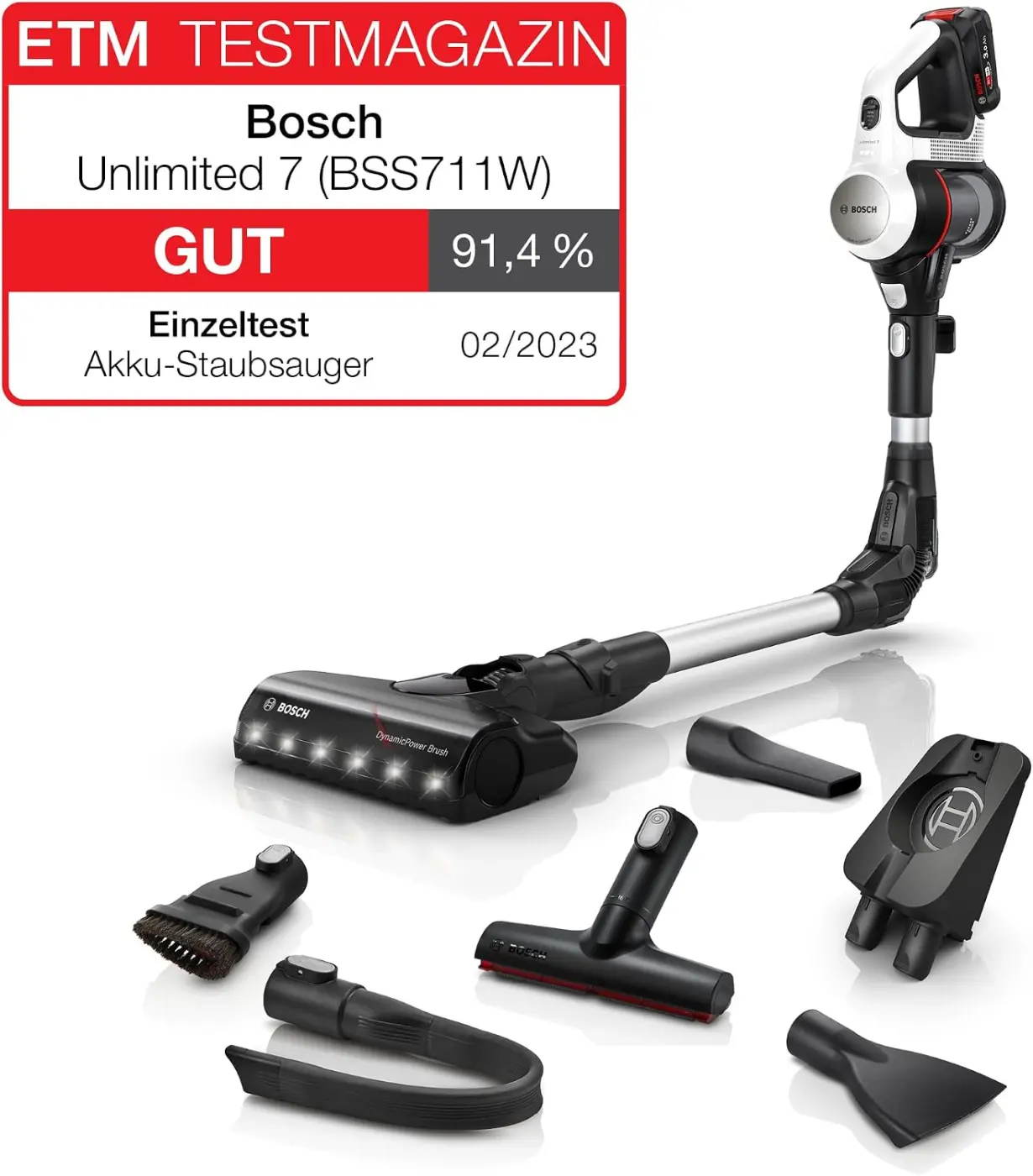
Bosch Bosch Unlimited 7 BSS711W
- up to 10 min turbo with the electric floor nozzle — published by BoschBoost-mode runtime with the motorised head
- €294retail price
Details+
The only machine here whose datasheet states both the eco and the turbo runtime plainly, on a Power for All 18 V battery shared with Bosch garden and DIY tools.
- Strengths
- Publishes both eco (40 min) and turbo (10 min) runtimes plainly — nobody else here does
- Power for All Alliance 18 V battery shared with Bosch garden and DIY tools
- Removable 18 V / 3.0 Ah / 54 Wh pack — replacement is a commodity purchase
- 2.9 kg and 82 dB(A)
- Already aligned with the February 2027 battery removability rule
- €293.90 — the best value among the honest-specification machines
- Weaknesses
- 10 minutes of genuine boost cleans one room, not a house
- Bin capacity given only as "M", no litre figure published
- No HEPA class stated for the filtration
- No independent test result found for this specific model
- No suction figure in Air Watts or Pascals published at all
8.5 / 10good
-
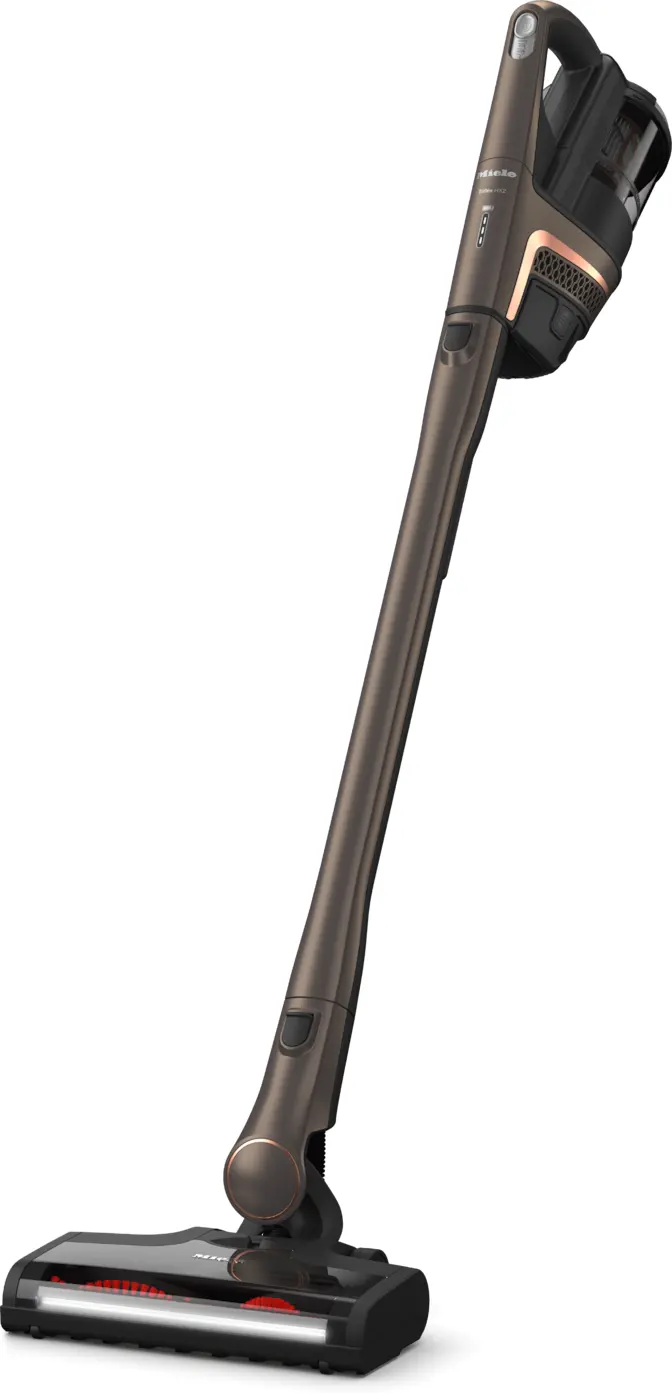
Miele Miele Triflex HX2 Pro
- 28 min on HIGH with the power brushBoost-mode runtime with the motorised head
- €549retail price
Details+
The quietest machine here at 77 dB(A), with filtration certified to EN 1822-1:2019 and the longest published boost runtime — 28 minutes with the power brush. Miele lists it as discontinued.
- Strengths
- 28 min boost runtime with the power brush — the longest published here
- Publishes three runtime figures rather than one headline number
- Filtration rated 99.999% per EN 1822-1:2019, a named testable standard
- 77 dB(A) — the quietest machine in this ranking by 5 dB
- Exchangeable 25.2 V / 2 500 mAh (approx. 63 Wh) battery
- Comprehensive tool set including a lit electrobrush
- Ranked highly by Stiftung Warentest in 02/2024
- Weaknesses
- Miele lists it as no longer available — check for a successor
- 3.6 kg, among the heaviest here
- 240-minute charge time
- 0.5 litre bin, small against the Rowenta's 0.9 litres
- Exact Stiftung Warentest grade could not be verified
- No suction figure published
8.4 / 10good
-
Best value
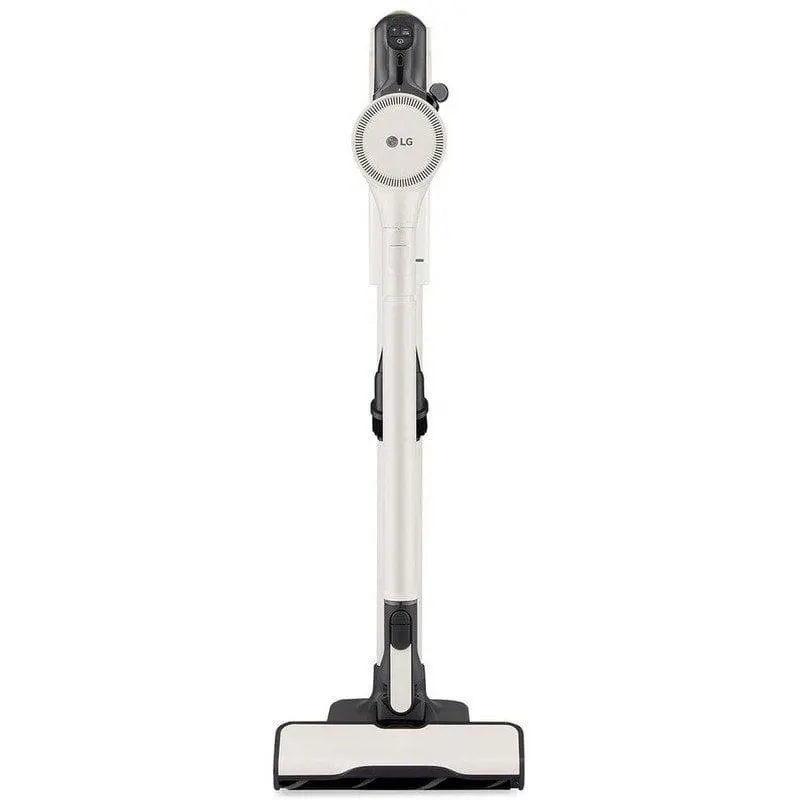
LG LG CordZero A9K-LITE1C
- 6 min at maximum — LG publishes itBoost-mode runtime with the motorised head
- €275retail price
Details+
€275 with a removable battery, 5-layer HEPA filtration and 2.6 kg. LG publishes a 60-minute headline and a 6-minute maximum — a 10:1 ratio, and the most useful honesty datapoint in this category.
- Strengths
- Publishes both the 60-minute headline and the 6-minute maximum figure
- €260-289 — cheapest here with a removable battery and HEPA filtration
- 2.6 kg, the lightest machine in this ranking
- 5-layer HEPA filtration
- 83 dB(A), quieter than the Rowenta, Philips and Samsung
- testberichte.de own test 1.6-1.7
- Weaknesses
- 6 minutes at maximum — the shortest boost runtime here
- Bin capacity conflicting between 440 ml and 1.05 l
- testberichte.de score shown as both 1.6 and 1.7
- No independent Stiftung Warentest or Which? result found
- 220 W motor is modest against the premium machines
- No suction figure in Air Watts published
8.2 / 10good
-
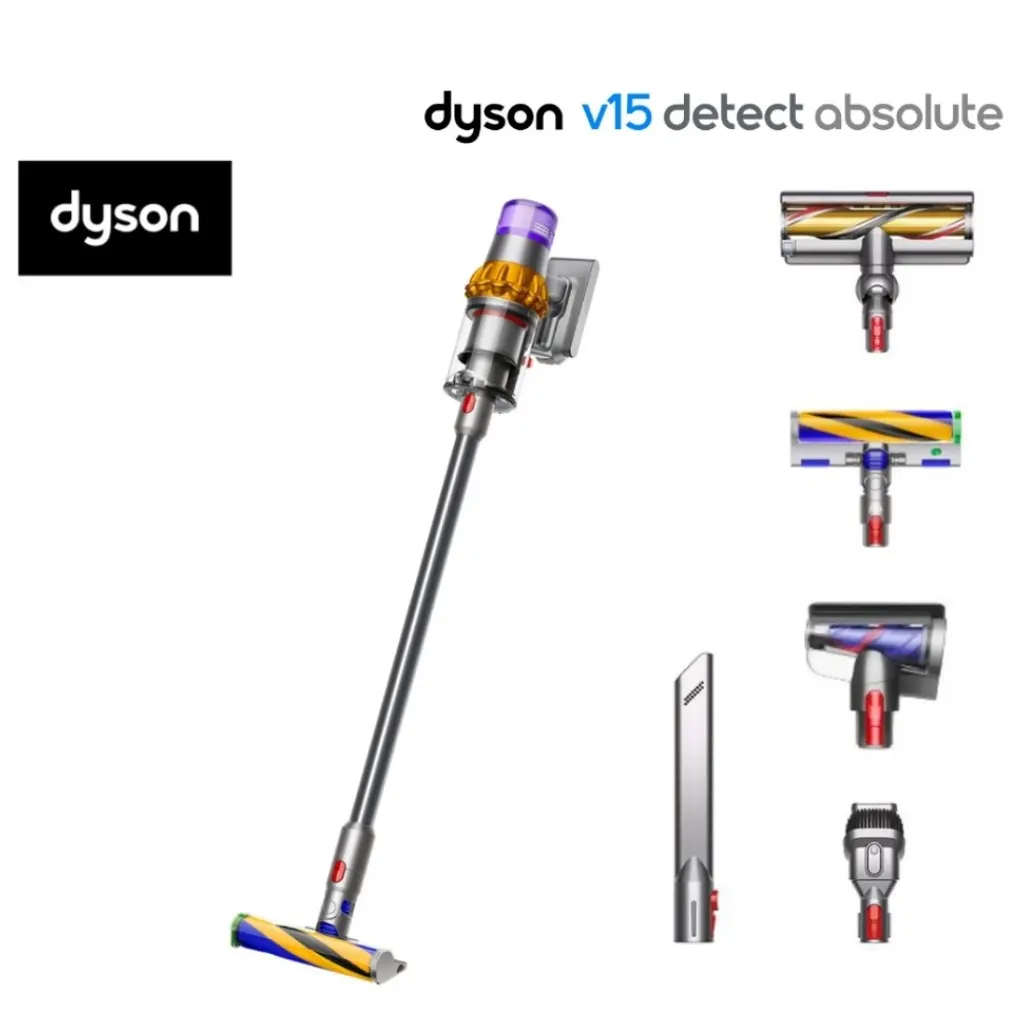
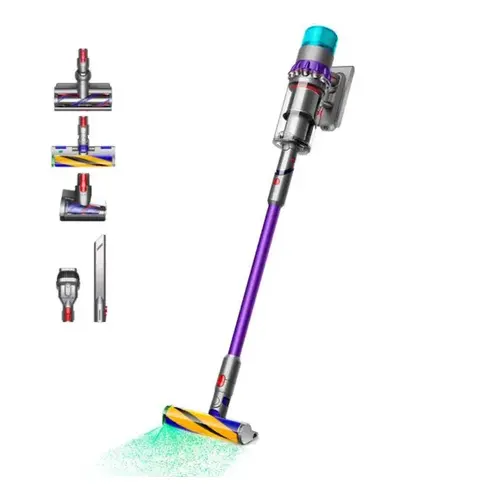
Dyson Dyson V15 Detect Absolute
- Not published — Dyson states 60 min maximum onlyBoost-mode runtime with the motorised head
- €580retail price
Details+
240 Air Watts, a removable click-in battery and Dyson's engineering, at €580 against a €799 RRP. But Dyson publishes no boost-mode runtime figure at all.
- Strengths
- 240 Air Watts — a meaningful unit, unlike Pascals
- Removable click-in battery, aligned with the 2027 rule
- 99.97% filtration of microscopic particles with a washable filter
- €579.99 street against a €799 RRP
- Laser dust detection on the Slim Fluffy head
- Strong Dyson service and spares network in Europe
- Weaknesses
- No boost-mode runtime published anywhere
- Bin capacity not published
- Noise level in dB(A) not published
- Battery watt-hour capacity not published
- The 4.1 kg weight figure on Dyson's own page is almost certainly a boxed weight
- No HEPA class stated, only a particle percentage
7.8 / 10fair
-
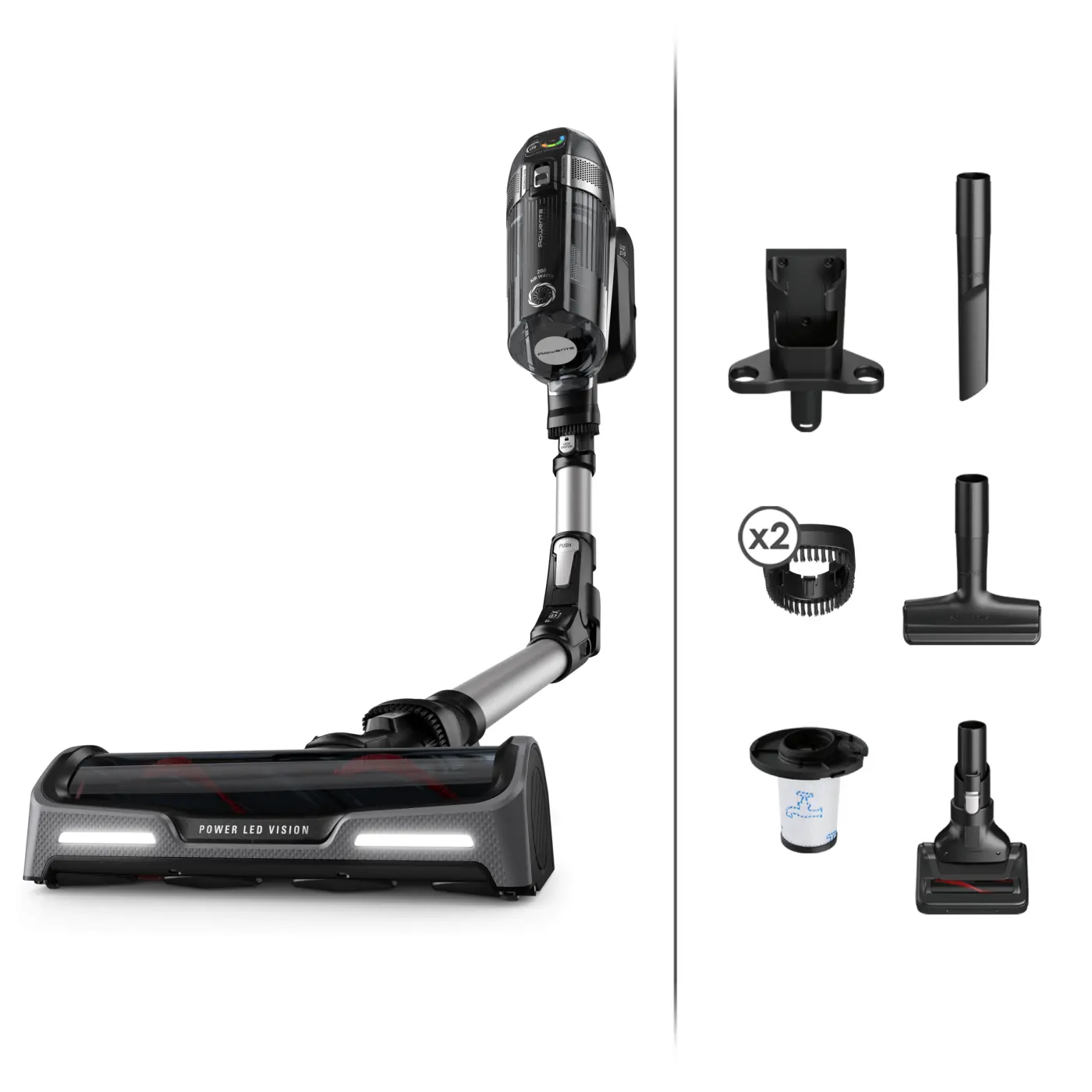
Rowenta Rowenta X-Force Flex 14.60 RH9958
- 10 min boostBoost-mode runtime with the motorised head
- €375retail price
Details+
The largest bin here at 0.9 litres and a HEPA 15 filtration claim, with a removable battery. But Stiftung Warentest reportedly graded it "Ausreichend" at a €550 test price.
- Strengths
- 0.9 litre bin — the largest here, nearly double most rivals
- Publishes both 70 min maximum and 10 min boost
- HEPA 15 filtration claim at 99.9995%
- Removable battery
- Comprehensive tool set including a mini turbo brush
- €374.90 street against a €550 price at test time
- Weaknesses
- Stiftung Warentest reportedly graded it "Ausreichend" (adequate) in 02/2024
- That grade is second-hand and could not be verified on test.de
- 84 dB(A), among the louder machines here
- Battery watt-hour capacity and charging time not published
- No suction figure published
7.4 / 10fair
-
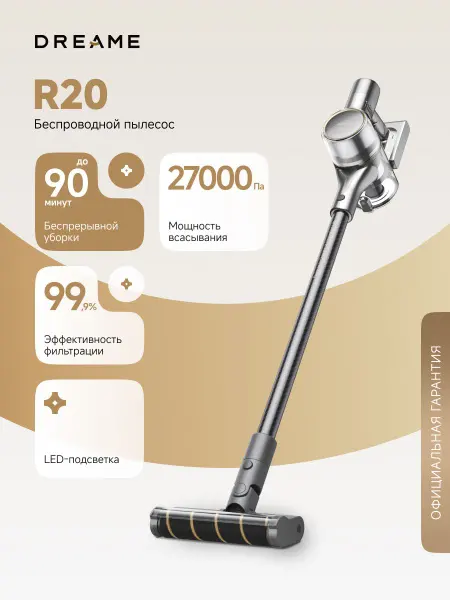
Dreame Dreame R20
- Not published — 90 min maximum claimedBoost-mode runtime with the motorised head
- €188retail price
Details+
The cheapest machine here at €188 — and the perfect illustration of the specification problem, marketed simultaneously as 190 Air Watts and 27,000 Pascals.
- Strengths
- €187.65 — the cheapest machine in this ranking
- Dreame builds competent hardware at aggressive prices
- 90-minute maximum runtime claimed
- Widely available across European retailers
- Weaknesses
- Marketed as both 190 AW and 27 000 Pa — two incompatible units for the same machine
- No boost-mode runtime published
- No independent European test result found
- No verified filtration class
- No noise figure or battery capacity published
- Pascals describe sealed pressure at zero airflow and tell you nothing about cleaning
6.8 / 10acceptable
-
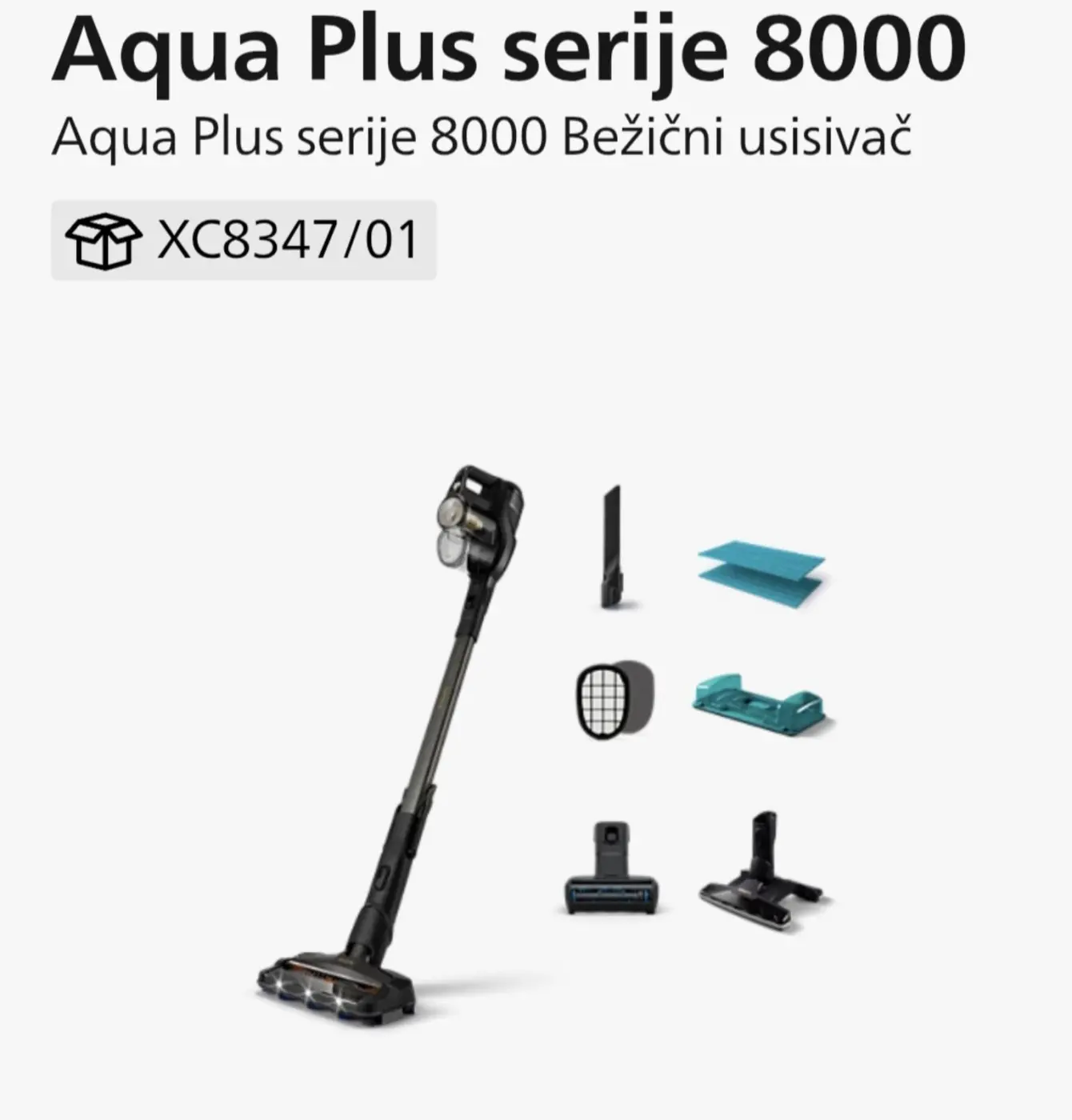
Philips Philips 8000 Series Aqua Plus XC8347/01
- 28 min turboBoost-mode runtime with the motorised head
- €399retail price
Details+
A well-equipped wet-and-dry machine with a 28-minute turbo runtime — attached to a non-removable battery, which is the specification the EU is about to outlaw.
- Strengths
- 28 minutes on turbo — matching the Miele, well above the Bosch and LG
- 80 minutes in normal mode
- Wet and dry cleaning in one machine
- 2.70 kg, light for its capability
- 0.6 litre bin, above the category average
- Weaknesses
- NON-REMOVABLE battery — the specification the EU is about to outlaw
- Replacement requires a service visit; the machine's life is the cell's life
- 5-hour charge time, the longest here
- "Triple filter system" with no HEPA class stated
- 84 dB(A)
- The cheaper 3000 Series was reportedly graded 5.1 "Mangelhaft" by Stiftung Warentest
6.5 / 10acceptable
-
Dyson Dyson Gen5detect Absolute
- Not published — 70 min maximum, eco, hard floorsBoost-mode runtime with the motorised head
- €693retail price
Details+
The most powerful machine here at 280 Air Watts with HEPA filtration to 0.1 µm — and reportedly graded "Mangelhaft" by Stiftung Warentest after housings melted at the battery contacts.
- Strengths
- 280 Air Watts — the highest figure in this ranking
- Motor spinning to 135 000 rpm
- HEPA filtration sealing 99.99% of particles to 0.1 µm, pre- and post-motor
- Removable single-click 10-cell battery
- Laser dust detection, Digital Motorbar and hair-removal tool included
- €692.53 street against a €899 RRP
- Weaknesses
- Reportedly graded "Mangelhaft" by Stiftung Warentest 02/2024
- Plastic housing reportedly melted at the battery contacts on two test units
- No boost-mode runtime published
- Bin capacity, noise level and battery Wh all unpublished
- €692.53 against a €580 V15 Detect with a similar feature set
- The test finding is second-hand and needs verifying
6.0 / 10acceptable
Scores comparable only within this categorySignificance threshold: ±0.15 pt
8.5 Our verdict
The Bosch Unlimited 7 is the pick, and the reason is unusual: Bosch tells you the truth about the runtime. Its datasheet publishes up to 40 minutes in eco with a non-motorised accessory and up to 10 minutes in turbo with the electric floor nozzle, side by side. Nobody else in this ranking presents both figures that plainly. It also runs on the Power for All Alliance 18 V battery, shared with Bosch garden and DIY tools — which turns the single biggest long-term risk in this category into a commodity purchase.
That risk is worth stating clearly. From 18 February 2027, Battery Regulation (EU) 2023/1542 requires portable batteries in appliances to be removable and replaceable by the end user, using commonly available tools, without adhesives defeating the process. The Philips 8000 Series sold today has a non-removable battery. A machine like that, placed on the market after that date, would not comply — and when its cell degrades in three or four years, the machine is a service job or scrap.
Two cautions at the premium end. Stiftung Warentest graded the Dyson Gen5detect "Mangelhaft" in issue 02/2024 after the plastic housing melted at the battery contacts on two units during durability testing, at a €900 price. And the Rowenta X-Force Flex 14.60 scored "Ausreichend" at €550. Both figures are second-hand and should be checked, but neither is the result a €500-plus buyer expects.
Ignore Pascals entirely. They describe sealed static pressure at zero airflow. If a listing quotes Pa, it is telling you nothing about how the machine picks up dust.
The regulatory vacuum
There is no EU label for cordless vacuums. There never was.
This is the single most important fact in this category, and almost no retailer will tell you.
The energy label was annulled
Delegated Regulation (EU) 665/2013 — the familiar A–G vacuum cleaner energy label — was annulled by the EU General Court following litigation brought by Dyson. The grounds were that testing with an empty bag or bin did not represent real-world use.
The European Commission's own harmonised standards page states it plainly: "The publication of references of harmonised standards under Commission Delegated Regulation (EU) No 665/2013 is not valid anymore because the Regulation was annulled."
The ecodesign rule never covered cordless machines anyway
Regulation (EU) 666/2013 — which set the 900 W motor cap, dust re-emission limits and noise disclosure — survived the annulment. But Article 1(2)(a) reads:
"This Regulation shall not apply to: (a) wet, wet and dry, battery operated, robot, industrial, or central vacuum cleaners."
Cordless stick vacuums were excluded from the start. And per EUR-Lex metadata, 666/2013 itself is no longer in force as of 23 July 2026 — though we could not identify the repealing act and flag that as unverified.
What that leaves
No EU energy label. No EU ecodesign performance requirement. No mandatory suction measurement. No obligation to publish a runtime methodology. Every number on the box is self-declared, and the standards that exist are voluntary.
Those standards do exist: IEC 62885-2 covers corded household dry vacuums and IEC 62885-4:2020 is the dedicated standard for cordless dry household vacuums. Nothing compels a manufacturer to use them, and none of the eight machines here publishes a figure referenced to one.
Is new regulation coming?
Not directly. The ESPR Working Plan 2025–2030 lists textiles (2027), tyres (2027), furniture (2028), mattresses (2029), iron and steel, and aluminium. Vacuum cleaners are not on it. The nearest hook is a horizontal repairability requirement scheduled for 2027 whose scope is undecided but could include consumer electronics and small household appliances.
The one rule that will bite is the battery rule — covered in its own section below.
Suction
Air Watts, Pascals, and why one of them is meaningless
Two units are used in this category and they measure different physical quantities. They cannot be converted, and only one relates to cleaning.
| Air Watts (AW) | Pascals (Pa) | |
|---|---|---|
| What it measures | Airflow × suction at a point in the airpath | Sealed static pressure with zero airflow |
| Relates to cleaning? | Yes, imperfectly | No — a vacuum moving no air cleans nothing |
| Used by | Dyson, Samsung | Dreame, Roidmi, Tineco, most Chinese brands |
A Pascal figure is measured by blocking the inlet completely. The machine is then in a state it never occupies while cleaning. A large Pa number tells you the seal is good; it tells you nothing about whether the machine picks up dust from a carpet.
The tell
The Dreame R20 is advertised simultaneously as 190 Air Watts and 27,000 Pascals. Those are two incompatible measurements of the same machine, presented together. That is not a specification sheet — it is a decision to offer whichever number impresses whichever buyer is reading.
What to do instead
Since no figure is standardised, use the indirect indicators that manufacturers cannot easily inflate:
- Boost-mode runtime with the motorised head, which reveals how hard the machine is actually working
- Independent test results, where they exist
- Noise in dB(A), which is measured under EN 60704 and is comparable
And note what nobody publishes: we found no independently measured suction figure for any cordless vacuum from any European test body. Not one.
Runtime
The headline number describes a mode you will never use
Every runtime claim in this category is measured on the lowest power setting, frequently with a non-motorised tool attached. The gap between that and reality is enormous.
| Machine | Headline | Boost with motorised head | Ratio |
|---|---|---|---|
| LG CordZero A9K | 60 min | 6 min | 10:1 |
| Bosch Unlimited 7 | 40 min | 10 min | 4:1 |
| Rowenta X-Force Flex | 70 min | 10 min | 7:1 |
| Philips 8000 Aqua Plus | 80 min | 28 min | 2.9:1 |
| Miele Triflex HX2 Pro | 120 min | 28 min | 4.3:1 |
| Dyson V15 / Gen5detect | 60 / 70 min | Not published | — |
| Dreame R20 | 90 min | Not published | — |
Two honesty benchmarks
Samsung's own footnote on its 160-minute claim is admirably explicit: the figure "applies to the minimum power level with a non-motorized tool attached using 2 batteries." Minimum power. Non-motorised tool. Two batteries. Read that way, 160 minutes is technically accurate and practically meaningless.
The measured example: an independent German test of the Shark Detect Pro found a manufacturer claim of 60 minutes and a measured boost-mode runtime of 11 minutes 3 seconds.
What this means when you shop
Look for the boost figure. If a manufacturer publishes it — Bosch, Miele, LG, Rowenta and Philips all do — that is a point in its favour regardless of how short the number is. LG's willingness to print 6 minutes is more useful to you than Dyson's decision to print nothing.
Batteries
February 2027 changes what you should buy today
This is the one regulation that will genuinely reshape the category, and it is close enough to affect a purchase made now.
Article 11 of Battery Regulation (EU) 2023/1542 applies from 18 February 2027. Portable batteries in appliances must be removable and replaceable by the end user throughout the product's lifetime:
- Removal must not damage the battery or the device
- Only commonly available tools may be required — not proprietary ones, per the EN 45554:2020 definition
- Adhesives must not defeat the process
Commission guidance was published in the Official Journal on 13 February 2025. Derogations cover wet-environment products such as shavers and toothbrushes, certain medical devices, and continuity-of-supply devices like smoke alarms. A stick vacuum plausibly fits none of them.
What that means for a 2026 purchase
The Philips 8000 Series Aqua Plus sold today has a non-removable battery. A machine of that design placed on the EU market after February 2027 would not comply. Buying one now means buying into a design the EU is about to prohibit — and a lithium cell degrades on its own schedule regardless of how well the motor works.
At the other extreme, the Bosch Unlimited 7 uses a Power for All Alliance 18 V pack shared across Bosch garden and DIY tools. That is a commodity battery, widely stocked, competitively priced, and already compliant.
The practical rule: buy a machine with a removable battery, and prefer one whose battery is part of a wider ecosystem. This single specification determines whether your vacuum lasts four years or ten.
Filtration
HEPA class means nothing without a sealed system
Filtration claims in this category range from a named European standard to a bare count of filters. Here is what each of the eight actually says:
| Machine | Filtration claim | Quality of claim |
|---|---|---|
| Miele Triflex HX2 Pro | HEPA Lifetime Filter, 99.999% per EN 1822-1:2019 | Referenced to a testable standard — the best here |
| Rowenta X-Force Flex | HEPA 15, 99.9995% | EPA/HEPA-grade nomenclature, meaningful |
| LG CordZero A9K | 5-layer HEPA | Layer count, no class |
| Dyson Gen5detect | Seals 99.99% of particles to 0.1 µm | Particle specification, no class |
| Dyson V15 Detect | 99.97% of microscopic particles | Percentage only |
| Bosch Unlimited 7 | Metal mesh + cartridge with PureAir membrane | Description, no class or percentage |
| Philips 8000 | "Triple filter system" | A count of filters — the weakest claim here |
| Dreame R20 | Not verified | — |
The thing that actually matters
A filter class is meaningless without a sealed system. If unfiltered air leaks around the filter housing and out of the machine's body, the filter's rating describes air that never went through it.
That is why Dyson's phrasing — "seals 99.99% of particles" — is a whole-machine claim rather than a filter claim, and why it is worth more than a higher percentage attached to the filter alone.
For an allergy sufferer, look for a whole-machine sealing statement, then a filter class referenced to EN 1822. A layer count tells you nothing.
Marketing decoded
Five claims worth ignoring, and one nobody advertises
Pascal figures. Sealed static pressure at zero airflow. Never comparable to Air Watts, and unrelated to cleaning performance.
Headline runtime. Measured on minimum power, frequently with a non-motorised tool, sometimes with two batteries. The real figure is 3 to 10 times lower.
"Laser dust detection." It reveals dust on hard floors, in the dark, and mostly sells the idea that your floor was dirtier than you thought. It does not improve pick-up.
"AI" dust sensing. A piezo particle counter adjusting motor speed. Genuinely useful — it saves battery on clean floors — and not intelligence.
Air Watt figures. More meaningful than Pascals, but still self-declared. IEC 62885-4:2020 exists for cordless vacuums; no manufacturer here references it.
And the specification nobody advertises
Noise. Measured under EN 60704, comparable across brands, and spanning a full ten decibels across this ranking:
- Miele Triflex HX2 Pro — 77 dB(A)
- Bosch Unlimited 7 — 82 dB(A)
- LG CordZero A9K — 83 dB(A)
- Rowenta X-Force Flex — 84 dB(A)
- Philips 8000 — 84 dB(A)
- Samsung Bespoke AI Jet Ultra — 87 dB(A)
Neither Dyson publishes a figure. Ten decibels is a substantial perceived difference, and it is buried at the bottom of a specification sheet while Pascals get the headline.
Methodology
How this score is built
The score is the mean of four component scores — each carries equal weight and each rests on a named source. The full procedure is described in the methodology.
01Composition and specification
Declared composition and specification: active ingredients and their concentrations, energy classes, standards, technical parameters — and what the manufacturer leaves unsaid.
02Evidence and studies
Verification of the manufacturer's claims against outside sources: laboratory reports, industry testing, safety data sheets, certificates and regulatory decisions.
03Owner feedback
Analysis of verified reviews written after extended use, together with recurring fault reports for the model or series.
04Cost and value
Price set against what the product actually delivers, plus costs incurred later — consumables, energy, servicing, subscriptions — over the lifespan typical for the category.
FAQ
Frequently asked questions
Which cordless stick vacuum should I buy?+
The Bosch Unlimited 7 at around €294, because it publishes both its eco runtime (40 minutes) and its turbo runtime with the motorised head (10 minutes), and because its 18 V battery is part of the Power for All Alliance shared with Bosch garden and DIY tools — which makes eventual replacement a commodity purchase rather than a service negotiation. If you need longer boost running and better filtration, the Miele Triflex HX2 Pro gives 28 minutes and HEPA certified to EN 1822-1:2019, though Miele lists it as discontinued.
Is there an EU energy label for cordless vacuums?+
No, and there never was. The A-G label under Regulation (EU) 665/2013 was annulled by the EU General Court after Dyson's litigation, on the grounds that testing with an empty bin misrepresented real use. The ecodesign regulation that survived it, 666/2013, explicitly excluded battery-operated vacuums in Article 1(2)(a) — and per EUR-Lex is itself no longer in force as of July 2026. Every figure on a cordless vacuum's box is self-declared.
Can I compare Pascals with Air Watts?+
No. Air Watts measure airflow multiplied by suction in the airpath. Pascals measure sealed static pressure with zero airflow — a state a working vacuum never occupies, because a machine moving no air cleans nothing. They are dimensionally different quantities. The clearest tell is the Dreame R20, advertised as both 190 AW and 27,000 Pa simultaneously — two incompatible measurements of one machine, presented together.
Why is the advertised runtime so different from what I get?+
Because it is measured on the lowest power setting, often with a non-motorised tool. Samsung's own footnote states its 160-minute figure applies to minimum power, a non-motorised tool and two batteries. LG publishes 60 minutes and 6 minutes at maximum — a 10:1 ratio. An independent test of a Shark model measured 11 minutes 3 seconds against a 60-minute claim. Look for the boost figure with the motorised head; several manufacturers publish it, and the ones that do not are telling you something.
Does the battery need to be removable?+
It should be, and from 18 February 2027 it will have to be. Article 11 of Battery Regulation (EU) 2023/1542 requires portable batteries in appliances to be removable and replaceable by the end user, using commonly available non-proprietary tools, without adhesives defeating the process — and the derogations for wet-environment and medical devices do not plausibly cover a stick vacuum. A machine with a sealed battery, like the Philips 8000 Series, has a useful life equal to its cell's.
What does HEPA actually guarantee?+
Less than you would expect, unless the machine is also sealed. A filter class describes what the filter removes from the air that passes through it; if unfiltered air leaks around the housing, the class is irrelevant. Miele's claim is the strongest here because it references EN 1822-1:2019, a testable standard. Dyson's phrasing — "seals 99.99% of particles" — is a whole-machine claim, which is what an allergy sufferer should look for. Philips's "triple filter system" is a count of filters and tells you nothing.
Are expensive cordless vacuums better?+
Not reliably. Stiftung Warentest reportedly graded the €900 Dyson Gen5detect "Mangelhaft" in issue 02/2024 after housings melted at the battery contacts on two units, and the €550 Rowenta X-Force Flex "Ausreichend" in the same round — while the €294 Bosch publishes more honest specifications than either. Note that both grades reach us through secondary reporting rather than test.de directly, and are worth verifying before you rely on them.
How loud are these machines?+
Between 77 and 87 dB(A) across this ranking — a full ten decibels, which is a substantial perceived difference. Noise is measured under EN 60704 and is genuinely comparable between brands, unlike suction. The Miele Triflex HX2 Pro is quietest at 77 dB(A); the Samsung Bespoke AI Jet Ultra is loudest at 87. Neither Dyson publishes a figure. It is one of the few honest numbers in the category and nobody advertises it.
Sources
Documents and standards
- 1. European Commission - Ecodesign and energy labelling for vacuum cleaners (annulment of 665/2013): https://single-market-economy.ec.europa.eu/single-market/european-standards/harmonised-standards/ecodesign-and-energy-labelling-vacuum-cleaners_en
- 2. Regulation (EU) 666/2013 text, Article 1(2)(a) exclusions: https://www.legislation.gov.uk/eur/2013/666/body
- 3. IEC 62885-4:2020 - Cordless dry vacuum cleaners performance measurement: https://webstore.iec.ch/en/publication/34081
- 4. BSI - Surface cleaning appliances, cordless dry vacuum cleaners: https://knowledge.bsigroup.com/products/surface-cleaning-appliances-cordless-dry-vacuum-cleaners-for-household-or-similar-use-methods-for-measuring-the-performance-1
- 5. Cooley Productwise - EU Batteries Regulation removability guidance: https://products.cooley.com/2025/02/13/european-commission-publishes-guidance-on-eu-batteries-regulation-removability-requirements/
- 6. Official Journal C/2025/214 - Commission guidance on battery removability: https://eur-lex.europa.eu/legal-content/EN/TXT/?uri=OJ%3AC_202500214
- 7. Sidley Austin - ESPR working plan priority products: https://www.sidley.com/en/insights/newsupdates/2025/04/european-commission-releases-list-of-priority-products
- 8. Notebookcheck - Stiftung Warentest 02/2024 cordless vacuum test summary (Dyson Gen5detect): https://www.notebookcheck.com/Akku-Staubsauger-im-Warentest-Teurer-Dyson-Gen5detect-Absolute-versagt-mit-verschmortem-Akku-guenstiger-Xiaomi-Vacuum-Cleaner-G9-Plus-ausreichend.797979.0.html
- 9. Bosch BSS711W datasheet (PDF): https://media3.bosch-home.com/Documents/specsheet/de-DE/BSS711W.pdf
- 10. Miele Triflex HX2 Pro product page: https://www.miele.de/product/11806010/akku-staubsauger-triflex-hx2-pro-infinitygrau-pearlfinish
- 11. Dyson Gen5detect product page: https://www.dyson.de/staubsauger/kabellos/gen5detect
- 12. Dyson V15 Detect Absolute product page: https://www.dyson.at/staubsauger/kabellos/v15/absolute-gelb-nickel
- 13. Samsung Bespoke AI Jet Ultra product page: https://www.samsung.com/uk/vacuum-cleaners/stick/vc9700cl-stick-vc-with-most-powerful-jet-aiultra-400w-black-vs90f40dek-eu/
- 14. testberichte.de - LG CordZero A9K-LITE1C test: https://www.testberichte.de/p/lg-tests/a9k-lite1c-testbericht.html
- 15. Coolblue.de - Rowenta X-Force Flex 14.60 RH9958: https://www.coolblue.de/produkt/881254/rowenta-x-force-flex-14-60-rh9958.html
- 16. guenstiger.de - Philips 8000 Series Aqua Plus XC8347: https://www.guenstiger.de/Produkt/Philips/8000_Series_Aqua_Plus_XC8347.html
- 17. guenstiger.de - Philips 3000 Series XC3031: https://www.guenstiger.de/Produkt/Philips/3000_Series_XC3031.html
- 18. Geizhals - Dreame R20: https://geizhals.de/dreame-r20-vtv97a-a2976516.html
- 19. Geizhals - Dyson Gen5detect: https://geizhals.de/dyson-gen5detect-447002-01-a2949793.html
- 20. Geizhals - Dyson V15 Detect: https://geizhals.de/dyson-v15-detect-443099-01-a2862568.html
- 21. Alza.de - Bosch BCS711A Unlimited 7: https://www.alza.de/bosch-bcs711a-unlimited-7-d7088147.htm
- 22. smarthomeassistent.de - Shark Detect Pro IW3611EU measured runtime: https://www.smarthomeassistent.de/akkusauger/shark-detect-pro-iw3611eu/
More
Other rankings
in
Home appliances.
Each category has its own protocol and its own key parameter.
-
 Home appliances8.2top
Air Fryers
Basket capacity (litres) with rated power (W) — and OCU's measured frozen-fries load where available
-
 Home appliances8.0top
Bean-to-Cup Coffee Machines
Removable brew unit and grinder type, as published
-
 Home appliances8.4top
Robot Vacuums
Published threshold-crossing height and robot height