
Home appliancesAnalysis 143
Best Bean-to-Cup Coffee Machines
A fully automatic bean-to-cup machine grinds, tamps, brews and — on most models — froths milk at the press of a button. The boxes shout about 15 or 19 bar and '16 drinks'; the things that decide whether you still like the machine in five years are quieter: can you take the brew unit out and rinse it, what is the grinder made of, how awkward is the milk system to clean, and what do tablets, descaler and filters cost.
We compared ten machines currently sold in the EU from eight brands, from about 232 to 899 euros, using only what can be checked: manufacturer product pages, Commission Regulation (EU) 2023/826 on standby and auto power-down, retailer listings, and published summaries of tests by Stiftung Warentest and the Austrian magazine Konsument.
Two findings stand out. First, half of the makers leave basic facts off their product pages — pump rating, grind steps, even whether the brew unit is removable — and not one publishes a noise level. Second, price and test grade are only loosely linked: the two machines reported at the top of Stiftung Warentest's 2025 test cost 779 and 899 euros, but machines at 349 euros come with ceramic grinders and removable brew groups.
Methodology note
Desk research carried out in October 2026. Nothing was brewed, tasted or measured. Specifications come from the manufacturers' German product pages where these could be opened; for the Philips machines the manufacturer pages returned no specification content, so data comes from Geizhals and testberichte.de, and the Krups page gave almost no technical figures. Prices are in euros as seen in early October 2026: manufacturer store prices for De'Longhi, Siemens, Miele, Melitta, Krups and Nivona, a retailer price for Jura (Coffee Friend), the lowest Geizhals offer for the Philips EP2331/10 and an approximate lowest offer from testberichte.de for the Philips EP2220/10. All Stiftung Warentest and Konsument grades are second-hand, read in aggregators, press articles, a retailer article or a manufacturer press release; the full test tables are paywalled and were not purchased, and sources differ on whether the 2025 results appeared in the June or December issue. Owner ratings are quoted with their source and count and are not comparable across shops. Not examined: taste, temperature, noise, energy per cup, durability, consumable prices other than Melitta's, and the current tests of Which?, Consumentenbond and OCU, which we could not open.
 8.0BPR score
Key parameter
Removable brew unit and grinder type, as published
Whether the brew unit can be taken out and rinsed decides how the machine is kept clean over years, and the grinder (material, number of steps) decides how far you can adjust it. Values are taken from manufacturer product pages; where a page is silent we say so and name the retailer or aggregator listing used instead.
-
Top score
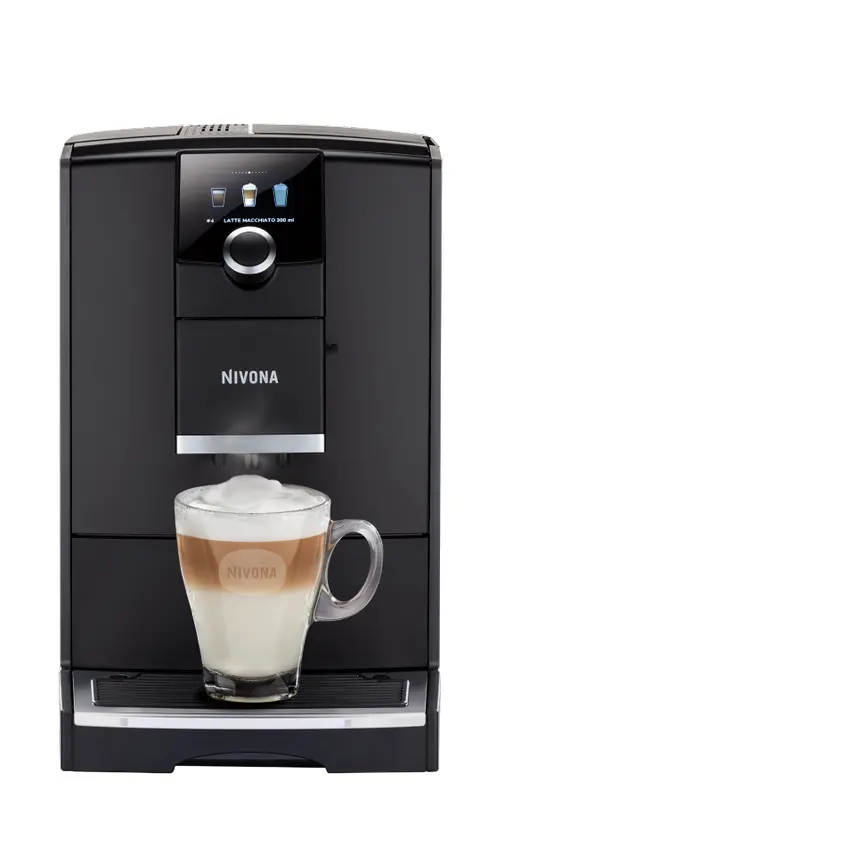
Nivona CafeRomatica NICR 790
- Removable brew unit; conical grinder in hardened steel, number of grind steps not stated — published by NivonaRemovable brew unit and grinder type, as published
- €779retail price
Details+
Reported as the winner of Stiftung Warentest's 2025 group test with a 'gut' (2.0), and one of the few machines whose maker states plainly that the brew unit comes out for rinsing.
- Strengths
- Stiftung Warentest 'gut' (2.0) and test winner of 11 machines, as reported by testberichte.de
- Brew unit stated as removable for cleaning
- 2.2 l water tank, the largest of the ten
- Hardened-steel conical grinder and 15 bar pump stated by the maker
- Repairability reported as guaranteed in the Warentest write-ups
- Weaknesses
- Number of grind steps not published
- No noise or standby figure published
- Only 9 owner reviews found (3.9 stars on Amazon via testberichte.de)
- Sold through specialist retailers only, no direct online shop
8.0 / 10good
-
Best value
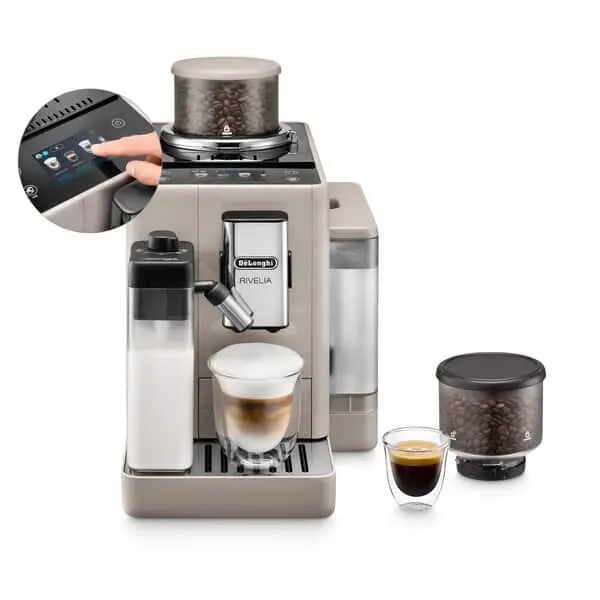
De'Longhi Rivelia EXAM440.55
- Brew unit removability not stated on the product page; 13-step grinder per testberichte.de, material not publishedRemovable brew unit and grinder type, as published
- €659retail price
Details+
Stiftung Warentest's 2024 test winner with a 'gut' (2.1), built around two swappable 250 g bean containers and a heated milk carafe, but with only a 1.4 litre water tank.
- Strengths
- Stiftung Warentest 'gut' (2.1), test winner 2024 (De'Longhi press release, testberichte.de)
- Konsument 68 %, first of 12 machines
- Two swappable 250 g bean containers included
- 4.3 stars from 46 Amazon reviews, 76 % five-star
- Dimensions, weight and power all published
- Weaknesses
- 1.4 l water tank
- Grinder material not published
- Brew unit removability not stated on the product page
- No noise figure published
8.0 / 10good
-
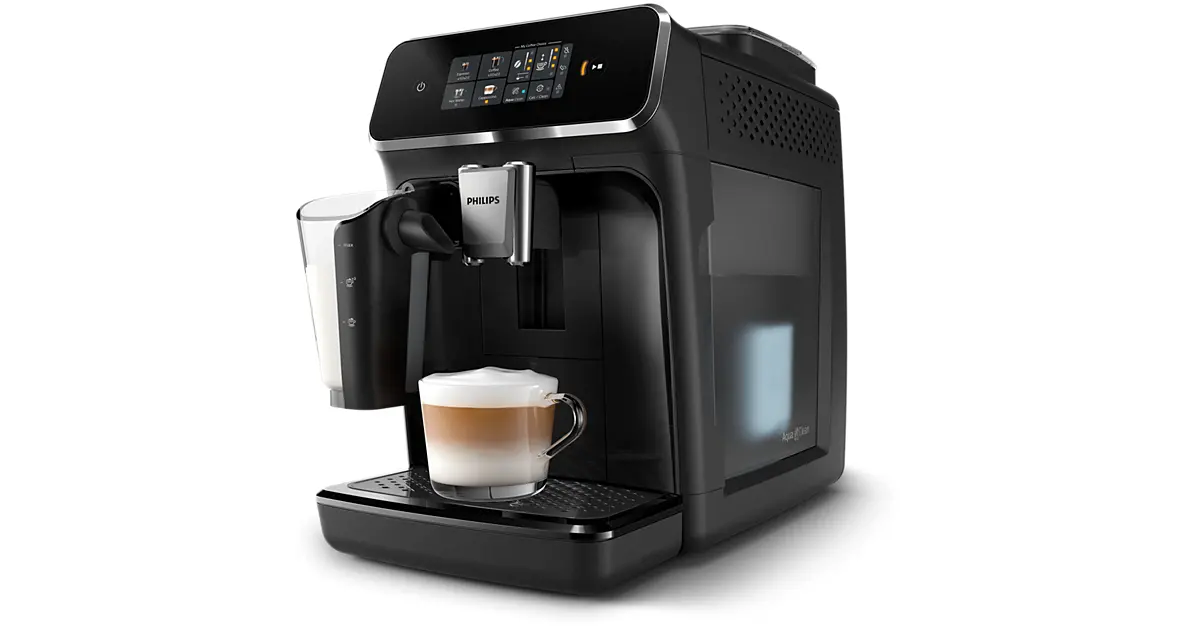
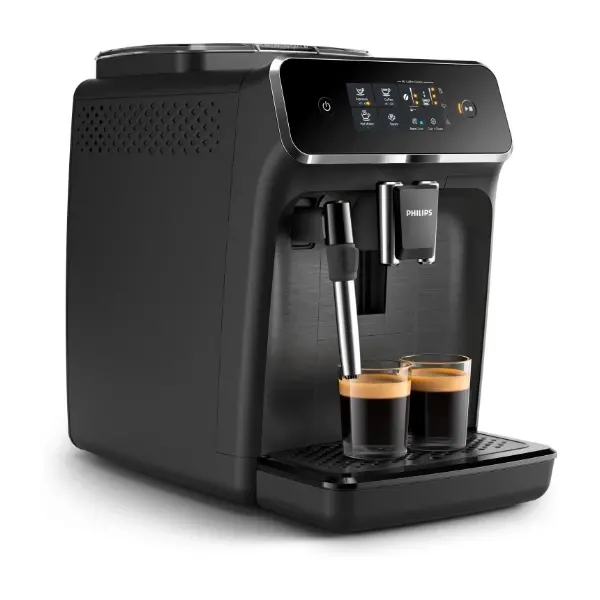
Philips Series 2300 LatteGo EP2331/10
- Removable brew group; ceramic grinder with 12 settings — per the Geizhals spec sheet for EP2331/10Removable brew unit and grinder type, as published
- €349retail price
Details+
A 349 euro machine with a ceramic 12-step grinder, a removable brew group and the hose-free LatteGo milk container; it was in Stiftung Warentest's 2025 field, but we could not see its grade.
- Strengths
- 349 EUR lowest price seen for a one-touch milk machine
- Ceramic grinder with 12 settings
- Removable brew group
- LatteGo milk container has no hoses
- 4.6 out of 5 from 135 ratings on Geizhals
- Weaknesses
- Stiftung Warentest grade (12/2025) not visible to us
- Owners criticise operating noise; no dB figure published
- Specification taken from retailer listings, not the Philips page
7.8 / 10fair
-
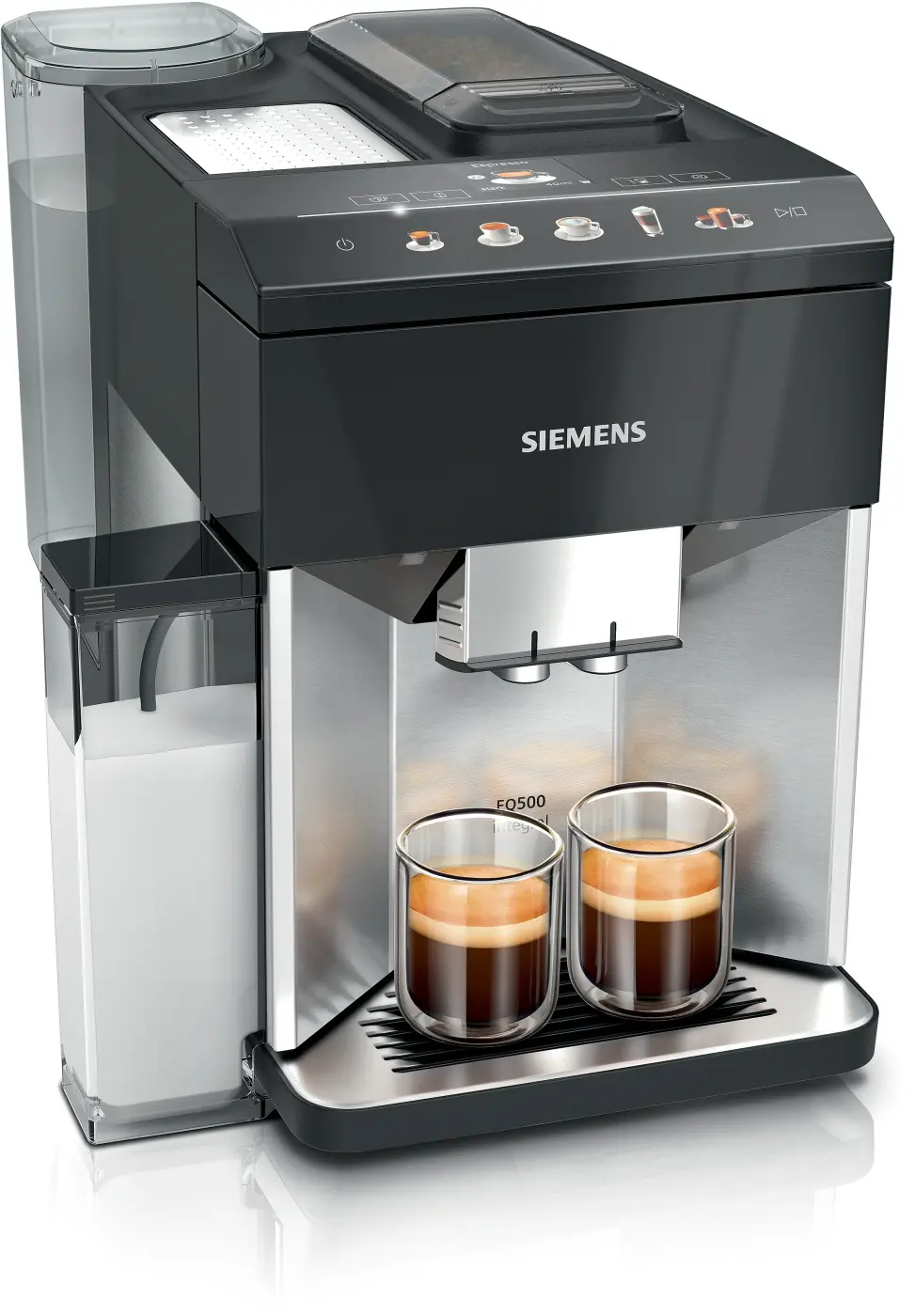
Siemens EQ500 integral TQ517D03
- ceramDrive ceramic grinder published by Siemens; brew unit removability and grind steps not stated on the product pageRemovable brew unit and grinder type, as published
- €349retail price
Details+
Siemens' own store listed this ceramic-grinder machine with an integrated milk container at 349 euros, down from 579; the product page is short on basic figures.
- Strengths
- 349 EUR in the Siemens store, down from 579
- Ceramic grinder stated by the maker
- 1.9 l tank and 270 g bean container
- 4.8 out of 5 from 71 reviews in the Siemens store
- Sister model TP517DF3 reported at 'gut' (2.3) by Stiftung Warentest
- Weaknesses
- Brew unit removability not stated on the product page
- Pump rating, power and weight not on the product page
- No independent test of this exact model found
- Delivery time of 4–6 weeks quoted
7.7 / 10fair
-
Philips Series 2200 EP2220/10
- Removable brew group; grinder with 12 settings — per testberichte.de; grinder material not seen in the sources we openedRemovable brew unit and grinder type, as published
- €232retail price
Details+
The cheapest machine here at about 232 euros, with a manual steam wand, a 2019 Stiftung Warentest 'gut' (2.2) and by far the largest pool of owner reviews.
- Strengths
- About 232 EUR, the lowest price of the ten
- 4.3 stars from 26,331 owner opinions (testberichte.de)
- Stiftung Warentest 'gut' (2.2) in 11/2019 and Konsument 66 %
- Removable brew group and 12 grind settings
- Steam wand means no milk circuit to clean
- Weaknesses
- Tests date from 2019
- F.A.Z. Kaufkompass criticised a loud pump and plastic housing
- Milk has to be frothed by hand
- Manufacturer page not opened; all figures second-hand
7.6 / 10fair
-
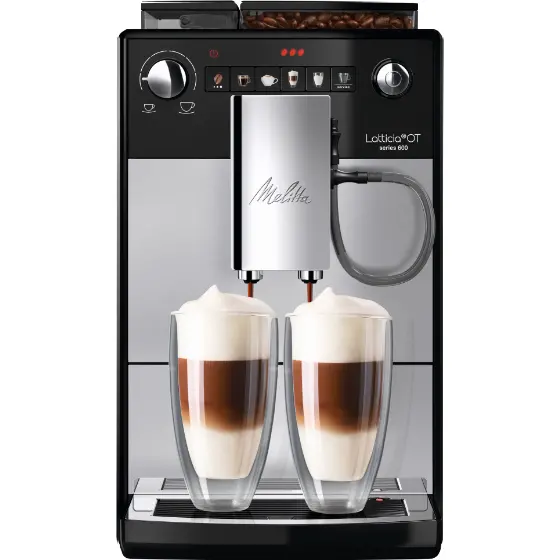
Melitta Latticia OT F300-100
- Removable brew group; conical steel grinder with 5 steps — published by MelittaRemovable brew unit and grinder type, as published
- €599retail price
Details+
A 20 cm wide machine with one of the most complete manufacturer data sheets here and two Stiftung Warentest grades of 2.3, held back by a divided Amazon record.
- Strengths
- Removable brew group and steel conical grinder both stated by Melitta
- Only 200 mm wide
- Stiftung Warentest 'gut' (2.3) in both 12/2025 and 11/2022 (testberichte.de)
- 0-watt switch and automatic switch-off
- Retail offers from 439.99 EUR seen against 599 EUR list
- Weaknesses
- 19 % one-star reviews among 459 on Amazon (average 3.8)
- Only 5 grind steps
- Pump rating not on the product page
- Konsument: 64 %, sixth of seven
7.5 / 10fair
-
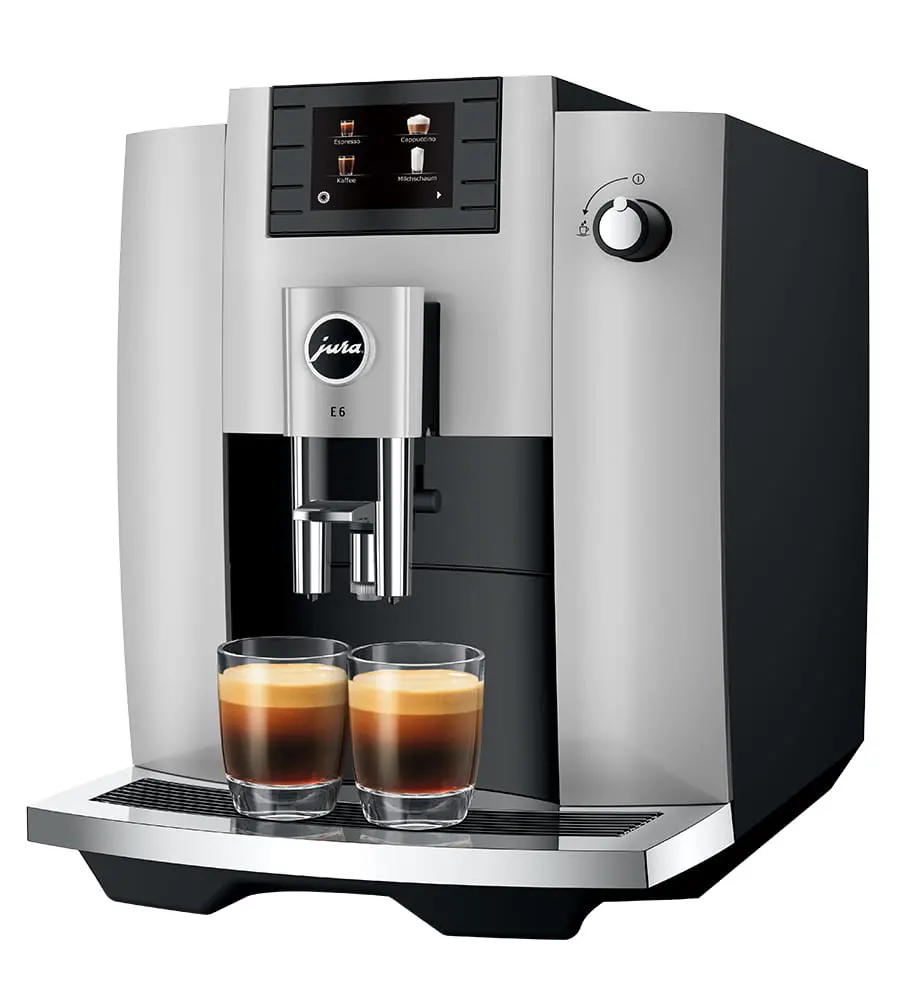
Jura E6 Platin (EC)
- Brew unit not removable (integrated cleaning programme); Professional Aroma Grinder in steel, 5 settings per retailer listingRemovable brew unit and grinder type, as published
- €899retail price
Details+
Reported joint best in Stiftung Warentest's 2025 test at 'gut' (2.0) and the only machine here with a published 0 W standby figure, but the brew unit is fixed and the price is the highest.
- Strengths
- Stiftung Warentest 'gut' (2.0), joint top in 2025 (second-hand reports)
- Standby consumption stated as 0 W
- Variable brew chamber of 5–16 g published
- 1.9 l tank and 280 g bean container
- Complete data sheet incl. weight, power and cable length
- Weaknesses
- Brew unit cannot be removed
- 899 EUR, the highest price here
- No manufacturer price on the product page
- No usable owner-review pool found for the EC version
7.3 / 10fair
-
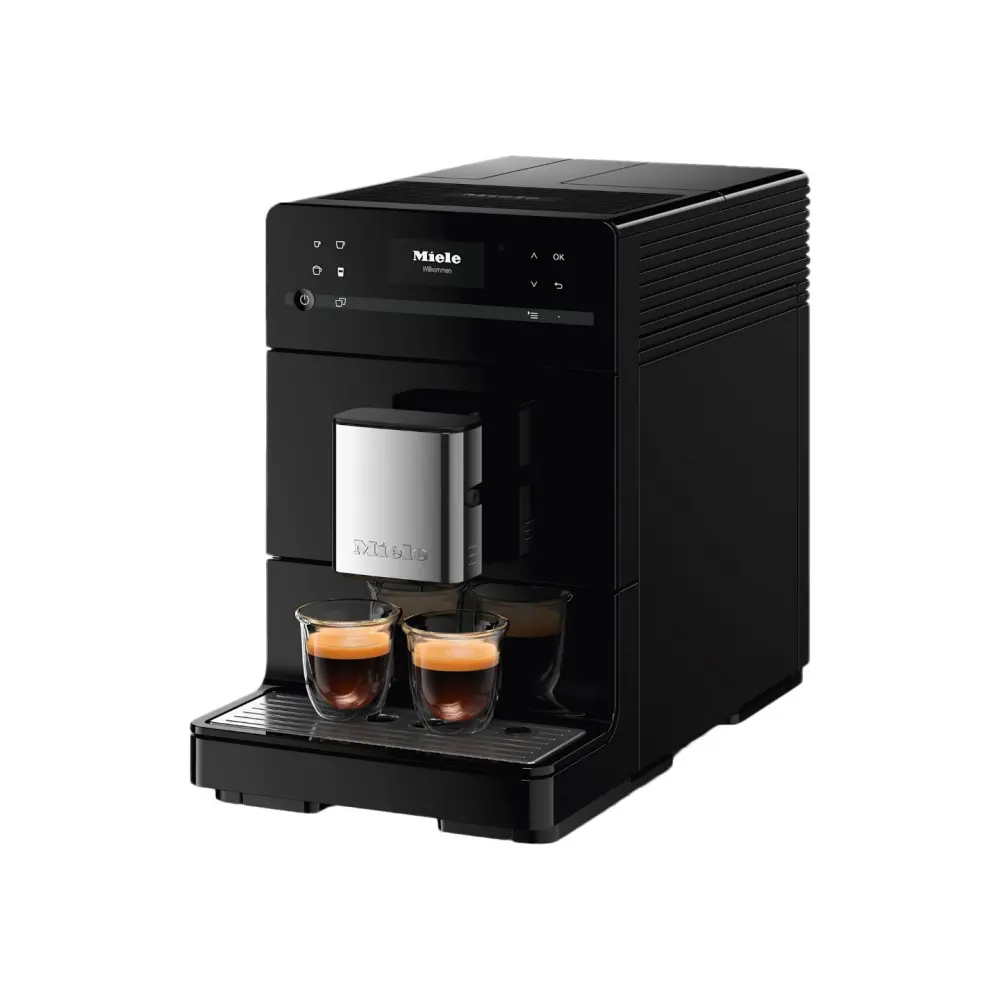
Miele CM 5310 Silence
- Removable brew unit; conical grinder, material and number of steps not stated — published by MieleRemovable brew unit and grinder type, as published
- €799retail price
Details+
A compact Miele with a removable brew unit and a published 0.3 W standby figure; its Stiftung Warentest 'gut' (2.1) dates from 2020, when it had the quietest grinder in the test.
- Strengths
- Removable brew unit stated by Miele
- Standby consumption published: 0.3 W
- Stiftung Warentest 'gut' (2.1) in 2020: quietest grinder, top at descaling
- Konsument 68 %, second of eight
- Only 241 mm wide
- Weaknesses
- 1.3 l tank and 200 g bean container, the smallest of the milk machines
- 'Silence' without a published dB figure
- Main test result dates from 2020
- 799 EUR; Amazon average 3.9 from 376 reviews
7.0 / 10fair
-
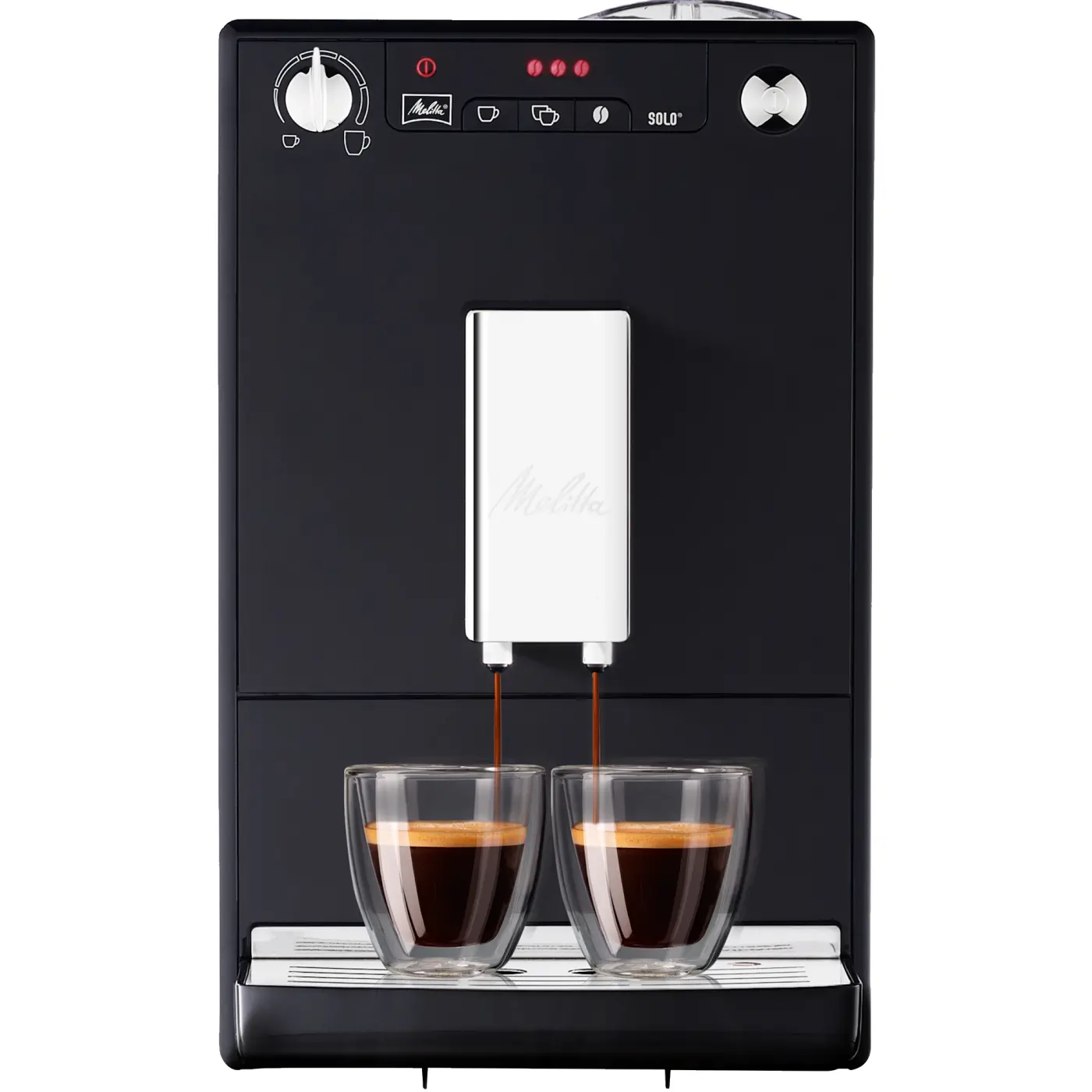
Melitta Solo E950
- Removable brew group; conical steel grinder with 5 steps — published by MelittaRemovable brew unit and grinder type, as published
- €349retail price
Details+
A 20 cm wide espresso-and-café-crème machine with no milk system at all, a fully published data sheet and no independent test that we could find.
- Strengths
- Removable brew group and 5-step steel conical grinder published
- No milk system to clean
- Only 200 mm wide and 8 kg
- 0-watt switch and automatic switch-off
- Consumable prices shown by the maker: tablets from 3.49 EUR, filter from 11.99 EUR
- Weaknesses
- No independent test found
- 125 g bean container and 1.2 l tank, the smallest here
- No milk drinks
- Only 27 owner reviews, all from the maker's shop
6.6 / 10acceptable
-
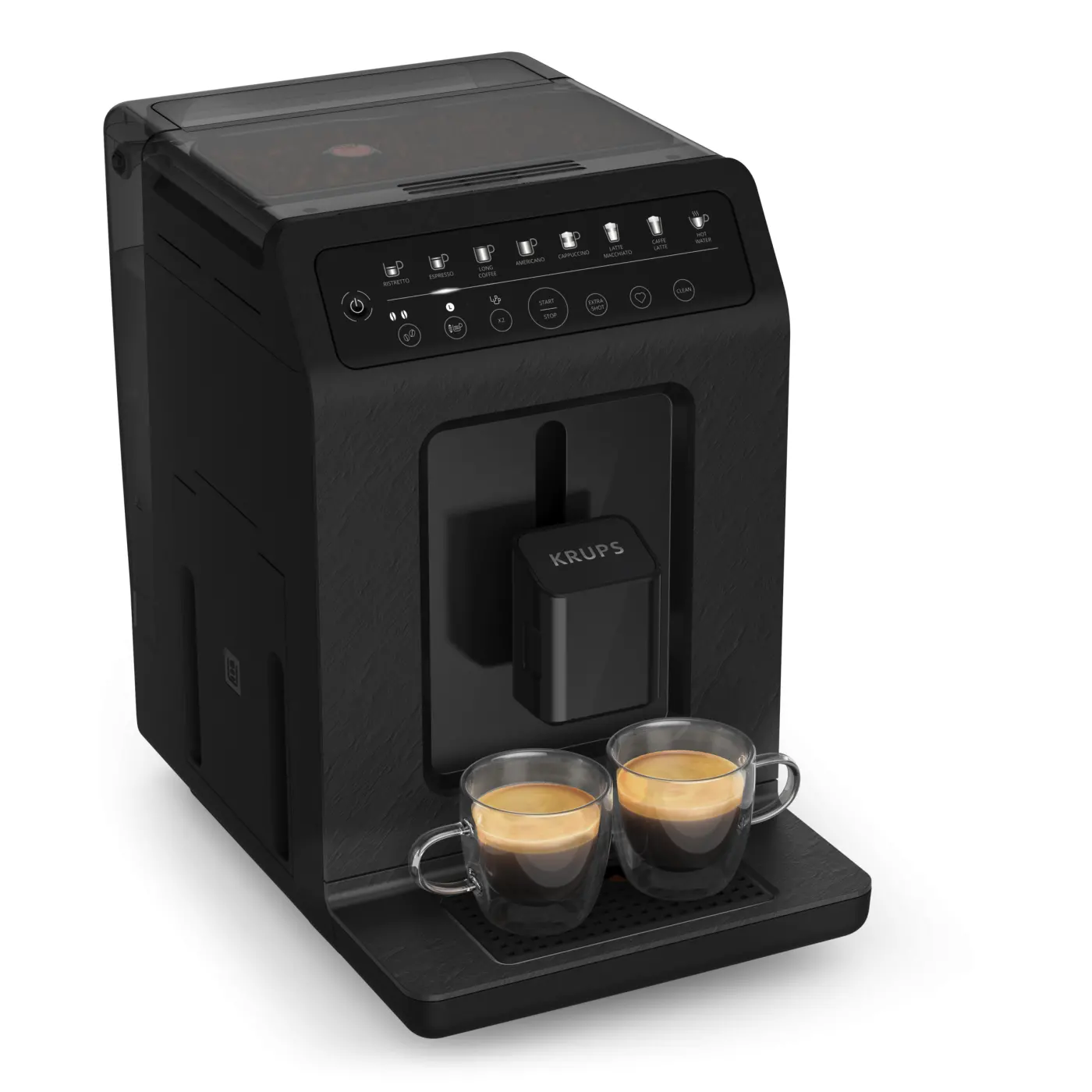
Krups Evidence EA897B
- Not stated on the product page as retrieved — neither brew-unit removability nor grinder typeRemovable brew unit and grinder type, as published
- €500retail price
Details+
Krups advertises 15 years of repairability and 62 % recycled plastic, and owners rate it 4.6 out of 5, but the product page we opened gave almost no technical figures.
- Strengths
- '15 years of repairability' advertised by Krups
- 62 % recycled plastic stated
- 4.6 out of 5 from 384 reviews in the Krups store
- One-touch cappuccino at 499.99 EUR
- Weaknesses
- No pump, tank, grinder or size figures on the product page as retrieved
- Brew-unit removability not stated
- No independent test of this model found
5.8 / 10poor
Scores comparable only within this categorySignificance threshold: ±0.15 pt
8.0 Our verdict
On published data and traceable test results, the Nivona CafeRomatica NICR 790 comes first: a removable brew unit, a hardened-steel conical grinder, the largest water tank and a reported Stiftung Warentest 'gut' (2.0) as test winner in 2025. The De'Longhi Rivelia, the 2024 test winner at 2.1, follows closely and has the better owner record, but only a 1.4 litre tank. For value, the Philips EP2331/10 and the Siemens EQ500 integral TQ517D03 both cost 349 euros with ceramic grinders and one-touch milk; the Philips has the fuller specification, the Siemens the higher owner rating. The Philips EP2220/10 is the cheapest sound choice for people who rarely froth milk. The Jura E6 matches the Nivona's reported grade and publishes 0 W standby, but its brew unit is fixed and it costs 899 euros. Miele's CM 5310 Silence is well documented but rests on a 2020 test. The Melitta Solo and Krups Evidence rank last for lack of independent evidence, not for any known fault. No maker publishes a noise figure, and every test grade here is second-hand.
EU rules
What Regulation (EU) 2023/826 requires of a coffee machine
Bean-to-cup machines carry no EU energy label, so there is no A-to-G class to compare. The rule that does apply is Commission Regulation (EU) 2023/826 on off-mode, standby and networked-standby consumption, which has applied since 9 May 2025 and repealed Regulations (EC) No 1275/2008 and (EC) No 107/2009.
| Requirement | Limit |
|---|---|
| Off mode | 0.50 W; 0.30 W two years after the date of application |
| Standby | 0.50 W |
| Standby with information or status display | 0.80 W |
| Networked standby (other than HiNA equipment) | 2.00 W |
| Auto power-down, drip filter machine with insulated jug | 5 minutes after the last brewing cycle |
| Auto power-down, drip filter machine with non-insulated jug | 40 minutes |
| Auto power-down, other household coffee machines | 30 minutes after the last brewing cycle, or after descaling or self-cleaning |
A bean-to-cup machine falls under 'other coffee machines'. In practice this means every machine legally sold in the EU must switch itself to a low-power mode within half an hour, so 'automatic switch-off' in a brochure is a legal minimum, not a feature. What separates the machines is whether the maker publishes the actual figure. In this ranking only two do: Jura states 0 W standby for the E6 and Miele 0.3 W for the CM 5310 Silence. Melitta goes a different way with a mechanical 0-watt switch on the Latticia OT and Solo. For the other machines we found no published standby value.
The regulation says nothing about noise, repairability or the energy used per cup. Stiftung Warentest measures energy use and noise and assesses repairability under its environmental criteria, which makes its tests the only public source for those points.
Marketing decoded
15 bar, 19 bar and '16 drinks': what the headline numbers mean
Three claims dominate the boxes, and none of them tells you how the coffee will taste.
| Claim | What it is | What it is not |
|---|---|---|
| 15 bar / 19 bar | The maximum rating of the pump | The pressure at the coffee during brewing, which no maker here publishes |
| '16 drinks' | A count of stored recipes, including variations in size and milk ratio | A count of different things the machine can physically do |
| 'Silent', 'Silence', 'quiet grinder' | A product name or description | A measured sound level: none of the ten pages we opened gave a dB figure |
Pump ratings in this ranking are 15 bar (Nivona, Jura, Philips) and 19 bar (De'Longhi Rivelia); Melitta, Miele, Siemens and Krups did not state one on the pages we retrieved. Stiftung Warentest's two 2025 leaders are both 15 bar machines, and the 19 bar Rivelia won the year before. The figure has no visible link to the grades.
Drink counts are just as loose. The Rivelia is sold with 16 drinks, while the Melitta Solo offers two. A machine has four real capabilities: brew coffee, dispense hot water, froth milk and — sometimes — brew at a lower temperature or over ice. Everything else is a preset.
The numbers worth looking for are quieter ones: the size of the water tank (1.2 to 2.2 litres here), the bean container (125 to 280 g), the range of the brew chamber (Jura alone publishes 5–16 g), the number of grind steps (5 on Melitta, 12 on Philips, 13 reported for the Rivelia) and the width (200 mm for the Melitta machines against 318 mm for the Siemens with its milk container).
Key metric
Removable or fixed brew unit, and what the grinder is made of
The brew unit is the part that presses the ground coffee and forces water through it. Damp coffee residue collects there. In most machines you open a side door, pull the unit out and rinse it under the tap; in others it is built in and cleaned only by a tablet programme. A removable unit costs a minute a week and lets you see what is going on. A fixed unit costs nothing in effort but makes cleaning tablets compulsory and puts the part out of reach.
| Machine | Brew unit | Grinder as published |
|---|---|---|
| Nivona NICR 790 | Removable | Conical, hardened steel |
| De'Longhi Rivelia | Not stated on product page | 13 steps (aggregator); material not published |
| Philips EP2331/10 | Removable | Ceramic, 12 settings |
| Siemens TQ517D03 | Not stated on product page | Ceramic (ceramDrive) |
| Philips EP2220/10 | Removable | 12 settings |
| Melitta Latticia OT | Removable | Conical steel, 5 steps |
| Jura E6 | Not removable | Steel, 5 settings (retailer listing) |
| Miele CM 5310 Silence | Removable | Conical; material not stated |
| Melitta Solo | Removable | Conical steel, 5 steps |
| Krups Evidence | Not stated on product page | Not stated on product page |
Ceramic against steel is argued about far more than it is measured. Siemens calls its ceramic grinder wear-free; steel-burr makers stress hardness. We found no published wear test for either, and the Warentest results do not sort by material: the two 2025 leaders use steel, and the ceramic Siemens EQ500 sister model scored 2.3. The number of steps is the more practical figure, because it decides how finely you can adjust to a new bean.
Running costs
Milk systems, tablets, descaler and filters
The purchase price is only part of the cost. A bean-to-cup machine needs cleaning tablets for the brew path, descaler, and usually a water filter cartridge; a milk system adds a cleaner of its own. Makers rarely show these prices next to the machine. Melitta was the exception among the pages we opened: Perfect Clean tablets from 3.49 euros and a Pro Aqua filter cartridge from 11.99 euros. For the other brands we did not verify consumable prices and therefore quote none; check them before buying, because they recur for the whole life of the machine.
The milk system decides how much daily work there is.
| Type | Machines here | Cleaning |
|---|---|---|
| Steam wand (panarello) | Philips EP2220/10 | Wipe and purge after use; you froth by hand |
| Milk hose | Jura E6 | Hose and spout need rinsing after use |
| Attached container or carafe | Siemens TQ517D03, De'Longhi Rivelia | Container and its lid to clean; rinse cycle after use |
| Hose-free container | Philips EP2331/10 (LatteGo) | No milk tube to flush |
| Automatic frother, design not detailed on the pages we saw | Nivona NICR 790, Melitta Latticia OT, Miele CM 5310 Silence, Krups Evidence | Check the manual before buying |
| None | Melitta Solo | Nothing to clean |
Milk residue spoils quickly, so the simplest system you will actually clean is the right one. Stiftung Warentest's summary for the Miele notes that its milk-system rinse takes a while, and for the Krups Sensation that foam has to be made by hand.
A filter cartridge reduces descaling but is itself a recurring purchase. Whether it pays depends on your water hardness. Jura fits CLARIS Smart+ cartridges, Philips its AquaClean filter and Melitta the Pro Aqua. Stiftung Warentest also checks the composition of the descaler each maker prescribes, which is one reason to read the full test before settling on a brand.
Evidence
Independent tests, and what nobody publishes
The most useful public test series for this category is Stiftung Warentest's. Its online database covered 36 bean-to-cup machines when we opened it, with 13 added in July 2026, priced from about 280 to over 1,000 euros; the grades are sold for 5.90 euros and we did not buy them. The test covers espresso and cappuccino tasting by trained tasters, usability, handling including cleaning and descaling, environmental properties (repairability, noise, descaler, energy use) and safety and pollutants such as lead and cadmium.
| Machine | Result as reported | How we saw it |
|---|---|---|
| Nivona NICR 790 | gut (2.0), test winner 2025 | testberichte.de, trade press |
| Jura E6 (EC) | gut (2.0), 2025 | Retailer and press summaries |
| De'Longhi Rivelia | gut (2.1), test winner 2024 | De'Longhi press release, testberichte.de |
| Melitta Latticia OT | gut (2.3), 2022 and 2025 | testberichte.de |
| Siemens EQ500 TP517DF3 (sister model) | gut (2.3), 2025 | Press summary |
| Miele CM 5310 Silence | gut (2.1), 2020 | testberichte.de |
| Philips EP2220/10 | gut (2.2), 2019 | testberichte.de |
| Philips EP2331/10 | Tested 2025, grade not seen | testsieger.de |
Every grade above is second-hand: we read it in an aggregator, a press article or a manufacturer release, not in the test itself. The sources also disagree on whether the 2025 results appeared in the June or the December issue. The Austrian VKI magazine Konsument, quoted by testberichte.de, gives a second opinion on four machines: Rivelia 68 %, Miele 68 %, Philips EP2220/10 66 % and Latticia OT 64 %. We could not open the current results of Which?, Consumentenbond or OCU and quote nothing from them.
What no maker here publishes: a noise level in decibels, the brew pressure at the coffee, the expected service life of the grinder or brew unit, and — Krups' 15-year statement aside — how long spare parts will be available.
Methodology
How this score is built
The score is the mean of four component scores — each carries equal weight and each rests on a named source. The full procedure is described in the methodology.
01Composition and specification
Declared composition and specification: active ingredients and their concentrations, energy classes, standards, technical parameters — and what the manufacturer leaves unsaid.
02Evidence and studies
Verification of the manufacturer's claims against outside sources: laboratory reports, industry testing, safety data sheets, certificates and regulatory decisions.
03Owner feedback
Analysis of verified reviews written after extended use, together with recurring fault reports for the model or series.
04Cost and value
Price set against what the product actually delivers, plus costs incurred later — consumables, energy, servicing, subscriptions — over the lifespan typical for the category.
FAQ
Frequently asked questions
Which bean-to-cup machine is best according to independent tests?+
On the results we could trace, the Nivona NICR 790 and the Jura E6 (EC) were both reported at 'gut' (2.0) in Stiftung Warentest's 2025 test, with the Nivona named test winner by testberichte.de. The De'Longhi Rivelia won the 2024 test with 2.1. All three grades are second-hand to us.
Is a removable brew unit better than a fixed one?+
It is easier to check and rinse, and it does not depend on cleaning tablets alone. A fixed unit, as on the Jura E6, saves the weekly rinse but cannot be inspected. Jura machines still score well in tests, so it is a question of preference and running cost, not of coffee quality.
Does 19 bar make better espresso than 15 bar?+
No evidence we saw says so. Both are maximum pump ratings. The two machines reported at the top of Stiftung Warentest's 2025 test are 15 bar models.
Ceramic or steel grinder?+
Neither is shown to be better in the public data. Siemens and Philips use ceramic, Nivona, Melitta and Jura steel. No maker publishes a wear test, and test grades do not follow the material.
How much power does a bean-to-cup machine use on standby?+
EU Regulation 2023/826 caps standby at 0.50 W, or 0.80 W with a status display, and requires coffee machines of this type to power down within 30 minutes. Jura publishes 0 W for the E6 and Miele 0.3 W for the CM 5310 Silence; the other makers gave no figure on the pages we opened.
How loud are these machines?+
None of the ten product pages we opened gives a decibel figure. Stiftung Warentest measures noise; its 2020 test found the Miele CM 5310 Silence had the quietest grinder of that field, and owners of the Philips EP2331/10 mention noise as a drawback.
What are the running costs?+
Cleaning tablets, descaler, a water filter cartridge and, with milk, a milk-system cleaner. The only prices we verified are Melitta's: tablets from 3.49 euros and a filter cartridge from 11.99 euros. Check the prices for your brand before you buy.
Did you test these machines yourselves?+
No. This is desk research from manufacturer pages, EU law, retailer listings and published summaries of independent tests, carried out in October 2026. We brewed no coffee and measured nothing.
Sources
Documents and standards
- 1. Stiftung Warentest — Kaffeevollautomaten im Test (overview, grades paywalled) — https://www.test.de/Kaffeevollautomaten-im-Test-4635644-0/
- 2. Commission Regulation (EU) 2023/826, EUR-Lex — https://eur-lex.europa.eu/legal-content/EN/TXT/HTML/?uri=CELEX:32023R0826
- 3. Nivona — 7 series product page (NICR 790) — https://nivona.com/de/product/7series
- 4. Nivona NICR 790 datasheet (PDF, hosted by kaffeetechnik24.de) — https://www.kaffeetechnik24.de/wp-content/uploads/2024/01/DE_NIVONA_Datenblaetter_NICR-790.pdf
- 5. testberichte.de — Nivona Café Romatica 790 — https://www.testberichte.de/p/nivona-tests/cafe-romatica-790-nicr790-testbericht.html
- 6. infoboard.de — Nivona NICR 790 test winner at Stiftung Warentest — https://www.infoboard.de/stiftung-warentest-nivona-nicr-790-ist-testsieger-unter-den-kaffeevollautomaten-2025/
- 7. TV Movie — Kaffeevollautomaten bei Stiftung Warentest — https://www.tvmovie.de/technik/kaffeevollautomaten-bei-stiftung-warentest-hiermit-machst-du-den-besten-kaffee-134466
- 8. testsieger.de — Stiftung Warentest 12/2025 overview — https://www.testsieger.de/kaffeevollautomaten/vergleichstest/1f0c5eaa-1b33-6046-9a24-bc2411fe4266-stiftung-warentest-12-2025-sucht-den-besten-kaffeevollautomaten-des-jahres-das-ist-der-testsieger.html
- 9. Jura — E6 Platin (EC) product page — https://www.jura.com/de/produkte-haushalt/kaffeevollautomaten/e6-platin-ec-15440
- 10. Coffee Friend — Jura E6 Platin (EC), price and listing — https://www.coffeefriend.de/p/jura-e6-platin-ec-kaffeevollautomat/
- 11. KaffeeTechnik Shop — Bestnoten für die JURA E6 — https://www.kaffeetechnik-shop.de/kaffeejournal/bestnoten-fuer-die-jura-e6/
- 12. De'Longhi — Rivelia EXAM440.55.BG product page — https://www.delonghi.com/de-de/p/rivelia-rivelia-kaffeevollautomat-exam440.55.bg/EXAM440.55.BG.html?pid=0132215474
- 13. De'Longhi newsroom — Rivelia at Stiftung Warentest (21 Nov 2024) — https://delonghigroup-newsroom.de/2024/11/21/jubel-bei-delonghi-rivelia-erobert-den-spitzenplatz-bei-stiftung-warentest/
- 14. testberichte.de — De'Longhi Rivelia EXAM 440.55 — https://www.testberichte.de/p/de-longhi-tests/rivelia-exam-440-55-bg-testbericht.html
- 15. Melitta — Latticia OT product page — https://www.melitta.de/kaffeevollautomaten/latticia-ot
- 16. Melitta — Solo product page — https://www.melitta.de/kaffeevollautomaten/solo
- 17. testberichte.de — Melitta Latticia One Touch F300-100 — https://www.testberichte.de/p/melitta-tests/latticia-one-touch-f300-100-testbericht.html
- 18. Siemens — EQ500 integral TQ517D03 product page — https://www.siemens-home.bsh-group.com/de/de/product/kaffeemaschinen/kaffeevollautomaten/eq500/TQ517D03
- 19. Geizhals — Philips EP2331/10 Series 2300 — https://geizhals.de/philips-ep2331-10-series-2300-a3027859.html
- 20. testsieger.de — Philips EP2331/10 — https://www.testsieger.de/kaffeevollautomaten/2C3G10SAP8YE6-philips-ep233110-espresso-vollautomat.html
- 21. testberichte.de — Philips Series 2200 EP2220/10 — https://www.testberichte.de/p/philips-tests/series-2200-ep2220-10-testbericht.html
- 22. Miele — CM 5310 Silence product page — https://www.miele.de/product/11525280/stand-kaffeevollautomat-cm-5310-silence-obsidianschwarz
- 23. testberichte.de — Miele CM 5310 Silence — https://www.testberichte.de/p/miele-tests/cm-5310-silence-testbericht.html
- 24. Krups — Evidence EA897B product page — https://www.krups.de/p/evidence-ea897b/8010001021
- 25. testberichte.de — Krups Sensation EA910810 — https://www.testberichte.de/p/krups-tests/sensation-ea910810-testbericht.html
More
Other rankings
in
Home appliances.
Each category has its own protocol and its own key parameter.
-
 Home appliances8.2top
Air Fryers
Basket capacity (litres) with rated power (W) — and OCU's measured frozen-fries load where available
-
 Home appliances8.4top
Robot Vacuums
Published threshold-crossing height and robot height
-
 Home appliances8.5top
Washing Machines 9 kg
Weighted energy consumption per 100 cycles (kWh)