Home & gardenAnalysis 146
Best Air Purifiers
A room air purifier is a fan pushing air through a filter, and almost everything worth knowing about it fits into one number: the clean air delivery rate (CADR), the volume of particle-free air it supplies per hour. The box, however, usually leads with a room size in square metres, and those room sizes are calculated so differently from brand to brand that they cannot be compared. In this ranking the same 300 m³/h is sold as enough for 62.5 m², and a 270 m³/h machine is sold for 20 m². Both statements are arithmetically true; they simply assume a different number of air changes per hour.
We compared ten purifiers currently sold in the EU, from a €119 IKEA unit to a €1,399 Swiss-made IQAir, using only what can be checked: the manufacturers' published data, the publicly visible parts of Stiftung Warentest's April 2026 test of 16 purifiers, and first-hand measurements published by HouseFresh. For every model we recalculated the room size at five air changes per hour, noted whether a filter class under EN 1822 is actually stated, and recorded what the maker leaves out.
The pattern is clear. The cheap and mid-priced machines deliver most of the clean air per euro; the expensive ones sell documentation, filter mass or a fan function. And the figure buyers most need, the CADR at a speed quiet enough to sleep next to, is published by almost nobody.
Methodology note
This ranking is desk research carried out in October 2026. We did not test any purifier ourselves. Specifications come from the manufacturers' product pages (Bosch, Philips, Levoit, Blueair, IKEA, Xiaomi, IQAir, Dyson); prices are the manufacturer's EU or German/Dutch store price on the day we checked, except the Bosch Air 4000 (otto.de) and the Xiaomi Smart Air Purifier 4 Lite (lowest offer listed on geizhals.de). Stiftung Warentest's results are behind a paywall: we read the free text of the April 2026 test (method, running costs, the ageing finding), but individual grades quoted here come second-hand from Bosch press releases, testberichte.de, geizhals.de and raumluft-helden.de. HouseFresh figures are that site's own measurements, mostly on US versions. RTINGS' and Consumentenbond's detailed results were not visible to us, and we could not open a Which? test page, so none of them is used for scoring. Owner-feedback scores rest on the ratings shown on the manufacturer or retailer pages we opened; for the Philips and the Xiaomi no rating was visible and the score is a neutral placeholder. Room sizes at five air changes per hour and cfm to m³/h conversions (1 cfm = 1.699 m³/h) are our own arithmetic. Not examined: gas and odour removal, ozone emission, filter prices for most models, long-term reliability.
 8.4BPR score
Key parameter
Particle CADR in m³/h, as published by the manufacturer
The clean air delivery rate is the one figure that combines airflow and filter efficiency, so it decides how large a room a purifier can really handle. The values come from each manufacturer's own product page; where a maker publishes only cfm we show the conversion, and where no CADR is published at all we say so.
-
Top score
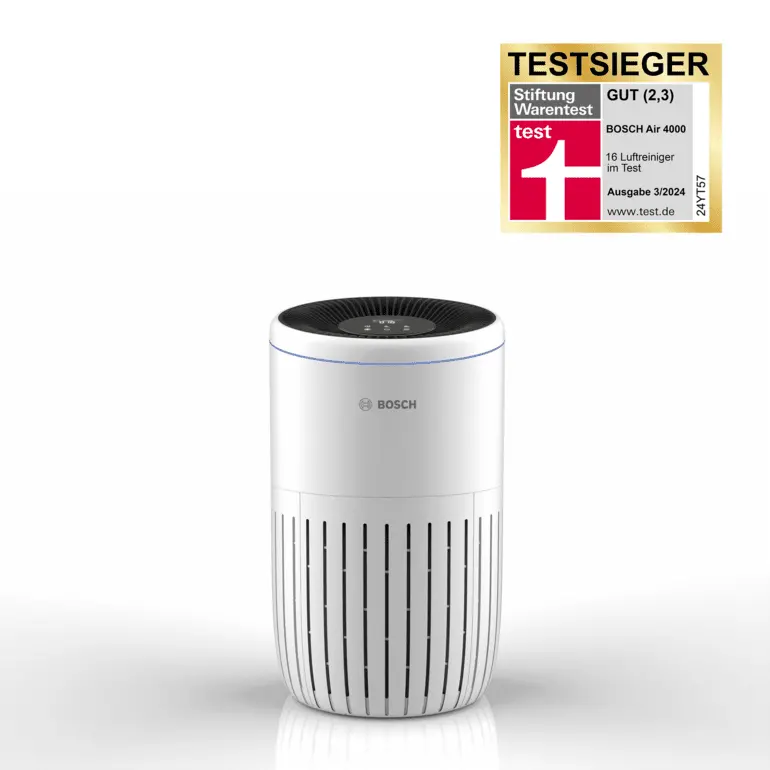
Bosch Air 4000
- 300 m³/h — published by Bosch; not independently certified on the product pageParticle CADR in m³/h, as published by the manufacturer
- €198retail price
Details+
The only purifier in this ranking with a documented Stiftung Warentest result: test winner in 3/2024 with 2.3 (gut) and, according to Bosch, still on top in 5/2026. A plain 300 m³/h machine without an app, sold for under €200.
- Strengths
- Stiftung Warentest test winner 3/2024 with 2.3 (gut), confirmed in 5/2026 according to Bosch
- Konsument 4/2024: gut (64 %), first of six
- Low draw of 2–26 W and 25 dB(A) in sleep mode
- Filter layer stated as HEPA 13, not just 'HEPA'
- 4.7 stars from 720 Amazon.de ratings (via testberichte.de); €197.55 at otto.de
- Weaknesses
- 62.5 m² claim assumes two air changes per hour; about 25 m² at five
- Filter interval and filter price not stated on the product page
- No app or remote control on this version
- Test grades seen second-hand only; the reports are behind a paywall
8.4 / 10good
-
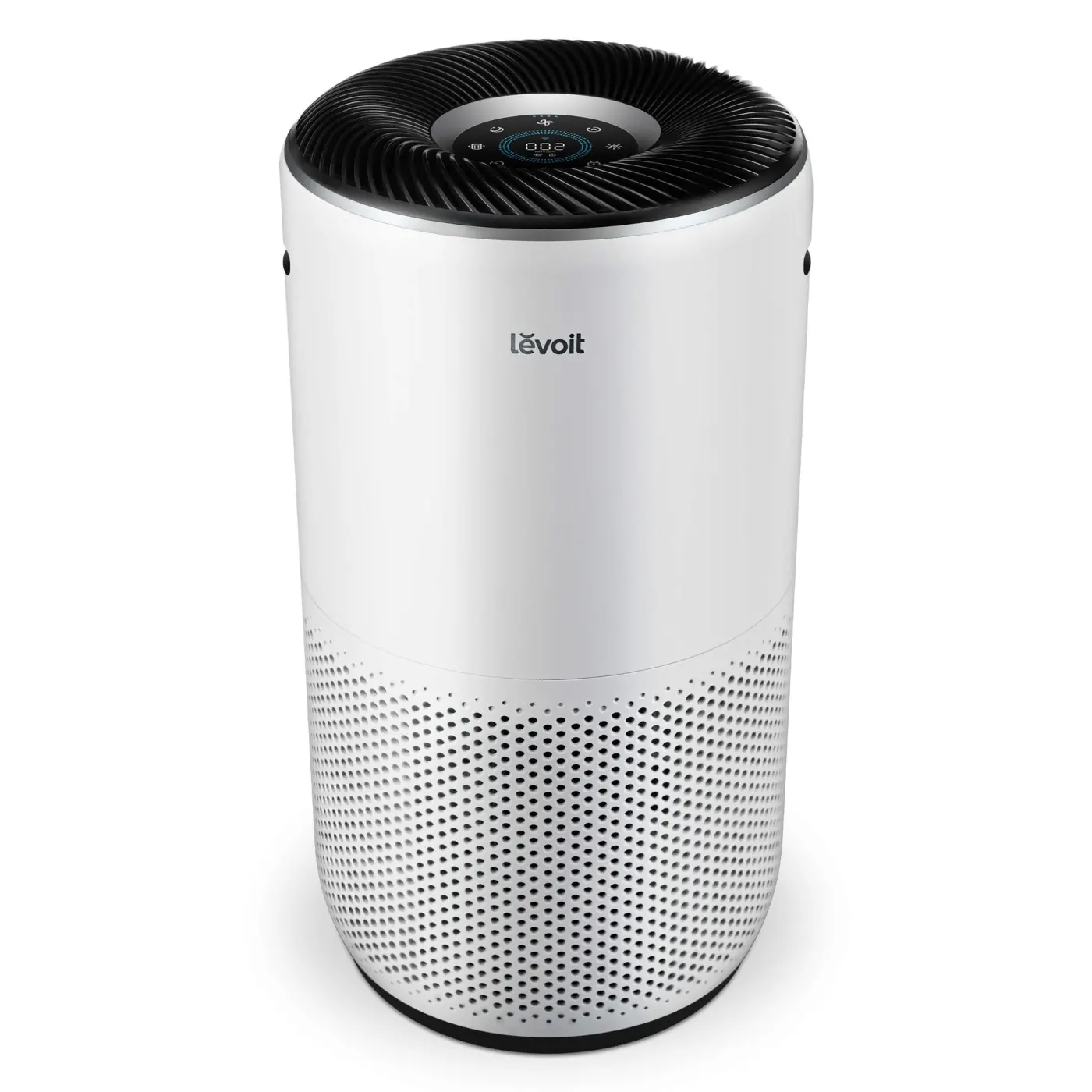
Levoit Core 400S
- 400 m³/h — published by Levoit; no certification mark on the EU pageParticle CADR in m³/h, as published by the manufacturer
- €220retail price
Details+
A 400 m³/h cylinder for mid-size living rooms and the best-evidenced Levoit: HouseFresh measured the European version itself. Levoit's own noise and wattage figures look optimistic next to those measurements.
- Strengths
- 400 m³/h for €219.99: about €0.55 per m³/h
- European version measured by HouseFresh: test room cleared of PM1 in 30 minutes
- 24 dB in sleep mode according to Levoit
- Stated as 100 % ozone-free
- Filter change only about once every 12 months
- Weaknesses
- No EN 1822 filter class, only 'HEPA' and 99.97 % at 0.3 µm
- HouseFresh measured 60.3 dBA and 39.6 W at top speed on the US version, against Levoit's 48 dB and 24 W
- 83 m² claim assumes two air changes per hour; about 33 m² at five
- Dimensions and filter price not on the German product page
7.8 / 10fair
-
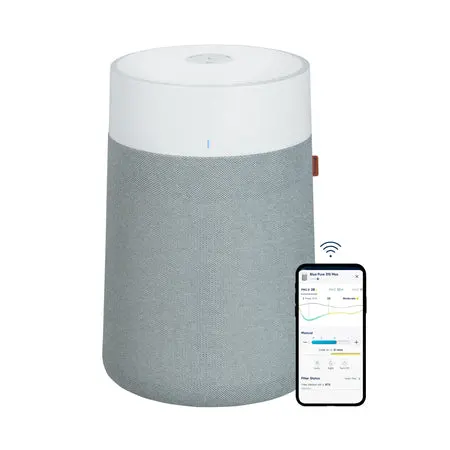
Blueair Blue Pure 311i Max (3350i)
- 283 cfm smoke (about 481 m³/h) — published by Blueair in cfm onlyParticle CADR in m³/h, as published by the manufacturer
- €249retail price
Details+
Three separate CADR values, a sensible 36 m² room recommendation and the best owner ratings among the larger machines. The filter relies partly on electrical charging, and we found no independent test of this exact model.
- Strengths
- About 481 m³/h (283 cfm smoke) for €249: roughly €0.52 per m³/h
- CADR published separately for smoke, dust and pollen
- Realistic 36 m² recommendation, about 5.6 air changes per hour
- 32 W maximum and only 3.5 kg
- 4.7/5 from 218 reviews on blueair.co, 94 % recommend
- Weaknesses
- CADR given only in cfm on the European page
- No EN 1822 class; relies on electrical charging plus mechanical filter
- No ozone statement on the page we opened
- No independent test of this model found; filter price not shown
7.7 / 10fair
-
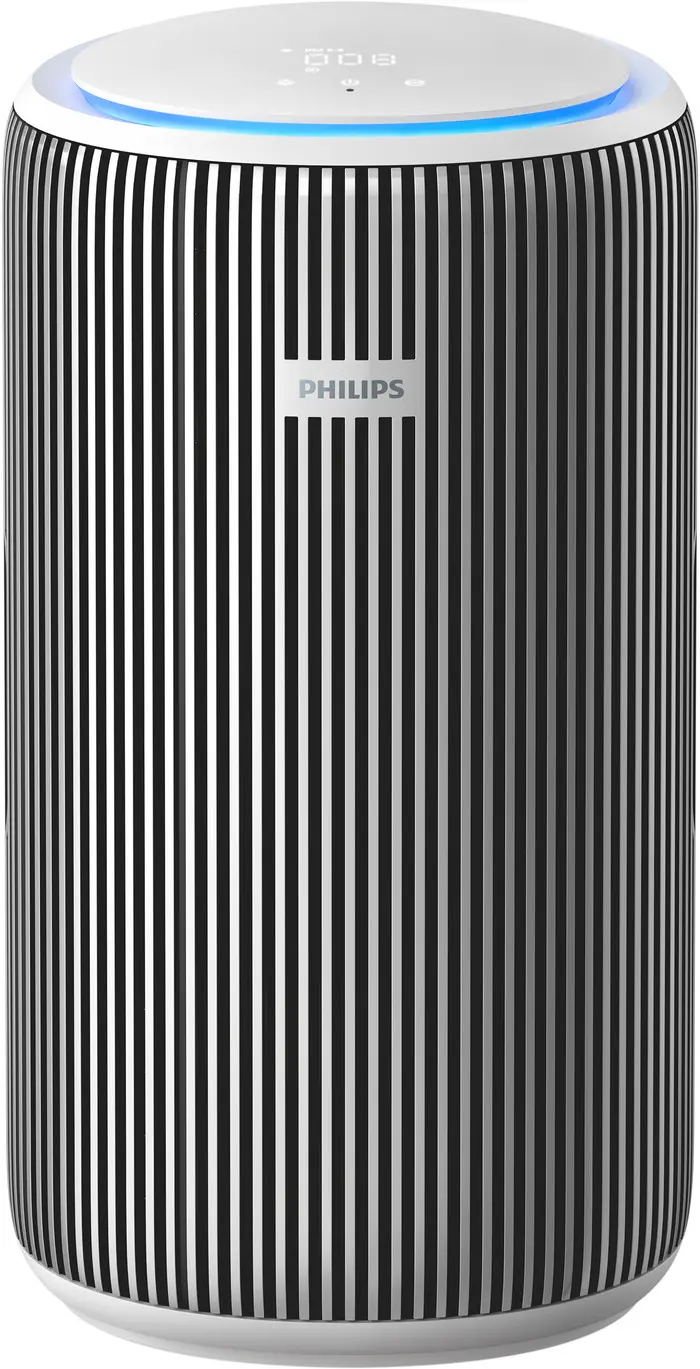
Philips PureProtect 3200 Series AC3220/10
- 520 m³/h — published by Philips; ECARF-certified, test standard not namedParticle CADR in m³/h, as published by the manufacturer
- €249retail price
Details+
The highest published CADR in the ranking, 520 m³/h for €249, in a 6.2 kg tower with ECARF allergy certification. The 135 m² room claim is the most stretched figure of all ten.
- Strengths
- 520 m³/h, the highest published CADR of the ten
- €249 at Philips NL (list €319.99): about €0.48 per m³/h
- 15–47.5 dB(A) and 36 W maximum, under 2 W standby
- ECARF-certified as allergy-friendly
- One combined filter (FY3200), rated for 1 year
- Weaknesses
- 135 m² claim equals about 1.6 air changes per hour; about 43 m² at five
- No EN 1822 class; '99.97 % at 0.003 µm' is not a class statement
- No independent comparative test found
- No owner rating and no filter price visible on the pages we opened
7.7 / 10fair
-
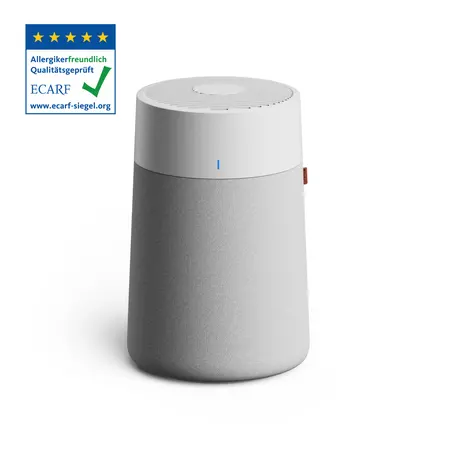
Blueair Blue Pure 511i Max
- 153 cfm smoke (about 260 m³/h) — published by Blueair in cfm onlyParticle CADR in m³/h, as published by the manufacturer
- €149retail price
Details+
A 1.9 kg bedroom purifier that draws 17 W and still publishes about 260 m³/h for smoke. Blueair recommends it for 18 m², which is an honest figure.
- Strengths
- About 260 m³/h (153 cfm smoke) from a 1.9 kg, 17 W unit
- Honest 18 m² recommendation, about six air changes per hour
- CADR published for smoke, dust and pollen
- 19 dB at the lowest speed according to Blueair
- 4.6/5 from 172 reviews, 90 % recommend
- Weaknesses
- CADR in cfm only; top-speed noise given as both 42 and 48 dB
- Electrical charging, no EN 1822 class, no ozone statement on the page
- No independent test found
- Filter price not shown
7.5 / 10fair
-
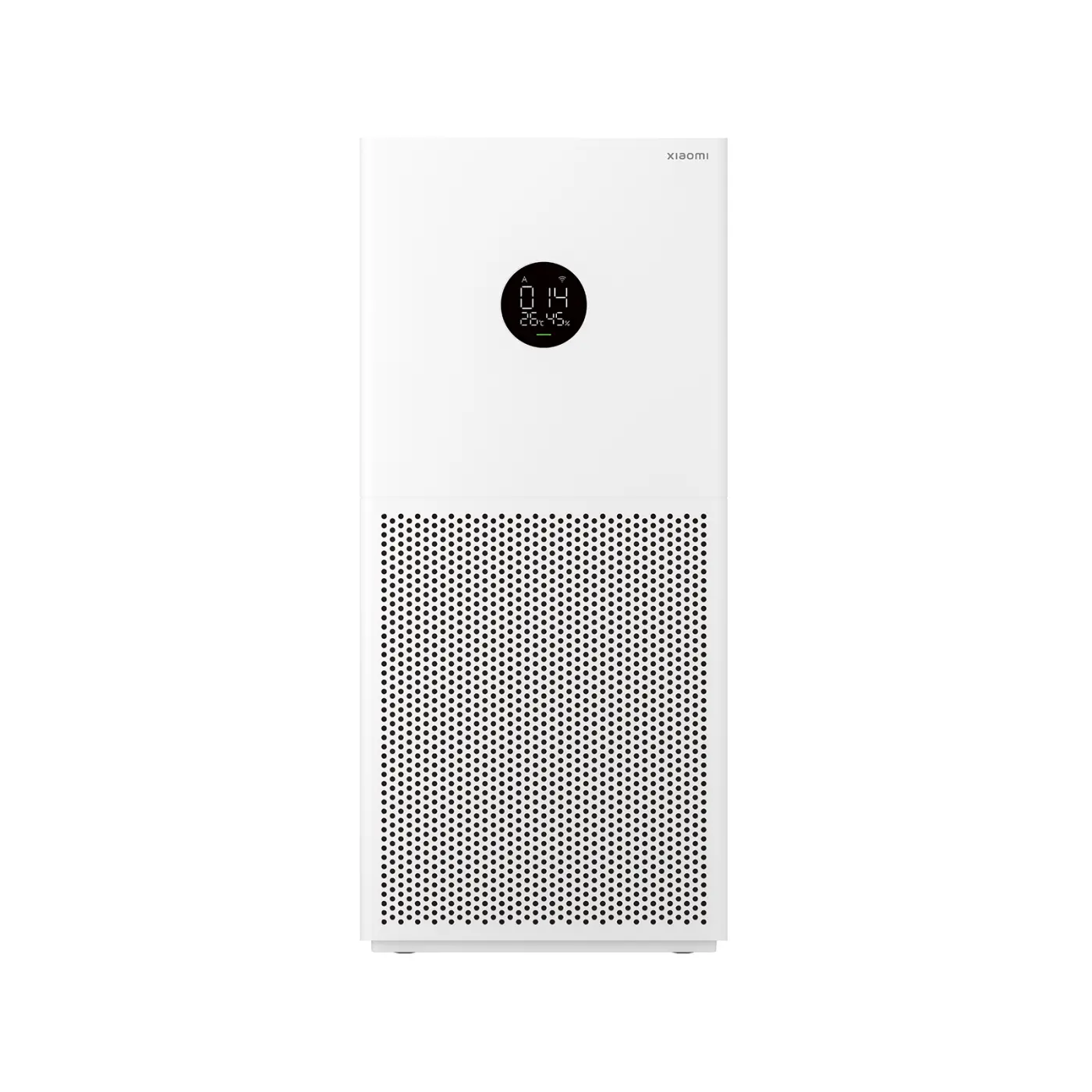
Xiaomi Smart Air Purifier 4 Lite
- 360 m³/h — published by Xiaomi; TÜV Rheinland Allergy Care certificateParticle CADR in m³/h, as published by the manufacturer
- €121retail price
Details+
The cheapest clean air here: 360 m³/h from about €121. Stiftung Warentest tested it in 2024 and gave 2.8, a middling result, and Xiaomi does not publish the noise at full speed.
- Strengths
- 360 m³/h from €120.80: about €0.34 per m³/h, the lowest here
- Tested by Stiftung Warentest in 2024: 2.8 (second-hand source)
- TÜV Rheinland Allergy Care certificate
- 33 W maximum; 0.8 kWh per 24 hours
- Realistic lower room figure of 25 m², about six air changes per hour
- Weaknesses
- Noise published for night mode only (33.4 dB(A)); full-speed figure missing
- Electrostatic charging, no EN 1822 class, no ozone statement on the page
- Filter life only 6–12 months
- Price is the lowest shop offer on geizhals.de, not Xiaomi's own store price
7.3 / 10fair
-
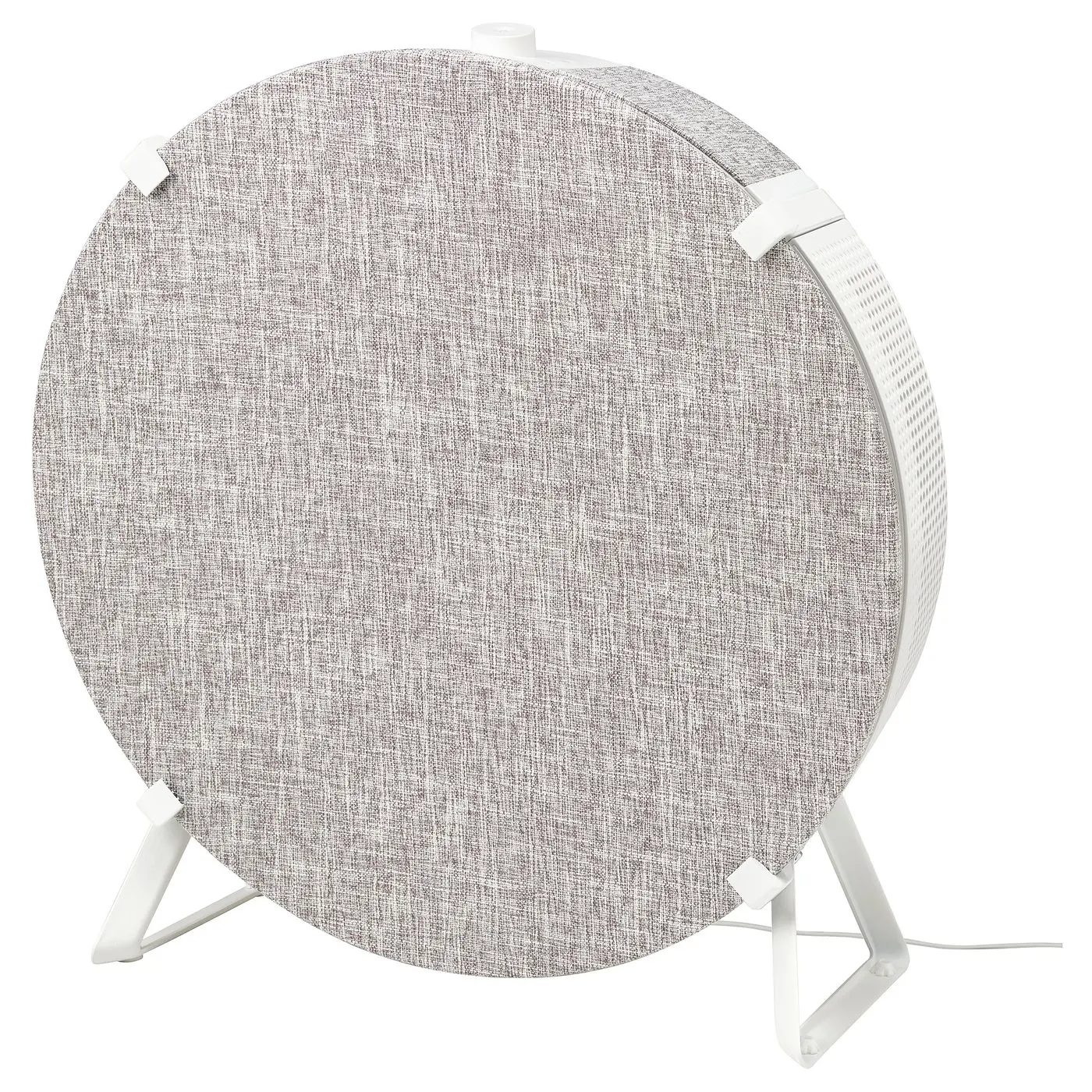
IKEA STARKVIND
- 55–270 m³/h (particle filter only) — published by IKEA for the lowest and highest speedParticle CADR in m³/h, as published by the manufacturer
- €119retail price
Details+
The most honest data sheet under €150: IKEA states CADR, noise and wattage at both ends of the fan range, calls the filter EPA 12 and recommends just 20 m².
- Strengths
- CADR, noise and power published for lowest and highest speed
- 270 m³/h for €119: about €0.44 per m³/h
- Honest 20 m² recommendation, about 5.6 air changes per hour
- Filter class stated plainly: EPA 12
- Optional gas filter, with its effect on CADR disclosed (240 m³/h)
- Weaknesses
- EPA 12, not a HEPA-class (H13) filter
- Filter change recommended about every 6 months
- 53 dB at top speed
- No independent test found
7.3 / 10fair
-
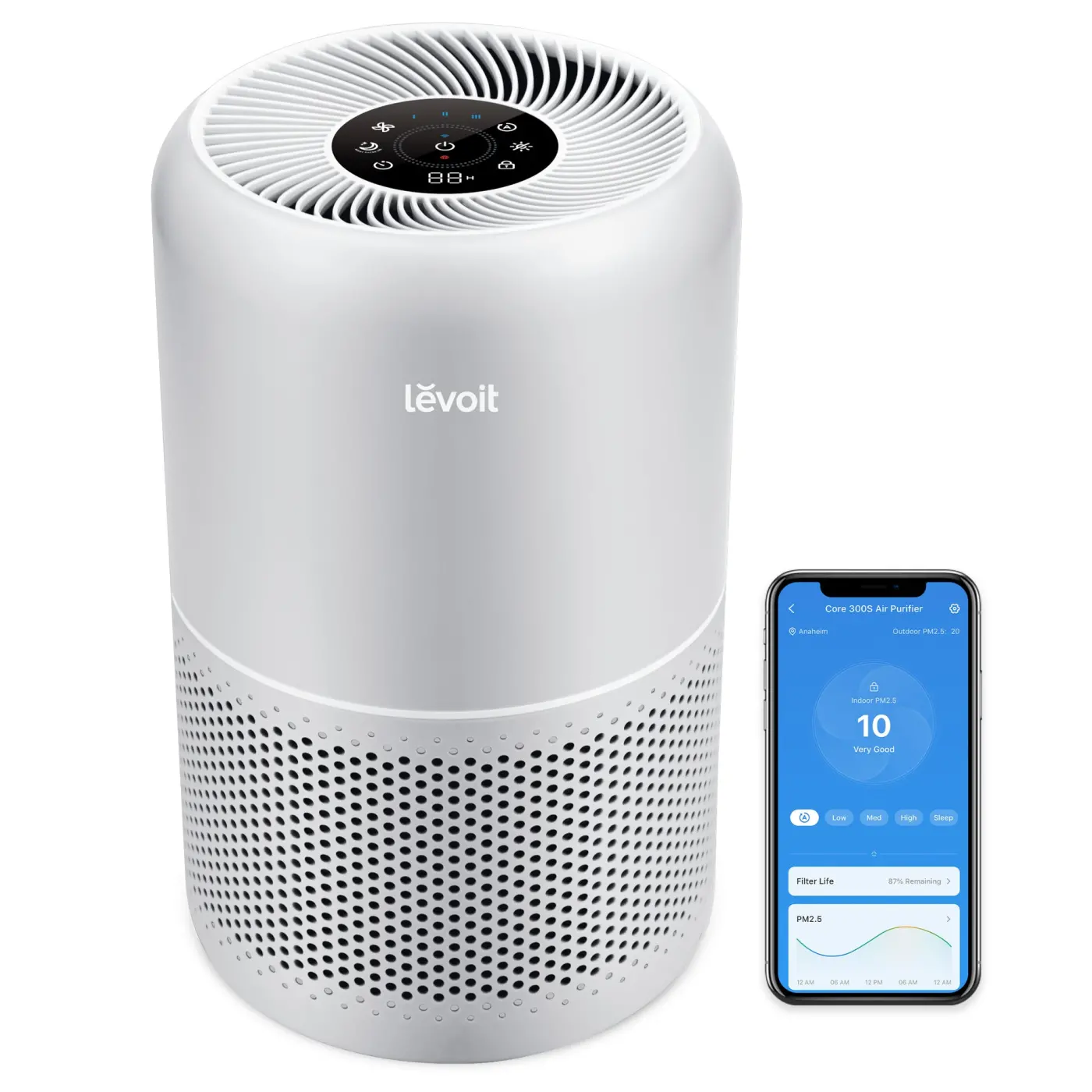
Levoit Core 300S Pro
- 240 m³/h (141 cfm) — published by Levoit; no certification mark on the EU pageParticle CADR in m³/h, as published by the manufacturer
- €150retail price
Details+
A compact 2.72 kg cylinder with a laser particle sensor and app. 240 m³/h is enough for about 20 m², not the 50 m² on the product page, and rivals now offer more air for the same €150.
- Strengths
- Compact and light: 22 × 22 × 36 cm, 2.72 kg
- 23 W and 22 dB in sleep mode according to Levoit
- Laser particle sensor and VeSync app with voice control
- Stated as 100 % ozone-free
- Sister model Core 300S measured by HouseFresh (45 minutes, PM1)
- Weaknesses
- 50 m² claim assumes two air changes per hour; about 20 m² at five
- Maximum noise not published; HouseFresh measured 54.5 dB on the Core 300S
- No EN 1822 class, no filter interval, no filter price on the page
- About €0.62 per m³/h: dearer per unit of clean air than the 400S
7.2 / 10fair
-
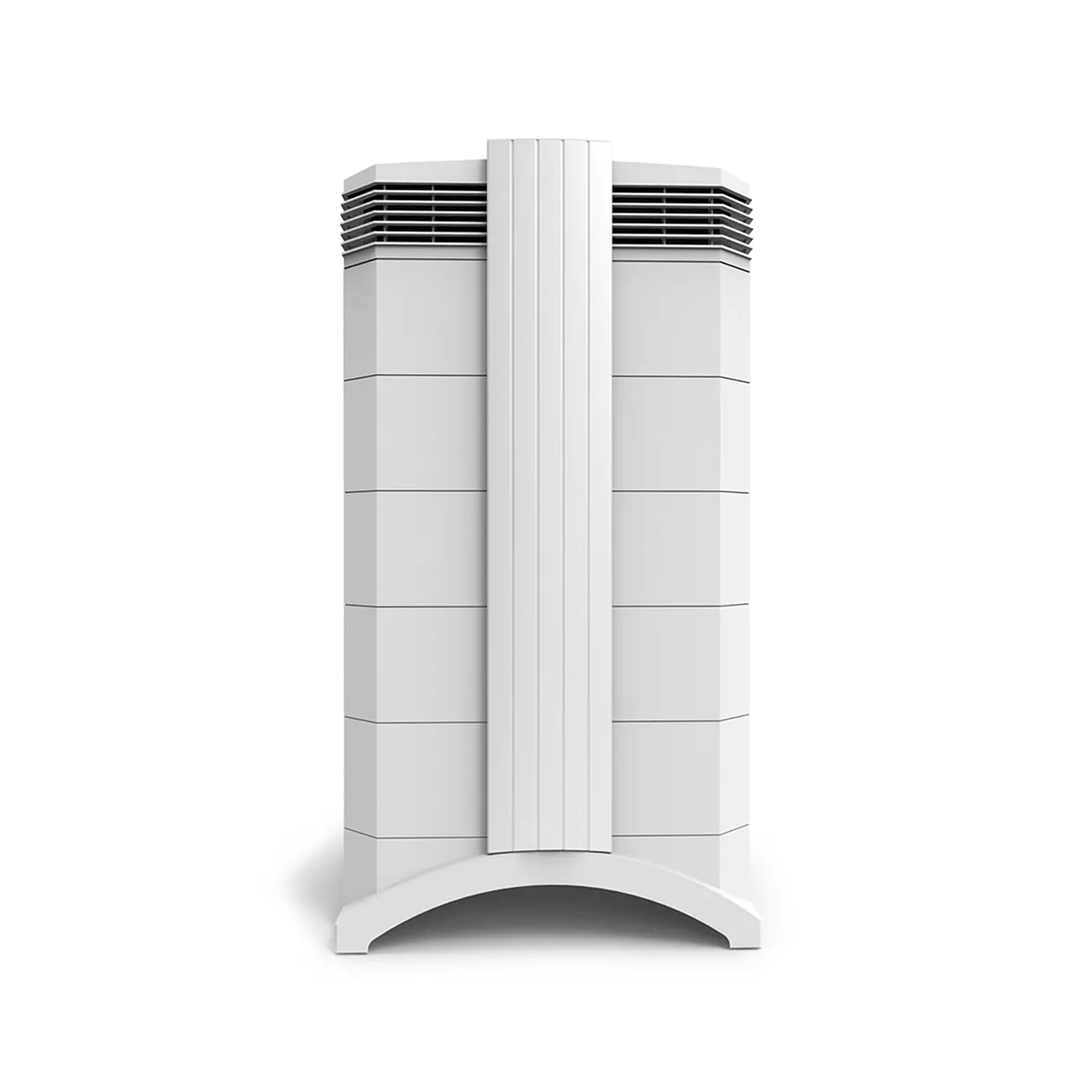
IQAir HealthPro 250
- 440 m³/h air delivery at speed 6 — published by IQAir for all six speeds; not a CADRParticle CADR in m³/h, as published by the manufacturer
- €1,399retail price
Details+
The best-documented purifier of the ten: airflow, noise and power for each of six speeds, declared filter classes and a factory test of every unit. At €1,399 it delivers less air than a €249 Philips.
- Strengths
- Airflow, noise and power published for all six speeds
- Filter classes declared: F8 pre-filter, HyperHEPA H12/13, separate gas cartridge
- Every unit individually factory-tested, according to IQAir
- HyperHEPA filter life of 36–48 months
- Measured first-hand by HouseFresh: PM1 CADR 213 cfm (about 362 m³/h)
- Weaknesses
- €1,399: about €3.18 per m³/h of airflow, over six times the Philips
- 67 dB(A) and 135 W at top speed; 16 kg
- Only 86 cfm (about 146 m³/h) below 45 dBA in HouseFresh's test
- 104 m² claim equals about 1.8 air changes per hour
- No CADR figure published, only air delivery
6.9 / 10acceptable
-
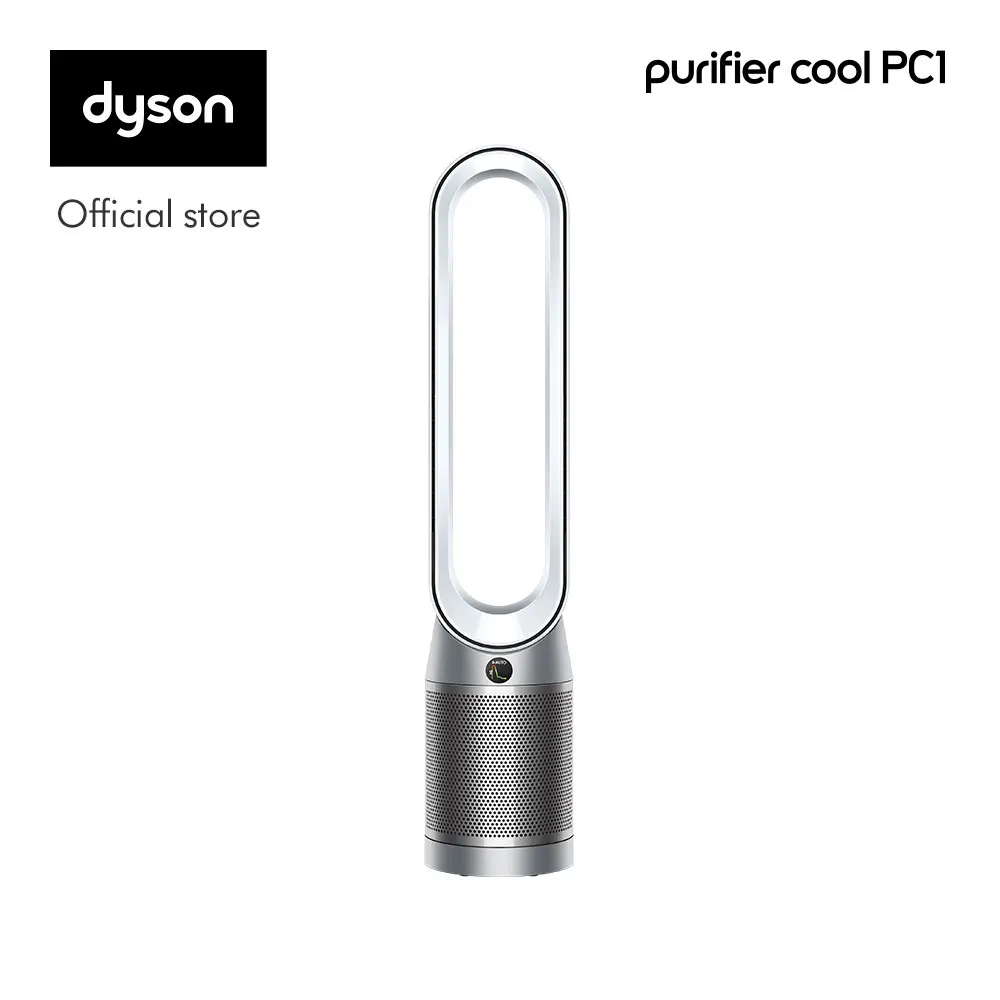
Dyson Purifier Cool PC1
- Not published — Dyson states airflow (over 290 l/s) and a tested room volume of 81 m³ insteadParticle CADR in m³/h, as published by the manufacturer
- €499retail price
Details+
A tower fan with an H13 filter and a fully sealed housing, according to Dyson, but no CADR and no wattage on the product page. At €499 you are paying for the fan and the design.
- Strengths
- Filter stated as HEPA H13, tested to ISO 29463
- Whole machine described by Dyson as fully sealed
- Doubles as a tower fan
- 4.72 kg and a 22 cm footprint
- Filter rated for 1 year
- Weaknesses
- No CADR published
- Power consumption not on the product page
- 38 dBA even at the lowest setting, 56 dBA at maximum
- €499, and 3.9/5 from 890 reviews on dyson.de
5.7 / 10poor
Scores comparable only within this categorySignificance threshold: ±0.15 pt
8.4 Our verdict
The Bosch Air 4000 tops the list not because it is the most powerful, 300 m³/h is mid-table, but because it is the only purifier here with a documented Stiftung Warentest result, the best owner ratings we saw and a price under €200. For the most clean air per euro, the Philips PureProtect 3200 (520 m³/h, ECARF-certified, €249) and the Blueair Blue Pure 311i Max (about 481 m³/h, €249) are the pick for living rooms, and the Levoit Core 400S is the best-evidenced mid-size machine thanks to HouseFresh's measurements of the European version. On a tight budget, the Xiaomi Smart Air Purifier 4 Lite and the IKEA STARKVIND deliver 360 and 270 m³/h for around €120; IKEA is also the most honest about room size. The IQAir HealthPro 250 has the best documentation of any model, per-speed airflow, noise and power, but at €1,399 its 440 m³/h costs six times as much per cubic metre. The Dyson Purifier Cool PC1 publishes no CADR at all, and that is the main reason it sits last.
The arithmetic
CADR versus room-size claims: the same machine, three different rooms
CADR is defined as the volume of air per unit of time from which all particles of a given size range have been removed. Under the American AHAM method it is measured in a 28.5 m³ chamber, separately for smoke (0.09–1.0 µm), dust (0.5–3 µm) and pollen (5–11 µm), with a new filter. It says nothing about gases.
A room size follows from CADR only once you choose how often the air should be cleaned. AHAM's rule of thumb, smoke CADR in cfm of at least two-thirds of the floor area in square feet, works out at five air changes per hour for a 2.4 m ceiling. Many European product pages instead assume two changes per hour, or even fewer, which more than doubles the advertised room. Divide the CADR in m³/h by 12 and you get the floor area in m² at five changes per hour.
| Model | Published CADR | Maker's room claim | Air changes/h implied | Room at 5 changes/h |
|---|---|---|---|---|
| Philips PureProtect 3200 | 520 m³/h | 135 m² | 1.6 | 43 m² |
| Blueair Blue Pure 311i Max | 283 cfm (481 m³/h) | 36 m² | 5.6 | 40 m² |
| Levoit Core 400S | 400 m³/h | 83 m² | 2.0 | 33 m² |
| Xiaomi 4 Lite | 360 m³/h | 25–43 m² | 3.5–6.0 | 30 m² |
| Bosch Air 4000 | 300 m³/h | 62.5 m² | 2.0 | 25 m² |
| IKEA STARKVIND | 270 m³/h | 20 m² | 5.6 | 23 m² |
| Blueair Blue Pure 511i Max | 153 cfm (260 m³/h) | 18 m² | 6.0 | 22 m² |
| Levoit Core 300S Pro | 240 m³/h | 50 m² | 2.0 | 20 m² |
The implied air changes and the last column are our own calculation for a 2.4 m ceiling. IQAir publishes air delivery (440 m³/h at top speed), not a CADR, and Dyson publishes neither, only a tested volume of 81 m³.
Filter classes
H13, EPA 12 and plain 'HEPA': what the filter label does and does not say
In Europe, filter classes are defined by EN 1822 (and ISO 29463). The class refers to retention at the most penetrating particle size, roughly 0.2 µm, which is the hardest size to catch: E12 retains at least 99.5 %, H13 at least 99.95 % and H14 at least 99.995 %. The American definition, 99.97 % at 0.3 µm, is a different test point, so '99.97 %' on a box does not tell you an EN 1822 class. Terms such as 'HEPA-type' or 'HEPA-like' satisfy no standard at all.
| Model | What the maker states |
|---|---|
| Bosch Air 4000 | HEPA 13 filter layer |
| Dyson Purifier Cool PC1 | HEPA H13, tested to ISO 29463; machine described as fully sealed |
| IQAir HealthPro 250 | HyperHEPA H12/13, pre-filter F8; each unit individually factory-tested |
| IKEA STARKVIND | EPA 12 particle filter |
| Philips, Levoit, Blueair, Xiaomi | 'HEPA' or a percentage (99.97 %) with no EN 1822 class |
Two things follow. First, IKEA's EPA 12 is not a weakness to hide: it is an honest class, and a lower-class filter passes more air for the same fan, which is one reason CADR, not the filter class, is the figure to compare. Second, a filter class describes the filter medium, not the appliance. If air leaks around the cartridge, the unit performs below its filter. Only Dyson makes an explicit whole-machine sealing claim among these ten, and only IQAir says it tests each finished unit; neither claim was verified by us.
Blueair and Xiaomi (4 Lite) state that they combine electrostatic charging with mechanical filtration. That lets a more open filter reach a high percentage, but it is a different technique from a classified mechanical HEPA filter.
Noise and speed
CADR is measured at full speed, and you will not sleep next to full speed
The headline CADR is a top-speed figure. The headline noise figure, by contrast, is almost always the lowest speed or night mode: 15 dB(A) for the Philips, 22 dB for the Levoit Core 300S Pro, 25 dB(A) for the Bosch. The two numbers on the box therefore describe two different machines. What a bedroom buyer needs is the clean air delivered at a noise level they can live with, and only two makers in this ranking publish enough to work it out.
IKEA gives both ends: 55 m³/h at 24 dB and 270 m³/h at 53 dB. IQAir lists all six speeds, from 50 m³/h at 32 dB(A) to 440 m³/h at 67 dB(A). Everyone else publishes a range and leaves the buyer to guess what lies between.
HouseFresh, which measures purifiers itself, fills part of the gap by reporting a PM1 CADR at top speed and again at the fastest setting below 45 dBA:
| Model (HouseFresh, first-hand) | Top speed | Below 45 dBA |
|---|---|---|
| Levoit Core 400S (US version) | 249 cfm (about 423 m³/h) at 60.3 dBA | 134 cfm (about 228 m³/h) |
| IQAir HealthPro Plus | 213 cfm (about 362 m³/h) at 61.2 dB | 86 cfm (about 146 m³/h) |
In other words, at a tolerable noise level these machines deliver roughly half, or less, of their headline output. The practical consequence: buy more CADR than the arithmetic says you need and run the purifier on a middle speed. A 400–500 m³/h unit at half speed is usually quieter than a 240 m³/h unit at full speed. Stiftung Warentest also tests at the maximum fan setting, so its cleaning grades likewise describe the loudest mode.
Running costs
Filters, electricity and the ageing problem nobody prints on the box
A purifier is a subscription to filters. In its April 2026 test of 16 purifiers, Stiftung Warentest puts the yearly running cost at roughly €65 to €175, electricity plus replacement filters, with a filter set costing €40 to €85. HouseFresh's US calculation for the IQAir HealthPro Plus is far higher: about $200 a year for filters and $421 including electricity.
Electricity is the smaller part for most models here. The published maximum draw ranges from 17 W (Blueair 511i Max) through 24–36 W for the mid-size machines to 135 W for the IQAir at top speed. None of the ten manufacturer pages we opened shows an EU energy-label class for the purifier, so there is no A-to-G shortcut: you have to read the wattage.
| Model | Stated filter interval | Max. power |
|---|---|---|
| IKEA STARKVIND | about every 6 months | 33 W |
| Xiaomi 4 Lite | 6–12 months | 33 W |
| Philips, Dyson, Levoit Core 400S | about 12 months | 36 W / not published / 24 W |
| Blueair (both) | up to 1 year, usage-tracked | 32 W / 17 W |
| IQAir HealthPro 250 | pre-filter 12–18, gas 15–21, HyperHEPA 36–48 months | 135 W |
| Bosch, Levoit Core 300S Pro | not stated on the product page | 26 W / 23 W |
The second cost is hidden: filters lose performance. Stiftung Warentest ages each filter with the smoke of 100 cigarettes and reports that some purifiers which cleaned a 16 m² bedroom effectively when new managed only a fraction of that with the used filter. No manufacturer in this ranking publishes a CADR for an aged filter. Treat the stated interval as a maximum, and shorten it in a smoker's household or on a busy road.
Marketing decoded
Ions, viruses, '0.003 microns' and the air you are actually trying to reach
'Captures particles down to 0.003 µm' / 'down to 0.1 µm'. Very small particles are not the hard ones. Filters are weakest around 0.2 µm, which is why EN 1822 tests there. A percentage quoted at a much smaller size sounds stricter but is easier to pass.
'Removes 99.9 % of viruses'. Philips, Levoit and Xiaomi cite laboratory tests with H1N1 or similar. These are chamber tests of the filter or the unit over a set time; they do not show that a purifier prevents infection in a lived-in room.
Ionisers and charging. Blueair's HEPASilent and Xiaomi's 4 Lite filter charge particles electrically to help the filter catch them. Devices that charge air can generate ozone as a by-product; Levoit advertises its purifiers as '100 % ozone-free', while the Blueair, Xiaomi and IKEA pages we opened carry no ozone statement either way. If this matters to you, ask the seller for the ozone test report.
Allergy seals. ECARF (Philips) and TÜV Rheinland Allergy Care (Xiaomi) are paid certification schemes. They confirm a minimum performance, not a ranking.
'Smart' air-quality displays. Most units show PM2.5 from a small optical sensor. For reference, the World Health Organization's 2021 guideline levels for PM2.5 are 5 µg/m³ as an annual mean and 15 µg/m³ as a 24-hour mean, down from 10 and 25 µg/m³ in 2005. A purifier lowers the indoor level only while it runs, with windows closed, in the room it stands in.
'Tested'. AHAM Verifide means a CADR was measured by an independent laboratory rather than by the maker. None of the ten product pages we opened shows that mark for the EU model, so every CADR in this ranking is, as far as we could see, the manufacturer's own declaration.
Methodology
How this score is built
The score is the mean of four component scores — each carries equal weight and each rests on a named source. The full procedure is described in the methodology.
01Composition and specification
Declared composition and specification: active ingredients and their concentrations, energy classes, standards, technical parameters — and what the manufacturer leaves unsaid.
02Evidence and studies
Verification of the manufacturer's claims against outside sources: laboratory reports, industry testing, safety data sheets, certificates and regulatory decisions.
03Owner feedback
Analysis of verified reviews written after extended use, together with recurring fault reports for the model or series.
04Cost and value
Price set against what the product actually delivers, plus costs incurred later — consumables, energy, servicing, subscriptions — over the lifespan typical for the category.
FAQ
Frequently asked questions
How much CADR do I need for my room?+
Multiply the floor area in m² by 12 to get the CADR in m³/h for five air changes per hour with a 2.4 m ceiling. A 15 m² bedroom needs about 180 m³/h, a 30 m² living room about 360 m³/h. Because you will not run the unit at full speed, buying one size up is sensible.
Why do room sizes on the box differ so much for similar machines?+
Because each maker assumes a different number of air changes per hour. Bosch and Levoit calculate with about two changes per hour, Philips with about 1.6, IKEA and Blueair with five to six. The CADR is comparable; the square metres are not.
Is an H13 filter always better than E12 or plain 'HEPA'?+
Not for room cleaning. A room purifier recirculates the same air many times, so airflow matters as much as single-pass efficiency. A higher class slows the air unless the fan works harder. Compare CADR first, then check that a filter class is stated at all.
Do air purifiers have an EU energy label?+
None of the ten manufacturer pages we opened shows an energy-label class for the purifier. Compare the stated wattage instead: most models here draw 17–36 W at full speed, the IQAir up to 135 W.
What did Stiftung Warentest find in 2026?+
The April 2026 report covers 16 purifiers priced roughly €140 to €650, tested at maximum speed in a chamber of about 30 m³ with paraffin-oil droplets, formaldehyde and toluene, and with filters aged by the smoke of 100 cigarettes. Individual grades are behind a paywall; according to Bosch, the Air 4000 kept its 2.3 (gut) and its test-winner position.
Are ionisers dangerous?+
Electrical charging can produce ozone as a by-product, and how much depends on the design. We could not verify ozone figures for any model here. Levoit states its purifiers are ozone-free; Blueair and Xiaomi describe electrostatic charging without an ozone statement on the pages we opened.
How often do the filters really need replacing?+
Makers state six to twelve months for combined filters, and up to four years for the IQAir HyperHEPA. Stiftung Warentest found that some filters lose most of their effect after heavy smoke exposure, so heavy use means earlier replacement.
Does a purifier remove gases and odours?+
Only to the extent of its activated-carbon stage, and CADR does not cover gases. The thin carbon layers in combined filters hold little. IKEA sells a separate gas filter, and the IQAir has a dedicated gas cartridge; we found no published gas CADR for any EU model here.
Sources
Documents and standards
- 1. Bosch Home Comfort, Air 4000 product page — https://www.bosch-homecomfort.com/de/de/ocs/wohngebaeude/air-4000-19287220-p/
- 2. Bosch Home Comfort, air purifier range — https://www.bosch-homecomfort.com/de/de/ocs/wohngebaeude/luftreiniger-19287219-c/
- 3. Bosch press release, Air 4000 test winner again at Stiftung Warentest 5/2026 — https://www.bosch-homecomfort.com/de/de/wohngebaeude/unternehmen/presse/bosch-air-4000-2026-erneut-von-der-stiftung-warentest-als-testsieger-ausgezeichnet/
- 4. Bosch press release, Air 4000 test winner at Stiftung Warentest 3/2024 — https://www.bosch-homecomfort.com/de/de/wohngebaeude/unternehmen/presse/bosch-air-4000-triumphiert-als-testsieger/
- 5. otto.de, Bosch Air 4000 (price, rating, data) — https://www.otto.de/p/bosch-luftreiniger-air-4000-filtert-ueber-99-der-schadstoffe-fuer-62-m2-raeume-mit-3-in-1-luftfilter-automatik-und-ruhemodus-C2032635768/
- 6. testberichte.de, Bosch Air 4000 test overview — https://www.testberichte.de/p/bosch-tests/air-4000-testbericht.html
- 7. Philips, PureProtect 3200 Series AC3220/10 (NL) — https://www.home-appliances.philips/nl/nl/p/AC3220_10
- 8. Philips, PureProtect 3200 Series AC3220/10 (GB, specifications) — https://www.home-appliances.philips/gb/en/p/AC3220_10
- 9. Levoit Germany, Core 400S — https://levoit.de/products/levoit-core-400s-luftreiniger
- 10. Levoit Germany, Core 300S Pro — https://levoit.de/products/levoit-core-300s-pro-luftreiniger
- 11. Blueair, Blue Pure 311i (3350i) Max — https://blueair.co/products/blau-pure-311i-3350i-max
- 12. Blueair, Blue Pure 511i Max — https://blueair.co/products/blue-pure-511i-max
- 13. IKEA Germany, STARKVIND air purifier — https://www.ikea.com/de/de/p/starkvind-luftreiniger-weiss-smart-50461942/
- 14. Xiaomi Germany, Smart Air Purifier 4 Lite — https://www.mi.com/de/product/xiaomi-smart-air-purifier-4-lite/
- 15. geizhals.de, Xiaomi Smart Air Purifier 4 Lite (prices, data) — https://geizhals.de/xiaomi-smart-air-purifier-4-lite-luftreiniger-xm200057-a2707783.html
- 16. IQAir EU, HealthPro 250 — https://www.iqair.com/eu/products/air-purifiers/healthpro-plus
- 17. Dyson Germany, Purifier Cool PC1 — https://www.dyson.de/raumklima/luftreiniger/purifier-cool-pc1/weiss
- 18. Stiftung Warentest, Luftreiniger im Test (free text, 23 April 2026) — https://www.test.de/Luftreiniger-im-Test-5579439-0/
- 19. Stiftung Warentest, Luftreiniger im Test, article PDFs 5/2026 and 3/2024 — https://www.test.de/Luftreiniger-im-Test-5579439-5706950/
- 20. raumluft-helden.de, overview of Stiftung Warentest purifier grades (second-hand) — https://raumluft-helden.de/luftreiniger-testsieger-stiftung-warentest/
- 21. HouseFresh, Levoit Core 400S review (own measurements) — https://housefresh.com/levoit-core-400s-review/
- 22. HouseFresh, Levoit Core 300S review (own measurements) — https://housefresh.com/levoit-core-300s-review/
- 23. HouseFresh, IQAir HealthPro Plus review (own measurements) — https://housefresh.com/iqair-healthpro-plus-review/
- 24. WHO, What are the WHO Air quality guidelines? (22 September 2021) — https://www.who.int/news-room/feature-stories/detail/what-are-the-who-air-quality-guidelines
- 25. Wikipedia, HEPA (EN 1822 / ISO 29463 classes) and Clean air delivery rate — https://en.wikipedia.org/wiki/HEPA
More
Other rankings
in
Home & garden.
Each category has its own protocol and its own key parameter.