Sports & outdoorAnalysis 122
Best Running Shoes for Beginners
Methodology note
What this ranking is based on. Weight, stack height, drop, midsole softness, outsole thickness and Dremel wear come from RunRepeat's cut-in-half laboratory programme and RTINGS. Prices are European RRPs from brand sites plus street prices from Geizhals, checked September 2026. Injury-evidence claims are cited to the specific trial or systematic review, with sample sizes and confidence intervals given where published.
An important measurement note. RunRepeat now reports midsole softness in Asker C (AC), where lower is softer, not in Shore A. Their current lab average is 35.6 AC. The two scales are not interchangeable and we have not converted between them.
What we did not test. We ran in none of these shoes and conducted no user survey. The owner-feedback score reflects published review consensus and lab scores.
Known gaps. The Decathlon Kiprun KS500 2 has never been independently lab-tested; its weight and drop are Decathlon's own figures and its stack heights are unpublished. Two motion-control studies that partly complicate the pronation picture (Malisoux 2016 and its 2021 secondary analysis) could not be retrieved in full, and we describe their conclusions without quoting hazard ratios. Several street prices come from search-result listings where the price-comparison pages themselves returned errors.
 8.9BPR score
Key parameter
Lab-measured weight
Weight in grams for a men's sample shoe, measured by an independent lab (RunRepeat or RTINGS) rather than quoted by the brand. Where only a manufacturer figure exists, this is stated. Lab weights in this ranking differ from brand claims by up to 23 grams, and lab-measured drop differs from claimed drop by up to 5.3 mm — a reminder that spec sheets are approximate.
-
Top score
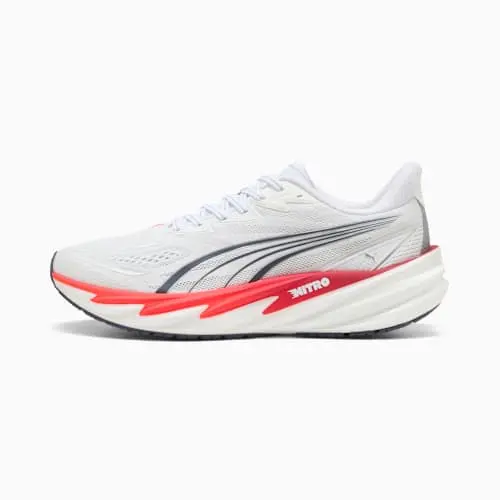
Puma Puma Velocity Nitro 5
- 242 g (RTINGS lab)Lab-measured weight
- €130retail price
Details+
The lightest shoe here at 242 g, on nitrogen-injected TPU with PUMAGRIP — widely regarded as the best-gripping outsole compound available. Runs narrow through the midfoot.
- Strengths
- 242 g — the lightest shoe in this ranking
- PUMAGRIP, widely considered the best-gripping outsole compound available
- Stability 8.4/10 from geometry rather than a medial post
- Nitrogen-injected TPU midsole at €129.95
- Doctors of Running graded it A-/A; predecessor scored 93/100 at RunRepeat
- Predecessor Nitro 4 available from around €66
- Weaknesses
- Runs narrow through midfoot and forefoot — bad for wide feet
- Regular width only on Puma's European site
- Measured drop 9.8 mm against 8 mm advertised
- Puma's 800 km lifespan claim is uncited marketing
- No RunRepeat lab data for this specific version yet
8.9 / 10good
-
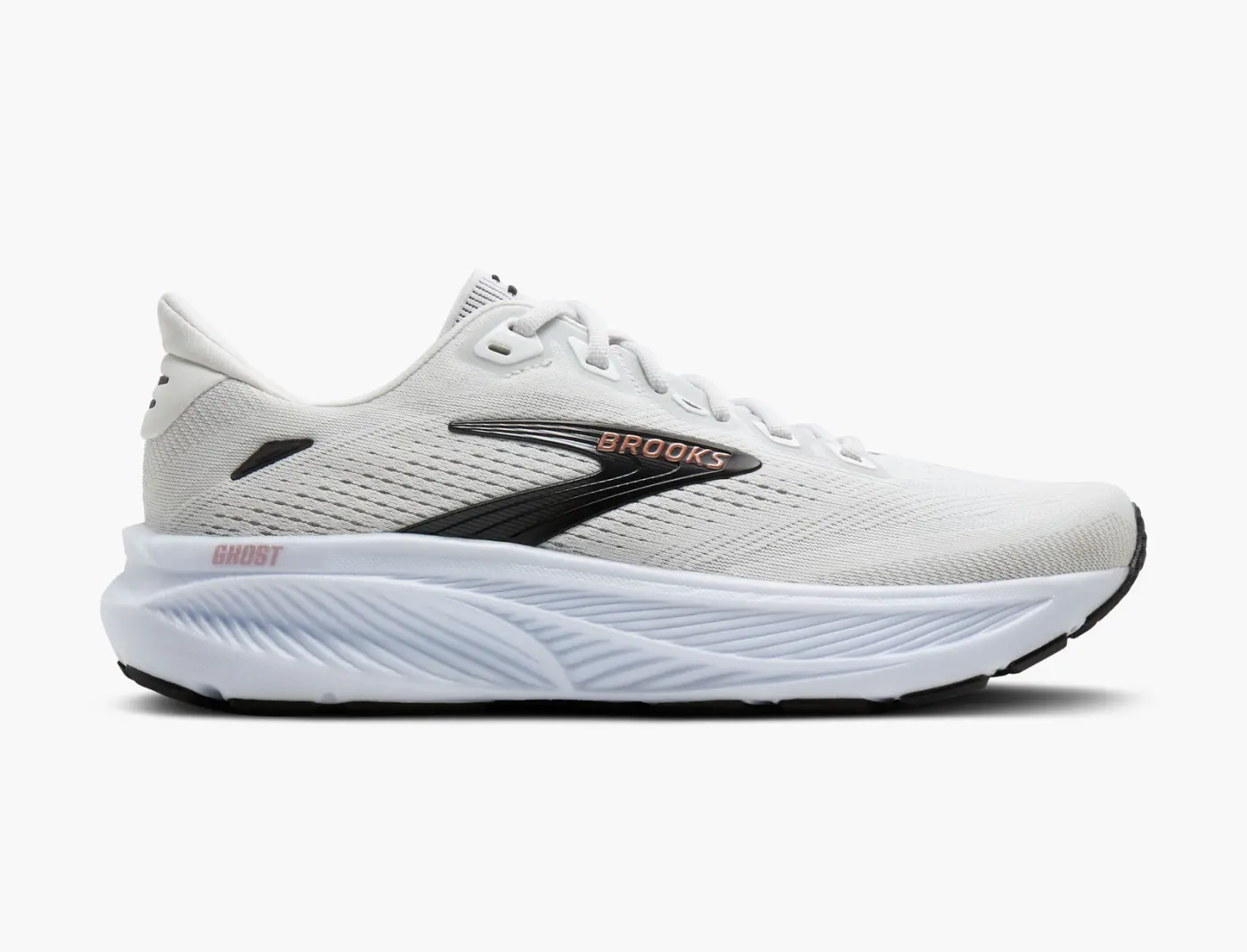
Brooks Brooks Ghost 18
- 289 g — matching the brand claim exactlyLab-measured weight
- €135retail price
Details+
The most outsole rubber here at 3.5 mm with excellent durability, a rigid heel counter that acts as de facto support, and the only 90-day worn-shoe return policy in this ranking.
- Strengths
- Brooks EMEA accepts worn shoes back within 90 days, free returns, full refund, bought direct
- 3.5 mm outsole rubber with near-full coverage — the most here
- 0.8 mm Dremel wear, excellent durability
- Lab weight matched the brand claim exactly at 289 g
- Heel counter stiffness 5/5 gives de facto rearfoot support
- RunRepeat 86/100 Great
- Weaknesses
- Breathability 70/100, second worst here
- 70.6 mm toebox — the narrowest of the eight
- Wide fittings listed but often not stocked in Europe
- 289 g, joint heaviest in this ranking
- Firmest midsole at 40.5 AC, which not everyone prefers
8.8 / 10good
-
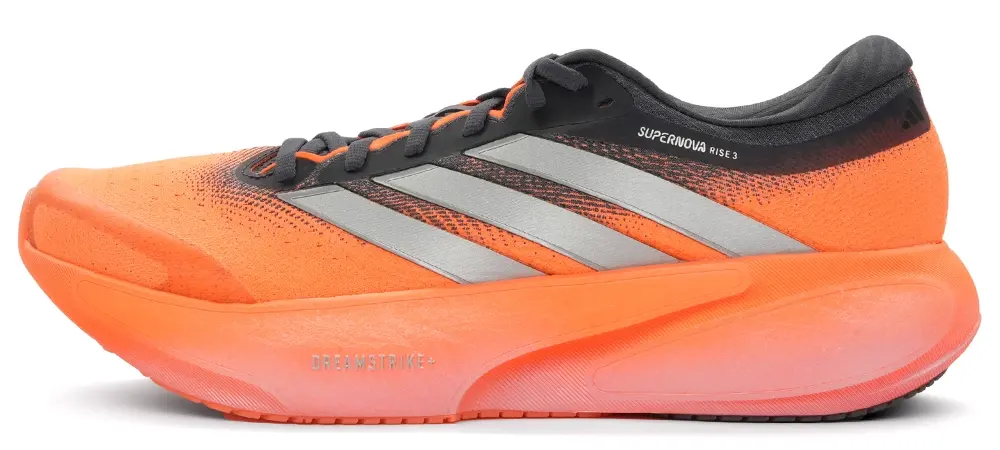
adidas adidas Supernova Rise 3
- 264 g (RunRepeat lab)Lab-measured weight
- €85retail price
Details+
The softest midsole here at 28.6 AC on PEBA foam, the highest energy return, and the most honest spec sheet in the ranking — measured drop 7.8 mm against 8 mm claimed.
- Strengths
- Softest midsole here at 28.6 AC on PEBA-based Dreamstrike+ foam
- Highest energy return measured: 58.8% heel, 62.8% forefoot
- Measured drop 7.8 mm against 8 mm claimed — the most honest spec sheet here
- Wet-concrete traction 0.94, very high
- 0.8 mm Dremel wear despite only 2.1 mm outsole thickness
- 74.5 mm toebox, the roomiest in this ranking; normal and wide fittings
- RunRepeat 87/100 Great
- Weaknesses
- Breathability only 3/5, average
- Whether it retains the Rise 2's Support Rods is unconfirmed
- €150 RRP, though street price is €84.99
- PEBA foams generally compress faster than EVA over high mileage
- Thin 2.1 mm outsole, though it tested durable
8.7 / 10good
-
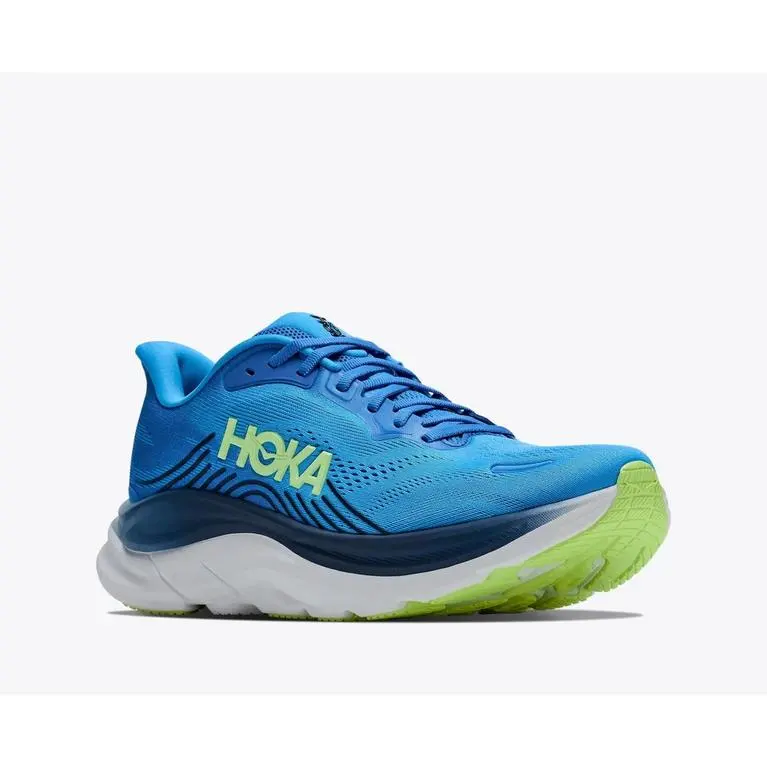
Hoka Hoka Clifton 11
- 266 g (RunRepeat lab)Lab-measured weight
- €118retail price
Details+
The best breathability here at 93/100 and the only shoe with narrow through extra-wide fittings genuinely stocked in Europe. The midsole is conventional EVA with the lowest measured energy return of the group.
- Strengths
- Breathability 93/100 — the best in this ranking
- Normal, wide and extra-wide fittings genuinely stocked in Europe
- Soft midsole at 31.1 AC
- 0.9 mm Dremel wear — excellent outsole durability
- MetaRocker geometry and Active Foot Frame aid an easy rolling gait
- Street price around €118 against €160 RRP
- Weaknesses
- Conventional CMEVA foam with the lowest energy return here (46.8% heel)
- Forefoot traction 0.52, the lowest measured in this group
- Measured drop 11.7 mm against 8 mm official
- 266 g against a 258 g brand claim
- Heel counter stiffness only 3/5
8.4 / 10good
-
Best value
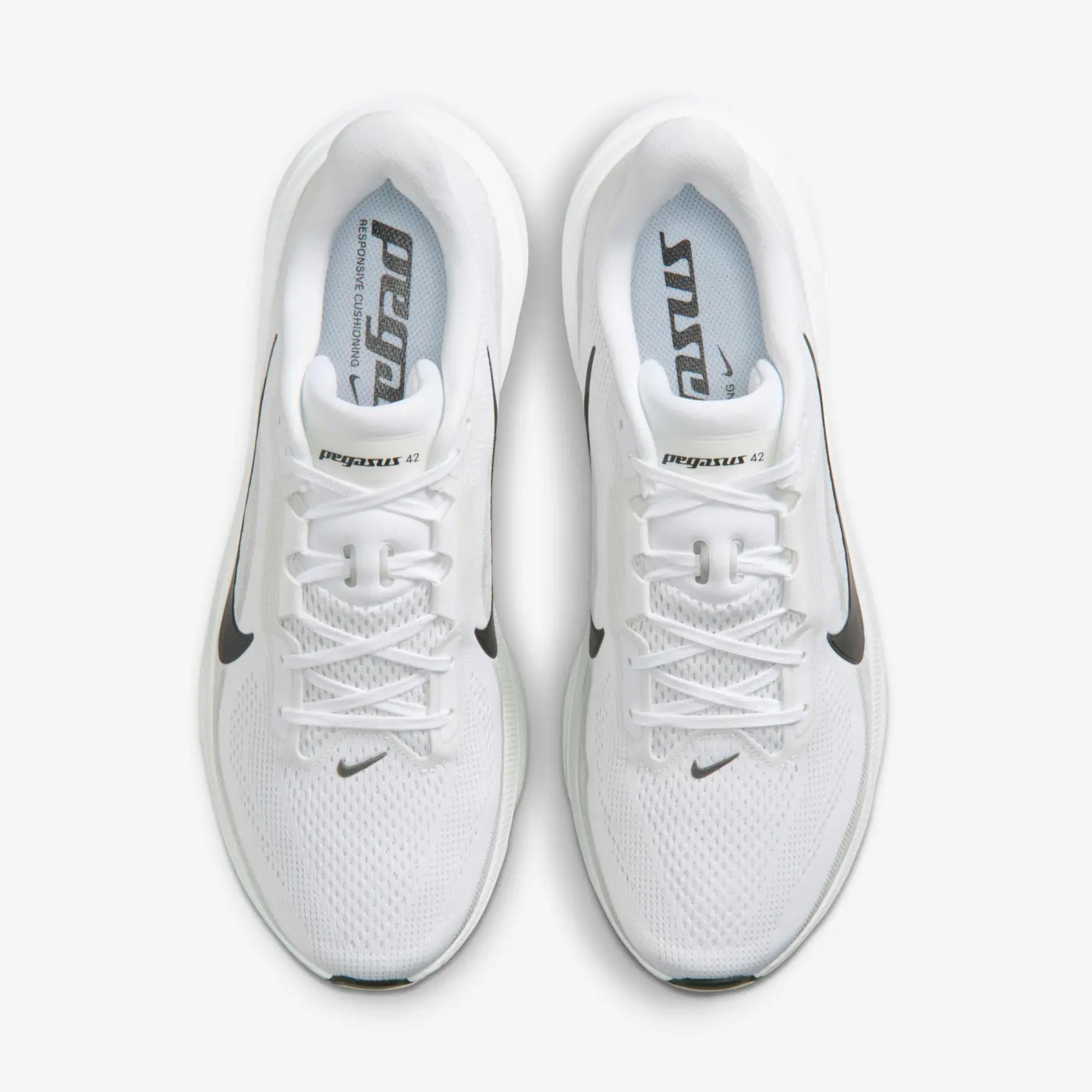
Nike Nike Pegasus 42
- 286 g (RunRepeat lab)Lab-measured weight
- €75retail price
Details+
Outstanding breathability at 87/100, excellent 0.8 mm outsole wear, and heavily discounted — street price from €74.95 against a €139.99 RRP. RunRepeat's lowest score here at 80/100.
- Strengths
- Breathability 87/100 — outstanding
- 0.8 mm Dremel wear with high-abrasion perimeter rubber
- Street price from €74.95 against €139.99 RRP
- Normal and wide fittings available on Nike's German site
- Flexible at 12.1 Nm torsional rigidity, with a firm 4/5 heel counter
- Thoroughly proven design with two decades of iteration
- Weaknesses
- RunRepeat 80/100 — the lowest score in this ranking
- The new full-length Air Zoom "adds little from a performance standpoint"
- Measured drop 14.0 mm against 10 mm claimed
- 286 g, among the heaviest here
- Conventional ReactX foam at exactly the lab average softness
8.3 / 10good
-
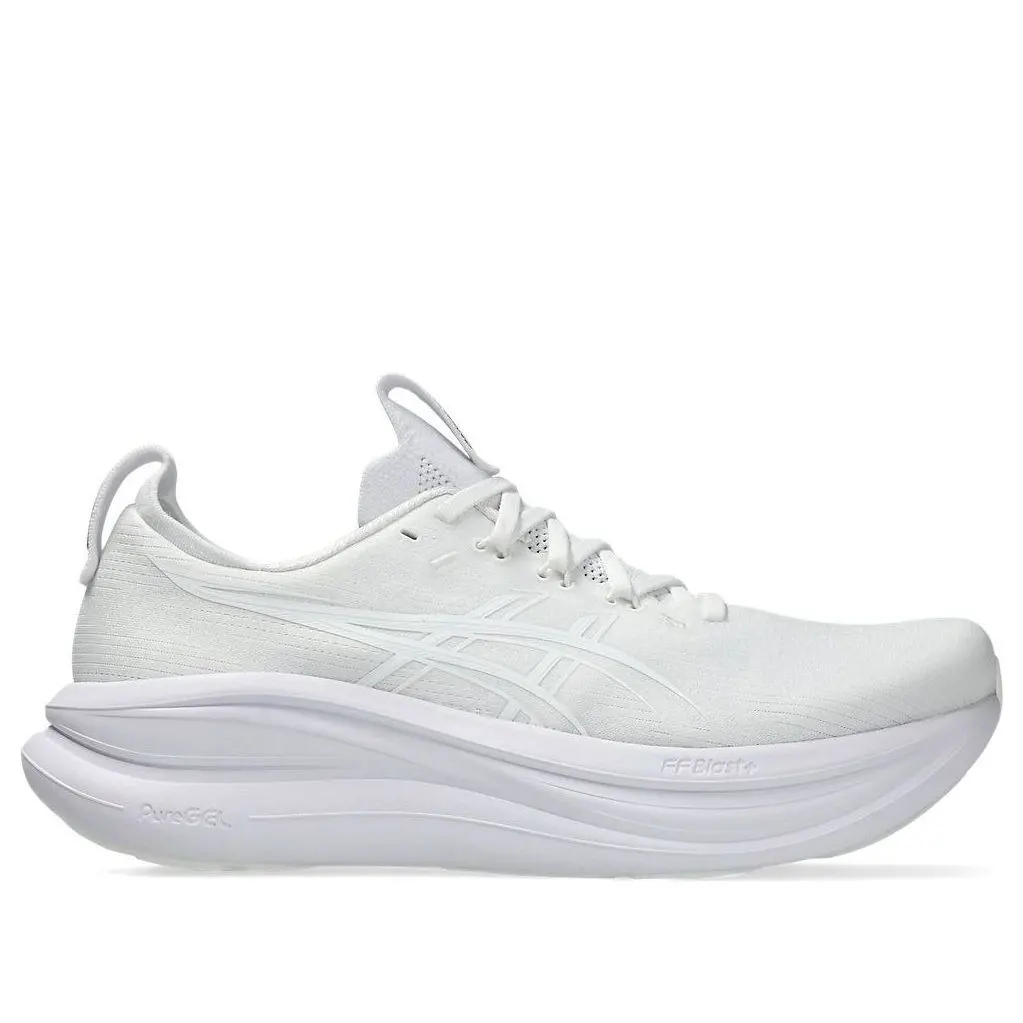
Asics Asics Gel-Nimbus 28
- 278 g (RunRepeat lab)Lab-measured weight
- €120retail price
Details+
Asics's max-cushion flagship and its best in five years — but measurably firmer than the cheaper Cumulus, the stiffest shoe here, and the worst breathability at 64/100.
- Strengths
- RunRepeat 86/100 Great — described as the best Nimbus in five years
- Hybrid ASICSGRIP and AHAR outsole, 3.3 mm, 1.0 mm wear
- 278 g against a 283 g brand claim
- High stack at 39.5 / 34.3 mm for plenty of material underfoot
- PureGEL heel insert
- Street price €120 against €200 RRP
- Weaknesses
- 38.8 AC — firmer than the cheaper Gel-Cumulus 28 despite being max cushion
- Breathability 64/100, the worst in this ranking
- Stiffest shoe here: flex 23.1 N, torsional rigidity 20.5 Nm
- Measured drop 5.2 mm against 8 mm official
- Energy return 44.2% at the heel
- Asics Germany offers standard width only
- €200 RRP is the highest here
8.0 / 10good
-
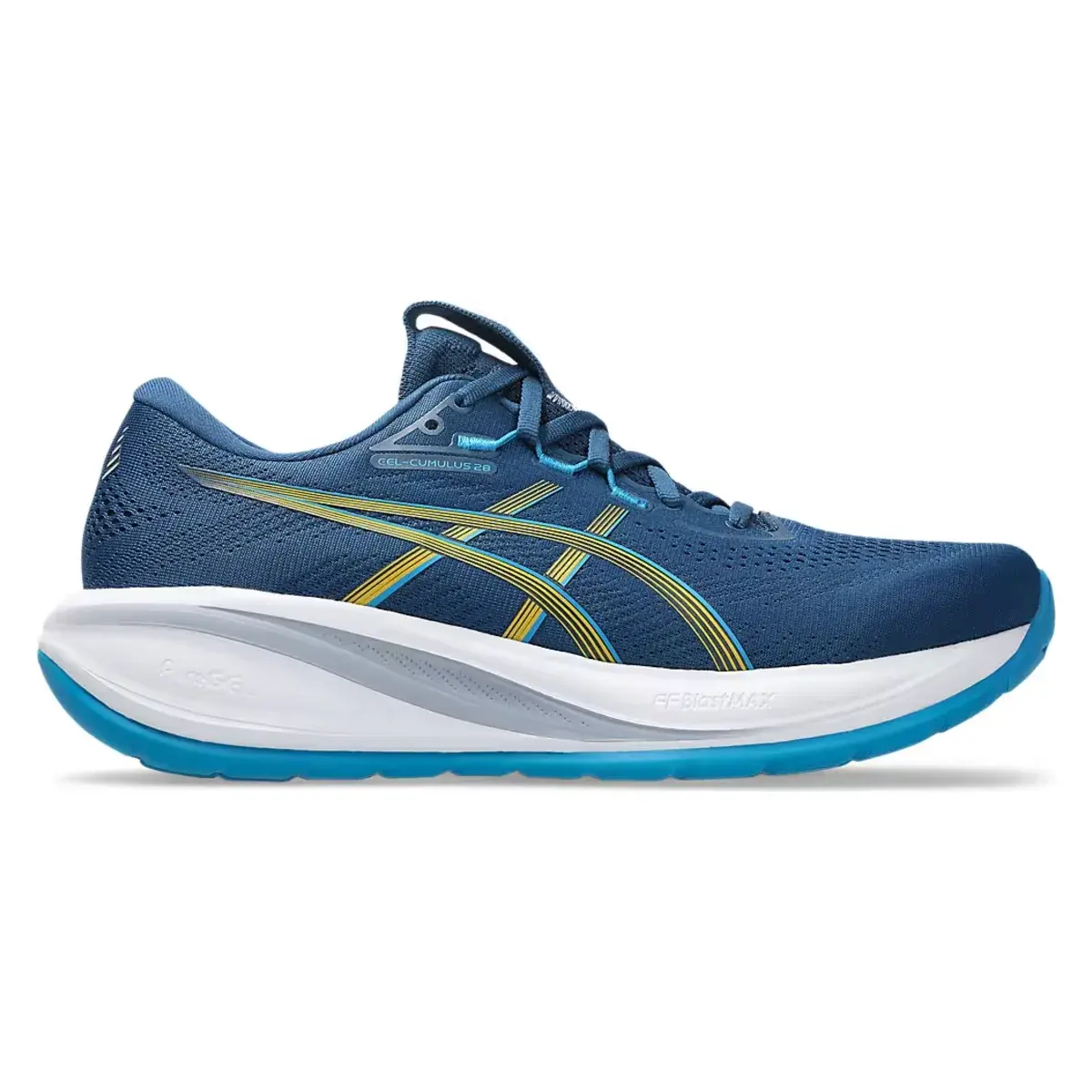
Asics Asics Gel-Cumulus 28
- 252 g (RunRepeat lab)Lab-measured weight
- €81retail price
Details+
Soft, light and roomy at a heavy discount — but its outsole is exposed foam rather than rubber, and it measured 2.4 mm of wear, three times the best shoes here.
- Strengths
- 252 g measured against a 275 g brand claim — second lightest here
- Soft 31.9 AC FF Blast Max midsole with PureGEL heel insert
- 74.4 mm roomy toebox and 5/5 heel counter stiffness
- RunRepeat 86/100 Great, singled out as good for heel strikers
- Biggest discount here: €80.99 against a €160 RRP
- Wide, stable platform geometry
- Weaknesses
- 2.4 mm Dremel wear — three times the best shoes here
- No conventional rubber outsole; exposed FluidRide foam instead
- Largest lab-versus-claim disagreement: 13.3 mm measured drop against 8 mm claimed
- Measured stack 42.8 / 29.5 mm against a claimed 38 / 30 mm
- Asics Germany offers standard width only
- Breathability only 3/5
8.0 / 10good
-
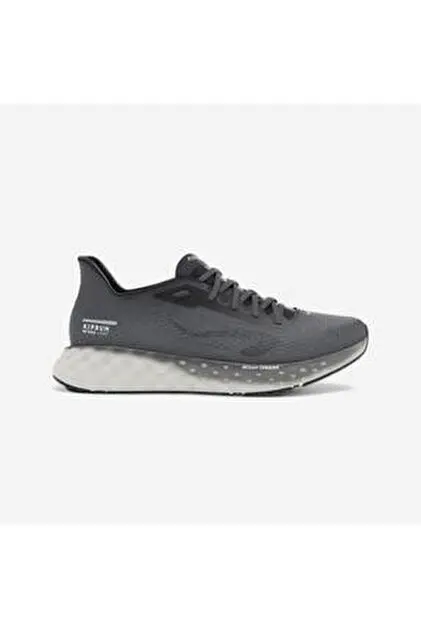
Kiprun (Decathlon) Decathlon Kiprun KS500 2
- 280 g in EU 42 — manufacturer figure, no lab test existsLab-measured weight
- €40retail price
Details+
€39.99 with 365-day returns on a free loyalty account. No independent lab has ever tested it, and the outsole is 70% EVA — but it removes the financial risk of finding out whether you like running.
- Strengths
- €39.99 reduced from €59.99 — removes the financial risk of starting
- 365-day returns and exchanges with a free Fidélité account
- Two-year statutory legal guarantee
- 6 mm drop and neutral construction, no unnecessary features
- Available across Decathlon stores throughout Europe for in-person fitting
- Weaknesses
- No independent lab test exists — every figure is Decathlon's own
- Outsole is 70% EVA and only 30% rubber, so it will wear faster
- Stack heights not published
- No measured softness, energy return, breathability or durability data
- Standard width only
- Kalensole is a conventional EVA-family foam
6.8 / 10acceptable
Scores comparable only within this categorySignificance threshold: ±0.15 pt
8.9 Our verdict
The evidence
Pronation: what 11,000 trial participants actually showed
This is where the industry's story and the published literature diverge most sharply. Here is what the research says, reported straight.
Cochrane systematic review, 2022
Relph et al., Cochrane Database of Systematic Reviews, CD013368.pub2. Twelve trials, 11,240 participants, 6 to 26 weeks, across North America, Europe, Australia and South Africa.
On shoes prescribed by foot posture — three studies, 7,203 participants — the review found "little or no difference" to injury rates, at moderate certainty, the highest rating anywhere in the review.
The authors' conclusions: "Most evidence demonstrates no reduction in lower-limb running injuries in adults when comparing different types of running shoes" and "There is no evidence that prescribing footwear based on foot type reduces running-related lower-limb injuries in adults."
Knapik et al., 2014 — the military trials
Journal of Orthopaedic & Sports Physical Therapy, pooling three randomised controlled trials across the US Army, Air Force and Marine Corps — roughly 7,200 recruits. One group received motion-control, stability or cushioned shoes matched to plantar shape; the control group received stability shoes regardless.
Result: rate ratio 0.97 for men (95% CI 0.88–1.06) and 0.97 for women (95% CI 0.85–1.08). Conclusion: "Selecting running shoes based on arch height had little influence on injury risk in military basic training."
Nielsen et al., 2014 — and the result that surprises people
British Journal of Sports Medicine. 927 novice runners (1,854 feet), one year, 326,803 km logged, 252 injuries. Every participant ran in the same neutral shoe regardless of foot posture.
Pronators had a lower injury rate: −0.37 injuries per 1,000 km (95% CI −0.03 to −0.70), p=0.03, versus neutral-footed runners.
The authors state their findings "contradict the widespread belief that moderate foot pronation is associated with an increased risk of injury among novice runners taking up running in a neutral running shoe". They note the highly-pronated subgroup was too small to draw conclusions about.
The honest counterweight
We are not going to present this as settled. Malisoux et al. ran a blinded RCT of motion-control versus standard shoes (BJSM 2016), and a 2021 secondary analysis reported that motion-control shoes reduced the risk of specifically pronation-related pathologies in recreational runners. We could not retrieve those numbers, so we describe the conclusion without quoting figures.
A 2022 focused review adds that motion-control shoes "may even prove harmful, with some runners experiencing more missed training days in stability footwear compared to neutral options", while cautioning that evidence for any paradigm is generally limited.
The fair summary
Prescribing shoes by pronation category does not reduce overall injury rates. That is well established across roughly 11,000 trial participants. There is weaker secondary-analysis evidence that support features may affect some specific injury types. Neither justifies a shop assigning you a category from a 30-second treadmill clip.
The evidence
Drop, cushioning and rotation: what the trials found
Drop: no effect on injury
Malisoux et al., American Journal of Sports Medicine 2016. 553 runners randomised to identical shoes in 10 mm, 6 mm or 0 mm drop, six-month follow-up.
"The overall injury risk was not different among the participants who had received the D6 (HR 1.30; 95% CI 0.86–1.98) or D0 (HR 1.17; 95% CI 0.76–1.80) versions compared with the D10 shoes."
A secondary, hypothesis-generating subgroup finding: in occasional runners, low drop was associated with lower risk (HR 0.48; 95% CI 0.23–0.98); in regular runners, with higher risk (HR 1.67; 95% CI 1.07–2.62).
Practical translation: drop is a comfort variable, not a safety variable. And given that measured drop in this ranking differed from claimed drop by up to 5.3 mm, arguing between an 8 mm and a 10 mm shoe means arguing about a number that may not survive measurement.
Cushioning: the one property with a positive result
Malisoux et al., American Journal of Sports Medicine 2020. 848 runners analysed, 220,014 km, six months, 128 injuries. Two prototype shoes identical except for cushioning — soft at 61 ± 3 N/mm global stiffness, hard at 95 ± 6 N/mm.
- Runners in the hard shoe had higher injury risk: HR 1.52 (95% CI 1.07–2.16).
- The interaction with body mass ran opposite to industry intuition: significant in lighter runners (HR 1.80; 95% CI 1.09–2.98), not significant in heavier ones (HR 1.23; 95% CI 0.75–2.03).
- Body mass itself was not associated with injury risk, nor was BMI, nor body fat percentage.
Caveats, stated plainly: this is a single RCT; Cochrane's pooling of soft-versus-hard midsole trials (2 studies, 1,095 participants) found minimal difference at low certainty; "soft" here means a measured 61 N/mm stiffness, which maps onto no shoe's marketing copy; and the usual mechanism story — that cushioning reduces external vertical ground reaction forces — "lacks sufficient support".
So: mild support for cushioned over firm, and no support for the theory usually given for why.
Rotation: promising, but one observational study
Malisoux et al., Scandinavian Journal of Medicine & Science in Sports 2015. Prospective observational cohort, not an RCT. 264 recreational runners, 22 weeks, 87 injuries.
HR 0.614 (95% CI 0.389–0.969), p=0.036 — a 39% lower injury risk for runners using two or more pairs alternately.
The authors' own limitations: a short 22-week window, fewer injuries than the study was powered for (87 observed against 133 expected), 56 dropouts, and an explicit call for confirmation via a larger or randomised study. That RCT has not been done.
Honest verdict for a beginner: runners who own two pairs are, on average, more committed and better resourced than those who own one — confounding is baked in. Nobody should be told they need €300 of shoes to start safely. The defensible advice is: buy one pair now; when you replace it, keep the old pair and alternate. That costs nothing extra and is consistent with the only evidence that exists.
Replacement
Where the 500–800 km rule comes from
It is not derived from injury data. It is a blend of mechanical bench testing and manufacturer convention. Puma's own product page simply asserts roughly 800 km for the Velocity Nitro 5, with no citation.
What research actually exists:
- A 2020 University of Connecticut study followed eight college runners over 643 km in Nike Pegasus shoes. No reduction in running economy at 160 km, large reductions by 240 km, statistically significant by 320 km — degradation well before 500 km.
- A 2017 cushioning study found midsole material may harden after as little as 160 km — yet runners perceived essentially no change in cushioning at 160 km or even 640 km, about a 3% difference. Your legs are a poor sensor for this.
- On injury specifically: the link between shoe wear and injury is unclear, and based on minimal and often conflicting evidence.
Note also that the rotation study sometimes cited as indirect support did not record shoe age at all.
The fair framing
500–800 km is a reasonable budgeting heuristic and a reasonable trigger to inspect your shoes. What to look for: compressed midsole creases, outsole worn through to the foam, and the heel collar collapsing.
It is not an evidence-based injury-prevention deadline, and running in a 900 km shoe is not established as dangerous.
The measured outsole data in this ranking is more useful than any kilometre figure. The Brooks, Nike and adidas each wore 0.8 mm in the same Dremel test; the Asics Gel-Cumulus 28 wore 2.4 mm. That is a threefold difference in how fast your shoes reach the point where the outsole is gone.
Fit
How to size a running shoe, and why EU sizing is unreliable
Beginners buy shoes too small far more often than they buy the wrong "category". Here is the correct method.
- Length: half to a full thumb's width of space in front of the longest toe. Note that the longest toe is not always the big toe.
- Heel: hold the back of the shoe and try to lift your heel. There should be little to no movement.
- Asymmetry: your left and right foot may differ by up to a full size. Measure both and fit to the larger foot.
- Socks and insoles change fit materially. Try shoes with the socks and any orthotic you actually run in.
- Re-measure periodically. Arches can lower and lengthen over time.
- Men's and women's sizing differ by roughly 1.5 US sizes.
Conventional retail advice is to fit shoes late in the day, when feet are largest. We could not locate a controlled study quantifying running-induced foot swelling, so treat that as sensible practice rather than a cited finding.
EU sizing does not convert reliably
The anchor point is men's US 10.0 = UK 9.5 = EU 44.0. Beyond that, be careful. EU sizing is nominally the Paris point system but brands apply it inconsistently, and the same EU number can differ by up to a full size between Asics, Nike and Hoka.
Concretely, across the European brand pages we checked: Asics DE lists EU 39–51.5, Hoka DE lists EU 40–52, and Brooks via a German retailer lists EU 42.5–49.5 for men. Three different grids.
Convert using your brand's own chart, not a generic one, and order two adjacent sizes when buying online.
Width: the European problem
Review sites list narrow, wide and extra-wide fittings that mostly reflect US availability. On actual European brand sites we found:
| Brand | Widths available in Europe |
|---|---|
| Hoka DE | Normal, Wide, X-Wide — the best here |
| Nike DE | Normal and Wide |
| adidas | Normal and Wide |
| Asics DE | Standard only |
| Puma EU | Regular only |
| Decathlon | Standard only |
| Brooks (German retailer) | Medium only |
If you have wide feet, start with Hoka.
Buying in Europe
Your return rights, and which retailers go further
The statutory right lets you try shoes on, not test them
Under the Consumer Rights Directive 2011/83/EU, distance purchases across the EU carry at least 14 days from delivery to withdraw, no reason required.
Two details matter for shoes:
- You may normally have to pay return shipping — but if the vendor failed to tell you about those costs beforehand, they are responsible for paying them.
- You are entitled to examine goods "under comparable conditions to those of a store", and a vendor cannot impose depreciation if you only used the item to check the size. Trying shoes on indoors is protected.
What is not protected: the trader can reduce your refund where use goes substantially beyond establishing the nature and characteristics of the goods. Running 20 km outdoors is not covered by the statutory right.
Retailers whose voluntary policy goes further
- Brooks EMEA — the Run Happy Promise. 90 days, worn shoes accepted, free returns, full refund, on purchases made directly on the Brooks website (not through third-party retailers). This is the strongest policy we verified in Europe and a genuine reason to buy the Ghost 18 direct.
- Decathlon. 365-day returns and exchanges with a free Fidélité loyalty account, plus the two-year statutory legal guarantee. Combined with a €40 price, the lowest-risk entry point in Europe.
- adidas. 30-day returns on adidas.de. A separate 30-day performance-shoe guarantee exists but we verified it only on the US site.
The practical method
Order two adjacent sizes from a retailer with free returns. Try both on carpet indoors, wearing your running socks. Keep the packaging. Send one back. This is fully protected by the statutory right and costs nothing.
One more European habit worth adopting: price comparison consistently shows 25–45% off RRP on last-season and even current models. In this ranking the Nike drops from €139.99 to €74.95, the Asics Cumulus from €160 to €80.99, the adidas from €150 to €84.99. Paying RRP for a running shoe in Europe is unusual.
The shop treadmill
What gait analysis can and cannot tell you
The most directly relevant study is small but very pointed.
Fife et al., Translational Sports Medicine 2025. Twenty-one women runners, single-blind crossover design.
The two "different" shoes were the same shoe. Identical Brooks Anthem 5, differing only in colour and in whether they were described to the participant as "gait-matched" or "basic".
- Comfort scores: own shoes 83.8 ± 8.3 mm; "gait-matched" 66.1 ± 21.5 mm; "basic" 49.0 ± 24.1 mm.
- Difference favouring the identical-but-better-labelled shoe: 15.6 mm (95% CI 5.7–25.5).
- Preference: 71.4% own shoes, 23.8% "gait-matched", 4.8% "basic".
- No significant differences in any spatiotemporal or kinematic parameter (p ≥ 0.157).
The authors' conclusion: shoe recommendation and description significantly affect subjective comfort and preference without significantly altering measured gait.
An honesty note the authors themselves make: this study measured perceived injury risk, not injuries, and perceptions of risk reduction may not reflect real risk. The sample was 21 women in three shoe sizes.
What this means practically
Put alongside Knapik's 7,200 recruits and Cochrane's 11,240 participants, the picture is coherent: the label on the recommendation does the work, not the analysis.
The useful part of a shop visit is trying several shoes on and running in them. The treadmill video is theatre — with a real placebo benefit, since comfort is the one variable the evidence supports. That benefit is not worthless. It should just be paid for honestly.
Marketing decoded
Six claims to discount
"Energy return" percentages. Measured with a mechanical drop test — a mass dropped onto the midsole. Real spread: EVA 47–54%, premium PEBA and TPU 74–82%. But RunRepeat's own caveat is that most of the energy a shoe returns "simply helps it spring back into shape rather than pushing you forward", and better energy return "can improve your running economy — but not always". The same supershoe produces responders and non-responders. Note that in this ranking the shoe with the highest measured energy return is a €150 daily trainer, and the €200 max-cushion flagship is among the lowest.
Pronation categories. Cochrane at moderate certainty: no evidence prescribing by foot type reduces injuries. Knapik across ~7,200 recruits: rate ratio 0.97. Nielsen across 927 novices: pronators had fewer injuries. "You're an overpronator, you need stability" is a sales taxonomy, not a diagnosis.
"Designed for" claims. "Designed for the everyday runner", "engineered for long runs", "built for heel strikers" — positioning statements. None of the eight shoes here has a published study behind such a claim.
Plate hype. Plates in daily trainers are usually about ride feel and midsole stability, not propulsion, and carbon plates deliver measured benefits at speeds most beginners do not run. Note that adidas's "Support Rods" are a foam element, not a propulsive plate — the name invites exactly the wrong inference.
Lifespan claims. Puma's stated 800 km carries no citation. Actual research found running economy significantly reduced by 320 km, and the link between shoe wear and injury unclear.
The spec sheet itself. In this ranking, measured drop differed from claimed drop by up to 5.3 mm and measured stack by up to 4.8 mm. Treat every brand-published stack and drop figure as approximate.
Safety
Why beginners should not buy carbon-plated shoes
None of the eight shoes in this ranking has a plate, and that is deliberate.
The practical argument
A carbon-plated racing shoe is the wrong tool for a new runner: a thin, fragile outsole, a stiff plate that requires established form and speed to load properly, and a lifespan measured in a few hundred kilometres — at roughly €280.
The safety signal, reported honestly
A 2023 case series in Sports Medicine described five elite athletes who developed navicular bone stress injuries after exclusively wearing carbon-plated shoes.
Dr Adam Tenforde of Spaulding Rehabilitation and Harvard Medical School, on navicular injuries: "Left undiagnosed, the bone can essentially die… It can also contribute to osteoarthritis." Sports biomechanist Dr Kim Hebert-Losier of the University of Waikato adds that "injuries in the knee, hip and back are… likely to occur in carbon-plated shoe wearers, as well as ankle sprains."
Be clear about how strong this is: a five-athlete case series in elite runners is not proof that carbon plates injure beginners. The correct claim is that the plausible risk is non-zero, the benefit to someone running 6:30 per kilometre is negligible, and the cost is high.
Both experts quoted recommend gradual introduction and mixing plated with non-plated shoes rather than abstinence — which is advice for people already running fast, not for people starting out.
What to buy instead
A neutral daily trainer with a durable outsole and a comfortable fit. That is every shoe on this page.
Methodology
How this score is built
The score is the mean of four component scores — each carries equal weight and each rests on a named source. The full procedure is described in the methodology.
01Composition and specification
Declared composition and specification: active ingredients and their concentrations, energy classes, standards, technical parameters — and what the manufacturer leaves unsaid.
02Evidence and studies
Verification of the manufacturer's claims against outside sources: laboratory reports, industry testing, safety data sheets, certificates and regulatory decisions.
03Owner feedback
Analysis of verified reviews written after extended use, together with recurring fault reports for the model or series.
04Cost and value
Price set against what the product actually delivers, plus costs incurred later — consumables, energy, servicing, subscriptions — over the lifespan typical for the category.
FAQ
Frequently asked questions
Which running shoe should a beginner buy?+
The Brooks Ghost 18 at around €134.90 is the safest recommendation — the most outsole rubber here at 3.5 mm with excellent 0.8 mm wear, and Brooks EMEA accepts worn shoes back within 90 days with free returns when bought direct. If budget is the constraint, the Decathlon Kiprun KS500 2 at €39.99 with 365-day returns removes the financial risk of finding out whether running suits you. If you have wide feet, start with the Hoka Clifton 11, the only shoe here with genuine narrow-to-extra-wide availability in Europe.
Do I need stability or motion-control shoes if I overpronate?+
The evidence says no. A Cochrane review of 12 trials and 11,240 participants found no evidence that prescribing footwear by foot type reduces running injuries, at moderate certainty. Pooled military trials across roughly 7,200 recruits found a rate ratio of 0.97. And in a study of 927 novice runners covering 326,803 km, all in the same neutral shoe, pronators had a lower injury rate than neutral-footed runners. Buy the most comfortable neutral shoe that fits.
Does heel-to-toe drop matter?+
Not for injury risk. A randomised trial gave 553 runners identical shoes in 10 mm, 6 mm and 0 mm drop and found no difference in overall injury risk. And in this ranking, measured drop differed from claimed drop by up to 5.3 mm — the Nike measured 14.0 mm against a claimed 10 mm, the Asics Cumulus 13.3 mm against a claimed 8 mm. Choosing between an 8 mm and a 10 mm shoe means choosing between numbers that may not survive measurement.
Should I buy soft or firm shoes?+
Mild evidence favours softer. In an RCT of 848 runners over 220,014 km, those in the firmer shoe had a higher injury risk (HR 1.52), and the effect was significant in lighter runners rather than heavier ones. Body mass itself was not associated with injury risk. Caveats: it is a single trial, Cochrane rated pooled evidence on this low certainty, and the mechanism usually offered — that cushioning reduces impact forces — is not well supported.
How often should I replace running shoes?+
Inspect at 500-800 km rather than replacing on a schedule. That figure comes from bench testing and manufacturer convention, not injury data — a 2020 study found running economy significantly reduced by 320 km, well before 500, while a 2017 study found runners perceived almost no change in cushioning even at 640 km. The link between shoe wear and injury is unclear and based on minimal, conflicting evidence. Look for compressed midsole creases, outsole worn through to foam, and a collapsing heel collar.
Do I need two pairs of shoes?+
Not to start. One observational study of 264 runners found a 39% lower injury risk among those alternating two or more pairs (HR 0.614), but its own authors called for confirmation by a randomised trial that has never been done — and runners who own two pairs differ from those who own one in ways that confound the result. The sensible approach: buy one pair now, and when you replace it, keep the old pair and alternate. That costs nothing extra.
Is gait analysis in a running shop useful?+
For choosing a shoe, largely no. In a 2025 single-blind crossover trial, 21 runners were given the same shoe twice — identical model, different colour — described once as "gait-matched" and once as "basic". Comfort scored 66.1 mm versus 49.0 mm, and there were no significant differences in any measured gait parameter. The label did the work. What is genuinely useful about a shop visit is trying several shoes on and running in them.
Can I return running shoes in the EU after wearing them?+
Under the statutory 14-day right of withdrawal, you may try shoes on "under comparable conditions to those of a store" and the vendor cannot charge depreciation for that — but running outdoors in them goes beyond what is protected, and the trader can reduce your refund. Some retailers go much further voluntarily: Brooks EMEA accepts worn shoes within 90 days with free returns on direct purchases, and Decathlon offers 365-day returns with a free loyalty account.
Should I buy carbon-plated shoes?+
No. They have thin fragile outsoles, a short lifespan, cost around €280, and need established form and pace to load the plate at all. A 2023 case series documented five elite athletes developing navicular bone stress injuries after exclusively wearing plated shoes — which is not proof of risk to beginners, but the benefit to someone running 6:30 per kilometre is negligible either way. None of the eight shoes in this ranking has a plate.
Sources
Documents and standards
- 1. Relph N et al. - Running shoes for preventing lower limb running injuries in adults, Cochrane Database of Systematic Reviews 2022: https://www.cochrane.org/CD013368/MUSKINJ_running-shoes-preventing-lower-limb-running-injuries-adults
- 2. Nielsen RO et al. - Foot pronation is not associated with increased injury risk in novice runners, Br J Sports Med 2014: https://vbn.aau.dk/en/publications/foot-pronation-is-not-associated-with-increased-injury-risk-in-no/
- 3. Knapik JJ et al. - Injury-reduction effectiveness of prescribing running shoes on the basis of foot arch height, JOSPT 2014: https://www.jospt.org/doi/10.2519/jospt.2014.5342
- 4. Malisoux L et al. - Influence of the heel-to-toe drop on injury risk, Am J Sports Med 2016 (PDF): https://podochat.gespodo.com/wp-content/uploads/2020/ressources/Influence-of-the-Heel-to-Toe-Drop-of-standard-cushioned-running-shoes-on-injury-risk-in-leisure-time-runners.pdf
- 5. Malisoux L et al. - Shoe cushioning influences running injury risk according to body mass, Am J Sports Med 2020 (summary PDF): https://files.lih.lu/Press/200903_RRI_Interv4-Feedback_to_the_participants_FV2-EN.pdf
- 6. Malisoux L et al. - Can parallel use of different running shoes decrease running-related injury risk, Scand J Med Sci Sports 2015 (PDF): https://www.fitasaphysio.com/uploads/4/3/3/4/43345381/parallel_use_of_2_pairs_of_running_shoes_decreases_injury.pdf
- 7. Agresta C et al. - Running injury paradigms and their influence on footwear design, Frontiers in Sports and Active Living 2022: https://www.frontiersin.org/articles/10.3389/fspor.2022.815675/full
- 8. Fife A et al. - Running shoe recommendations based on gait analysis, Translational Sports Medicine 2025 (open access PDF): https://researchcommons.waikato.ac.nz/server/api/core/bitstreams/89a64513-bc7d-4b8c-88d1-2db533bff85e/content
- 9. The Conversation - How do I know when it's time to replace my running shoes: https://theconversation.com/how-do-i-know-when-its-time-to-replace-my-running-shoes-238997
- 10. Live Science - Can carbon-plated running shoes cause injury: https://www.livescience.com/can-carbon-plated-running-shoes-cause-injury
- 11. RunRepeat - Nike Pegasus 42 lab review: https://runrepeat.com/nike-pegasus-42
- 12. RunRepeat - Brooks Ghost 18 lab review: https://runrepeat.com/brooks-ghost-18
- 13. RunRepeat - Hoka Clifton 11 lab review: https://runrepeat.com/hoka-clifton-11
- 14. RunRepeat - Asics Gel-Cumulus 28 lab review: https://runrepeat.com/asics-gel-cumulus-28
- 15. RunRepeat - Asics Gel-Nimbus 28 lab review: https://runrepeat.com/asics-gel-nimbus-28
- 16. RunRepeat - adidas Supernova Rise 3 lab review: https://runrepeat.com/adidas-supernova-rise-3
- 17. RunRepeat - Asics Novablast 6 lab review: https://runrepeat.com/asics-novablast-6
- 18. RunRepeat - Energy return in running shoes guide: https://runrepeat.com/guides/energy-return-in-running-shoes
- 19. RTINGS - Puma Velocity Nitro 5 review: https://www.rtings.com/running-shoes/reviews/puma/velocity-nitro-5
- 20. Doctors of Running - Puma Velocity Nitro 5 review: https://www.doctorsofrunning.com/puma-velocity-nitro-5-review/
- 21. Running Warehouse - Shoe fit tips: https://www.runningwarehouse.com/learningcenter/gear_guides/footwear/fittips.html
- 22. European Consumer Centre Germany - Right of withdrawal: https://www.evz.de/en/topics/internet-shopping/online-shopping/right-of-withdrawal/
- 23. Brooks EMEA - Worn item returns policy: https://emea-support.brooksrunning.com/hc/en-us/articles/360042960932-Can-I-send-back-worn-items-And-is-the-returns-process-free
- 24. Decathlon FR - Kiprun KS500 2 product page: https://www.decathlon.fr/p/chaussure-de-running-homme-kiprun-ks500-2-noir-jaune/_/R-p-341860
- 25. Nike DE - Pegasus 42: https://www.nike.com/de/t/pegasus-42-strassenlaufschuh-M9ckDyR3
- 26. Hoka DE - Clifton 11: https://www.hoka.com/de/de/herren-strasse/clifton-11/1176572.html
- 27. Asics DE - Gel-Cumulus 28: https://www.asics.com/de/de-de/gel-cumulus--28/p/1011C143-402.html
- 28. Asics DE - Gel-Nimbus 28: https://www.asics.com/de/de-de/gel-nimbus--28/p/1011C127-001.html
- 29. adidas DE - Supernova Rise 3: https://www.adidas.de/supernova-rise-3-laufschuh/KK1206.html
- 30. Puma EU - Velocity Nitro 5: https://eu.puma.com/de/de/pd/velocity-nitro-5-laufschuhe-herren/312944
- 31. bunert.de - Brooks Ghost 18: https://www.bunert.de/brooks-ghost-18-herren
- 32. Geizhals.de price comparison, September 2026: https://geizhals.de/
More
Other rankings
in
Sports & outdoor.
Each category has its own protocol and its own key parameter.