
4Rank 04 of 8 · Best Running Shoes for Beginners
Hoka Hoka Clifton 11
The best breathability here at 93/100 and the only shoe with narrow through extra-wide fittings genuinely stocked in Europe. The midsole is conventional EVA with the lowest measured energy return of the group.
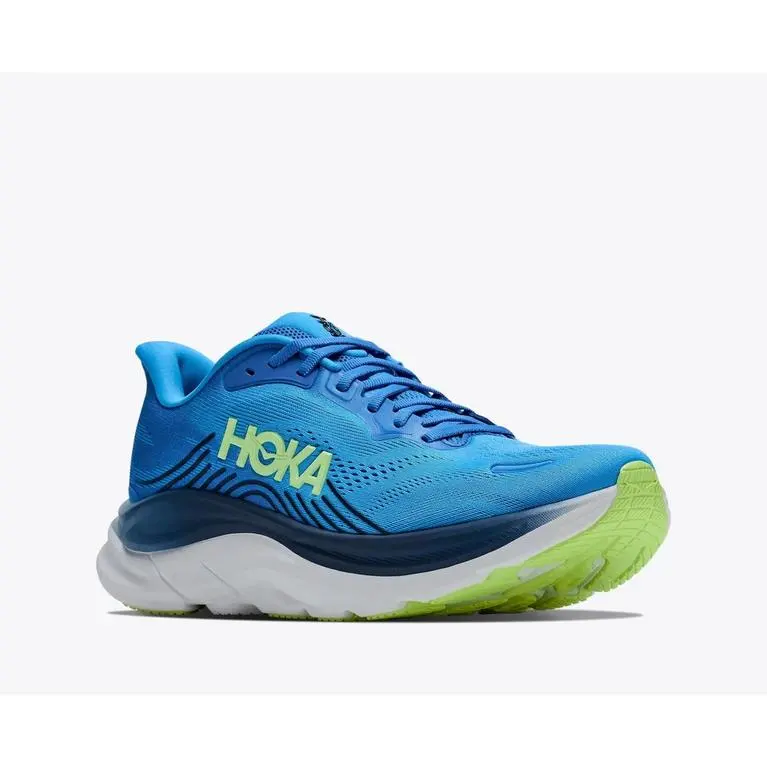 8.4BPR score
- €118Price
- 266 g (RunRepeat lab)Lab-measured weight
- 4 of 8in Best Running Shoes for Beginners
- 8.4BPR score 0–10
Review
What this product is
Written after the analysis, from the same sources the score is built on: the manufacturer's documentation, available studies and verified owner feedback.
Two things make this the right shoe for specific people, and both are practical rather than performance-related.
Breathability measured 93 out of 100 — the best in this ranking — with 62% drying potential. If you run in Spain, Italy or southern France in summer, or if your feet run hot, this is a materially different experience from the Brooks at 70 or the Asics Nimbus at 64.
And Hoka's German site offers normal, wide and extra-wide fittings — the only brand in this ranking with genuine width availability in Europe. RunRepeat lists wide options for several shoes here, but those listings reflect the US market; when we checked actual European brand sites, Asics offered standard only, Puma regular only, Decathlon standard only, and Brooks via its German retailer medium only. If you have wide feet in Europe, this is where to start.
The lab numbers are mixed. RunRepeat measured 266 g against a 258 g claim, stack 41.4 / 29.7 mm giving an 11.7 mm drop against 8 mm official. The midsole is CMEVA — compression-moulded EVA, a conventional foam, not supercritical — measuring 31.1 AC, comfortably soft. Energy return is 46.8% heel and 50.1% forefoot, the lowest measured here, which is consistent with EVA: RunRepeat's own guide puts EVA at 47–54% and premium foams at 74–82%.
Outsole is 3.2 mm rubber with excellent 0.9 mm wear. But forefoot traction measured 0.52, the lowest in this group — worth knowing given European autumn road conditions.
RunRepeat scored it 85/100 "Great", describing it as best for easy-paced daily running with an outdated foam limiting faster paces. For a beginner running easy paces, that limitation is irrelevant.
Technical data
Specification
Figures from the manufacturer's documentation, verified against available outside sources. Values we could not confirm are marked as declared.
- Lab weight
- 266 g (RunRepeat; brand claims 258 g)
- Lab stack
- 41.4 mm heel / 29.7 mm forefoot
- Lab drop
- 11.7 mm (official 8 mm)
- Midsole
- CMEVA - compression-moulded EVA, conventional foam
- Midsole softness
- 31.1 AC - soft
- Energy return
- 46.8% heel / 50.1% forefoot - lowest here
- Outsole
- 3.2 mm rubber, 0.9 mm Dremel wear
- Forefoot traction
- 0.52 - lowest in this group
- Breathability
- 93/100 - best here, 62% drying potential
- Toebox width
- 70.9 mm
- Widths on hoka.com/de
- Normal, Wide, X-Wide
- Plate
- None
- Price
- EUR 160 RRP; from EUR 118 street
Component scores
Where the score
comes from.
Four components, equal weight, each on a 0–10 scale and each resting on a named source. The overall score is their mean — the full procedure is in the methodology.
What we liked
- Breathability 93/100 — the best in this ranking
- Normal, wide and extra-wide fittings genuinely stocked in Europe
- Soft midsole at 31.1 AC
- 0.9 mm Dremel wear — excellent outsole durability
- MetaRocker geometry and Active Foot Frame aid an easy rolling gait
- Street price around €118 against €160 RRP
Worth knowing
- Conventional CMEVA foam with the lowest energy return here (46.8% heel)
- Forefoot traction 0.52, the lowest measured in this group
- Measured drop 11.7 mm against 8 mm official
- 266 g against a 258 g brand claim
- Heel counter stiffness only 3/5
Comparison
How it compares
within the category
All values come from the same analysis and are comparable only within the category Best Running Shoes for Beginners.
| Product | Score | Lab-measured weight | Price |
|---|---|---|---|
| Puma Velocity Nitro 5Top score | 8.9 | 242 g (RTINGS lab) | €130 |
| Hoka Clifton 11This product | 8.4 | 266 g (RunRepeat lab) | €118 |
| Category average8 products analysed | 8.2 | — | — |
FAQ
Frequently asked questions
Does low energy return matter for a beginner?
Almost not at all. Energy return is measured with a mechanical drop test — a mass dropped onto the midsole — and RunRepeat's own guidance is that most of the energy a shoe returns "simply helps it spring back into shape rather than pushing you forward". The gap between 47% and 62% shows up, if at all, at paces a new runner will not be holding. Comfort and fit will affect your running far more.
I have wide feet. What are my options in Europe?
Start here — Hoka's German site is the only one in this ranking offering normal, wide and extra-wide. Be careful with review sites that list width options: those listings usually reflect US availability. Of the eight shoes here, on actual European brand sites we found Asics standard only, Puma regular only, Decathlon standard only, Brooks medium only at its German retailer, and Nike normal plus wide.
From the same ranking
Other products in Best Running Shoes for Beginners.
The same protocol, the same key parameter, the same set of sources.
-
 No. 018.9/ 10
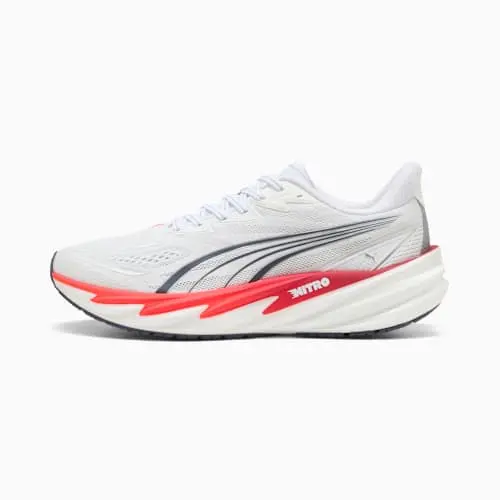
Puma Velocity Nitro 5
The lightest shoe here at 242 g, on nitrogen-injected TPU with PUMAGRIP — widely regarded as…
-
 No. 028.8/ 10
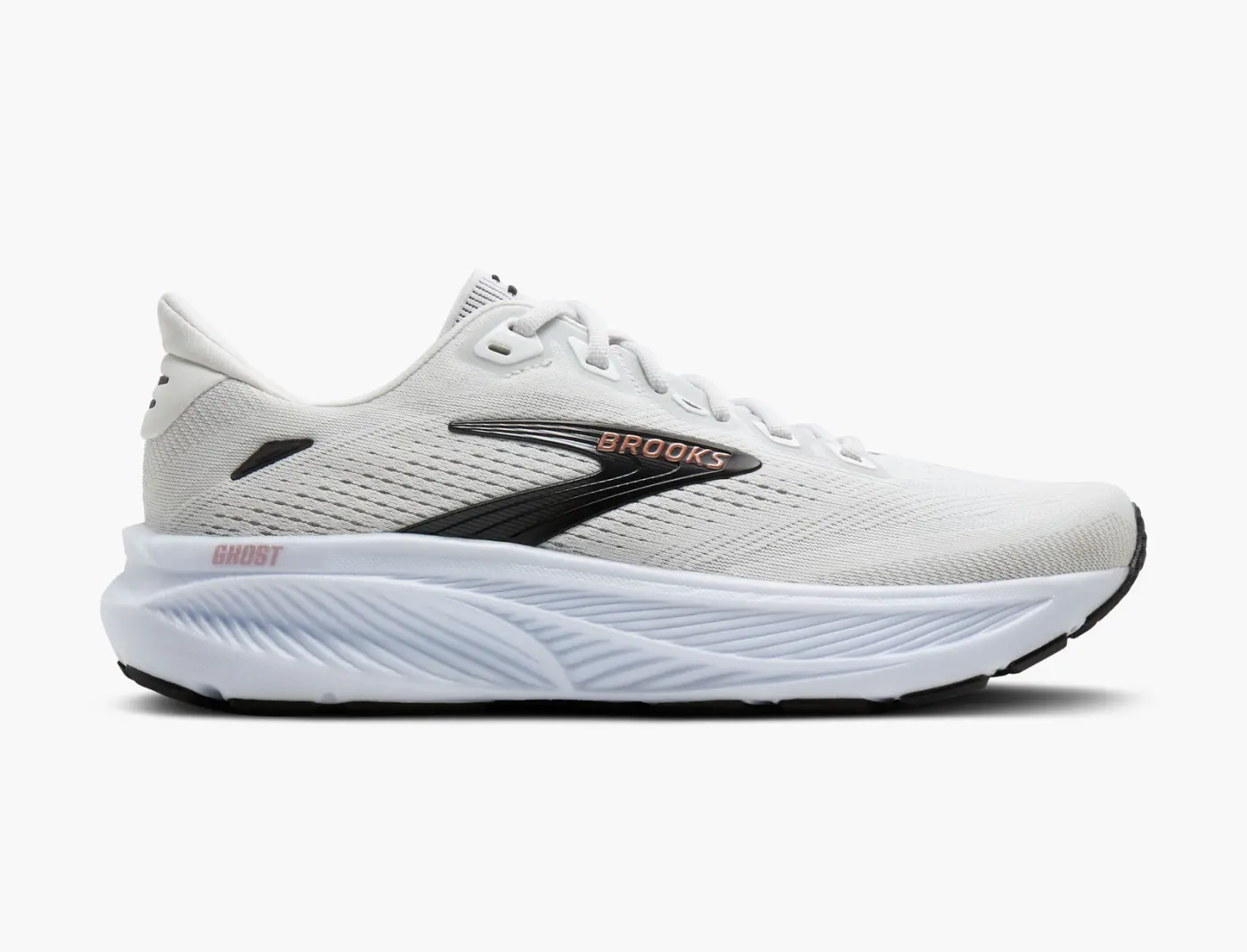
Brooks Ghost 18
The most outsole rubber here at 3.5 mm with excellent durability, a rigid heel counter that…
-
 No. 038.7/ 10
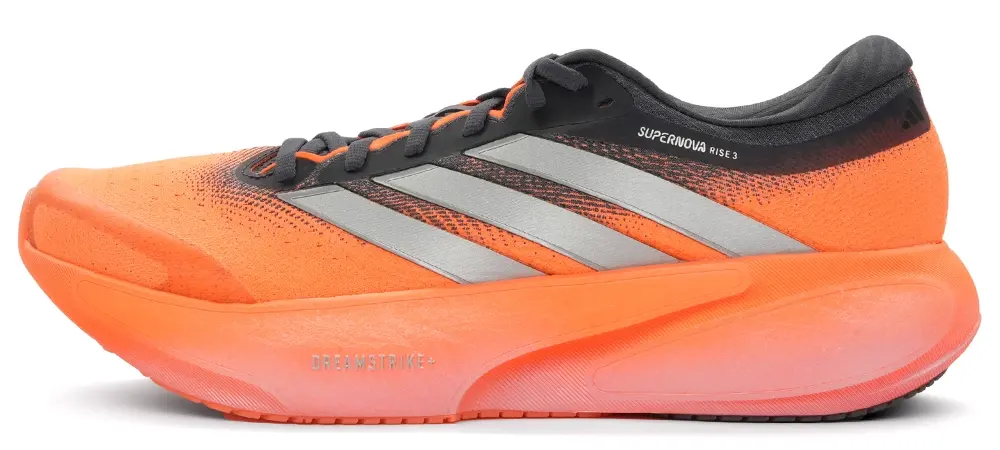
adidas Supernova Rise 3
The softest midsole here at 28.6 AC on PEBA foam, the highest energy return, and the most…
-
 No. 058.3/ 10
Nike Pegasus 42
Outstanding breathability at 87/100, excellent 0.8 mm outsole wear, and heavily discounted…