Health & beauty
Best Retinol Serums
European retinol shopping changed on 1 November 2025, and most product pages have not caught up.
Commission Regulation (EU) 2024/996 amended the Cosmetics Regulation to cap retinol, retinyl acetate and retinyl palmitate at 0.3% retinol equivalent in leave-on and rinse-off products, and 0.05% in body lotion. Non-compliant products could no longer be placed on the EU market from 1 November 2025, and may no longer be made available — that is, sold through from existing stock — after 1 May 2027.
Two consequences follow, and neither is obvious from a product listing:
- Products above 0.3% retinol are still legally on shelves right now, working through the sell-through window. A 0.5% or 1% retinol serum you buy today is legal to sell and legal to use — but it will not be reformulated at that strength, and it will disappear.
- Retinaldehyde and hydroxypinacolone retinoate are not covered by the cap at all. They were not part of the scientific dossier behind the restriction. Retinal is arguably more potent per unit than retinol, and it remains unrestricted.
There is a further tension worth stating plainly: the best-evidenced retinol concentration in the clinical literature is 0.4% — from a 24-week controlled trial that found significant wrinkle improvement and increased procollagen — and that is now above the EU legal limit. The restriction is a vitamin A intake measure, not a verdict on efficacy.
Meanwhile Stiftung Warentest's laboratory analysis of 94 facial products in May 2026 found roughly one-third of 70 facial creams contained too little vitamin A to have an anti-ageing effect at all. The market fails in both directions at once.
Methodology note
What this ranking is based on. Retinoid form, stated concentration, ingredient lists and packaging come from brand websites and European retailers. Regulatory figures come from the Official Journal text of Commission Regulation (EU) 2024/996 and from the SCCS opinion behind it. Efficacy claims are sourced to peer-reviewed dermatology literature or to the American Academy of Dermatology, and each is cited.
What we did not test. We performed no laboratory analysis and no user trial. The owner-feedback score reflects published assessments and formulation quality, not a consumer survey.
An important limit on our compliance flags. Regulation (EU) 2024/996 does not define "retinol equivalent" or give conversion factors for retinyl acetate and retinyl palmitate. We therefore state only what is verifiable: whether a product's retinoid is one of the three restricted substances, and — for pure retinol, where the conversion is one to one — whether the stated concentration exceeds 0.3%. We do not calculate retinol equivalents for ester forms, and no figure of that kind appears on this page.
This is not medical advice. Retinoids are active ingredients with real side effects. If you are pregnant, planning pregnancy, breastfeeding, or treating a skin condition, speak to a doctor or dermatologist rather than relying on a product ranking.
 8.8BPR score
Key parameter
Retinoid form and stated concentration
The specific vitamin A derivative used and the concentration the brand states. This matters more than any other number, because retinol, retinaldehyde, retinyl acetate and hydroxypinacolone retinoate deliver completely different retinoic-acid activity at the same percentage — and only some of them are capped by EU law. Where a brand does not disclose the concentration, we say so rather than estimating.
-
Top score
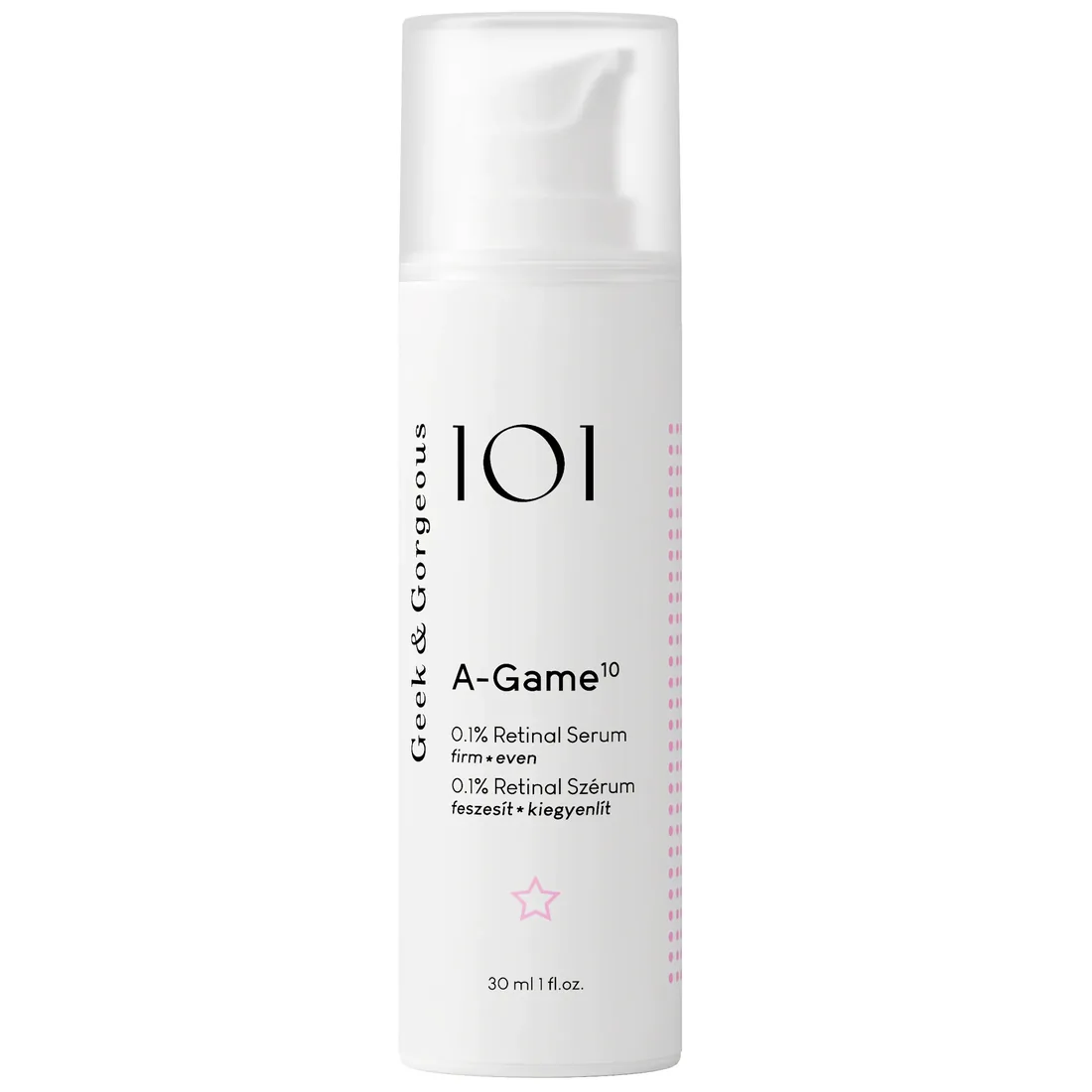
Geek & Gorgeous Geek & Gorgeous A-Game 10
- Retinaldehyde 0.1% — not covered by the EU capRetinoid form and stated concentration
- €19retail price
Details+
Cyclodextrin-encapsulated retinal at 0.1% for €18.80 — the same technology and a higher concentration than products costing three times as much. Best value in the ranking.
- Strengths
- €18.80 for 30 ml — €0.63 per ml, roughly a third of Medik8's price
- 0.1% retinaldehyde, a higher retinal concentration than the Medik8 CR6
- Cyclodextrin encapsulation for stability
- Allantoin and panthenol directly address the irritation phase
- Not covered by the EU 0.3% cap
- Tocopheryl acetate antioxidant protection
- Weaknesses
- No strength ladder — 0.1% is a strong starting point for a first retinoid
- No brand-published clinical testing
- No independent European consumer test result found
- Smaller brand with narrower European retail distribution
- Packaging format not verified
8.8 / 10good
-
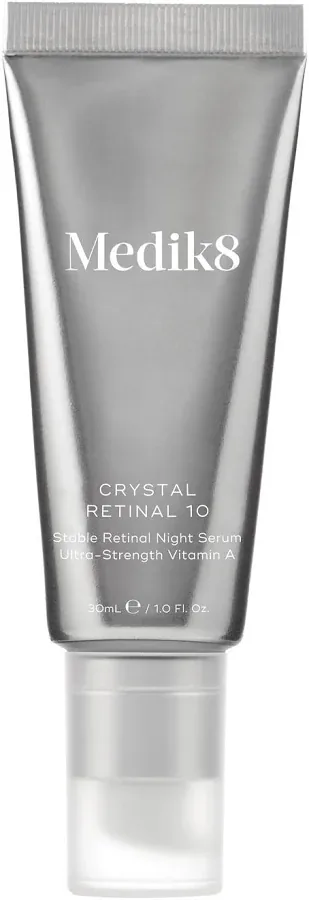
Medik8 Medik8 Crystal Retinal 6
- Retinaldehyde 0.06% — not covered by the EU capRetinoid form and stated concentration
- €65retail price
Details+
Cyclodextrin-encapsulated retinaldehyde in a formula built for stability — antioxidants, a chelator and titanium dioxide as an opacifier. A five-step strength ladder lets you build tolerance properly.
- Strengths
- Retinaldehyde — not covered by the EU 0.3% cap
- Cyclodextrin encapsulation for time-release and stability
- Titanium dioxide opacifier protects the active from light
- Full antioxidant and chelator system: tocopheryl acetate, BHT, disodium EDTA
- Five-step strength ladder (0.01% to 0.2%) for building tolerance
- Medik8 has published peer-reviewed retinaldehyde research
- Weaknesses
- €64.69 for 30 ml — €2.16 per ml, among the most expensive here
- No independent third-party lab verification, by the brand's own statement
- No published clinical data specific to Crystal Retinal itself
- The 11x potency claim appears uncited on the consumer page
- RRP of €98.50 means the price you see varies enormously by retailer
8.3 / 10good
-
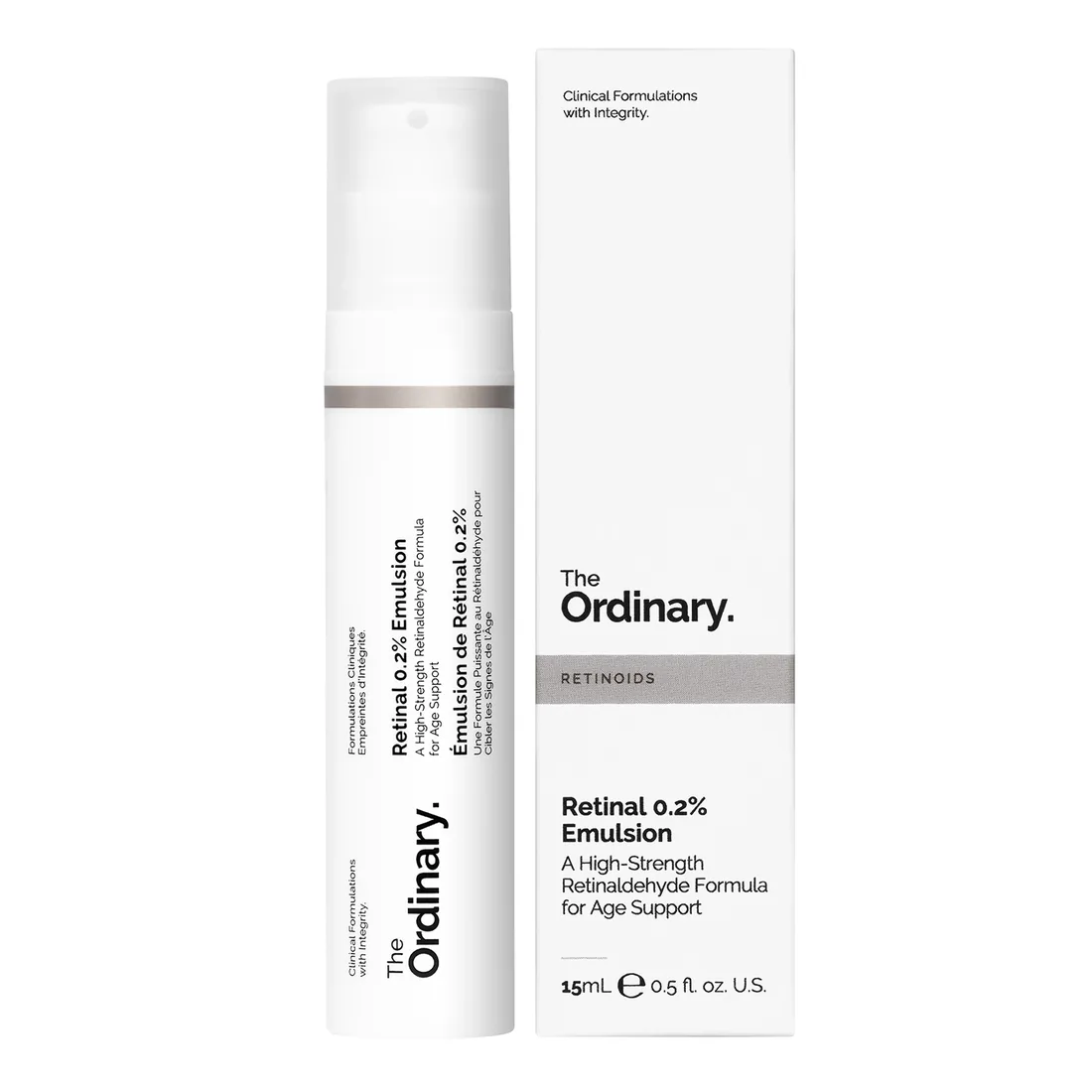
The Ordinary The Ordinary Retinal 0.2% Emulsion
- Retinaldehyde 0.2% — not covered by the EU capRetinoid form and stated concentration
- €18retail price
Details+
The strongest retinal here at 0.2%, in an airless pump — the right packaging for an oxidation-prone aldehyde, and notably better than the dropper bottles The Ordinary uses for its retinols.
- Strengths
- 0.2% retinaldehyde, the highest retinal concentration here
- Airless pump — correct packaging for an oxidation-prone aldehyde
- Ergothioneine, bisabolol and 4-t-butylcyclohexanol address irritation
- Not covered by the EU 0.3% cap
- €17.90 headline price
- Multiple antioxidants: ascorbyl palmitate, tocopherol
- Weaknesses
- 0.2% is too strong as a first retinoid — this is the top of Medik8's ladder
- 15 ml only, so €1.19 per ml despite the low headline price
- No published clinical testing
- Not encapsulated, unlike the Medik8 and Geek & Gorgeous retinals
- The Ordinary's retinol products in the same range use dropper bottles
8.2 / 10good
-
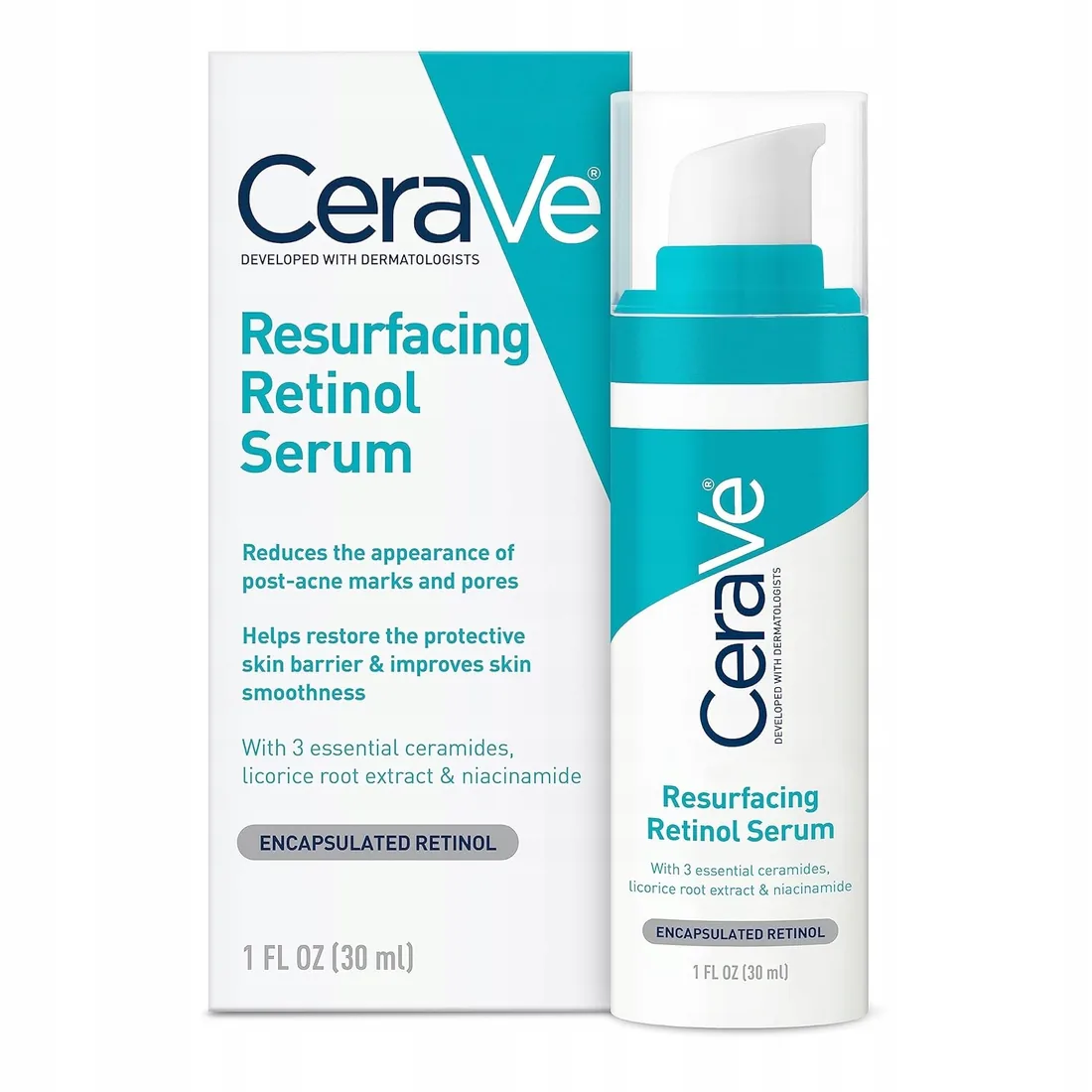
CeraVe CeraVe Resurfacing Retinol Serum
- Encapsulated retinol — concentration not disclosedRetinoid form and stated concentration
- €22retail price
Details+
Encapsulated retinol with ceramides and niacinamide, formulated for blemish-prone skin. The concentration is not disclosed anywhere — which is legal, and which is exactly the problem.
- Strengths
- Encapsulated retinol for stability and gentler release
- Ceramides and niacinamide support the barrier during retinisation
- Formulated for blemish-prone skin, where retinoids have the strongest evidence
- €0.73 per ml and very widely available in European pharmacies
- Licorice root extract as an additional soothing agent
- Weaknesses
- Concentration not disclosed anywhere — you cannot know what you are applying
- One-third of facial creams tested by Stiftung Warentest had too little vitamin A to work
- No published clinical testing for this product
- Full ingredient list not readily obtainable
- Contains restricted-category retinol, so subject to the EU cap
7.8 / 10fair
-
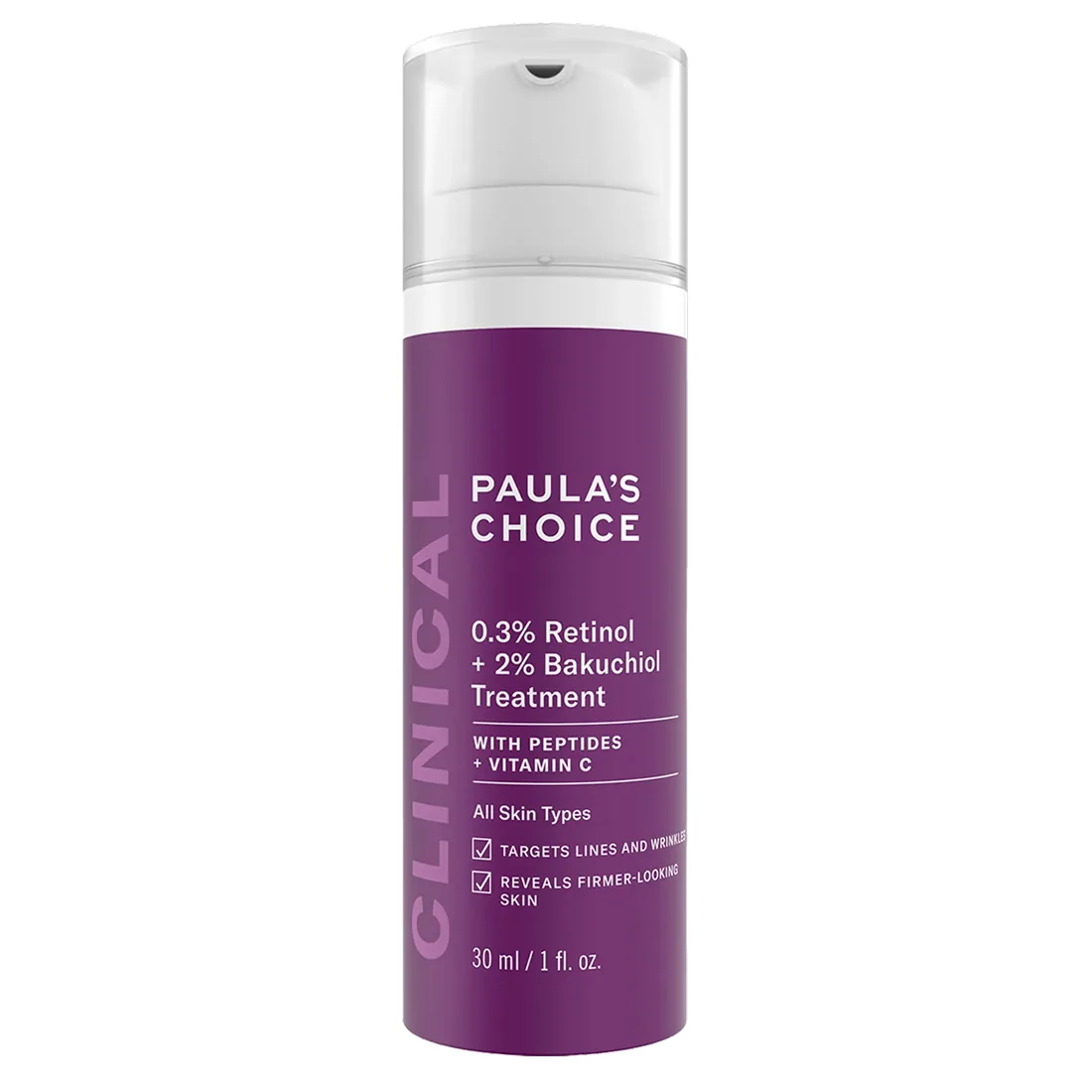
Paula's Choice Paula's Choice CLINICAL 0.3% Retinol + 2% Bakuchiol Treatment
- Retinol 0.3% — exactly at the EU legal limitRetinoid form and stated concentration
- €61retail price
Details+
Retinol at exactly 0.3%, the maximum the EU now permits, with ceramides and peptides. The one product here that is guaranteed to still exist in this formulation after May 2027.
- Strengths
- Exactly 0.3% retinol — the EU legal maximum, so it will not be reformulated or withdrawn
- Ceramide NG for barrier support during retinisation
- Two peptides: palmitoyl tetrapeptide-7 and palmitoyl hexapeptide-12
- Bakuchiol has genuine published comparative evidence behind it
- 60-day money-back guarantee
- Brand publishes evidence-based guidance on combining actives
- Weaknesses
- €61.20 for 30 ml — €2.04 per ml for a legally capped concentration
- The claim that bakuchiol "makes retinol more effective" is not substantiated
- No published clinical or third-party study cited for this product
- "Natural retinol" framing of bakuchiol is chemically inaccurate
- 0.3% retinol is below the 0.4% used in the best-evidenced retinol trial
7.7 / 10fair
-
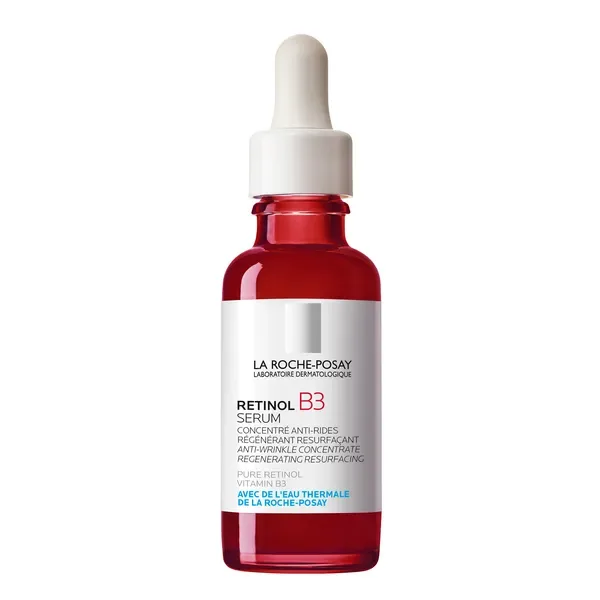
La Roche-Posay La Roche-Posay Retinol B3 Serum
- Retinol + retinyl palmitate — concentrations not disclosedRetinoid form and stated concentration
- €39retail price
Details+
A pharmacy-brand serum combining retinol with retinyl palmitate and niacinamide. Both retinoids are restricted substances under the EU cap, and neither concentration is published.
- Strengths
- Niacinamide high in the formula — a well-tolerated retinoid pairing
- La Roche-Posay's sensitive-skin formulating record
- Very wide European pharmacy distribution
- Sodium hyaluronate, adenosine and glycerin for hydration and barrier support
- Street price well below RRP, from around €29
- Weaknesses
- Neither retinoid concentration is disclosed
- Contains two of the three EU-restricted substances
- Glass dropper bottle — the wrong packaging for a light-sensitive active
- Contains alcohol denat. and cyclohexasiloxane high in the formula
- No published clinical testing located
7.6 / 10fair
-
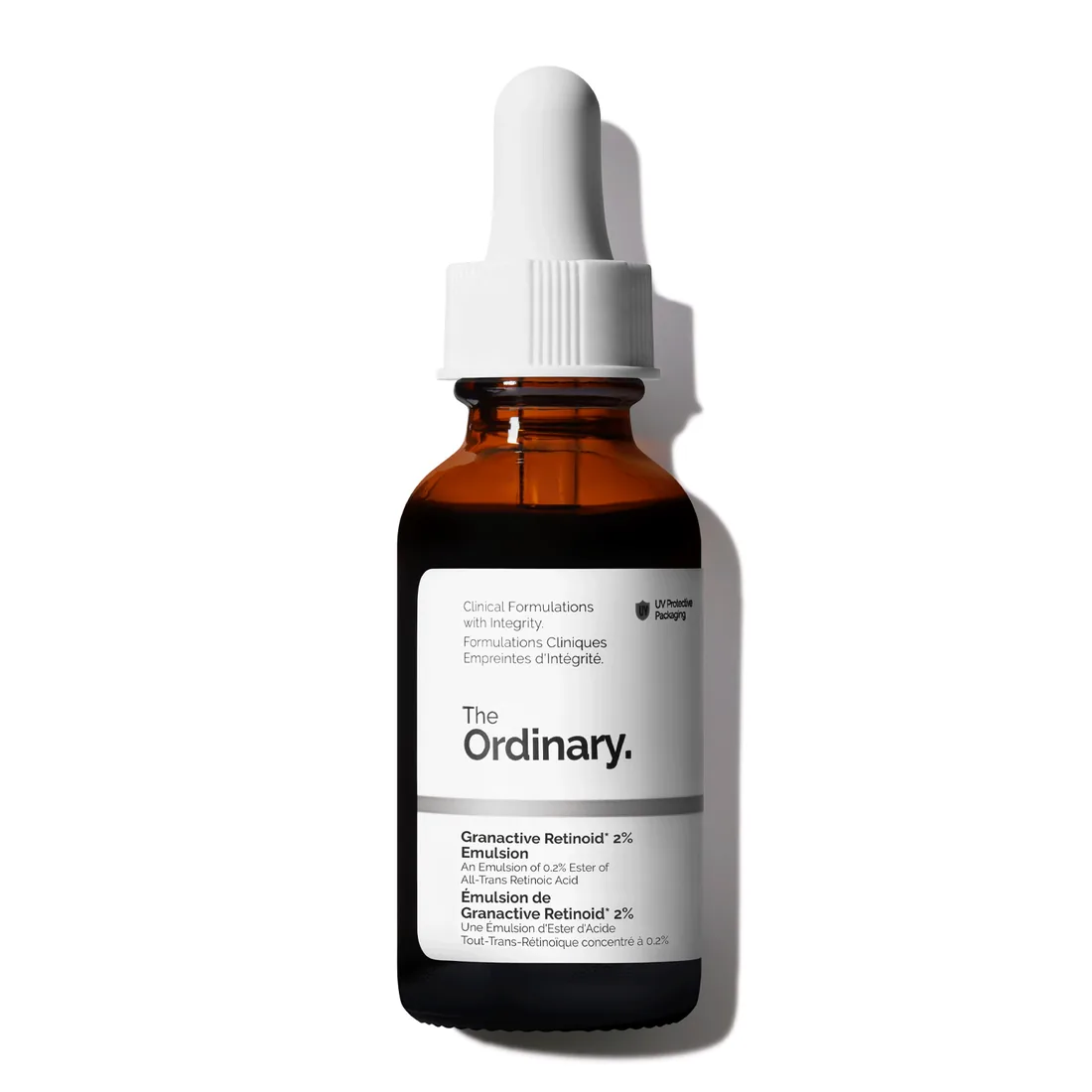
The Ordinary The Ordinary Granactive Retinoid 2% Emulsion
- Hydroxypinacolone retinoate — not covered by the EU capRetinoid form and stated concentration
- €13retail price
Details+
Hydroxypinacolone retinoate, a retinoid ester outside the scope of the EU cap, at €13.30. But the meaning of the "2%" is genuinely contested, and that is a problem.
- Strengths
- €13.30 for 30 ml — €0.44 per ml, the cheapest cap-exempt option here
- Hydroxypinacolone retinoate is outside the scope of the EU restriction
- A retinoic acid ester that binds retinoid receptors more directly than retinol
- Generally well tolerated with a low irritation reputation
- Emulsion base rather than an anhydrous oil
- Weaknesses
- The meaning of "2%" is contested — brand glossary and community understanding differ tenfold
- Thinner evidence base than retinol or retinaldehyde
- No published clinical trial for this product
- No independent European test result found
- Cannot be meaningfully compared in strength to a retinol or retinal product
7.6 / 10fair
-
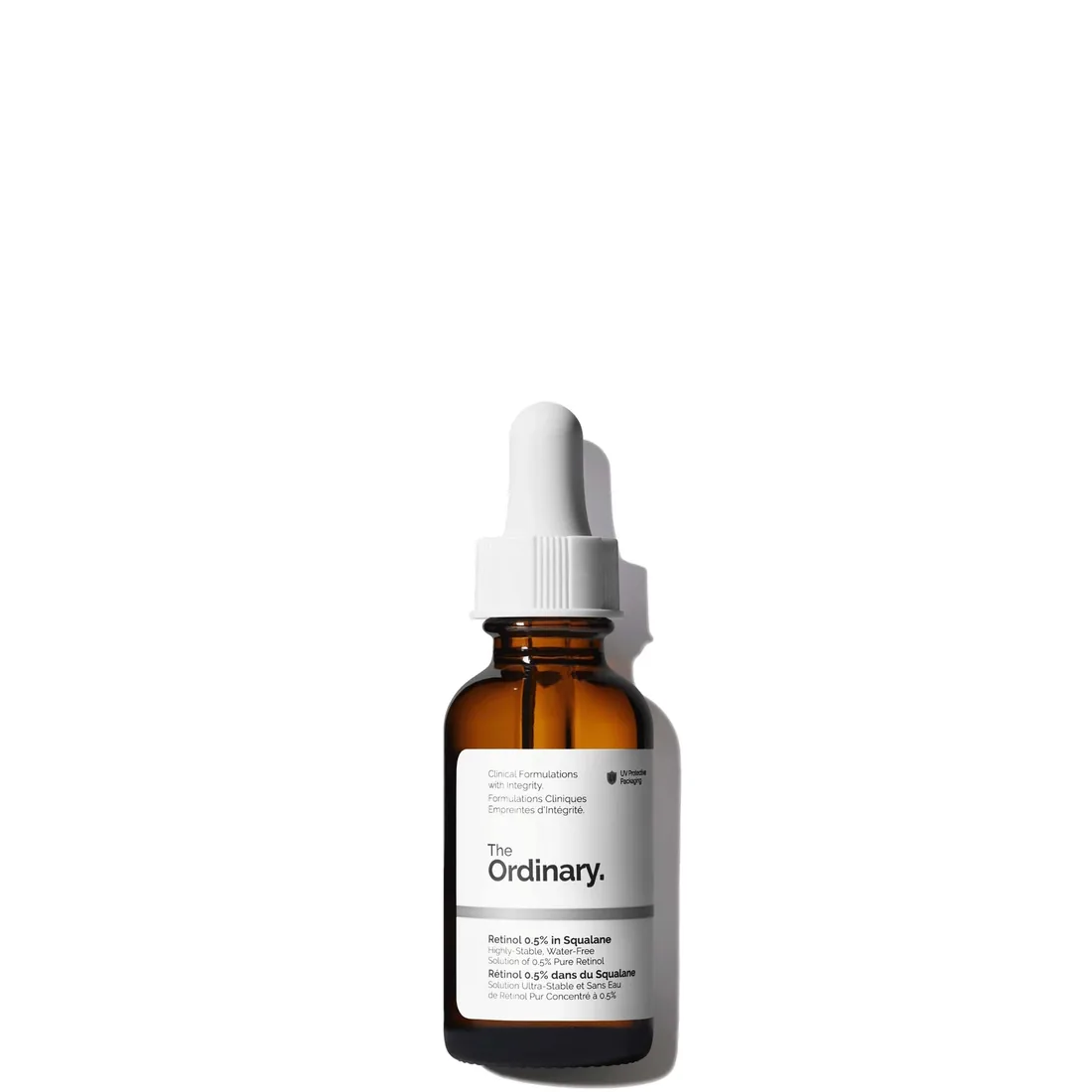
The Ordinary The Ordinary Retinol 0.5% in Squalane
- Retinol 0.5% — above the EU 0.3% limitRetinoid form and stated concentration
- €10retail price
Details+
The cheapest product here at €10.40, and included as a caution. At 0.5% it exceeds the EU limit for retinol, and it ships in a dropper bottle the brand tells you to refrigerate and finish within three months.
- Strengths
- €10.40 for 30 ml — €0.35 per ml, the cheapest here by a wide margin
- Simple, clean anhydrous formula with BHT antioxidant
- Squalane and jojoba base is well tolerated by dry skin
- 0.5% is close to the 0.4% used in the best-evidenced retinol trial
- Legal to sell and use through the transition period
- Weaknesses
- 0.5% exceeds the EU 0.3% retinol limit — this formulation ends by 1 May 2027
- Dropper bottle reintroduces air on every use
- Brand advises refrigerating after opening and using within three months
- No encapsulation and no time-release system
- No published clinical testing
7.0 / 10fair
Scores comparable only within this categorySignificance threshold: ±0.15 pt
8.8 Our verdict
Retinaldehyde is the sensible answer to the EU restriction, and the two products to look at are the Medik8 Crystal Retinal 6 and the Geek & Gorgeous A-Game 10. Both use retinal, both encapsulate it in cyclodextrin for stability, both ship in packaging that protects an oxidation-prone molecule — and neither is affected by the 0.3% cap. The Geek & Gorgeous costs €18.80 against Medik8's €64.69 for the same 30 ml.
If you want to stay with plain retinol, buy at 0.3%. Paula's Choice CLINICAL sits exactly on the legal limit, which means it will still exist in this form in 2028. Anything above 0.3% retinol is a product with a shelf life measured in months, not a formulation strategy.
Be sceptical of the potency claims that are about to flood the market. The "retinal converts 11 times faster than retinol" figure traces to a single 1990 in-vitro enzyme assay measuring conversion rates in cell protein — not to any clinical comparison of wrinkle outcomes. It is a real finding about metabolism, routinely presented as though it were a finding about results. Expect a wave of "retinal is the new retinol" marketing through the May 2027 deadline, driven by regulatory scope rather than new evidence.
Two things matter more than the percentage. Packaging — retinoids degrade in light and air, and a dropper bottle reintroduces air on every use. And consistency — the best retinol trial available found benefits had largely disappeared 24 weeks after treatment stopped. This is maintenance, not a cure.
The law
What the EU retinol restriction actually says
Commission Regulation (EU) 2024/996 of 3 April 2024 amended Annex III of the Cosmetics Regulation (EC) 1223/2009. Here is exactly what it does, from the Official Journal text.
Substances covered — exactly three
| Substance | CAS |
|---|---|
| Retinol | 11103-57-4 / 68-26-8 |
| Retinyl acetate | 127-47-9 |
| Retinyl palmitate | 79-81-2 |
Maximum concentrations
| Product category | Limit |
|---|---|
| Body lotion | 0.05% retinol equivalent |
| Other leave-on and rinse-off products | 0.3% retinol equivalent |
A correction to how this is usually reported. Most coverage describes the 0.3% cap as applying to "face products". The regulation's actual wording is "other leave-on and rinse-off products" — 0.3% is the catch-all limit for everything except body lotion. Body lotion is the carve-out, not face.
Mandatory label warning
Products carrying these substances must state: "Contains Vitamin A. Consider your daily intake before use."
The two deadlines
| Date | Effect |
|---|---|
| 1 November 2025 | Non-compliant products may no longer be placed on the EU market |
| 1 May 2027 | Non-compliant products may no longer be made available on the market — existing stock must clear |
The first deadline has passed. The sell-through window closes in about eight months, which is why over-strength retinol is still on European shelves today.
What is NOT covered — the point most guides miss
Retinaldehyde (retinal) and hydroxypinacolone retinoate are not in scope. The Annex III entry names three substances and neither of these is among them.
This creates a genuine regulatory asymmetry. Retinal is arguably more potent per unit than retinol, and it remains entirely unrestricted — because it was not part of the scientific dossier that drove the cap. The restriction is a vitamin A systemic-intake measure, not a potency measure.
The industry has already responded. Medik8 discontinued two of six EU retinol products and redirected consumers to retinaldehyde. The Inkey List was reported as moving non-compliant retinol stock to North America.
The reasoning
Why the EU capped retinol — and why it is not about your skin
Most consumer coverage reports the restriction as "the EU thinks retinol is unsafe for skin". That is wrong, and the actual reasoning is more interesting.
From the Scientific Committee on Consumer Safety opinion that drove the change:
- The SCCS used 1,500 µg retinol equivalent per day (5,000 IU) as the reference upper intake level for adults — chosen deliberately low "to take into account more susceptible populations, such as women suffering from osteoporosis".
- Children aged 1–3: 800 µg RE/day. Children 4–6: 1,100 µg RE/day.
- Cosmetics contribute roughly 33.5% of the adult upper limit in a worst-case scenario.
- The decisive finding: at the 95th percentile, dietary exposure alone already reaches 1,614 µg RE/day — above the 1,500 µg limit — before any cosmetics at all. Adding cosmetics takes the combined figure to 2,367 µg RE/day.
So the restriction is about aggregate vitamin A load in the most-exposed 5% of the population, driven mainly by liver consumption and supplements, with cosmetics as the marginal contributor the Commission could actually legislate. It is not a finding that topical retinol damages skin.
The awkward consequence
The best-evidenced retinol concentration in the clinical literature is 0.4% — from Kafi et al., published in Archives of Dermatology in 2007, which is now above the EU legal limit. A published molecular review notes plainly that "a significantly higher concentration of ROL (0.4%) is required to attain similar outcomes as observed with topical retinoic acid".
Europeans buying retinol from 2027 onwards will be buying below the concentration with the strongest supporting trial. Retinaldehyde, which is uncapped, is the practical answer.
Evidence
What retinoids actually do, and how long the benefit lasts
The mechanism
Topical retinoids drive keratinocyte proliferation, epidermal and dermal thickening, fibroblast growth and dermal angiogenesis, and activate the TGF-β / CTGF pathway to produce mature collagen — while simultaneously reducing collagen breakdown by decreasing matrix metalloproteinase production.
At molecular level, a 2023 review in Biomolecules reports that topical retinol increases Type I collagen, fibronectin and tropoelastin, upregulates TGF-β1 mRNA, decreases the inhibitory Smad7, and reduces CCN1 expression — a negative regulator of collagen homeostasis.
The best single retinol trial
Kafi et al., Archives of Dermatology, 2007. Thirty-six elderly subjects enrolled, 23 completed, mean age 87. A 0.4% retinol lotion applied to one arm against vehicle on the other, up to three times weekly for 24 weeks.
- Fine wrinkles improved from week 4, significant at 24 weeks (P<0.001)
- Glycosaminoglycan expression up about 40% versus vehicle (P=0.02)
- Procollagen I significantly increased (P=0.049)
And the finding nobody quotes: the benefits regressed. Improvement had lessened by 12 weeks after treatment stopped and showed no significant difference from vehicle by 24 weeks post-treatment.
That is the single most important practical fact about retinoids. This is maintenance, not a cure. Stopping returns you to baseline within roughly six months.
Acne
The 2024 American Academy of Dermatology acne guidelines give topical retinoids a strong recommendation, for unclogging pores and reducing inflammation, usable alongside benzoyl peroxide or antibiotics. Note these guidelines concern prescription retinoids — adapalene, tretinoin, tazarotene, trifarotene — not cosmetic retinol, which is considerably weaker. If acne is your reason for buying, a doctor can prescribe something better than anything in this ranking.
Retinal versus retinol: what is actually established
The industry-standard "11 times faster" claim traces to Siegenthaler et al. 1990, which measured conversion to retinoic acid at 51.6 pmol/h per mg protein for retinaldehyde against 4.49 for retinol — a ratio of about 11.5.
That is an in-vitro enzyme-kinetics measurement, not a clinical outcome comparison. It establishes that retinal converts faster in a metabolic assay. It does not establish 11 times better wrinkle reduction, and no trial has tested that.
Better-grounded support for retinal: published work confirms its activities are "qualitatively identical" to retinoic acid's, that it works via conversion to retinoic acid, and — usefully — that topical retinaldehyde is less irritating than retinoic acid.
Using them
Retinisation, sun, pregnancy, and what not to combine
The irritation phase
The side-effect cluster is well documented: erythema, peeling, scaling, dryness, burning and itching. The clinical protocol is to start at a low concentration, begin with three applications a week, and increase by tolerance.
The AAD advises using "the least-intense retinoid formula they can find" every other night to start. It also specifically warns that in darker skin tones, retinoid irritation can trigger post-inflammatory hyperpigmentation — an under-reported point and a strong reason to build up slowly.
An honest note on the "4 to 6 week purge": we could not trace that figure to any primary clinical source. Clinical reviews and the AAD give titration protocols but no defined purge duration. Treat it as folklore rather than a timetable.
Sun: what is true and what is overstated
Two claims get conflated constantly.
True: retinoids photodegrade. This is the actual reason for night application — the molecule breaks down in light. Adapalene is more photostable, which is why it can be used in daytime.
Overstated: retinoids make skin permanently sun-sensitive. Photosensitivity appears among irritation-phase side effects, and night application is recommended partly to reduce absorption and irritation — not because retinol is a photosensitiser in the phototoxic-drug sense.
The honest framing: apply at night because the molecule degrades in light and irritation is lower. Wear sunscreen daily because you are thinning the stratum corneum during retinisation, and because sunscreen is the actual anti-photoaging intervention — considerably more effective than any retinoid at preventing further damage.
Pregnancy
The standard guidance is unambiguous. The AAD states: "Retinoids should not be used during pregnancy." Brands advise avoiding during pregnancy and breastfeeding.
The evidence deserves an honest presentation. A Nordic cohort study published in the British Journal of Dermatology in 2026, covering registers from Denmark, Iceland, Norway and Sweden — 3,869,586 infants, of whom 2,172 had first-trimester topical retinoid exposure — found major congenital malformations in 3.3% of exposed versus 3.0% of unexposed, adjusted relative risk 1.10 (95% CI 0.87–1.38). Against active comparators the adjusted RR was 1.13 (95% CI 0.87–1.47). The authors state: "We did not observe an increased risk of MCM associated with use of topical retinoids."
And they still conclude topical retinoids should be avoided in women who are or plan to become pregnant, citing selection bias from excluding early pregnancy losses. The teratogenicity concern derives from oral isotretinoin and acitretin; research on topical forms remains inconclusive.
Follow the avoid-in-pregnancy advice. But you should know that a study of nearly four million infants did not detect a signal, and that this is a precautionary position rather than a demonstrated harm.
The "never combine with vitamin C" rule is largely wrong
A 2024 clinical review states that vitamin C, retinoids and sunscreen "are safe to use together", recommending the order: vitamin C or retinol, then moisturiser, then sunscreen. Paula's Choice's own guidance says the same about vitamin C, BHA, AHA and niacinamide.
The formulations prove it. Medik8 Crystal Retinal 6 contains ethyl ascorbic acid and tetrahexyldecyl ascorbate in the same bottle as the retinal. The Ordinary's Retinal contains ascorbyl palmitate. Brands that understand retinoid chemistry put vitamin C derivatives alongside them deliberately.
The one genuinely supported caution is cumulative irritation, not chemical incompatibility — and the strongest version of it is not to layer multiple separate retinoid products. Think of it as an irritation budget, not a chemistry problem.
Packaging
Why the bottle matters as much as the percentage
Retinoids degrade through light, oxygen and heat. A perfectly formulated 0.3% retinol in the wrong container is a weaker product after six weeks than a 0.1% retinal in the right one.
You can see how seriously a brand takes this from the formula itself. Every well-made product in this ranking carries antioxidant and chelator protection: BHT in The Ordinary's retinol and in Medik8's retinal, tocopherol and tocopheryl acetate throughout, disodium EDTA as a chelator in Medik8. Medik8 goes further and includes titanium dioxide as an opacifier, protecting the active from light through the formula rather than relying only on the bottle.
Encapsulation does double duty. Medik8 describes its cyclodextrin system as "a time-release mechanism as well as a stability enhancer". Geek & Gorgeous uses cyclodextrin identically. CeraVe encapsulates its retinol. Encapsulation is one of the few genuinely substantive formulation features in this category.
The sharpest example
The Ordinary ships its Retinal 0.2% — an oxidation-prone aldehyde — in an airless pump, which is exactly right. And it ships its Retinol 0.5% and 1% in dropper bottles, which draw fresh air into the bottle every time you use them — while telling you to refrigerate after opening and finish within three months.
The same company, in the same product range, chose the correct format for one molecule and the wrong one for another. La Roche-Posay also uses a dropper.
What to look for, in order of preference: airless pump > opaque tube > opaque bottle with a pump > dropper bottle. And if the bottle is clear glass, keep it in a cupboard, not on the windowsill.
Independent testing
One-third of retinol creams are too weak to work
The only genuine European consumer test of this category we could locate is Stiftung Warentest, published 4 May 2026, under the headline "Kosmetik mit Vitamin A: Wirksamkeit oft fraglich" — cosmetics with vitamin A: efficacy often questionable.
It rests on laboratory analysis by CVUA Karlsruhe of 94 facial care products:
- About one-third of 70 facial creams contained too little vitamin A for an anti-ageing effect.
- Only around a third of 24 sheet masks and eye pads had effective vitamin A levels — and the mask material may absorb the vitamin A before it reaches skin.
- Stiftung Warentest cites 0.05% retinol as a minimum threshold for efficacy.
- Project leader Dr Thomas Koppmann: retinol can improve skin appearance and give a temporary plumping effect — but cannot stop or reverse ageing.
This finding cuts both ways at once, and that is what makes it valuable. The regulator is capping the strong products while a third of the market is too weak to do anything.
The practical consequence: a product that does not disclose its concentration could be anywhere between ineffective and at the legal maximum, and there is no lawful requirement to tell you which. Of the eight products here, two do not disclose their concentration at all — the CeraVe and the La Roche-Posay — and a third, The Ordinary's Granactive Retinoid, discloses a figure whose meaning is contested by a factor of ten.
No test result was found from Which?, Que Choisir or Öko-Test for this category in 2024–2026.
Marketing decoded
Five claims to distrust
"Clinical strength" and "clinical grade". Neither term has any regulatory meaning in the EU. Medik8 markets results "comparable to clinical-grade vitamin A", which is a comparison to a category that does not formally exist.
A percentage without a named form. The single most misleading practice in this category. "2% retinoid" (an HPR complex), "1% retinyl acetate" and "1% retinol" describe wildly different delivered retinoic-acid activity. The AAD confirms there is no requirement to disclose the retinol percentage at all — so a brand may state a number, state nothing, or state a number about a complex rather than an active.
"11 times faster than retinol." Traceable to one 1990 in-vitro enzyme assay measuring conversion kinetics in cell protein. Medik8 cites the study on its technical page and states the figure without citation on its consumer page. It is a real measurement of metabolism presented as a claim about results.
Bakuchiol as "natural retinol". Bakuchiol is structurally unrelated to vitamin A — the description is chemically false. It does have real evidence: Dhaliwal et al. published a randomised double-blind comparison against retinol in the British Journal of Dermatology in 2019. But that trial tested it as an alternative, not as an enhancer, and the claim that bakuchiol "makes retinol more effective" is a separate proposition that is not substantiated. Bakuchiol is also not covered by the EU cap.
The coming repositioning wave. Expect heavy "retinal is the new retinol" marketing between now and 1 May 2027. The driver is regulatory scope, not new efficacy evidence. Retinal is a genuinely good choice — but buy it because it is well formulated and uncapped, not because a brand has discovered something about it recently.
Methodology
How this score is built
The score is the mean of four component scores — each carries equal weight and each rests on a named source. The full procedure is described in the methodology.
01Composition and specification
Declared composition and specification: active ingredients and their concentrations, energy classes, standards, technical parameters — and what the manufacturer leaves unsaid.
02Evidence and studies
Verification of the manufacturer's claims against outside sources: laboratory reports, industry testing, safety data sheets, certificates and regulatory decisions.
03Owner feedback
Analysis of verified reviews written after extended use, together with recurring fault reports for the model or series.
04Cost and value
Price set against what the product actually delivers, plus costs incurred later — consumables, energy, servicing, subscriptions — over the lifespan typical for the category.
FAQ
Frequently asked questions
Which retinol serum should most people buy in Europe now?+
A retinaldehyde product, because the EU cap does not cover it. The Geek & Gorgeous A-Game 10 at €18.80 gives you 0.1% cyclodextrin-encapsulated retinal for a third of the price of the equivalent Medik8; the Medik8 Crystal Retinal 6 at €64.69 has the better formulation and a five-step strength ladder. If you specifically want plain retinol, buy at 0.3% — the Paula's Choice CLINICAL sits exactly on the legal limit and will not be reformulated.
Is my 0.5% or 1% retinol serum now illegal?+
No. The restriction regulates suppliers, not consumers. Products placed on the EU market before 1 November 2025 may lawfully be sold through until 1 May 2027, and using a product you already own is not restricted at all. What it means is that those formulations are being phased out and will not return at those strengths in Europe.
Why is retinal not covered by the EU cap?+
Because the restriction names exactly three substances — retinol, retinyl acetate and retinyl palmitate — and retinaldehyde is not among them. Neither is hydroxypinacolone retinoate. The cap is a vitamin A systemic-intake measure based on a scientific dossier that covered those three substances, not a ranking of potency. Retinal is arguably more potent per unit than retinol and remains entirely unrestricted.
What concentration do I actually need?+
Stiftung Warentest cites 0.05% retinol as a minimum threshold for efficacy, and its May 2026 laboratory analysis found roughly a third of facial creams fell below what is needed to work. At the other end, the best-evidenced retinol trial used 0.4% — which is now above the EU legal limit. So the useful range in Europe is roughly 0.05% to 0.3% for retinol, or a considerably lower figure for retinal, which is more potent per unit.
How long before I see results, and what happens if I stop?+
In the best available retinol trial, fine wrinkles improved from week 4 and reached statistical significance at 24 weeks, with glycosaminoglycan expression up about 40% and procollagen I significantly increased. But the same trial found the benefit had lessened by 12 weeks after stopping and showed no significant difference from vehicle by 24 weeks post-treatment. Retinoids are maintenance, not a cure.
Can I use retinol with vitamin C?+
Yes. A 2024 clinical review states vitamin C, retinoids and sunscreen are safe to use together, in the order vitamin C or retinol, then moisturiser, then sunscreen. The strongest evidence is commercial: Medik8's Crystal Retinal contains two vitamin C derivatives in the same bottle as the retinal, and The Ordinary's Retinal contains ascorbyl palmitate. The genuine caution is cumulative irritation, not chemical incompatibility — and specifically, do not layer multiple separate retinoid products.
Can I use retinol while pregnant?+
The standard advice from the American Academy of Dermatology is not to, and you should follow it. It is worth knowing that a 2026 Nordic cohort study of 3,869,586 infants found no increased risk of major congenital malformations from first-trimester topical retinoid exposure — adjusted relative risk 1.10, confidence interval 0.87 to 1.38 — and its authors still recommend avoidance, citing potential selection bias. The teratogenicity concern comes from oral isotretinoin, not topical products. If you are pregnant or planning to be, ask your doctor rather than a website.
Does the packaging really matter?+
Substantially. Retinoids degrade through light, oxygen and heat, and a dropper bottle draws fresh air into the bottle every time you use it. The clearest evidence is that The Ordinary tells you to refrigerate its dropper-packaged retinols and use them within three months, while packaging its retinal in an airless pump. Prefer an airless pump, then an opaque tube, then a pump bottle. A clear glass dropper on a bathroom windowsill is the worst case.
Is bakuchiol a real alternative to retinol?+
It has one good study behind it — a prospective randomised double-blind comparison against retinol published in the British Journal of Dermatology in 2019 — which is more than most "natural alternatives" can claim. But it is structurally unrelated to vitamin A, so calling it natural retinol is chemically false, and the separate claim that it makes retinol more effective is not substantiated. It is also not covered by the EU cap, which is likely to make it more prominent over the next two years.
Sources
Documents and standards
- 1. Commission Regulation (EU) 2024/996 of 3 April 2024, Official Journal text: https://eur-lex.europa.eu/legal-content/EN/TXT/PDF/?uri=OJ%3AL_202400996
- 2. SCCS opinion SCCS/1639/21 on vitamin A (European Commission, PDF): https://health.ec.europa.eu/system/files/2023-08/sccs_o_261.pdf
- 3. Obelis - Upcoming cosmetics deadline in the EU: retinol restrictions: https://www.obelis.net/news/upcoming-cosmetics-deadline-in-the-eu-new-restrictions-on-retinol-retinol-equivalents-and-triclocarban-and-triclosan/
- 4. BeautyMatter - The EU's new retinol safety rules: https://beautymatter.com/articles/eus-new-retinol-safety-rules
- 5. Stiftung Warentest - Kosmetik mit Vitamin A: Wirksamkeit oft fraglich (4 May 2026): https://www.test.de/Anti-Aging-Kosmetika-Kosmetik-mit-Vitamin-A-Wirksamkeit-oft-fraglich-6296951-0/
- 6. Kafi R et al. - Improvement of naturally aged skin with vitamin A (retinol), Archives of Dermatology 2007: https://pubmed.ncbi.nlm.nih.gov/17515510/
- 7. Biomolecules 2023;13(11):1614 - retinoids and skin collagen: https://www.mdpi.com/2218-273X/13/11/1614
- 8. ACOFP clinical review - Vitamin C, topical retinoids and sunscreen in clinical practice (2024): https://acofp.org/news-and-publications/journal/article-detail/vol-16-no-3-fall-2024/vitamin-c-topical-retinoids-sunscreen-in-clinical-practice-essentials-for-family-physicians
- 9. American Academy of Dermatology - Retinoid or retinol: https://www.aad.org/public/everyday-care/skin-care-secrets/anti-aging/retinoid-retinol
- 10. American Academy of Dermatology - Updated acne management guidelines (2024): https://www.aad.org/news/updated-guidelines-acne-management
- 11. Biological activities of topical retinaldehyde (PubMed): https://pubmed.ncbi.nlm.nih.gov/10473955/
- 12. Nordic cohort study on topical retinoids in pregnancy, British Journal of Dermatology 2026: https://academic.oup.com/bjd/article/194/4/640/8375699
- 13. Dhaliwal S et al. - Bakuchiol vs retinol for facial photoageing, British Journal of Dermatology 2019: https://academic.oup.com/bjd/article-abstract/180/2/289/6601687
- 14. Medik8 - Crystal Retinal collection: https://www.medik8.com/collections/crystal-retinal
- 15. Medik8 - Testing and clinical studies: https://www.medik8.com.au/pages/testing-and-clinical-studies
- 16. Medik8 lab notes - The science of Crystal Retinal: https://int.medik8.com/blogs/lab-notes/crystal-retinal-the-science-of-skincare
- 17. Geek & Gorgeous - A-Game 10: https://geekandgorgeous.com/products/a-game-10
- 18. The Ordinary EU - Retinal 0.2% Emulsion: https://theordinary.com/en-de/retinal-02-emulsion-100646.html
- 19. The Ordinary EU - Retinol 0.5% in Squalane: https://theordinary.com/en-de/retinol-05-in-squalane-serum-100440.html
- 20. The Ordinary EU - retinoid category: https://theordinary.com/en-de/category/skincare/shop-by-ingredients/retinoids
- 21. NIOD / DECIEM - Granactive Retinoid ingredient glossary: https://niod.com/en-sn/granactive-retinoid-ingredient-glossary.html
- 22. Paula's Choice EU - CLINICAL 0.3% Retinol + 2% Bakuchiol Treatment: https://www.paulaschoice-eu.com/clinical-retinol-bakuchiol-treatment/m8015.html
- 23. Paula's Choice - Retinol with vitamin C, BHA, AHA and niacinamide: https://www.paulaschoice-eu.com/retinol-with-vitamin-c-bha-aha-niacinamide
- 24. Face the Future EU - CeraVe Resurfacing Retinol Serum: https://eu.facethefuture.store/products/cerave-resurfacing-retinol-serum-with-ceramides-niacinamide-for-blemish-prone-skin-30ml
- 25. Shop Apotheke DE - La Roche-Posay Retinol B3 Serum: https://www.shop-apotheke.com/beauty/16652242/la-roche-posay-retinol-b3-serum.htm
- 26. Geizhals - La Roche-Posay Retinol B3 Serum price comparison: https://geizhals.de/la-roche-posay-retinol-b3-serum-a2532803.html
- 27. Notino DE - Medik8 Crystal Retinal 6 ingredient list: https://www.notino.de/medik8/crystal-retinal-6-intensives-feuchtigkeitsspendendes-serum-gegen-falten-mit-vitamin-a-und-e/
- 28. PromoFarma - Medik8 Crystal Retinal 6 price: https://www.promofarma.com/en/medik8-crystal-retinal-6-30ml/p-689662
More
Other rankings
in
Health & beauty.
Each category has its own protocol and its own key parameter.