Health & beautyAnalysis 141
Best Vitamin C Serums
Vitamin C serums are one of the most crowded shelves in European skincare, and one of the hardest to compare. Two bottles can both say „vitamin C“ while one contains 20% L-ascorbic acid and the other an undisclosed fraction of a percent of a derivative. Prices for 30 ml run from about six euros to €184.
We compared ten serums sold in the EU on what their makers and a major EU retailer actually publish: the form of vitamin C, its declared percentage, supporting antioxidants such as vitamin E and ferulic acid, fragrance and alcohol, pack size and price per 30 ml. We read the claims against the EU cosmetics rules and against what a peer-reviewed review says about pH, concentration and derivatives.
The short version: seven of the ten use L-ascorbic acid at 10–23%; three use ethylated derivatives, two of them without a stated dose. None publishes its pH, and the cheapest properly dosed formulas are close relatives of far pricier ones.
Methodology note
This ranking is desk research carried out in October 2026; we did not test any product on skin or in a laboratory. Compositions and percentages come from the manufacturers' German product pages where they loaded (SkinCeuticals, La Roche-Posay, Vichy, CeraVe, Garnier) and otherwise from Notino.de product listings (The Ordinary, L'Oréal Paris, SVR, Sesderma, Revox B77); the La Roche-Posay page loads mostly via script, so its 12% figure and INCI are from Notino. Prices are Notino.de prices seen in October 2026, except SkinCeuticals, which is not sold there and is the manufacturer's list price. Owner scores use ratings shown on Notino.de and Garnier.de; most products have very few reviews. For CeraVe and Vichy the Notino listing shows an older ingredient list than the manufacturer; we use the manufacturer's. No brand publishes pH, and we found no independent laboratory test of these products. Several PubMed and PMC pages blocked access during research, so we quote only one peer-reviewed review we could read in full. Paula's Choice, Medik8, Drunk Elephant and others were considered but could not be verified.
 7.5BPR score
Key parameter
Form of vitamin C and declared concentration
Whether a serum uses L-ascorbic acid or a derivative, and how much of it, decides what the published evidence can say about it. We take the form from the INCI list and the percentage only from the manufacturer's page or, where that would not load, the retailer listing; where neither states a figure we write „not published“.
-
Top score
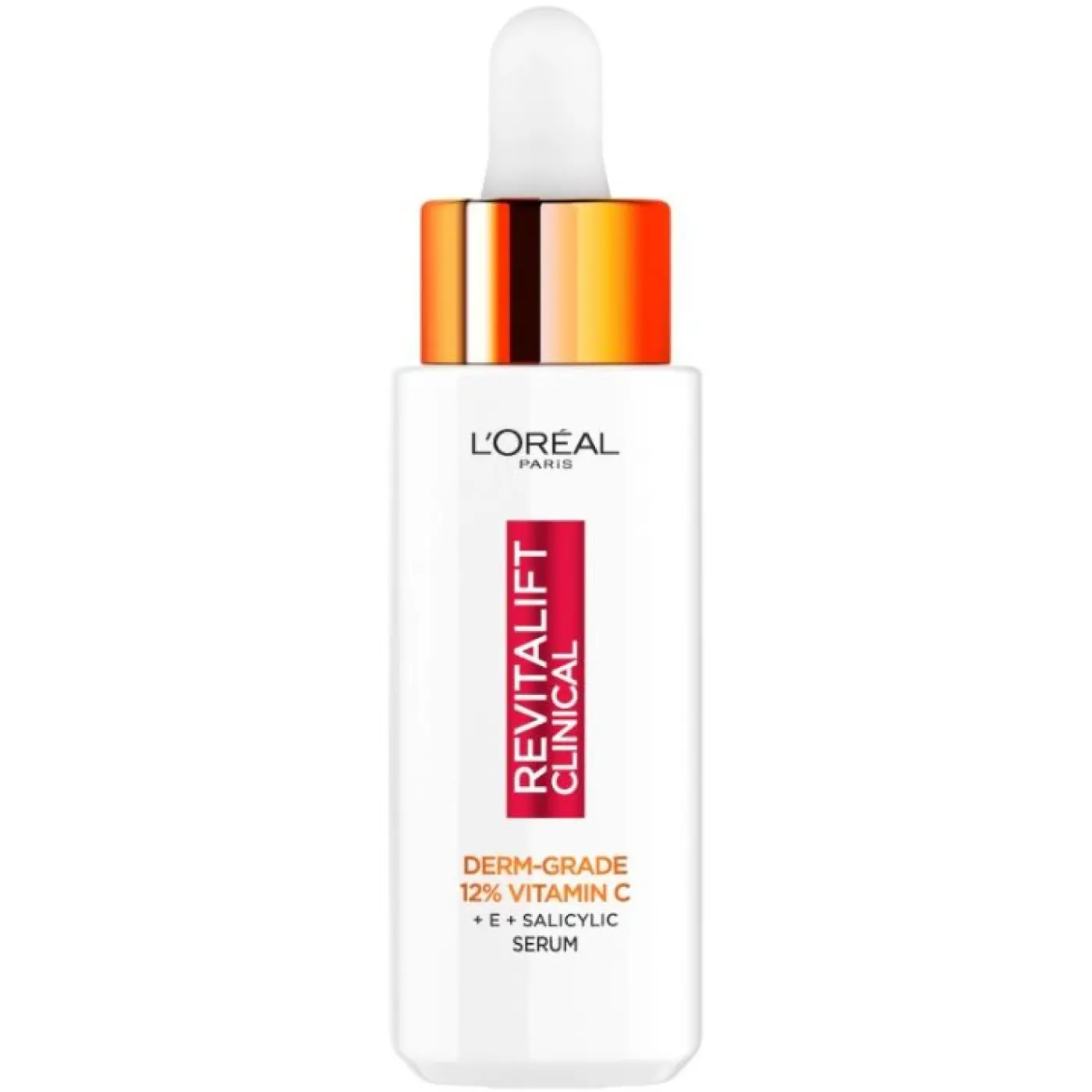
L'Oréal Paris Revitalift Clinical Vitamin C Serum
- 12% ascorbic acid (L-ascorbic acid) — percentage stated in the Notino.de listing; L'Oréal's own page could not be openedForm of vitamin C and declared concentration
- €1830 ml
Details+
A 12% L-ascorbic acid serum with tocopherol, hyaluronate and a little salicylic acid for under €18 — the cheapest way into a properly dosed pure vitamin C formula from a major EU brand.
- Strengths
- 12% L-ascorbic acid, second in the INCI list
- Contains tocopherol (vitamin E) as a supporting antioxidant
- €17.90 for 30 ml — the lowest price for a 10%+ L-ascorbic acid serum from a large EU group
- Same base chemistry as La Roche-Posay Pure Vitamin C12
- 4.5/5 average from 20 Notino reviews
- Weaknesses
- Contains parfum and alcohol denat. (fifth ingredient)
- pH not published
- No clinical study with participant numbers seen
- Manufacturer page could not be opened — data from retailer listing
7.5 / 10fair
-
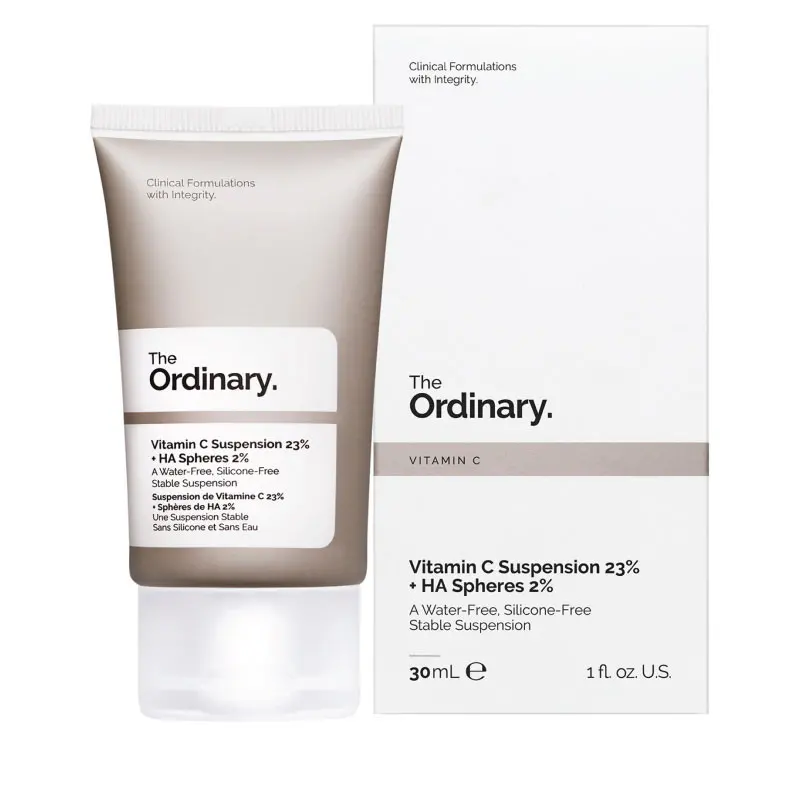
The Ordinary Vitamin C Suspension 23% + HA Spheres 2%
- 23% L-ascorbic acid in a water-free suspension — percentage in the product nameForm of vitamin C and declared concentration
- €930 ml
Details+
The highest declared L-ascorbic acid percentage in this ranking, suspended in a water-free silicone-and-squalane base so that the vitamin is not dissolved until it meets the skin.
- Strengths
- 23% L-ascorbic acid — the highest declared dose here
- Water-free base, so the vitamin is not dissolved in storage
- €9.30 for 30 ml
- Short, fragrance-free ingredient list
- Includes sodium hyaluronate
- Weaknesses
- Above the 10–20% range the 2017 review calls optimal; review notes possible irritation at higher doses
- No vitamin E or ferulic acid
- No published study of any kind
- Only five Notino reviews
- Official product page could not be opened
7.2 / 10fair
-
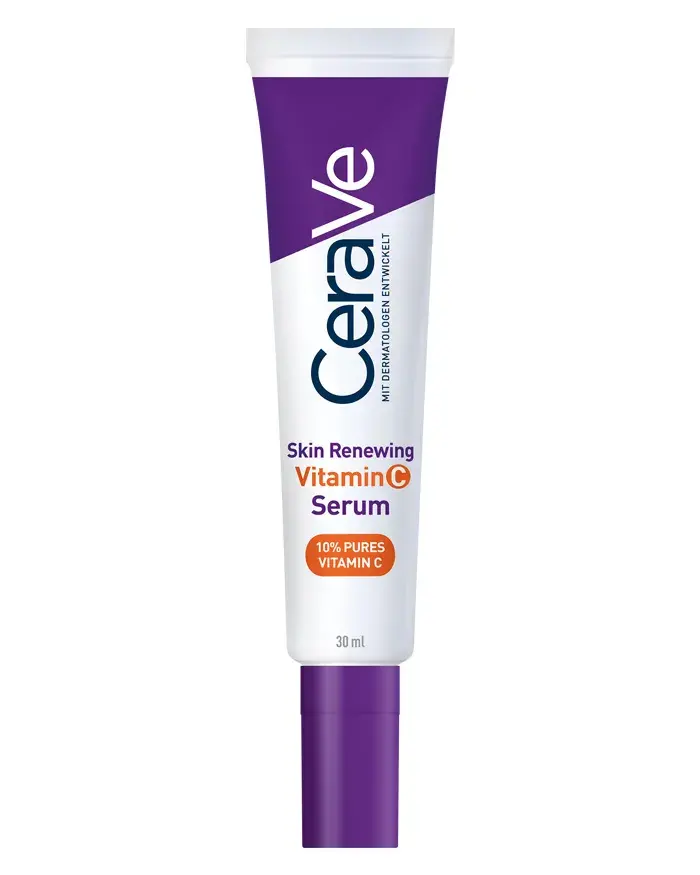
CeraVe Skin Renewing Vitamin C Serum
- 10% pure vitamin C (ascorbic acid) — published by CeraVe; a retailer listing shows an older ingredient list with sodium ascorbyl phosphateForm of vitamin C and declared concentration
- €2630 ml
Details+
A 10% L-ascorbic acid serum built on CeraVe's ceramide and cholesterol base, without fragrance — the gentlest-looking pure vitamin C formula in the list, at a mid-market price.
- Strengths
- 10% ascorbic acid, second in CeraVe's INCI list
- Ceramides NP, AP and EOP plus cholesterol and panthenol
- No fragrance on the manufacturer's ingredient list
- €25.50 for 30 ml
- Contains tocopheryl acetate (vitamin E)
- Weaknesses
- Retailer listing shows a different INCI (sodium ascorbyl phosphate, no ascorbic acid) — check the box
- pH not published
- No published study with participant numbers
- Only six Notino reviews
6.9 / 10acceptable
-
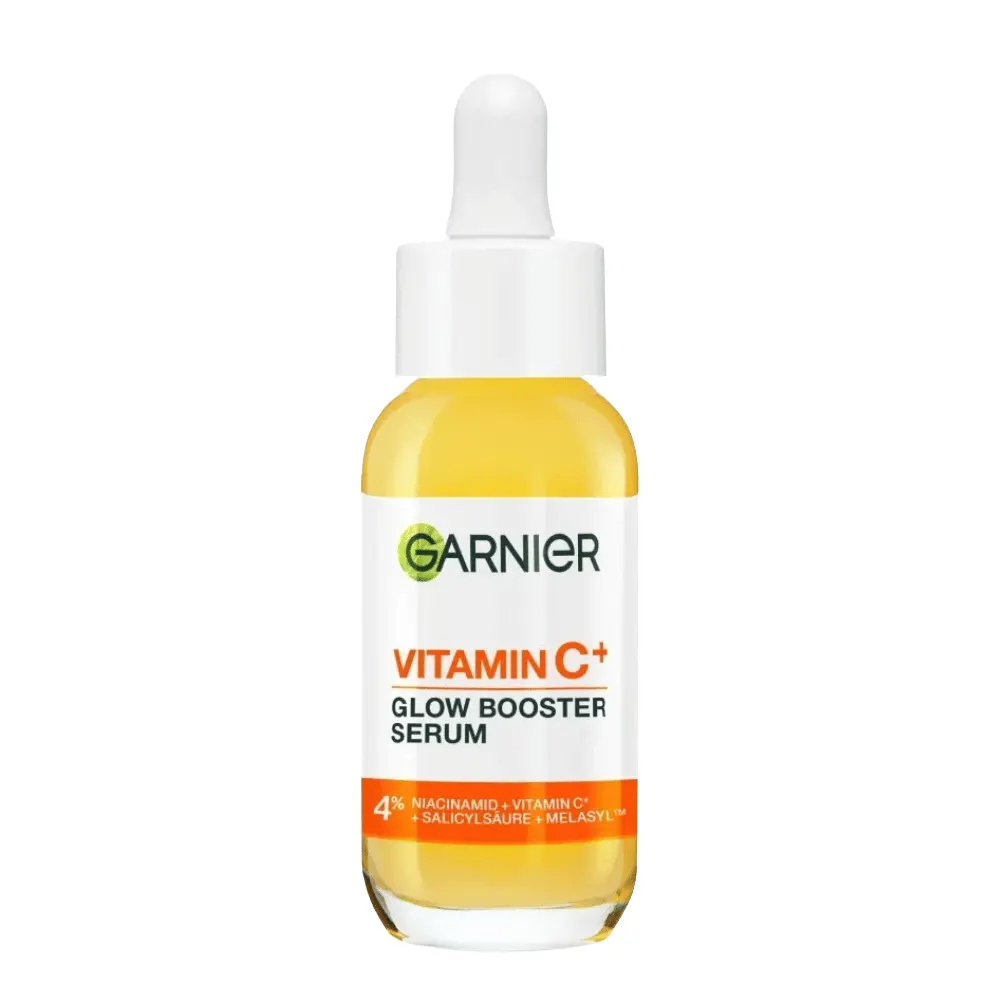
Garnier Vitamin C+ Glow Booster Serum
- 3-O-ethyl ascorbic acid; vitamin C percentage not published (Garnier quotes only a combined „4 %“ for niacinamide, vitamin C, salicylic acid and Melasyl)Form of vitamin C and declared concentration
- €1230 ml
Details+
A cheap, well-reviewed brightening serum that uses the derivative 3-O-ethyl ascorbic acid alongside niacinamide — but Garnier does not say how much vitamin C is in it.
- Strengths
- 4.67/5 from 1,264 reviews on Garnier.de
- €11.50 for 30 ml
- Stable derivative (3-O-ethyl ascorbic acid) with niacinamide
- Glass dropper bottle
- Contains tocopherol and tocopheryl acetate
- Weaknesses
- Vitamin C percentage not published
- Fragrance with linalool, limonene and geraniol
- Alcohol denat. third in INCI
- Speed claims (3 and 6 days) without published study details
6.9 / 10acceptable
-
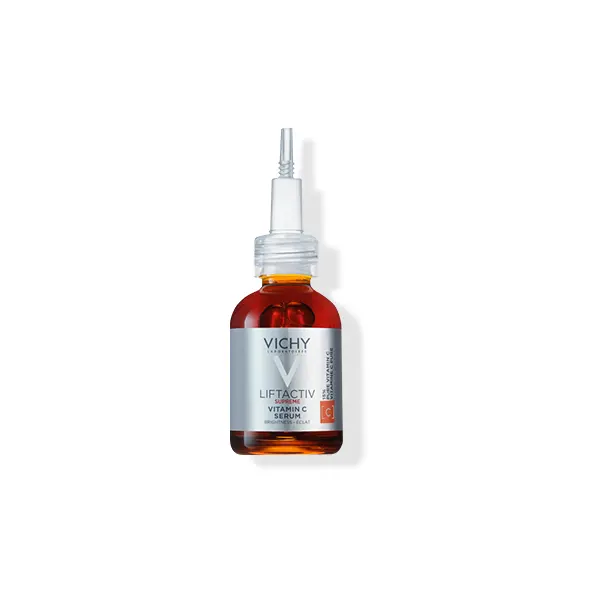
Vichy LiftActiv Vitamin C Serum
- 15% pure vitamin C (ascorbic acid) — published by VichyForm of vitamin C and declared concentration
- €3920 ml
Details+
A 15% L-ascorbic acid serum with vitamin E and pine-bark extract, backed by brand-run tests on 21 to 52 women — but sold in a 20 ml bottle, which makes it pricier than it looks.
- Strengths
- 15% ascorbic acid, second in Vichy's INCI list
- No fragrance on the manufacturer's ingredient list
- Contains tocopherol (vitamin E) and pine bark extract
- Brand tests name participant numbers and durations (21–40 women, up to 3 months)
- Weaknesses
- Only 20 ml — about €58 per 30 ml
- Alcohol denat. third in INCI
- Retailer listing shows an older INCI; stock may vary
- pH not published
- Only four Notino reviews
6.7 / 10acceptable
-
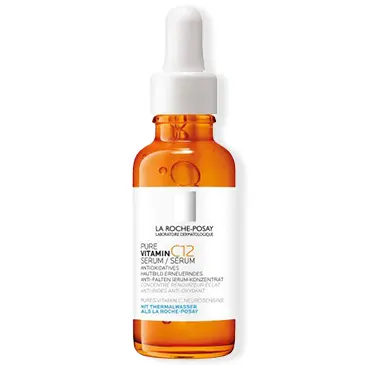
La Roche-Posay Pure Vitamin C12 Serum
- 12% pure ascorbic acid — stated in the Notino.de listing; La Roche-Posay's page names „reines Vitamin C12“Form of vitamin C and declared concentration
- €5030 ml
Details+
A fragrance-labelled but otherwise carefully built 12% L-ascorbic acid serum for sensitive skin, with a 63-person, 56-day brand test — at almost three times the price of its L'Oréal sibling.
- Strengths
- 12% ascorbic acid, second in INCI
- Brand test with numbers: 63 subjects, 56 days
- Contains tocopherol and two forms of hyaluronic acid
- Positioned for sensitive skin (Neurosensine)
- Weaknesses
- €50.50 for a formula close to a €17.90 sibling
- Contains parfum and alcohol denat.
- pH not published
- 3.0/5 from only four Notino reviews
6.6 / 10acceptable
-
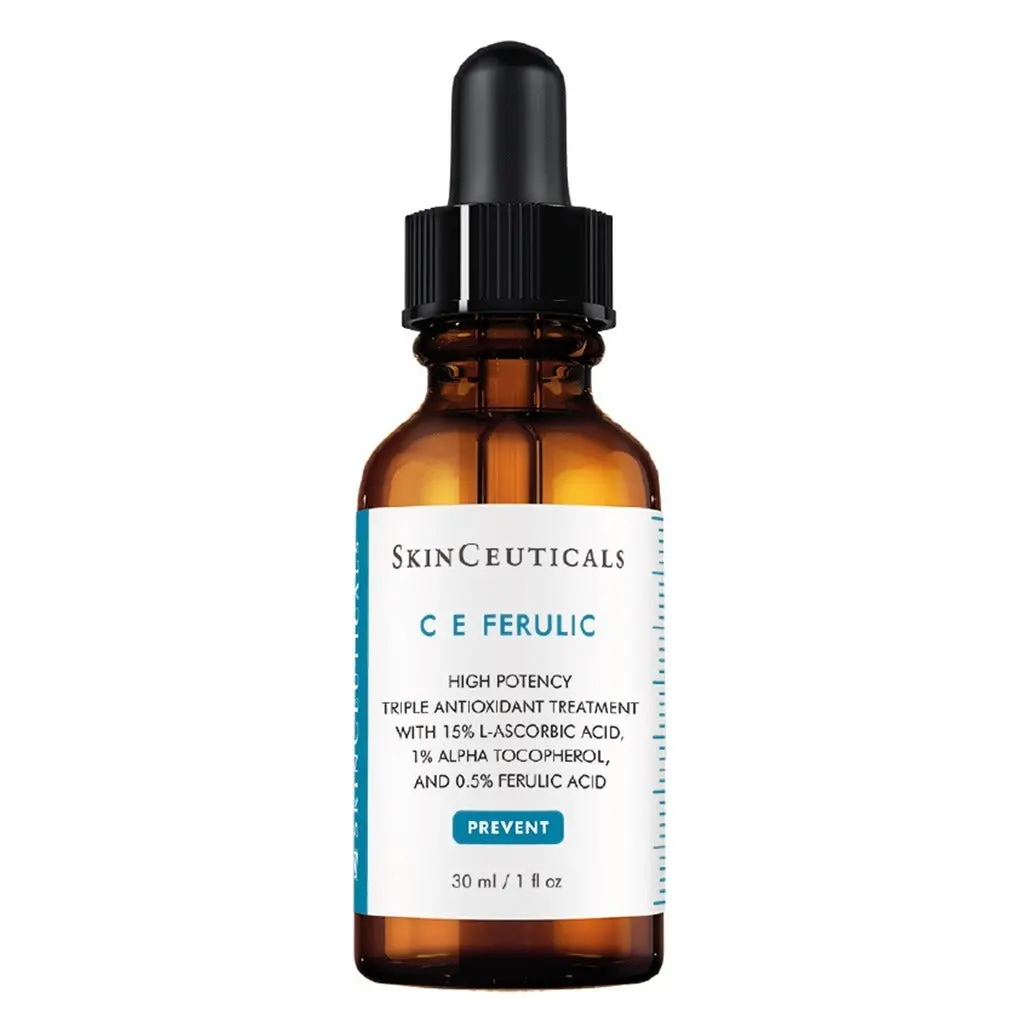
SkinCeuticals C E Ferulic
- 15% L-ascorbic acid + 1% alpha-tocopherol + 0.5% ferulic acid — published by SkinCeuticalsForm of vitamin C and declared concentration
- €18430 ml
Details+
The reference formula of the category: 15% L-ascorbic acid with 1% vitamin E and 0.5% ferulic acid, all three percentages published — and by far the most expensive bottle here.
- Strengths
- All three actives quantified: 15% L-AA, 1% vitamin E, 0.5% ferulic acid
- Fragrance-, alcohol-, silicone- and paraben-free (per SkinCeuticals)
- Glass bottle with dropper
- Patented formula (US 7,179,841)
- Weaknesses
- €184 for 30 ml — the most expensive here by far
- Efficacy percentages published without participant numbers or duration
- Full INCI not shown on the German product page
- No ratings seen; not sold on Notino.de
6.6 / 10acceptable
-
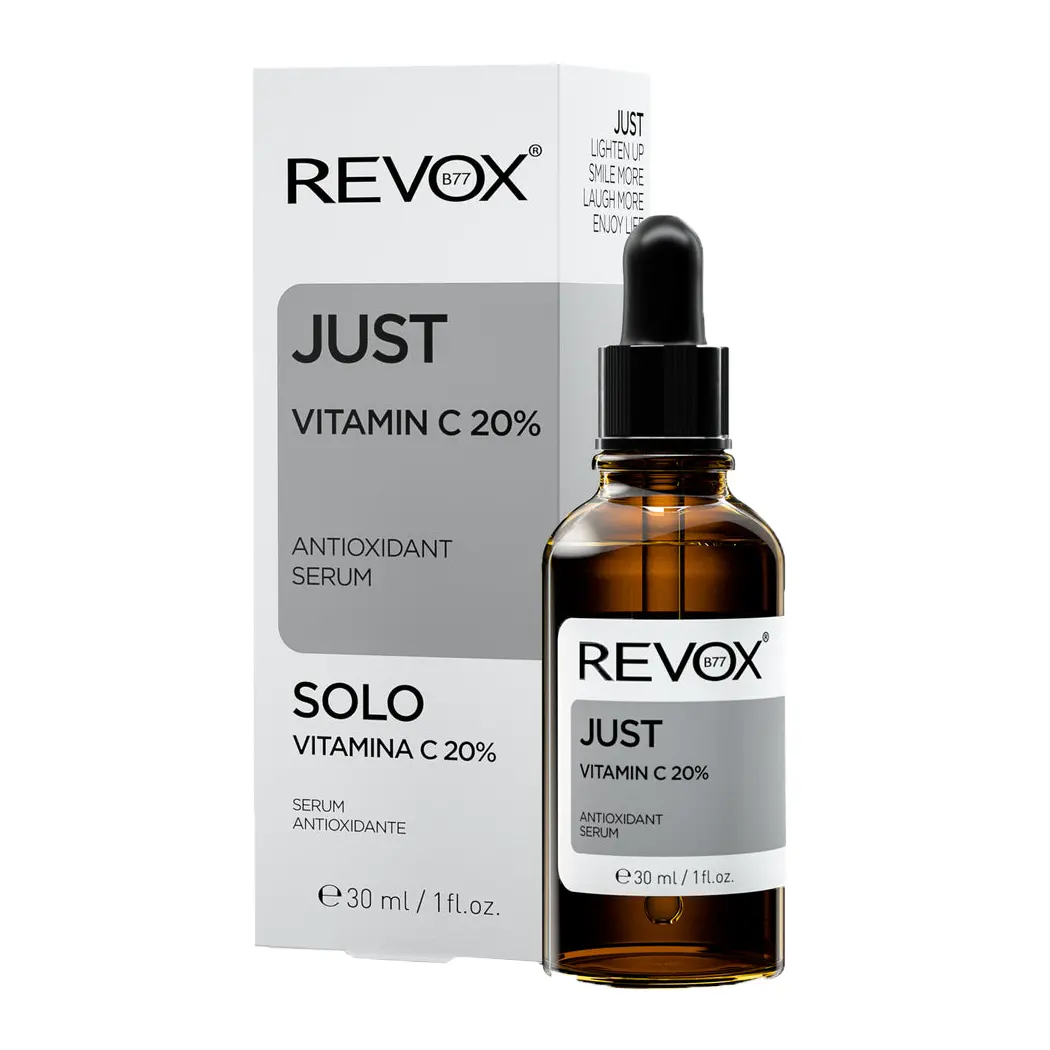
Revox B77 JUST Vitamin C 20%
- 20% vitamin C (ascorbic acid) — stated in the product name and Notino.de listingForm of vitamin C and declared concentration
- €630 ml
Details+
A bare-bones 20% L-ascorbic acid solution for about six euros, with no vitamin E, no ferulic acid and no published data beyond the label.
- Strengths
- 20% ascorbic acid at €6.10 for 30 ml
- Short, fragrance-free ingredient list
- Contains a chelating agent (disodium EDTA) and green tea extract
- Weaknesses
- No vitamin E or ferulic acid to support stability
- pH not published
- No study of any kind
- 3.6/5 from seven Notino reviews
- Manufacturer page not opened
6.4 / 10acceptable
-
SVR Ampoule [C] Anti-ox
- 20% „optimised vitamin C“, listed as 3-O-ethyl ascorbic acid — stated in the Notino.de listingForm of vitamin C and declared concentration
- €2230 ml
Details+
The only derivative serum here with a stated percentage: 20% 3-O-ethyl ascorbic acid in a fragranced, water-based ampoule from the French pharmacy brand SVR.
- Strengths
- 20% 3-O-ethyl ascorbic acid, second in INCI
- Derivative is more stable in water than L-ascorbic acid
- €22.50 for 30 ml
- Contains urea, trehalose and sodium hyaluronate
- Weaknesses
- Derivative evidence is weaker than for L-ascorbic acid
- Contains parfum and alcohol denat.
- No study with participant numbers
- Only two Notino reviews; manufacturer page not opened
6.4 / 10acceptable
-
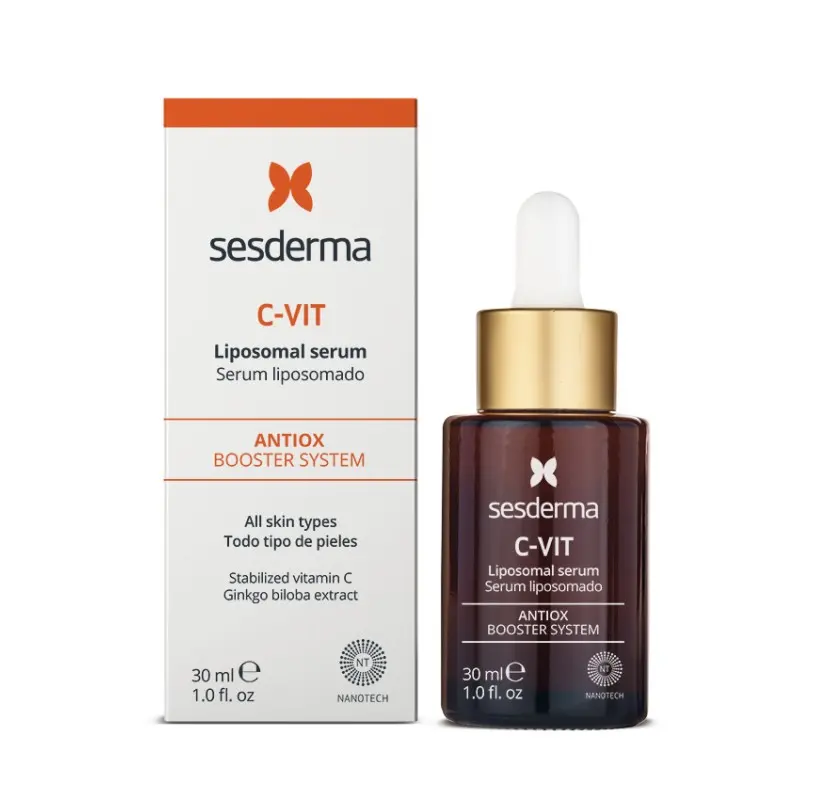
Sesderma C-Vit Liposomal Serum
- 3-ethyl ascorbic acid in liposomes; percentage not publishedForm of vitamin C and declared concentration
- €5030 ml
Details+
A liposomal serum from the Spanish brand Sesderma that mixes a vitamin C derivative with a long list of other antioxidants — popular with owners, but its vitamin C dose is undisclosed.
- Strengths
- 5.0/5 from 19 Notino reviews
- Liposomal delivery format
- Several additional antioxidants, including tocopheryl acetate
- Dropper application (4 drops)
- Weaknesses
- Vitamin C percentage not published
- Derivative ranks only eighth in INCI
- Contains parfum and colourant CI 15985
- €50.50 for an undisclosed dose; manufacturer page not opened
6.0 / 10acceptable
![SVR Ampoule [C] Anti-ox — product photo](/img/best-vitamin-c-serums/svr-ampoule-c-anti-ox.webp)
Scores comparable only within this categorySignificance threshold: ±0.15 pt
7.5 Our verdict
On published data, the best buy is L'Oréal Paris Revitalift Clinical: 12% L-ascorbic acid with vitamin E for €17.90, on the same base chemistry as La Roche-Posay's €50.50 Pure Vitamin C12. The Ordinary's 23% water-free suspension is the most concentrated and cheapest per percent, though above the 10–20% range the literature calls optimal. CeraVe's 10% formula is the fragrance-free pick, with ceramides, but check the carton because retailer data show an older derivative version. SkinCeuticals C E Ferulic remains the only serum here with every key antioxidant quantified, but at €184 its value score pulls it into the lower half. Garnier and Sesderma win on owner ratings yet publish no vitamin C percentage, and SVR's 20% is a derivative, not equivalent to 20% L-ascorbic acid. The common weakness is evidence: no brand publishes pH, and the only product data are brand-run tests. Choose a stated L-ascorbic acid dose between 10% and 20%, buy a size you will finish, and stop using a serum that has turned brown.
Chemistry
L-ascorbic acid versus derivatives: what is actually in the bottle
„Vitamin C“ on a label can mean two very different things. L-ascorbic acid (INCI: ascorbic acid) is the biologically active molecule itself. Derivatives such as sodium ascorbyl phosphate (SAP), ascorbyl glucoside, 3-O-ethyl ascorbic acid and tetrahexyldecyl ascorbate (THD) are modified forms designed to survive longer in a formula. The trade-off is evidence: the 2017 review by Al-Niaimi and Chiang in the Journal of Clinical and Aesthetic Dermatology describes L-ascorbic acid as „hydrophilic and unstable“, but also reports that daily application of magnesium ascorbyl phosphate, ascorbyl-6-palmitate „and other ascorbic acid derivatives did not increase the levels of L-ascorbic acid in the skin“.
Of our ten products, seven use L-ascorbic acid and three use an ethylated derivative:
| Product | Form | Declared % |
|---|---|---|
| The Ordinary Suspension | L-ascorbic acid (water-free) | 23% |
| Revox B77 JUST Vitamin C | L-ascorbic acid | 20% |
| SkinCeuticals C E Ferulic | L-ascorbic acid | 15% |
| Vichy LiftActiv Vitamin C | L-ascorbic acid | 15% |
| La Roche-Posay Pure Vitamin C12 | L-ascorbic acid | 12% |
| L'Oréal Revitalift Clinical | L-ascorbic acid | 12% |
| CeraVe Skin Renewing | L-ascorbic acid | 10% |
| SVR Ampoule [C] | 3-O-ethyl ascorbic acid | 20% |
| Garnier Glow Booster | 3-O-ethyl ascorbic acid | Not published |
| Sesderma C-Vit | 3-ethyl ascorbic acid | Not published |
A percentage of a derivative cannot be compared one-to-one with a percentage of L-ascorbic acid: they are different molecules with different weights and different evidence behind them. Where a brand does not state any percentage, the INCI position is the only clue, and EU rules allow ingredients below 1% to be listed in any order.
Evidence
pH, concentration and what the literature actually supports
We set out to quote only peer-reviewed papers we could open in full during this research. Several PubMed and PMC pages returned a verification challenge rather than the article, so this section relies on one review we could read: Al-Niaimi F, Chiang NYZ. „Topical Vitamin C and the Skin: Mechanisms of Action and Clinical Applications“. J Clin Aesthet Dermatol, 2017 (PMC5605218).
Three points from it matter for buyers:
- pH. The review states that reducing the pH of L-ascorbic acid to below 3.5 improves both its stability and its permeability, because the molecule becomes uncharged. None of the ten products here publishes its pH.
- Concentration. It states that a product needs more than 8% vitamin C to be of biological significance, with 10–20% as the optimal range, and that higher concentrations might cause some irritation. All seven L-ascorbic acid serums here state 10% or more; The Ordinary's 23% is above the range.
- Derivatives. Esterified forms such as ascorbyl-6-palmitate and magnesium ascorbyl phosphate are stable at neutral pH, but derivatives did not raise L-ascorbic acid levels in skin in the studies the review summarises.
What this does not tell you: none of these findings were made on the specific products in this ranking. The review discusses formulations in general. For individual products, the only evidence available is the brand's own testing, discussed in the regulation section. We found no independent laboratory test (for example from Stiftung Warentest or Which?) of these ten serums during this research.
Packaging and oxidation
Why vitamin C serums turn brown, and what helps
L-ascorbic acid oxidises when exposed to water, air, light and metal ions; in practice a clear serum turning yellow and then brown is the visible sign. Formulators fight this in four ways, and the ten products here use different combinations.
- Removing water. The Ordinary's suspension has no water in its INCI list; the vitamin stays undissolved until it meets skin.
- Partner antioxidants. SkinCeuticals publishes 1% alpha-tocopherol and 0.5% ferulic acid alongside its 15% L-ascorbic acid; the Al-Niaimi and Chiang review names ferulic acid as a stabiliser in SkinCeuticals formulations. Vichy, La Roche-Posay, L'Oréal Paris and CeraVe list vitamin E without a percentage. Revox B77 and The Ordinary list none.
- Chelators. Trisodium ethylenediamine disuccinate (La Roche-Posay) and disodium EDTA (CeraVe, Revox B77) bind metal ions that speed oxidation.
- Packaging. SkinCeuticals and Garnier state glass bottles with droppers. Few brands publish whether the glass is tinted or whether airless packaging is used.
EU law gives you one useful tool on the pack. Under Article 19(1)(c) of Regulation (EC) No 1223/2009, products with a minimum durability above 30 months must show a period after opening (the open-jar symbol). Shorter-lived products must carry a „best used before“ date. Because none of the brands here publishes stability data, the practical advice is simple: buy the smallest size you will finish, close the bottle promptly, store it away from heat and light, and stop using it if it has darkened noticeably.
Regulation
EU cosmetics rules and what a claim has to prove
Vitamin C serums are cosmetics under Regulation (EC) No 1223/2009, which defines a cosmetic as a product for the external parts of the body used „exclusively or mainly“ to clean, perfume, change the appearance of, protect or keep them in good condition. That definition is why no brand here may claim to treat a medical condition, and why this ranking does not discuss medical uses.
Article 19(1)(g) requires the ingredient list in descending order of weight, with ingredients under 1% allowed in any order. Article 20(1) bans text or images implying characteristics or functions the product does not have. Article 11 requires the responsible person to keep a product information file, including proof of the claimed effect.
Commission Regulation (EU) No 655/2013 adds six common criteria for claims: legal compliance, truthfulness, evidential support, honesty, fairness and informed decision-making. Two of them are worth knowing:
- Truthfulness: „If it is claimed on the product that it contains a specific ingredient, the ingredient shall be deliberately present“, and ingredient properties must not be implied for the finished product if it does not have them.
- Evidential support: claims must be backed by „adequate and verifiable evidence“, and studies must be relevant to the product and the benefit claimed and follow methodologies that are „valid, reliable and reproducible“.
The key word is verifiable: the evidence must exist in the product file, not on the website. So when La Roche-Posay reports 63 subjects over 56 days, or Vichy 40 women over three months, those are summaries of internal files. They are more transparent than SkinCeuticals' percentages without participant numbers, or Garnier's „in 3 days“, but none of them is a published, peer-reviewed trial.
Marketing decoded
Pure, optimised, clinical: what the labels mean in practice
- „Pure vitamin C“ normally means L-ascorbic acid (INCI: ascorbic acid). Check that ascorbic acid appears high in the INCI list — in five of the seven pure products here it is second, straight after water; in The Ordinary's water-free formula it is first, and SkinCeuticals did not show a full INCI list on the page we read.
- „Optimised“ or „stabilised“ vitamin C means a derivative. SVR's „optimised“ vitamin C is 3-O-ethyl ascorbic acid. Stable, yes; equivalent to L-ascorbic acid, no.
- „Clinical“ in a product name is branding. L'Oréal's Revitalift Clinical listing we read cites no study with participant numbers.
- „92% of women noticed…“ is a consumer perception result: participants were asked what they saw. It is legitimate under Regulation 655/2013 if the method is sound, but it is not an instrument measurement and not a controlled trial.
- A combined percentage such as Garnier's „4 % niacinamide, vitamin C, salicylic acid and Melasyl“ tells you nothing about the vitamin C dose.
Price per 30 ml, based on the prices we found:
| Product | Pack | Price | Per 30 ml |
|---|---|---|---|
| Revox B77 JUST Vitamin C 20% | 30 ml | €6.10 | €6.10 |
| The Ordinary Suspension 23% | 30 ml | €9.30 | €9.30 |
| Garnier Glow Booster | 30 ml | €11.50 | €11.50 |
| L'Oréal Revitalift Clinical | 30 ml | €17.90 | €17.90 |
| SVR Ampoule [C] | 30 ml | €22.50 | €22.50 |
| CeraVe Skin Renewing | 30 ml | €25.50 | €25.50 |
| La Roche-Posay C12 | 30 ml | €50.50 | €50.50 |
| Sesderma C-Vit | 30 ml | €50.50 | €50.50 |
| Vichy LiftActiv Vitamin C | 20 ml | €38.90 | €58.35 |
| SkinCeuticals C E Ferulic | 30 ml | €184.00 | €184.00 |
Methodology
How this score is built
The score is the mean of four component scores — each carries equal weight and each rests on a named source. The full procedure is described in the methodology.
01Composition and specification
Declared composition and specification: active ingredients and their concentrations, energy classes, standards, technical parameters — and what the manufacturer leaves unsaid.
02Evidence and studies
Verification of the manufacturer's claims against outside sources: laboratory reports, industry testing, safety data sheets, certificates and regulatory decisions.
03Owner feedback
Analysis of verified reviews written after extended use, together with recurring fault reports for the model or series.
04Cost and value
Price set against what the product actually delivers, plus costs incurred later — consumables, energy, servicing, subscriptions — over the lifespan typical for the category.
FAQ
Frequently asked questions
What is the difference between L-ascorbic acid and vitamin C derivatives?+
L-ascorbic acid is the active form of vitamin C; it is unstable in water. Derivatives such as sodium ascorbyl phosphate, ascorbyl glucoside, 3-O-ethyl ascorbic acid and tetrahexyldecyl ascorbate are more stable, but the 2017 review we cite reports that derivatives did not raise L-ascorbic acid levels in skin.
What concentration of vitamin C should a serum have?+
The 2017 review by Al-Niaimi and Chiang states that more than 8% is needed for biological significance and describes 10–20% as optimal, noting that higher concentrations might cause some irritation.
Why does pH matter for vitamin C serums?+
According to the same review, lowering the pH of L-ascorbic acid below 3.5 improves its stability and its ability to penetrate. None of the ten products in this ranking publishes its pH.
My vitamin C serum has turned brown. Is it still usable?+
Browning is the visible sign of oxidation of L-ascorbic acid. No brand here publishes how much activity is lost as the colour changes. Check the period-after-opening symbol or the best-before date required by Regulation (EC) No 1223/2009 and replace a product that has darkened noticeably.
Does vitamin E or ferulic acid make a difference?+
They are added as supporting antioxidants. SkinCeuticals is the only brand here that publishes their amounts (1% alpha-tocopherol, 0.5% ferulic acid); the review we cite names ferulic acid as a stabiliser in its formulations.
Are brand claims like '92% of women saw smoother skin' reliable?+
They are self-assessments from brand-run tests. Under Regulation (EU) 655/2013 such claims must be backed by adequate and verifiable evidence, but the protocols are not published, so they are not equivalent to peer-reviewed trials.
Is the most expensive vitamin C serum the best?+
Not on the published data. SkinCeuticals C E Ferulic discloses its formula most completely, but a 12% L-ascorbic acid serum from L'Oréal Paris costs €17.90, and several cheaper products declare 15–23% L-ascorbic acid.
Did you test these serums on skin?+
No. This ranking is desk research based on manufacturer pages, a major EU retailer's listings, EU legislation and one peer-reviewed review. We found no independent laboratory test of these specific products.
Sources
Documents and standards
- 1. SkinCeuticals C E Ferulic (SkinCeuticals.de) — https://www.skinceuticals.de/hautpflege/kategorien/antioxidantien/c-e-ferulic%C2%AE/S17.html
- 2. SkinCeuticals.de sitemap — https://www.skinceuticals.de/sitemap_0.xml
- 3. La Roche-Posay Pure Vitamin C12 Serum (LaRochePosay.de) — https://www.larocheposay.de/pure-vitamin-c/pure-vitamin-c12-serum
- 4. Vichy LiftActiv Vitamin C Serum (Vichy.de) — https://www.vichy.de/alle-produkte/hautpflege/gesichtsseren/anti-aging/liftactiv-vitamin-c-serum
- 5. CeraVe Skin Renewing Vitamin C Serum (CeraVe.de) — https://www.cerave.de/hautpflege/gesichtspflege/skin-renewing-vitamin-c-serum
- 6. Garnier Vitamin C+ Glow Booster Serum (Garnier.de) — https://www.garnier.de/gesichtspflege/gesichtspflege-marken/vitamin-c-routine/glow-booster-serum
- 7. Garnier: Vitamin C Serum guide (Garnier.de) — https://www.garnier.de/gesichtspflege/gesicht-pflegen/vitamin-c-serum
- 8. Notino.de search: vitamin C serum — https://www.notino.de/search.asp?exps=vitamin%20c%20serum
- 9. Notino.de: L'Oréal Paris Revitalift Clinical vitamin C serum — https://www.notino.de/loreal-paris/revitalift-clinical-gesichtsserum-mit-vitamin-c/p-16280563/
- 10. Notino.de: The Ordinary Vitamin C Suspension 23% + HA Spheres 2% — https://www.notino.de/the-ordinary/vitamin-c-suspension-23-ha-spheres-2-aufhellende-crem-mit-vitamin-c/p-16168477/
- 11. Notino.de: CeraVe Skin Renewing Vitamin C Serum — https://www.notino.de/cerave/skin-renewing-vitamin-c-serum-aufhellendes-serum-mit-vitamin-c-regeneriert-die-hautbarriere/p-16332876/
- 12. Notino.de: Garnier Vitamin C serum — https://www.notino.de/garnier/skin-naturals-vitamin-c-super-glow-serum-aufhellendes-serum-mit-vitamin-c/p-16281126/
- 13. Notino.de: Vichy LiftActiv Supreme vitamin C serum — https://www.notino.de/vichy/liftactiv-supreme-aufhellendes-gesichtsserum-mit-vitamin-c/p-16122648/
- 14. Notino.de: La Roche-Posay Pure Vitamin C12 — https://www.notino.de/la-roche-posay/pure-vitamin-c12-aufhellendes-serum-mit-vitamin-c-gegen-falten/p-16269149/
- 15. Notino.de: Revox B77 JUST Vitamin C 20% — https://www.notino.de/revox-b77/just-vitamin-c-20-antioxidationsserum-mit-vitamin-c/p-16246303/
- 16. Notino.de: SVR Ampoule [C] Anti-ox — https://www.notino.de/svr/ampoule-anti-ox-antioxidationsserum-mit-vitamin-c/p-16249841/
- 17. Notino.de: Sesderma C-Vit Liposomal Serum — https://www.notino.de/sesderma/c-vit-aufhellendes-serum-feuchtigkeit-spendend/p-513683/
- 18. Al-Niaimi F, Chiang NYZ. Topical Vitamin C and the Skin: Mechanisms of Action and Clinical Applications. J Clin Aesthet Dermatol 2017 (PMC5605218) — https://pmc.ncbi.nlm.nih.gov/articles/PMC5605218/
- 19. Regulation (EC) No 1223/2009 on cosmetic products (EUR-Lex) — https://eur-lex.europa.eu/legal-content/EN/TXT/HTML/?uri=CELEX:32009R1223
- 20. Commission Regulation (EU) No 655/2013, common criteria for cosmetic claims (EUR-Lex) — https://eur-lex.europa.eu/legal-content/EN/TXT/HTML/?uri=CELEX:32013R0655
More
Other rankings
in
Health & beauty.
Each category has its own protocol and its own key parameter.