
1Rank 01 of 8 · Best Retinol Serums
Geek & Gorgeous Geek & Gorgeous A-Game 10
Cyclodextrin-encapsulated retinal at 0.1% for €18.80 — the same technology and a higher concentration than products costing three times as much. Best value in the ranking.
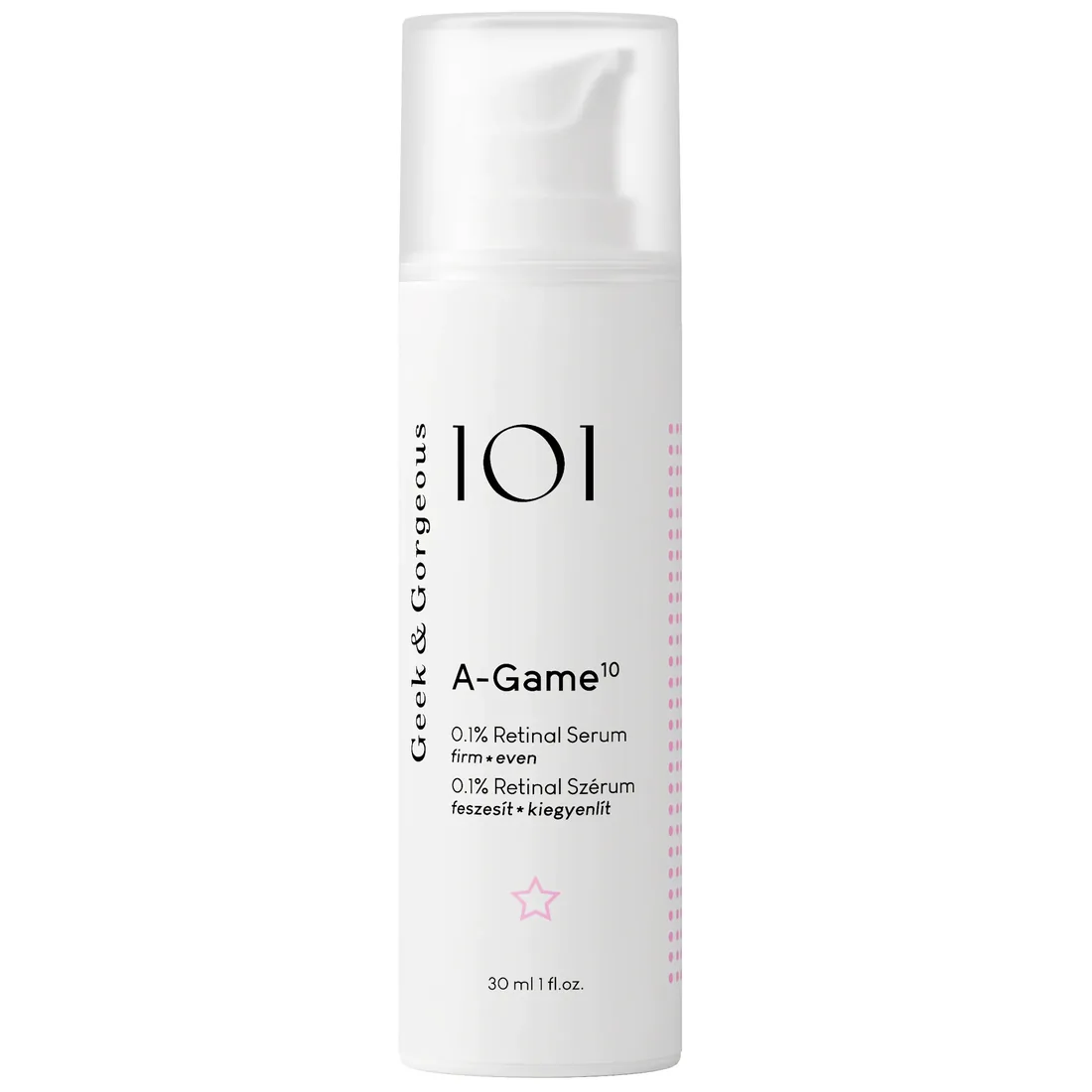 8.8BPR score
- €19Price
- Retinaldehyde 0.1% — not covered by the EU capRetinoid form and stated concentration
- 1 of 8in Best Retinol Serums
- 8.8BPR score 0–10
Review
What this product is
Written after the analysis, from the same sources the score is built on: the manufacturer's documentation, available studies and verified owner feedback.
The value pick, and by a wide margin. 0.1% retinaldehyde, cyclodextrin-encapsulated, in 30 ml for €18.80 — €0.63 per ml against Medik8's €2.16 for a lower retinal concentration using the same stabilisation technology.
The supporting formula is well judged rather than minimal: triheptanoin as a lightweight emollient base, allantoin and panthenol as soothing agents that directly address the irritation phase, cloudberry seed oil, tocopheryl acetate as an antioxidant, and biosaccharide gum-1 for barrier support. That is a formulation designed by someone who understands that the main reason people quit retinoids is discomfort in the first six weeks.
Like all retinaldehyde products, it sits outside the scope of Regulation (EU) 2024/996 — the cap covers retinol, retinyl acetate and retinyl palmitate only. This product does not need reformulating and will not disappear from EU shelves in May 2027.
The brand positions 0.1% retinal as comparable to a 0.5–1% retinol, citing the estimate that retinal "can convert more than 10x faster to retinoic acid than retinol". Treat that comparison as directional, not quantitative — it rests on the same 1990 in-vitro enzyme assay every brand cites, which measured conversion kinetics rather than clinical outcomes. What is well supported is that retinaldehyde's biological activity is qualitatively identical to retinoic acid's, works via conversion to it, and is less irritating than retinoic acid in published testing.
What you do not get at this price is a strength ladder to climb, or the packaging refinement of the Medik8. Nor is there any brand-published clinical testing. For a first retinoid at 0.1% retinal, starting twice a week is the sensible approach regardless.
Technical data
Specification
Figures from the manufacturer's documentation, verified against available outside sources. Values we could not confirm are marked as declared.
- Retinoid form
- Retinaldehyde (retinal)
- Stated concentration
- 0.1%
- Covered by EU 0.3% cap
- No
- Encapsulated
- Yes - cyclodextrin
- Key supporting ingredients
- Triheptanoin, allantoin, panthenol, cloudberry seed oil, tocopheryl acetate, biosaccharide gum-1
- Size
- 30 ml
- Price per ml
- approx. EUR 0.63
- Brand positioning
- Comparable to 0.5-1% retinol per the brand
- Independent verification
- None found
Component scores
Where the score
comes from.
Four components, equal weight, each on a 0–10 scale and each resting on a named source. The overall score is their mean — the full procedure is in the methodology.
What we liked
- €18.80 for 30 ml — €0.63 per ml, roughly a third of Medik8's price
- 0.1% retinaldehyde, a higher retinal concentration than the Medik8 CR6
- Cyclodextrin encapsulation for stability
- Allantoin and panthenol directly address the irritation phase
- Not covered by the EU 0.3% cap
- Tocopheryl acetate antioxidant protection
Worth knowing
- No strength ladder — 0.1% is a strong starting point for a first retinoid
- No brand-published clinical testing
- No independent European consumer test result found
- Smaller brand with narrower European retail distribution
- Packaging format not verified
Comparison
How it compares
within the category
All values come from the same analysis and are comparable only within the category Best Retinol Serums.
| Product | Score | Retinoid form and stated concentration | Price |
|---|---|---|---|
| Geek & Gorgeous A-Game 10This product · top score | 8.8 | Retinaldehyde 0.1% — not covered by the EU cap | €19 |
| Medik8 Crystal Retinal 6Runner-up | 8.3 | Retinaldehyde 0.06% — not covered by the EU cap | €65 |
| Category average8 products analysed | 7.9 | — | — |
FAQ
Frequently asked questions
Is this really equivalent to a 1% retinol?
The brand says so, based on the standard retinal-conversion argument, and the mechanism is real — retinal needs one metabolic step to retinoic acid where retinol needs two. But the multiplier comes from a 1990 in-vitro enzyme assay, not from a head-to-head clinical trial, and no such trial exists. Treat it as a strong retinoid rather than as a precisely quantified equivalent.
Is 0.1% retinal too strong to start with?
It is a firm starting point. The standard protocol from the AAD and clinical reviews is to begin with roughly three applications a week and increase by tolerance, and that applies here more than to a low-strength product. The allantoin and panthenol in the formula help, but they do not eliminate retinisation. If your skin is reactive, a lower-strength retinal or a 0.3% retinol is the gentler entry.
From the same ranking
Other products in Best Retinol Serums.
The same protocol, the same key parameter, the same set of sources.
-
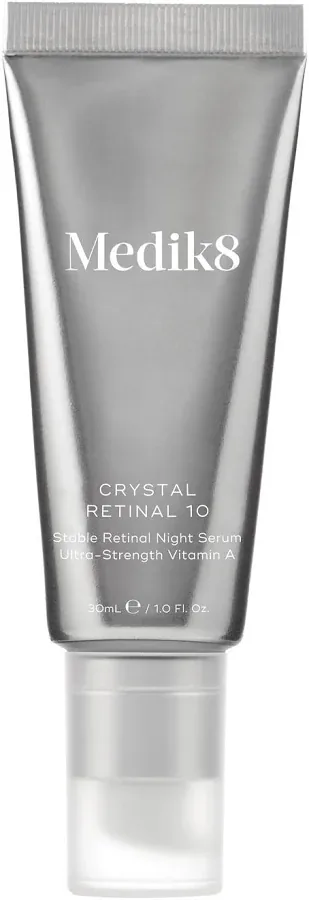 No. 028.3/ 10
Medik8 Crystal Retinal 6
Cyclodextrin-encapsulated retinaldehyde in a formula built for stability — antioxidants, a…
-
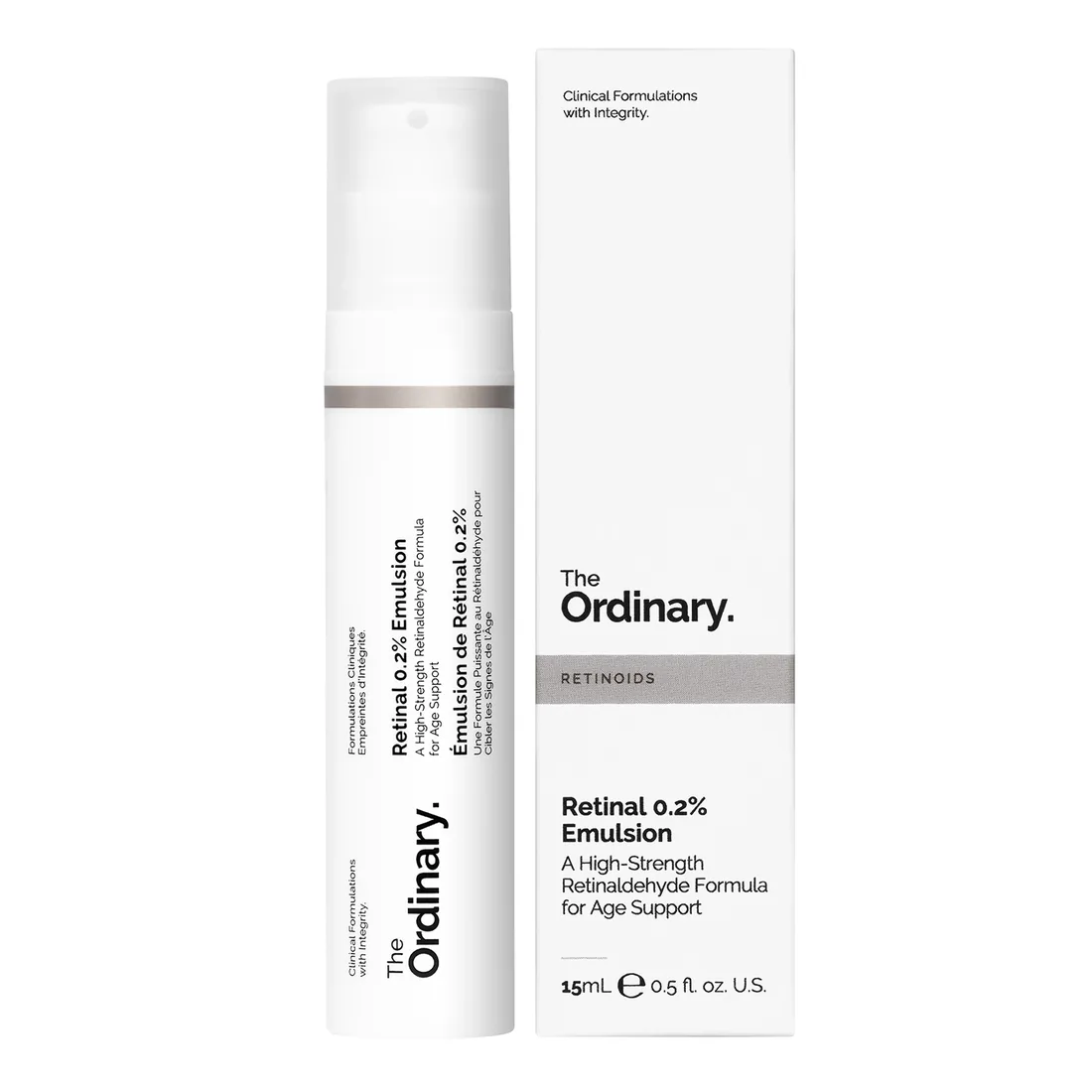 No. 038.2/ 10
The Ordinary Retinal 0.2% Emulsion
The strongest retinal here at 0.2%, in an airless pump — the right packaging for an…
-
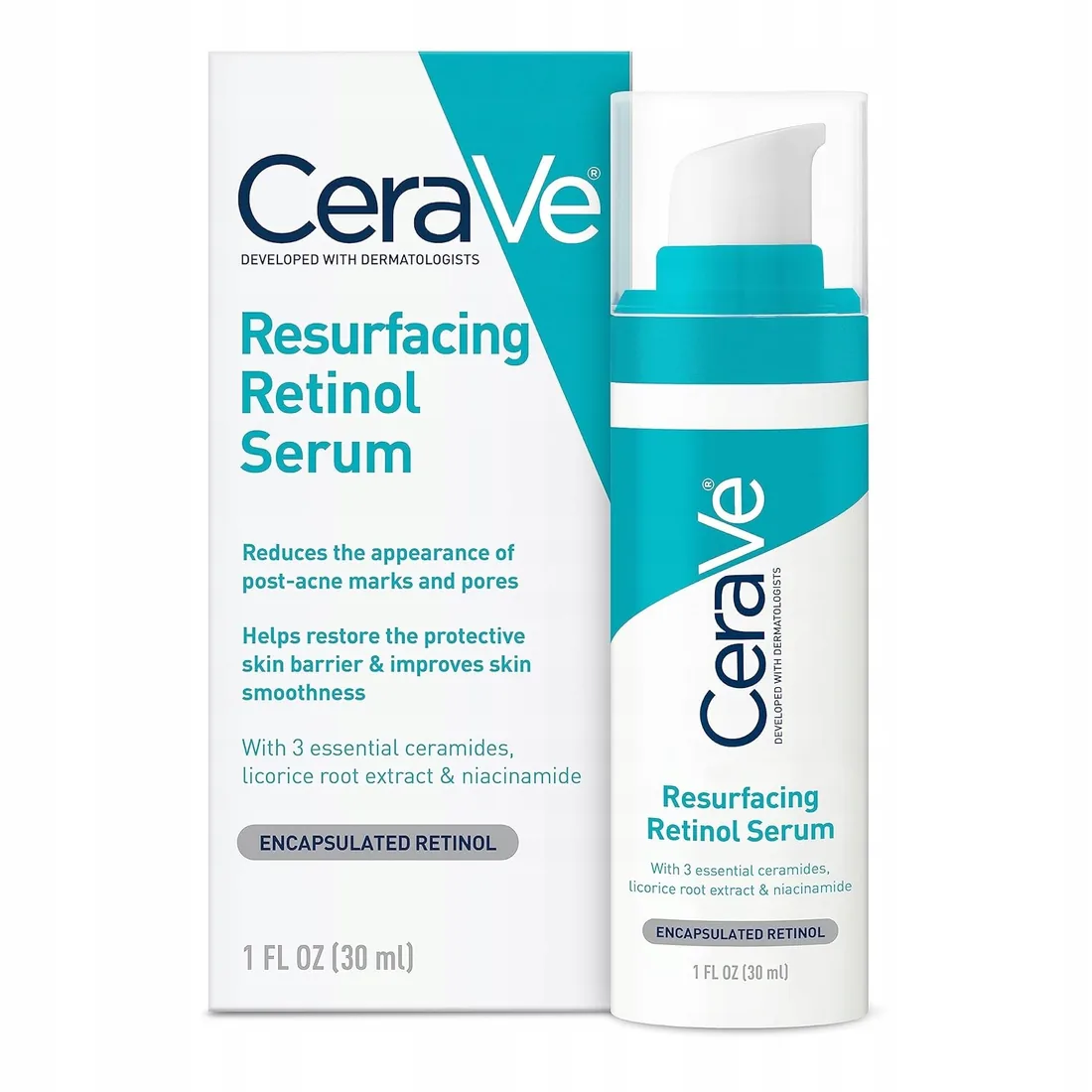 No. 047.8/ 10
CeraVe Resurfacing Retinol Serum
Encapsulated retinol with ceramides and niacinamide, formulated for blemish-prone skin. The…
-
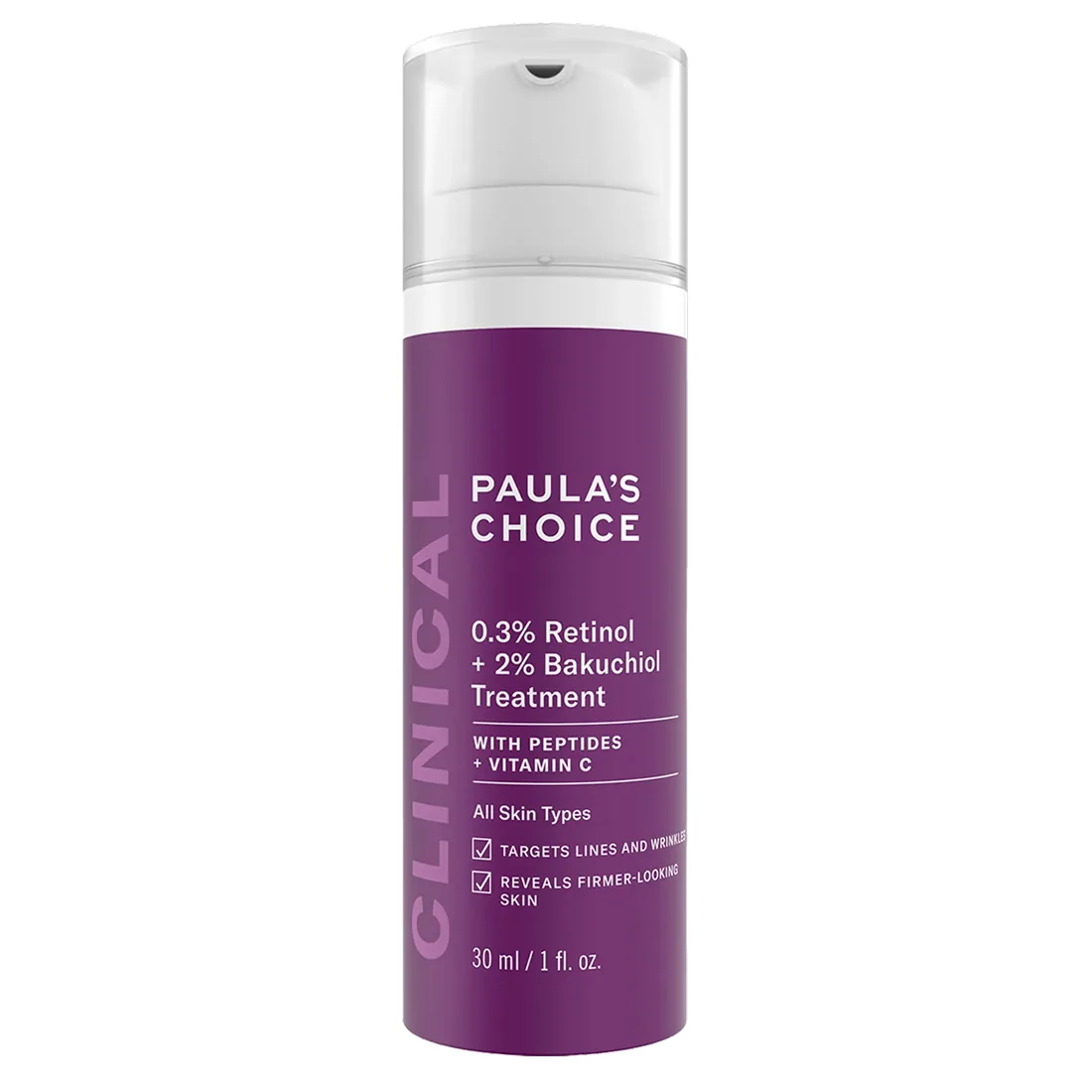 No. 057.7/ 10
Paula's Choice CLINICAL 0.3% Retinol + 2% Bakuchiol Treatment
Retinol at exactly 0.3%, the maximum the EU now permits, with ceramides and peptides. The one…