ElectronicsAnalysis 123
Best Noise-Cancelling Headphones
There is no standard for measuring active noise cancellation, and no manufacturer is obliged to publish a number. IEC 60268-7 covers conventional headphone isolation but predates adaptive DSP-based ANC. ETSI TS 103 640 is the closest modern specification — and it is entirely voluntary, with no consumer brand publishing a figure referenced to it.
The consequence is that peak dB claims are close to meaningless. Two demonstrations from this research:
- The Bowers & Wilkins Px7 S3 measures 43.4 dB peak ANC at 15,400 Hz — and 44.4 dB peak passive at the same frequency. That peak is the earcup seal, not the ANC circuit.
- The €66 Anker Soundcore Space One measures a 40.4 dB peak — and a German test lab called its ANC "recht schwach", quite weak, barely dampening office conversation. Both are true, because the peak sits at 12 kHz where passive isolation dominates.
The test signal also changes the answer more than the headphone does. Researchers found foam earplugs cut a leaf-blower recording by 41.57 dB but an aircraft-cabin recording by only 11 dB — with ANC devices showing the opposite pattern.
And there is one thing ANC cannot do at all. It works on constant low-frequency sound — engine drone, HVAC, road roar. It does not work on voices, because speech is short, sharp and unpredictable, and because above roughly 1–2 kHz cancellation becomes physically impractical. Everything above that is handled by the earcup seal. ANC turns a plane into a quiet room. It does not turn an open-plan office into one, and nothing in this ranking does.
Methodology note
What this ranking is based on. Measured ANC, battery life and latency come from SoundGuys, which uses a Brüel & Kjær 5128 head-and-torso simulator with a 1704C-102 ear simulator, subtracting the with-headphone frequency response from the bare-head response, and measures battery with music peaking at 75 dB SPL. Additional testing comes from HIFI.DE, StereoGuide, LowBeats and What Hi-Fi?. Prices are German and European street prices from Geizhals, September 2026.
An important gap. RTINGS blocks automated access, so no RTINGS figure appears anywhere on this page — not their band-by-band isolation data, not their clamping-force measurements, not their battery figures. Anyone comparing this ranking with RTINGS should consult them directly.
What we did not test. We listened to none of these headphones. The owner-feedback score reflects published review consensus.
Known gaps. Clamping force is published for none of these models. Frequency-response deviation figures are published for none. Measured battery life exists for only four of eight. Whether ANC still works in passive wired mode with the headphone powered off is unverified for every model here. Sources conflict on the Sony WH-1000XM6's Bluetooth capabilities (5.3 with LC3 versus full LE Audio and Auracast) and on the Anker's weight (256 g versus 263 g).
 9.3BPR score
Key parameter
Measured ANC performance
Attenuation measured by SoundGuys on a Brüel & Kjær 5128 head-and-torso simulator, expressed as their 0–10 ANC score where 5/10 equals a 50% reduction (about 10 dB) and 8.75/10 equals 87.5% (about 30 dB). Peak dB figures are given in the specifications but should not be read as "the ANC" — see the section explaining why. Where no outlet has measured a model, this is stated rather than substituted.
-
Top score
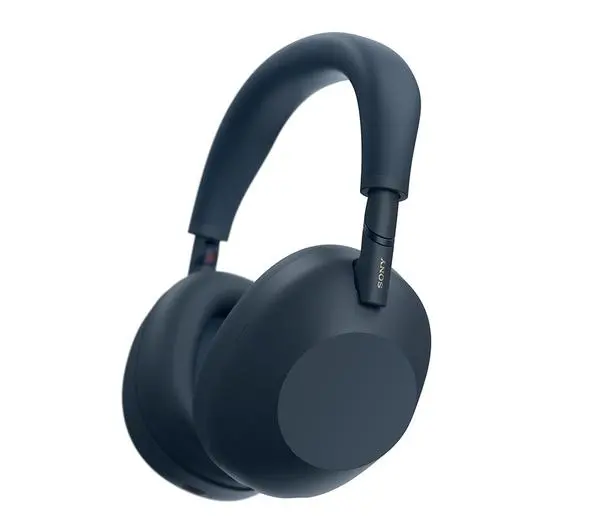
Sony Sony WH-1000XM6
- ANC 8.7/10 — beats 90% of over-ears (SoundGuys)Measured ANC performance
- €315retail price
Details+
The best-measuring headphone here on nearly every axis: highest peak attenuation, 37 hours of measured battery against a 30-hour claim, 30 ms latency, and 254 g. Heavily discounted from its €449 launch price.
- Strengths
- Highest measured peak attenuation here at 54.0 dB, effective 52 Hz to 19 400 Hz
- ANC score 8.7/10 — beats 90% of over-ears SoundGuys has tested
- Measured 37 h 14 min battery against a 30-hour claim
- Audio MDAQS 4.8/5, top 10% of over-ears
- 254 g — among the lightest here
- 30 ms measured latency, LDAC and LC3 support
- What Hi-Fi? five stars and a 2025 Award
- Weaknesses
- USB-C charges only — no USB-C audio, unlike the Bose and B&W
- No IP rating
- Sources conflict on whether it supports LE Audio and Auracast
- 30 mm drivers, smaller than most rivals here
- Whether ANC works in passive wired mode is unverified
9.3 / 10excellent
-
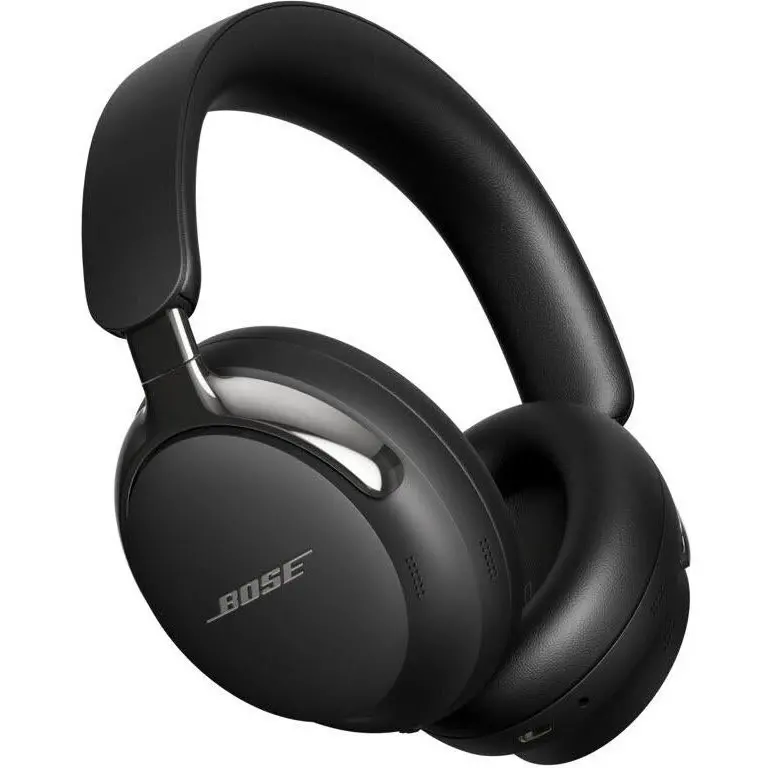
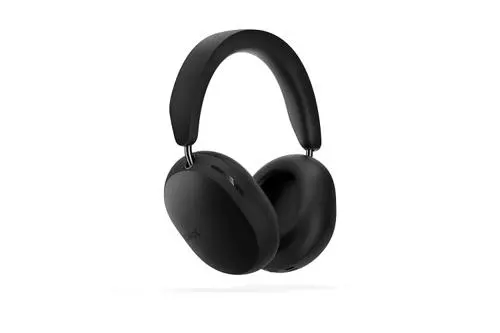
Bose Bose QuietComfort Ultra Headphones (2nd Gen)
- ANC 8.7/10 — beats 90% of over-ears (SoundGuys)Measured ANC performance
- €310retail price
Details+
The lightest flagship here at 250 g and still the comfort benchmark, with USB-C lossless audio and a 3.5 mm socket. But SoundGuys found the claimed ANC improvement did not show up in measurement.
- Strengths
- 250 g — the lightest headphone in this ranking
- ANC 8.7/10, matching the Sony and beating 90% of over-ears
- Both USB-C lossless audio AND a 3.5 mm socket
- aptX Adaptive family including aptX Lossless, Snapdragon Sound
- Long-standing comfort benchmark in this category
- Bluetooth 5.4 with multipoint
- Weaknesses
- SoundGuys found no measurable ANC improvement over the first generation
- Measured 27 h 12 min battery — below Bose's 30-hour headline
- 180 minutes for a full charge
- No IP rating
- Midrange response varies substantially with fit
- 35 mm drivers on a €380 RRP product
9.0 / 10excellent
-
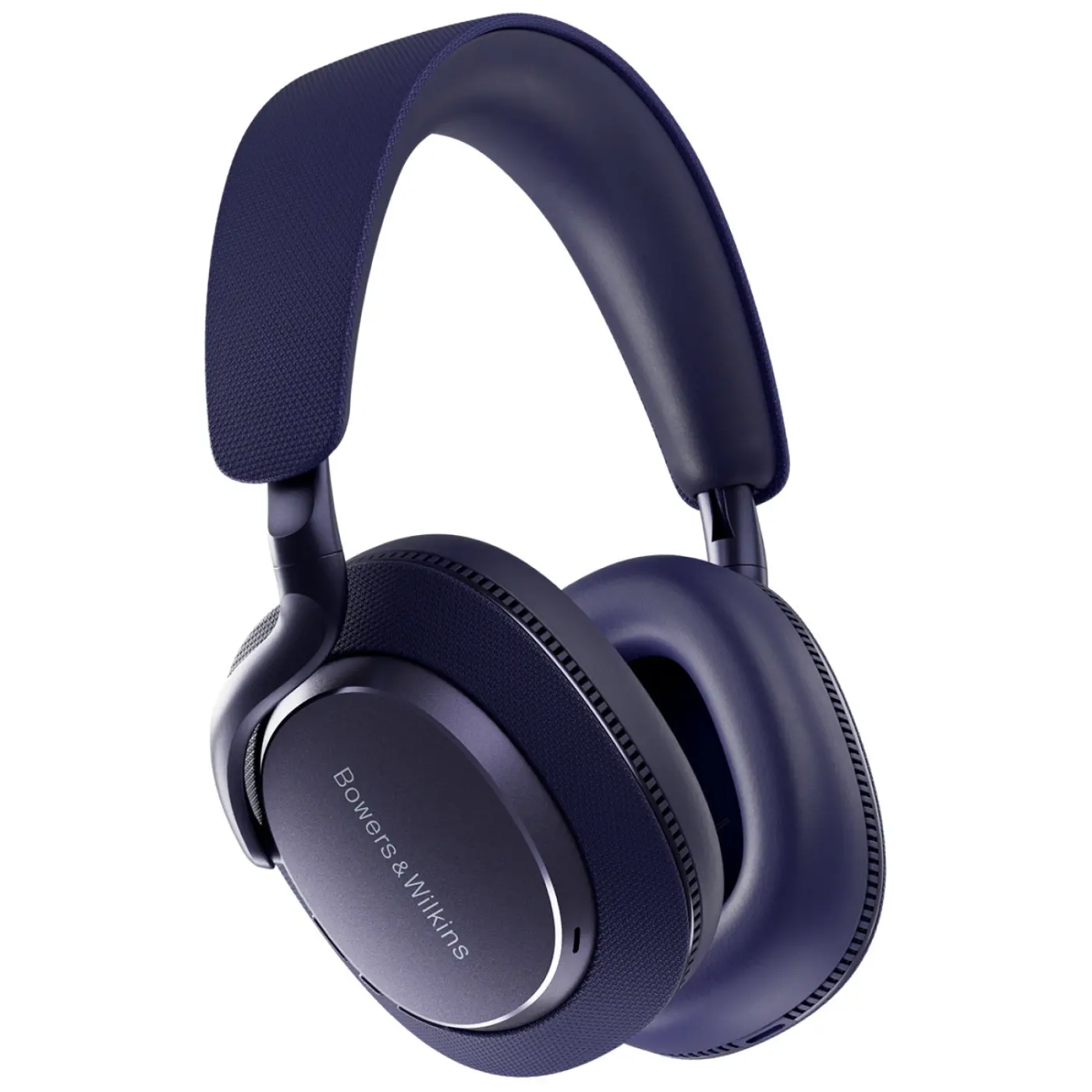
Bowers & Wilkins Bowers & Wilkins Px7 S3
- ANC 8.4/10, average 83–84% noise reduction (SoundGuys)Measured ANC performance
- €279retail price
Details+
Strong passive isolation from deep cushions, replaceable earpads and headband padding, aptX Lossless, and both wired options — the sensible office choice at €279.
- Strengths
- Strongest passive isolation case here — the right choice for an open-plan office
- Replaceable earpads and headband padding
- aptX Lossless plus aptX HD and aptX Adaptive
- Both 3.5 mm and USB-C audio
- 83-84% average reduction in perceived loudness measured
- Two 40 mm biocellulose drivers per side
- €279 street against a €429 RRP
- Weaknesses
- Peak ANC figure of 43.4 dB is essentially passive isolation at that frequency
- No measured battery figure from any outlet
- Noticeably bassier tuning than rivals
- 300 g, heavier than the Sony and Bose
- No IP rating
- Price varies wildly between B&W's own store, RRP and street
8.8 / 10good
-
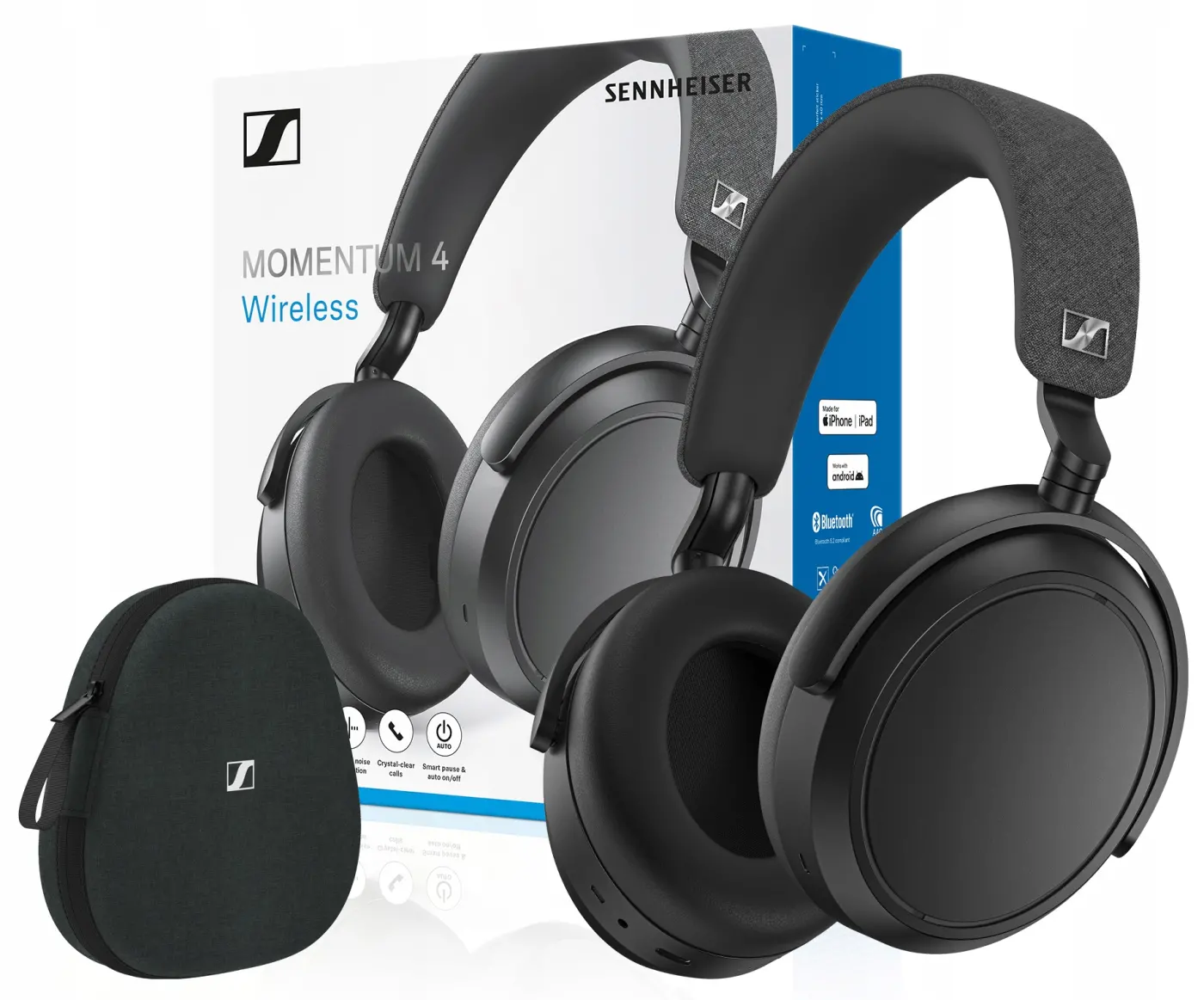
Sennheiser Sennheiser Momentum 4 Wireless
- 56 h 21 min measured battery — ANC "decidedly behind the pack"Measured ANC performance
- €179retail price
Details+
The battery record holder at a measured 56 hours 21 minutes with ANC on — nearly double the Sony — now at €179 as the successor arrives. The ANC is the weak point and SoundGuys says so plainly.
- Strengths
- 56 h 21 min measured battery with ANC on — nearly double the Sony
- €178.99 against a $449.95 original MSRP
- SBC, AAC, aptX, aptX HD and aptX Adaptive
- Both USB-C and a 3.5 mm TRS socket
- Sennheiser tuning with a long-standing reputation for balance
- Weaknesses
- ANC "decidedly behind the pack" (SoundGuys) — roughly 75% at low frequencies
- Superseded by the Momentum 5, which has a user-replaceable battery
- 293 g, heavier than the Sony and Bose
- Bluetooth 5.2, the oldest here
- Driver size not confirmed by any source we could verify
8.4 / 10good
-
Best value
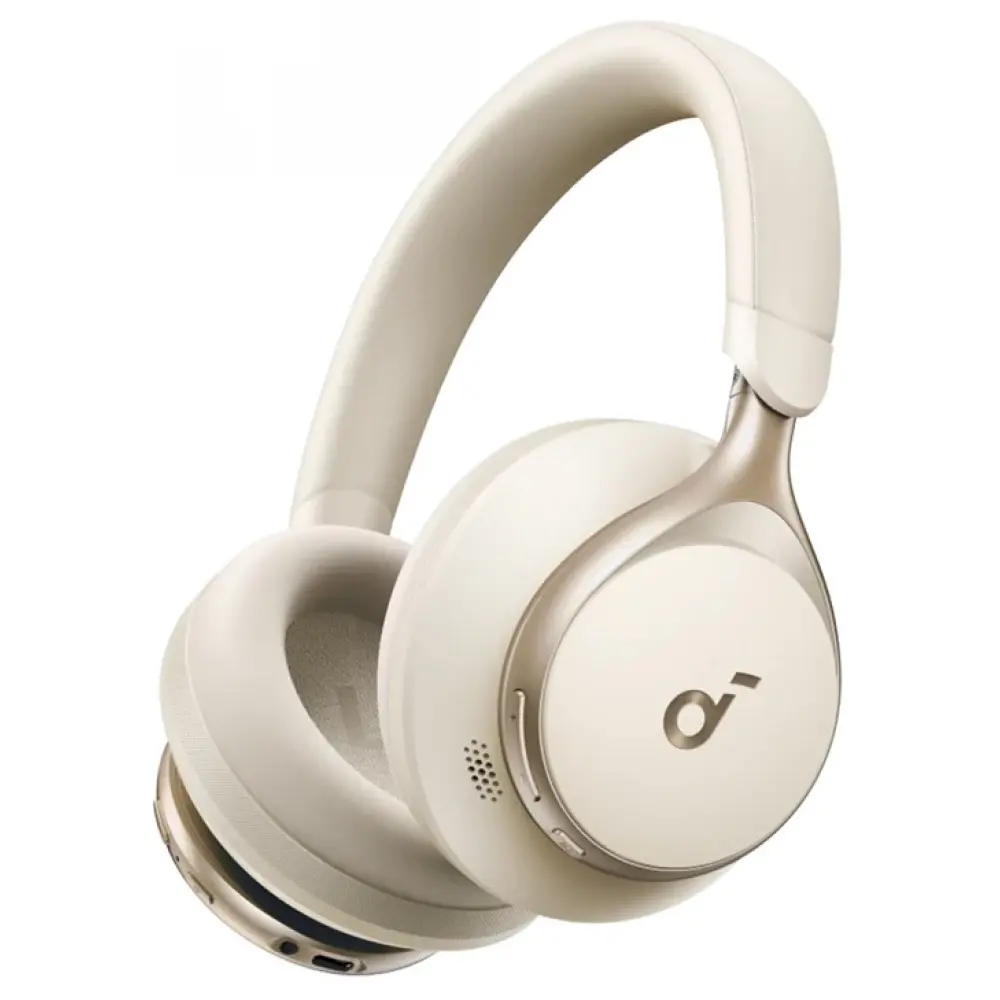
Anker Anker Soundcore Space One
- 40.4 dB peak — but HIFI.DE calls the ANC "quite weak"Measured ANC performance
- €66retail price
Details+
€66 with LDAC, a 3.5 mm socket, a claimed 40 hours of ANC battery, and a transparency mode a German lab called more natural than premium rivals. The ANC itself is the compromise.
- Strengths
- €66.13 street — a fifth of the flagship prices here
- LDAC support, which several €300 rivals lack
- 3.5 mm cable included in the box
- Claimed 55 h without ANC / 40 h with, from a 120-minute charge
- Transparency mode described by HIFI.DE as "very true to life"
- HIFI.DE 8.1/10 overall
- Weaknesses
- HIFI.DE calls the ANC "quite weak" — barely dampens office conversation
- The 40.4 dB peak is at 12 kHz where passive isolation dominates
- Audio 3.8/5, bottom third of over-ears at SoundGuys
- No IP rating
- Sources disagree on weight (256 g vs 263 g)
- No measured battery figure
8.0 / 10good
-
Cambridge Audio Cambridge Audio Melomania P100
- 60 h claimed with ANC on — no measured ANC publishedMeasured ANC performance
- €229retail price
Details+
A claimed 100 hours without ANC and 60 with it, aptX Adaptive and both wired modes, at €229 — from a British hi-fi brand. But no outlet has measured its ANC at all.
- Strengths
- Claimed 100 h without ANC and 60 h with it, from a 160-minute charge
- StereoGuide 92% and a Buy Tip
- Both 3.5 mm and USB-C audio
- 40 mm sandwich-membrane drivers (polyurethane and PEEK)
- aptX Adaptive support
- €229 street against a €280 RRP
- Weaknesses
- No outlet has measured its ANC — no attenuation figure exists
- No measured battery figure either; the 60/100 h numbers are claims
- 330 g, second heaviest here
- Left-right ANC asymmetry reported in wind
- Sources mix the P100 and the newer P100 SE, which have different codec support
- No IP rating
8.0 / 10good
-
Sonos Sonos Ace
- ANC 8.8/10 (SoundGuys) — but the seal fails for glasses wearersMeasured ANC performance
- €289retail price
Details+
aptX Lossless and a strong ANC score, at €289 against a €499 RRP. But there is no 3.5 mm socket at all, and HIFI.DE found the ANC noticeably degraded for spectacle wearers.
- Strengths
- ANC score 8.8/10, the highest number in this ranking
- aptX Lossless support
- HIFI.DE 9.0/10 — ANC on constant noise roughly Sony XM5 class
- €289 street against a €499 RRP — the biggest discount here
- Bluetooth 5.4 with multipoint
- TV Swap passes Dolby Atmos from a Sonos soundbar with head tracking
- Weaknesses
- No 3.5 mm socket at all — USB-C or an adapter only
- ANC noticeably degraded for spectacle wearers (HIFI.DE) due to thin cushions
- Weaker on variable sounds and voices than on constant noise
- No measured battery figure available
- TV Swap was iOS-only at test
- No IP rating; SoundGuys overall score only 7.4/10
7.9 / 10fair
-
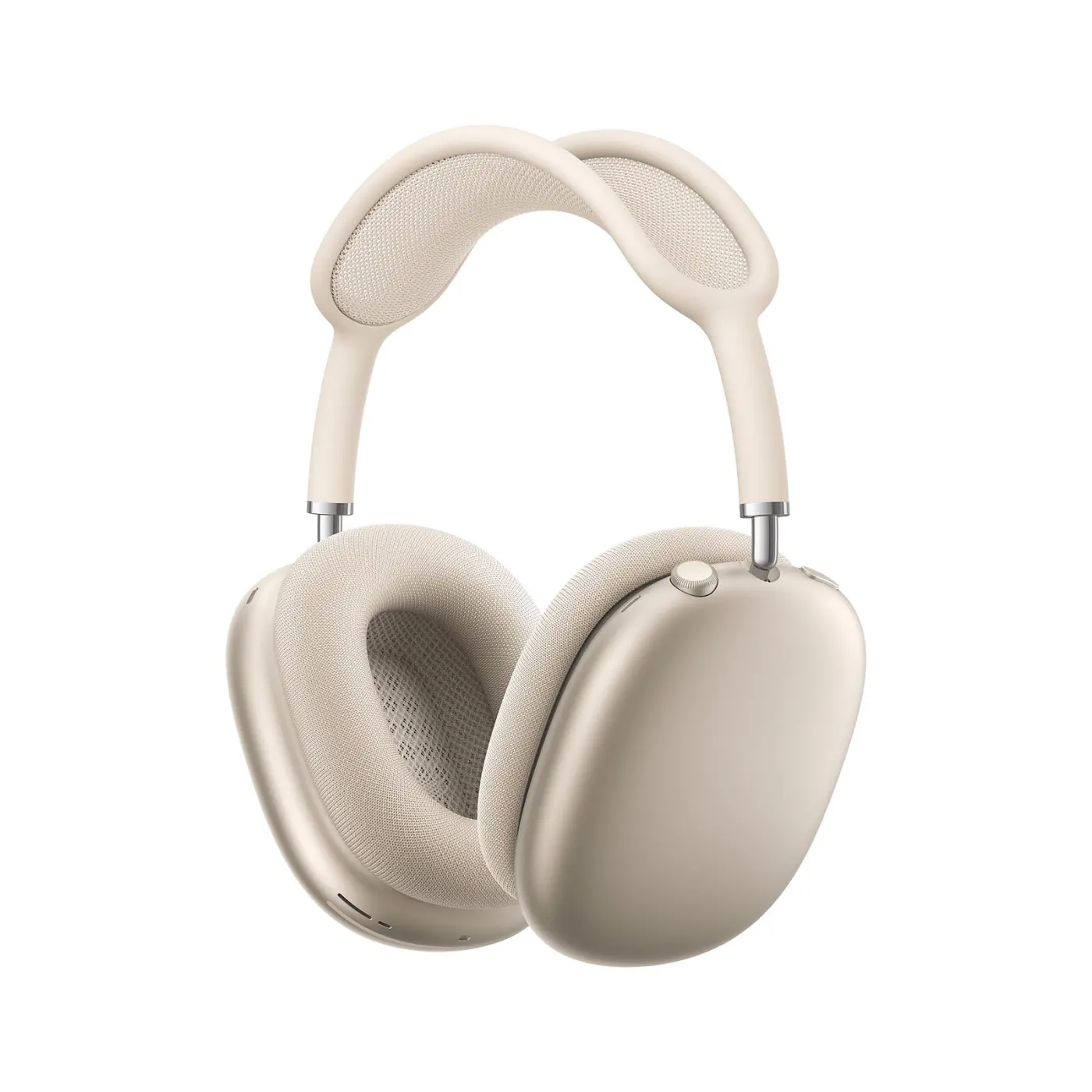
Apple Apple AirPods Max 2
- approx. 89.4% of noise removed by perceived loudness (SoundGuys)Measured ANC performance
- €493retail price
Details+
The most expensive and by far the heaviest here at 386 g, supporting only AAC and SBC. The previous generation sits at €379 and is arguably the better buy.
- Strengths
- approx. 89.4% of noise removed by perceived loudness (SoundGuys)
- Measured 21 h 31 min battery against a 20-hour claim
- H2 chip with seamless switching across Apple devices
- Aluminium build quality unmatched in this ranking
- USB-C lossless playback support
- Spatial audio with head tracking
- Weaknesses
- 386 g — 56 g heavier than anything else here, 136 g heavier than the Bose
- AAC and SBC only. No LDAC, no aptX, no LC3
- No 3.5 mm socket
- Settings cannot be adjusted while wired
- The previous generation at €379 measured 88% — €114 for 1.4 points
- No dB attenuation figure published, so no direct comparison is possible
- No official EU RRP could be verified
6.8 / 10acceptable
Scores comparable only within this categorySignificance threshold: ±0.15 pt
9.3 Our verdict
The dB problem
Why no ANC number on a box means anything
There is no mandatory standard for measuring active noise cancellation and no single number a manufacturer must publish.
- IEC 60268-7 covers conventional headphone isolation measurement but predates and does not properly handle adaptive DSP-based ANC.
- ETSI TS 103 640 is the closest modern ANC and hear-through evaluation specification, now at version 1.4.1 (April 2026). It is a voluntary technical specification. Nobody is obliged to test against it, and no consumer brand publishes an ETSI-referenced figure.
The test signal changes the answer more than the headphone does
Research by HEAD acoustics found that foam earplugs cut a leaf-blower recording by 41.57 dB but an aircraft-cabin recording by only 11 dB — while ANC devices show the opposite pattern. A single "up to XX dB" claim with no stated noise source is therefore close to meaningless.
Peak dB is usually the earcup, not the electronics
This is the trap, and two models here demonstrate it:
- Bowers & Wilkins Px7 S3: peak ANC 43.4 dB at 15,400 Hz — and peak passive isolation 44.4 dB at the same frequency. The ANC circuit contributes nothing at that peak.
- Anker Soundcore Space One: peak 40.4 dB at 12,200 Hz, passive peak 42.4 dB at 9,720 Hz — and a German test lab describing the ANC as "quite weak", barely dampening office conversation.
Never present a peak dB figure as "the ANC." Ask which frequency it occurs at. Below about 1 kHz it is cancellation; above about 2 kHz it is the seal.
How the figures on this page were produced
SoundGuys uses a Brüel & Kjær 5128 head-and-torso simulator with a 1704C-102 ear simulator. Shaped noise is played over loudspeakers and recorded on the bare head, then re-recorded with the headphones fitted, and one frequency-response curve is subtracted from the other. Their 10-point score maps directly to attenuation: 5/10 is a 50% reduction, about 10 dB; 8.75/10 is 87.5%, about 30 dB. Battery is measured with music peaking at 75 dB SPL, run to depletion.
RTINGS publishes band-by-band isolation data too, but blocks automated access — so no RTINGS figure appears anywhere on this page. Consult them directly if you want a second measurement.
What ANC can and cannot do
It cancels engines. It does not cancel people.
ANC is most effective on constant low-frequency sound — aircraft engines, HVAC, road roar, train rumble. It falls away as frequency rises, because high-frequency sound has a short wavelength and cancelling it would require sensing and generating the anti-phase signal closer to the eardrum than is technically feasible.
It is also weak on short, sharp, unpredictable sound — voices, laughter, breaking glass, keyboard clatter — because the system cannot anticipate them.
Everything above roughly 1–2 kHz is handled by passive isolation: cushion depth, clamping force, seal quality.
Why this matters more than any specification
HIFI.DE's finding that Sonos Ace ANC collapses for spectacle wearers is more consequential than any dB figure on this page. Glasses arms break the passive seal, and no amount of DSP recovers it. The same applies, to varying degrees, on every headphone here.
It also reframes the office question. A noisy open-plan office is a speech problem, and speech is the one thing ANC physically cannot cancel. The right specification there is deep cushions and a firm seal — which is why the B&W Px7 S3, with a lower ANC score than the Sonos, is the better office headphone.
The honest summary: ANC turns a plane into a quiet room. It does not turn an open-plan office into a quiet room, and nothing in this ranking does.
Transparency modes
Different names, same mechanism — external microphones feed environmental sound back into the drivers. What separates good from bad:
- Naturalness: how flat the microphone-to-ear response is, and how much occlusion of your own voice remains. Notably, HIFI.DE singled out the €66 Soundcore Space One for a "very true to life" transparency mode. This is not a premium-only feature.
- Latency: passthrough delay comb-filters against sound leaking in physically, producing a hollow or metallic quality.
- Adaptive variants — Sony's Speak-to-Chat, Bose's Aware Mode, Apple's Adaptive Audio — duck the music automatically when you speak.
Codecs
LDAC, aptX Lossless and whether any of it is audible
The best controlled measurement evidence available comes from Archimago's comparison on an Android 10 source. Bitrates: SBC around 328 kbps, AAC 256 kbps, aptX HD 529 kbps, LDAC 303, 606 or 909 kbps.
Findings that matter:
- LDAC at 303 kbps rolls off around 16.5 kHz — potentially audible to young listeners, and worse than LDAC's reputation suggests. Only the 606 and 909 kbps modes extend cleanly to 20 kHz. LDAC in a crowded RF environment drops to 303 kbps, where it can be worse than plain AAC.
- AAC measured worst on Android for total harmonic distortion plus noise, with frequency smearing degrading from −41.9 dB to −35.9 dB as signal complexity rose. Apple's own AAC implementation is generally better — which matters given the AirPods Max 2 is AAC-only.
- Overall ranking: LDAC 909 > LDAC 606 = aptX HD > aptX = LDAC 303 > SBC > AAC.
The honest framing
These are measurement differences at the transport layer. They are dwarfed by the headphone's own frequency response, by fit and seal, and by whether ANC is switched on.
We found no rigorous published blind listening test showing LDAC or aptX Lossless is reliably distinguishable from good AAC or aptX on headphones like these. Do not let anyone claim otherwise without one.
Codec support is a tiebreaker between two headphones you already like, not a reason to buy one. Note the absurdity it produces at the extremes: the €66 Anker supports LDAC; the €493 AirPods Max 2 supports AAC and SBC only.
EU rules
USB-C, volume limits, and the 2027 battery question
Common Charger Directive (EU) 2022/2380
Headphones and headsets are explicitly in scope, alongside phones, tablets, cameras, earbuds, portable speakers, e-readers, keyboards, mice, handheld consoles and navigation devices.
The deadline that applied was 28 December 2024; laptops followed on 28 April 2026. New devices placed on the EU market must charge via USB-C, and charging speed must be the same with any compatible charger.
What it does not do is mandate audio over USB-C. Sony's WH-1000XM6 is fully compliant with a USB-C port that carries no audio at all. Do not conflate the two — of the eight here, the Bose, B&W, Melomania, Sonos and AirPods carry USB-C audio; the Sony does not.
Sound output limits and hearing safety
The governing standard family is EN 50332, arising from Commission mandate M/452 (2009). Part 1 covers a player and headphone sold as a package, Part 2 covers separately sold components, and Part 3 (2017) adds dose management — cumulative exposure tracking, warnings triggered around 80–89 dB(A), and volume capping once a weekly dose threshold is reached.
The headline limit is 100 dB(A) LAeq, measured with a music-shaped signal rather than plain pink noise. Warnings must appear in the local language, require confirmation to override, and cannot be suppressed by default. Bluetooth headphones are fully in scope — wireless is not an exemption. EN 50332 reaches products through the Low Voltage Directive, the Radio Equipment Directive and the General Product Safety Regulation, applicable since December 2024.
These specific figures rest on a single commercial guide to the standard plus WHO and ITU background material; verify against the CENELEC text if you need to rely on them precisely.
Battery Regulation (EU) 2023/1542 — the interesting one
Article 11 applies from 18 February 2027. Portable batteries must be "readily removable and replaceable by the end user at any time during the lifetime of the product". In practice: removal without damaging the battery or device, only commonly available non-proprietary tools, no heat and no solvents, and parts-pairing software that blocks replacement is forbidden.
Exemptions are narrow — wet-environment products where removability would compromise safety, certain medical devices, and continuity-of-supply devices like smoke alarms.
The Commission guidance we read does not name headphones or earbuds. On its face, glued-in over-ear batteries look non-compliant from February 2027, and the wet-environment carve-out is a stretch for an over-ear headphone. But that is our inference, not a sourced ruling — treat it as a direction of travel rather than a settled fact.
Commercially it is already moving. The Sennheiser Momentum 5 Wireless ships with a user-replaceable battery, and the B&W Px7 S3 has replaceable earpads and headband padding. Expect serviceability to become a marketing axis through 2027 — and note that on a headphone used daily, the earpads usually fail before the battery does.
Choosing
Flight, commute, office or desk — the answer differs
| Use | Dominant noise | What to prioritise | Best here |
|---|---|---|---|
| Long-haul flight | 60–100 Hz engine drone, constant | Low-frequency ANC, comfort over 8+ hours, low weight, battery, 3.5 mm for the entertainment system | Sony WH-1000XM6 (254 g, best measured ANC, 37 h) or Bose QC Ultra 2 (250 g, comfort benchmark). Melomania P100 for sheer endurance. |
| Commuting | Mixed rumble, announcements, voices | ANC plus fast, natural transparency for platform announcements; multipoint; folding | Sony WH-1000XM6 or Bose QC Ultra 2, both of which fold |
| Open-plan office | Speech — the one thing ANC cannot cancel | Passive isolation and clamp, not ANC score. Deep cushions. Good call microphone. | B&W Px7 S3 (300 g, deep cushions). Avoid thin-cushion designs — the Sonos Ace glasses finding applies here. |
| Home desk | Very little | Wired USB-C lossless, tuning, long-session comfort | Bose QC Ultra 2 or Px7 S3 — both offer USB-C audio and 3.5 mm. Note the Sony has no USB-C audio, and the Sonos Ace and AirPods Max have no 3.5 mm socket. |
One thing we could not verify for any model: whether ANC remains active in passive 3.5 mm mode with the headphone powered off. SoundGuys explicitly declines to answer this for the Bose. If it matters to you, test it in a shop.
Marketing decoded
Five claims that do not survive scrutiny
"Up to XX dB of noise cancellation." No standard governs the measurement, no noise source is stated, and the figure is usually a peak at a high frequency where the earcup seal is doing the work. The B&W's peak ANC and peak passive isolation are within 1 dB of each other at the same frequency.
"Industry-leading ANC." SoundGuys tested the second-generation Bose QuietComfort Ultra against Bose's own improvement claim and found "it doesn't seem to be the case in terms of gross noise attenuation". Manufacturer year-on-year claims in this category are frequently not measurable.
Codec badges. LDAC, aptX Lossless and aptX Adaptive are real technologies with measurable transport-layer differences — and no published blind test shows they are reliably distinguishable on headphones like these. LDAC also drops to 303 kbps in RF congestion, where it measures worse than AAC.
Battery claims. These are at least testable, and the results cut both ways: Sony under-claims (30 h claimed, 37 h 14 min measured), Bose over-claims in at least one mode (27 h 12 min measured), and four models here have no independent measurement at all. Claimed figures assume a specific volume; SoundGuys measures at 75 dB SPL.
"Auracast ready." Auracast is genuinely deploying — the Bluetooth SIG cites live installations at the Sydney Opera House and Bristol Temple Meads station, and German-English interpretation demonstrations at a European hearing-aid congress. But the SIG publishes no shipment or deployment figures, and its language is aspirational. It is not yet a reason to choose a headphone.
Methodology
How this score is built
The score is the mean of four component scores — each carries equal weight and each rests on a named source. The full procedure is described in the methodology.
01Composition and specification
Declared composition and specification: active ingredients and their concentrations, energy classes, standards, technical parameters — and what the manufacturer leaves unsaid.
02Evidence and studies
Verification of the manufacturer's claims against outside sources: laboratory reports, industry testing, safety data sheets, certificates and regulatory decisions.
03Owner feedback
Analysis of verified reviews written after extended use, together with recurring fault reports for the model or series.
04Cost and value
Price set against what the product actually delivers, plus costs incurred later — consumables, energy, servicing, subscriptions — over the lifespan typical for the category.
FAQ
Frequently asked questions
Which noise-cancelling headphones should most people buy?+
The Sony WH-1000XM6 at around €315. It measured the highest peak attenuation here at 54.0 dB with an ANC score of 8.7/10 that beats 90% of over-ears tested, delivered 37 hours 14 minutes of measured battery against a 30-hour claim, weighs 254 g and scored MDAQS 4.8/5 on audio quality. It won a What Hi-Fi? Award. If €315 is too much, the Anker Soundcore Space One at €66 covers train and plane noise adequately — but its ANC was described as weak by a German test lab.
Can I compare the dB figures between brands?+
No. There is no mandatory standard for measuring ANC — IEC 60268-7 predates adaptive systems, and ETSI TS 103 640 is voluntary with no brand publishing figures against it. Worse, peak dB figures usually occur at high frequencies where the earcup seal, not the electronics, is doing the cancelling: the B&W Px7 S3's peak ANC is 43.4 dB and its peak passive isolation is 44.4 dB at the same frequency. Use measured scores from a lab that publishes its method, and check which frequency a peak occurs at.
Will ANC block my noisy office?+
No, and no headphone in this ranking will. ANC works on constant low-frequency sound — engines, HVAC, road roar. It cannot cancel speech, because voices are short, sharp and unpredictable, and because above roughly 1-2 kHz cancellation is physically impractical. Everything above that comes from the earcup seal. For an office, prioritise deep cushions and passive isolation over ANC scores — which is why the B&W Px7 S3 is the better office choice despite a lower ANC number than the Sonos Ace.
I wear glasses. Does that affect ANC?+
Yes, on every headphone, and on some far more than others. Glasses arms break the earcup seal, and since all attenuation above roughly 1-2 kHz is passive, no processing recovers it. HIFI.DE found the Sonos Ace's ANC noticeably degraded for spectacle wearers specifically, because its cushions are thin. If you wear glasses, prioritise deep, soft cushions and test the fit before buying.
Is LDAC or aptX Lossless worth paying for?+
Not on its own. Controlled measurements show real transport-layer differences — LDAC at 909 kbps ranks highest, AAC on Android lowest — but they are dwarfed by the headphone's own tuning, by fit and by whether ANC is on. We found no rigorous blind listening test showing these codecs are reliably distinguishable on headphones like these. Note also that LDAC drops to 303 kbps in RF congestion, where it rolls off at 16.5 kHz and can measure worse than AAC.
Do these headphones have to charge over USB-C?+
Yes. The EU Common Charger Directive (EU) 2022/2380 explicitly covers headphones and headsets, and applied from 28 December 2024. But note it mandates the charging port, not audio over USB-C — the Sony WH-1000XM6 is fully compliant with a USB-C port that carries no audio at all. If you want USB-C lossless listening, check the specification separately.
Can I replace the battery when it wears out?+
On most of these, not easily. Battery Regulation (EU) 2023/1542 requires portable batteries to be readily removable and replaceable by the end user, using commonly available tools and without heat or solvents, from 18 February 2027 — and forbids software that blocks replacement. The Commission guidance does not specifically name headphones, so we cannot state that they are covered. What is already visible commercially is that the Sennheiser Momentum 5 ships with a user-replaceable battery and the B&W Px7 S3 has replaceable earpads. On a headphone used daily, the pads usually fail before the cell does.
Should I wait for Black Friday?+
Most of the discount has already happened. The Sony fell from €449 at launch to around €315, the Sonos Ace from €499 to €289, and the Sennheiser Momentum 4 from a $449.95 MSRP to €179 — all through ordinary model-cycle depreciation rather than a sale event. European Black Friday discounting on audio typically adds a further 10-17% on top. Buying a superseded flagship at any time of year is the bigger saving.
Sources
Documents and standards
- 1. SoundGuys - Sony WH-1000XM6: https://www.soundguys.com/product/sony-wh-1000xm6/
- 2. SoundGuys - Bose QuietComfort Ultra 2nd Gen: https://www.soundguys.com/product/bose-quietcomfort-ultra-2nd-gen/
- 3. SoundGuys - Bose QC Ultra 2nd Gen review: https://www.soundguys.com/bose-quietcomfort-ultra-headphones-2nd-gen-review-boring-refresh-or-notable-upgrade-144545/
- 4. SoundGuys - Bowers & Wilkins Px7 S3: https://www.soundguys.com/product/bowers-wilkins-px7-s3/
- 5. SoundGuys - Px7 S3 review: https://www.soundguys.com/bowers-and-wilkins-px7-s3-review-an-unexpected-anc-heavyweight-142231/
- 6. SoundGuys - Sonos Ace: https://www.soundguys.com/product/sonos-ace/
- 7. SoundGuys - Anker Soundcore Space One: https://www.soundguys.com/product/anker-soundcore-space-one/
- 8. SoundGuys - Sennheiser Momentum 4 Wireless review: https://www.soundguys.com/sennheiser-momentum-4-wireless-review-2-86111/
- 9. SoundGuys - Sennheiser Momentum 5 Wireless review: https://www.soundguys.com/sennheiser-momentum-5-wireless-review-157679/
- 10. SoundGuys - Apple AirPods Max 2 review: https://www.soundguys.com/apple-airpods-max-2-review-155613/
- 11. SoundGuys - Cambridge Audio Melomania P100 SE: https://www.soundguys.com/product/cambridge-audio-melomania-p100-se/
- 12. SoundGuys - How we test: https://www.soundguys.com/how-we-test/
- 13. RTINGS - Headphone isolation test methodology: https://www.rtings.com/headphones/tests/isolation
- 14. What Hi-Fi? - Sony WH-1000XM6: https://www.whathifi.com/headphones/sony-wh-1000xm6
- 15. HIFI.DE - Sonos Ace test: https://hifi.de/test/sonos-ace-test-192902
- 16. HIFI.DE - Soundcore Space One test: https://hifi.de/test/soundcore-space-one-test-185125
- 17. StereoGuide - Cambridge Audio Melomania P100 review: https://stereoguide.com/headphones/noise-cancelling-en/cambridge-audio-melomania-p100-review/
- 18. LowBeats - Bowers & Wilkins Px7 S3: https://www.lowbeats.de/test-bluetooth-kopfhoerer-bw-px7-s3-luxus-fuer-den-kopf/
- 19. Bose Germany - QuietComfort Ultra 2nd Gen: https://www.bose.de/p/kopfhorer/bose-quietcomfort-ultra-headphones-2nd-gen/QCUH2-HEADPHONEARN.html
- 20. Bowers & Wilkins Germany - Px7 S3: https://www.bowerswilkins.com/de-de/product/over-ear-headphones/px7-s3/FP45330P.html
- 21. Sonos support - Lossless audio requirements for Sonos Ace: https://support.sonos.com/en-us/article/lossless-audio-requirements-for-sonos-ace
- 22. audioXpress - New ways to measure noise cancelling and transparency: https://audioxpress.com/article/new-ways-to-measure-noise-cancelling-transparency-and-other-modes-in-headphones-and-earphones
- 23. ETSI TS 103 640 V1.4.1 (April 2026): https://www.etsi.org/deliver/etsi_ts/103600_103699/103640/01.04.01_60/ts_103640v010401p.pdf
- 24. Archimago - Comparison of Bluetooth codec fidelity: http://archimago.blogspot.com/2023/08/part-i-comparison-of-bluetooth-fidelity.html
- 25. European Commission - EU common charger rules: https://commission.europa.eu/news-and-media/news/eu-common-charger-rules-power-all-your-devices-single-charger-2024-12-28_en
- 26. Cooley Productwise - EU Batteries Regulation removability guidance: https://products.cooley.com/2025/02/13/european-commission-publishes-guidance-on-eu-batteries-regulation-removability-requirements/
- 27. spilma - EN 50332 acoustic safety guide: https://www.spilma.com/en/guides/acoustic-safety-en-50332
- 28. WHO - Safe listening standards situation analysis: https://cdn.who.int/media/docs/default-source/documents/health-topics/deafness-and-hearing-loss/monograph_on_situation_analysis_and_background_for_standards_for_safe_listening_systems.pdf
- 29. Bluetooth SIG - Auracast broadcast audio market impact 2026: https://www.bluetooth.com/blog/how-auracast-broadcast-audio-is-expanding-audio-streaming-and-a-look-at-the-market-impact-it-could-have-in-2026-and-beyond/
- 30. Geizhals price comparison, September 2026: https://geizhals.de/
More
Other rankings
in
Electronics.
Each category has its own protocol and its own key parameter.