
2Rank 02 of 8 · Best Noise-Cancelling Headphones
Bose Bose QuietComfort Ultra Headphones (2nd Gen)
The lightest flagship here at 250 g and still the comfort benchmark, with USB-C lossless audio and a 3.5 mm socket. But SoundGuys found the claimed ANC improvement did not show up in measurement.
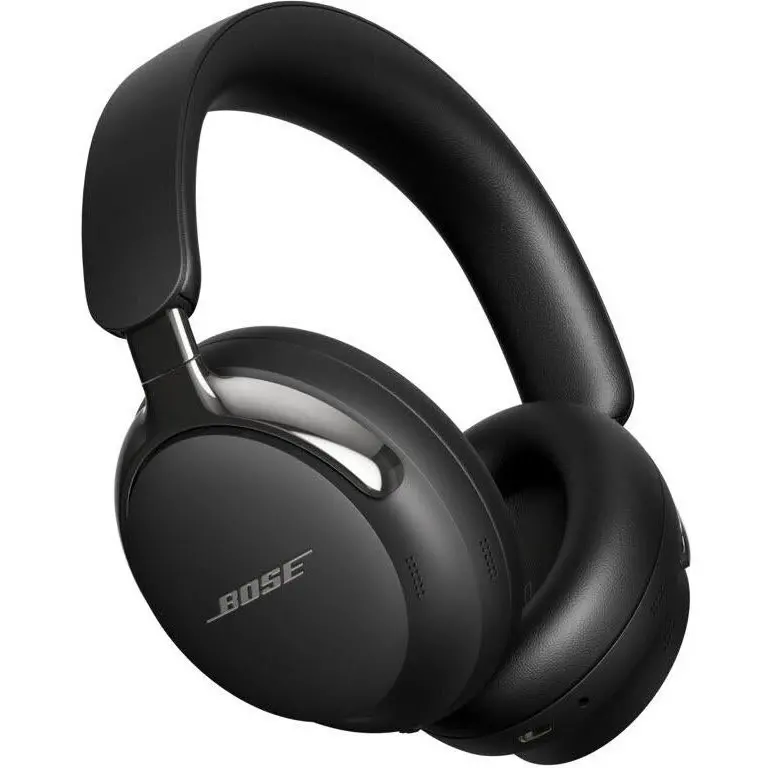 9.0BPR score
- €310Price
- ANC 8.7/10 — beats 90% of over-ears (SoundGuys)Measured ANC performance
- 2 of 8in Best Noise-Cancelling Headphones
- 9.0BPR score 0–10
Review
What this product is
Written after the analysis, from the same sources the score is built on: the manufacturer's documentation, available studies and verified owner feedback.
The comfort choice, and the one to buy if you want both wired options.
SoundGuys measured peak attenuation of 50.0 dB at 15,400 Hz with an ANC score of 8.7/10 that beats 90% of over-ears — matching the Sony's score — and isolation at 7.1/10. At 250 g it is the lightest headphone in this ranking, which over an eight-hour flight is worth more than a decibel or two.
The honest caveat is Bose's own claim. SoundGuys' verdict on the second generation: "Despite Bose's claims that they've improved ANC, it doesn't seem to be the case in terms of gross noise attenuation." This is an incremental refresh, and if you own the first generation there is little reason to upgrade.
Connectivity is the best here for home listening. Both USB-C audio (lossless, 16-bit 44.1/48 kHz) and a 3.5 mm socket — the Sony lacks USB-C audio, the Sonos Ace and AirPods Max lack a 3.5 mm socket. Codecs cover SBC, AAC and the aptX Adaptive family including aptX Lossless, under Snapdragon Sound branding.
The battery figures need care. Bose Germany claims 30 hours in Quiet or Aware mode, and 23 hours with 360-degree spatial audio active. SoundGuys measured 27 hours 12 minutes against a 24-hour claim in the mode they tested. Both are plausible; they are not the same measurement.
Default tuning carries roughly 3–6 dB of bass emphasis with extension to 20 kHz, though SoundGuys notes the 3–8 kHz midrange varies substantially between fits — which is another way of saying the seal matters.
No IP rating. €379.95 RRP, €309.98 street.
Technical data
Specification
Figures from the manufacturer's documentation, verified against available outside sources. Values we could not confirm are marked as declared.
- Measured peak ANC
- 50.0 dB at 15 400 Hz (SoundGuys)
- ANC score
- 8.7/10 - beats 90% of over-ears
- Passive isolation
- 7.1/10
- Battery
- Bose claims 30 h (Quiet/Aware), 23 h with spatial audio; SoundGuys measured 27 h 12 min
- Charging
- 180 min full
- Codecs
- SBC, AAC, aptX Adaptive family incl. aptX Lossless (Snapdragon Sound)
- Bluetooth
- 5.4, multipoint 2 devices
- Weight / driver
- 250 g / 35 mm
- Wired
- USB-C lossless audio (16-bit 44.1/48 kHz) AND 3.5 mm
- IP rating
- None
- Tuning
- approx. 3-6 dB bass emphasis, extension to 20 kHz
- Price
- EUR 379.95 RRP; from EUR 309.98 street
Component scores
Where the score
comes from.
Four components, equal weight, each on a 0–10 scale and each resting on a named source. The overall score is their mean — the full procedure is in the methodology.
What we liked
- 250 g — the lightest headphone in this ranking
- ANC 8.7/10, matching the Sony and beating 90% of over-ears
- Both USB-C lossless audio AND a 3.5 mm socket
- aptX Adaptive family including aptX Lossless, Snapdragon Sound
- Long-standing comfort benchmark in this category
- Bluetooth 5.4 with multipoint
Worth knowing
- SoundGuys found no measurable ANC improvement over the first generation
- Measured 27 h 12 min battery — below Bose's 30-hour headline
- 180 minutes for a full charge
- No IP rating
- Midrange response varies substantially with fit
- 35 mm drivers on a €380 RRP product
Comparison
How it compares
within the category
All values come from the same analysis and are comparable only within the category Best Noise-Cancelling Headphones.
| Product | Score | Measured ANC performance | Price |
|---|---|---|---|
| Sony WH-1000XM6Top score | 9.3 | ANC 8.7/10 — beats 90% of over-ears (SoundGuys) | €315 |
| Bose QuietComfort Ultra Headphones (2nd Gen)This product | 9.0 | ANC 8.7/10 — beats 90% of over-ears (SoundGuys) | €310 |
| Category average8 products analysed | 8.3 | — | — |
FAQ
Frequently asked questions
Should I upgrade from the first-generation QuietComfort Ultra?
Probably not. SoundGuys tested both and concluded that despite Bose's claims of improved ANC, gross noise attenuation had not measurably changed. This is a refresh rather than a new product. If your current pair works, the money is better spent elsewhere.
Why does USB-C audio matter if it has a 3.5 mm socket?
USB-C carries a digital signal, so the headphone's own DAC handles conversion — giving lossless 16-bit 44.1/48 kHz from a laptop or phone with no analogue stage in between. The 3.5 mm socket matters for a different reason: aircraft entertainment systems, older equipment, and listening with the headphone powered off. Having both is genuinely useful, and only this and the B&W Px7 S3 offer it here.
From the same ranking
Other products in Best Noise-Cancelling Headphones.
The same protocol, the same key parameter, the same set of sources.
-
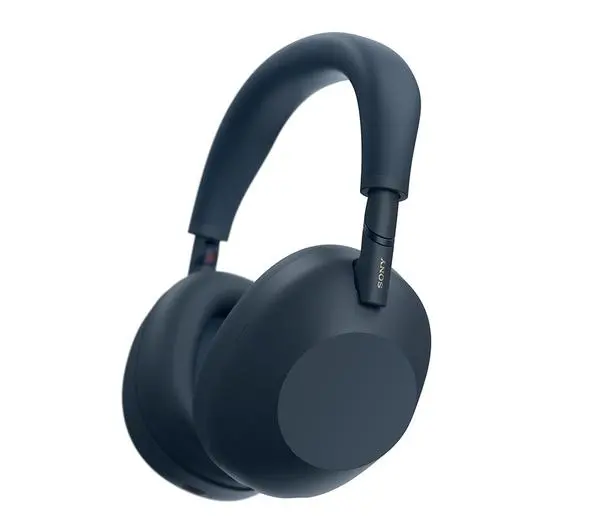 No. 019.3/ 10
Sony WH-1000XM6
The best-measuring headphone here on nearly every axis: highest peak attenuation, 37 hours of…
-
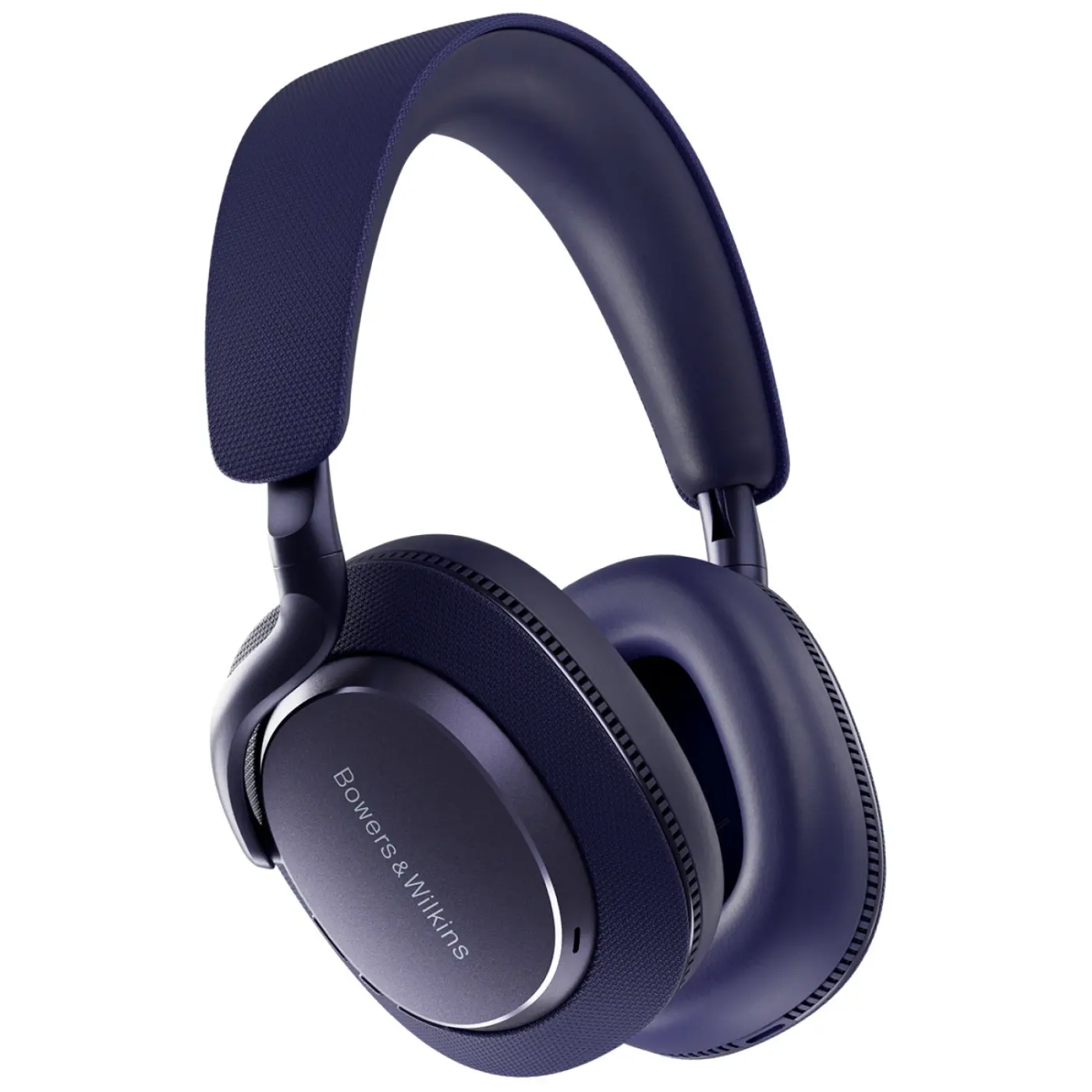 No. 038.8/ 10
Bowers & Wilkins Px7 S3
Strong passive isolation from deep cushions, replaceable earpads and headband padding, aptX…
-
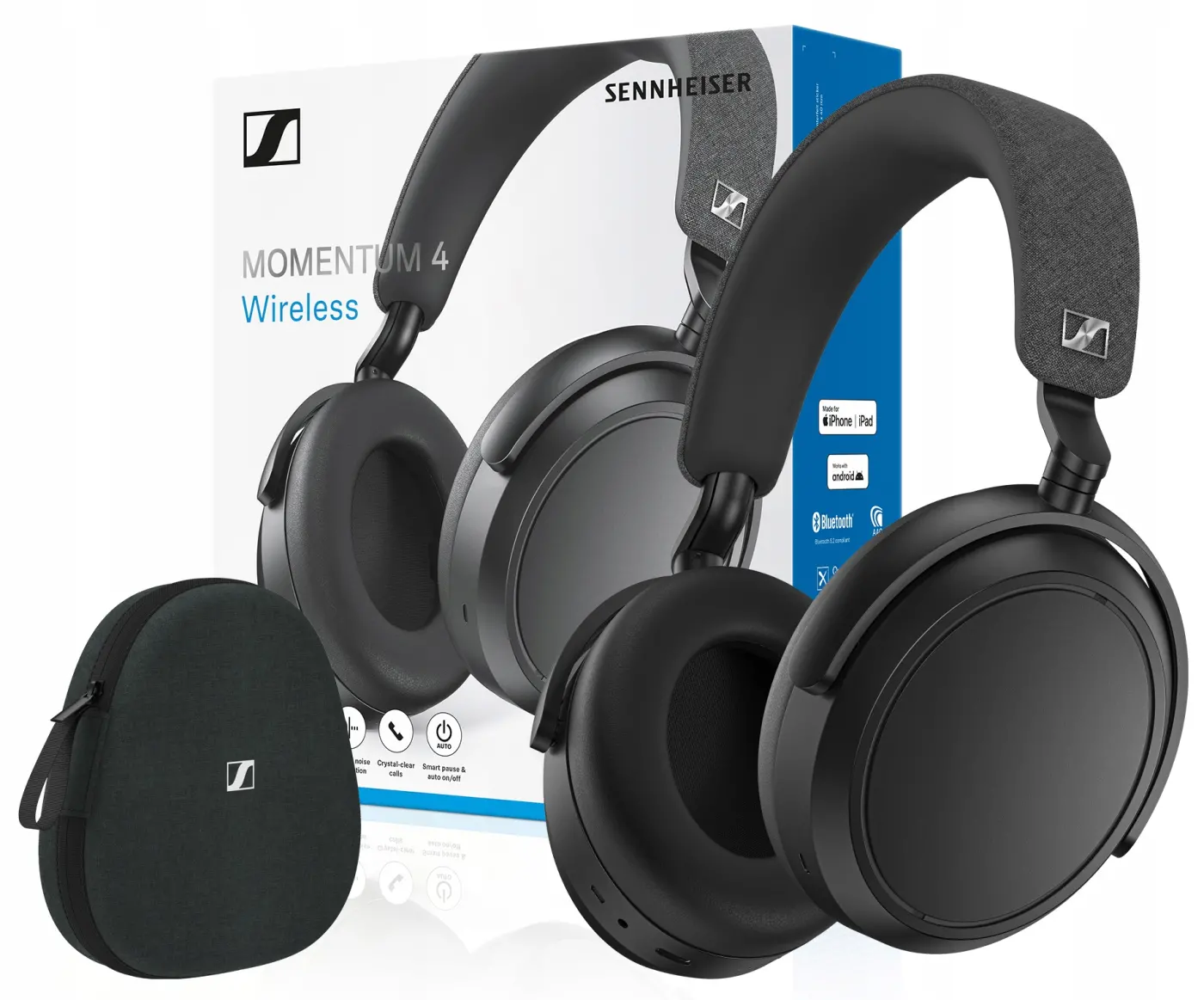 No. 048.4/ 10
Sennheiser Momentum 4 Wireless
The battery record holder at a measured 56 hours 21 minutes with ANC on — nearly double the…
-
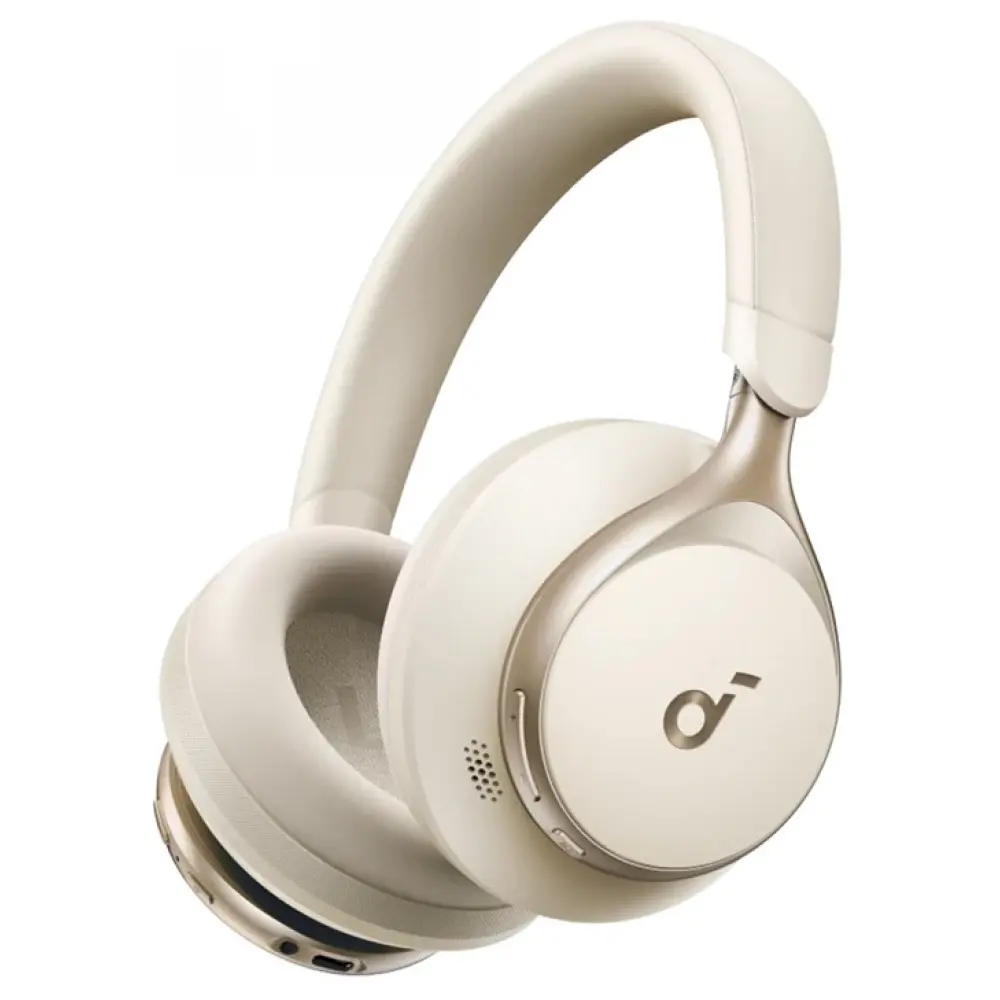 No. 058.0/ 10
Anker Soundcore Space One
€66 with LDAC, a 3.5 mm socket, a claimed 40 hours of ANC battery, and a transparency mode a…