
Automotive
Best Winter Tyres 205/55 R16
205/55 R16 is the most contested tyre size in Europe. It is the standard fitment on the VW Golf, Audi A3, Škoda Octavia, Ford Focus and Toyota Corolla, and the default winter downsize for cars delivered on 17 and 18-inch wheels. One retailer alone lists 141 winter models in this size. That competition is good for prices and terrible for choosing.
The EU tyre label will not help you. Every tyre in this ranking carries the same label: rolling resistance class C, wet grip class B. Not one achieves wet grip A. Yet on the same size, the joint ADAC / ÖAMTC / TCS test graded these tyres from 2.0 to 5.5 — a spread that included one budget model still travelling at 30 km/h at the point where the winner had already come to a complete stop. Two tyres with identical labels, one recommended and one dangerous.
The reason is in the regulation. The label's wet grip test is run on wet asphalt at between 2 °C and 20 °C, with 1 mm of standing water. There is no snow, no ice and no slush anywhere in the procedure. The only winter information on the label is the 3PMSF snowflake, and that is a pass/fail threshold rather than a ranking.
So this ranking is built on independent test results measured in 205/55 R16 specifically — not read across from other sizes, where the same tyre often performs very differently. The EU label values are published for every model below, because they are legally required and you will see them at the point of sale, but they are not what decides the order.
Methodology note
What this ranking is based on. Three test programmes conducted in 205/55 R16: the joint ADAC / ÖAMTC / TCS winter test 2024 (12 tyres, 91H), the AUTO BILD Winterreifen-Test 2024 (53 candidates reduced to 20 finalists), and Auto Express Best Winter Tyres 2026 (snow testing at Ivalo in Finland, wet and dry at Contidrom in Germany). EU label values come from manufacturer declarations published by European retailers, with EPREL registration numbers where we could verify them.
What we did not test. We ran no tyre tests of our own and we did not survey owners. The owner-feedback score reflects the consensus of published test verdicts, not a consumer survey. Where a test was conducted in a different size, this is stated — a tyre's behaviour changes materially between sizes, and the Continental TS 870 illustrates it: 2.0 and a test win in 205/55 R16, but only 2.5 in 225/40 R18.
Prices were taken from reifen.com, reifendirekt.de, Oponeo.de and Geizhals in September 2026 and are per single tyre. Winter tyre prices move sharply between September and December — verify before purchase.
Known gaps. No 2026 ADAC / ÖAMTC / TCS test had been published at the time of writing; it normally appears in late September or October, and we will update this page when it does. Noise class letters could not be verified for two models and are marked accordingly. Auto Express published finishing order but not per-tyre scores.
 8.9BPR score
Key parameter
Independent test grade, 205/55 R16
Overall grade from the joint ADAC / ÖAMTC / TCS winter tyre test conducted in this exact size, on the German school scale where 1.0 is best and 5.5 is worst. Where a tyre was not in that test, the AUTO BILD grade or Auto Express placing in 205/55 R16 is given instead, with the source named. Results measured in other tyre sizes are excluded from this column.
-
Top score
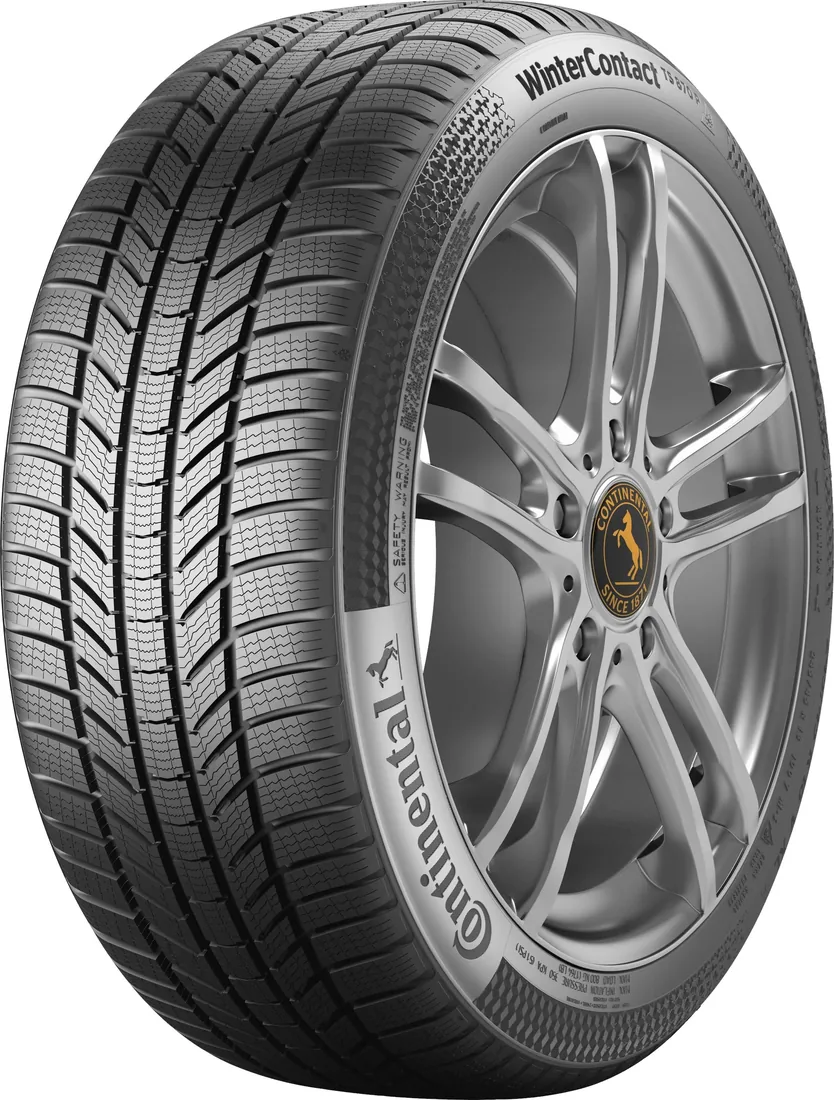
Continental Continental WinterContact TS 870
- 2.0 gut — winner (ADAC/ÖAMTC/TCS 2024)Independent test grade, 205/55 R16
- €103retail price
Details+
The only tyre to win this size in three separate test programmes. Uniquely, it posted both the best winter-road score and the best overall safety score in the same test — a combination none of its rivals achieved.
- Strengths
- Winner in this exact size in three separate test programmes (ADAC/ÖAMTC/TCS, AUTO BILD, Auto Express)
- Best winter-road score (1.6) and best safety score (1.8) in the ADAC field simultaneously
- Snow braking 29.1 m from 50 km/h — tied shortest in AUTO BILD's test
- TCS 70%, four stars, sehr empfehlenswert
- 3PMSF and M+S — legal across all of Europe
- EPREL registration verified (479726)
- Weaknesses
- Among the more expensive options here
- Mid-pack on rolling resistance and wear (ADAC environment score 2.3)
- The TS 870 P variant scored only 2.5 in 225/40 R18 — do not assume the result transfers to other sizes
- Wet grip class B, not A — like every tyre in this size
8.9 / 10good
-
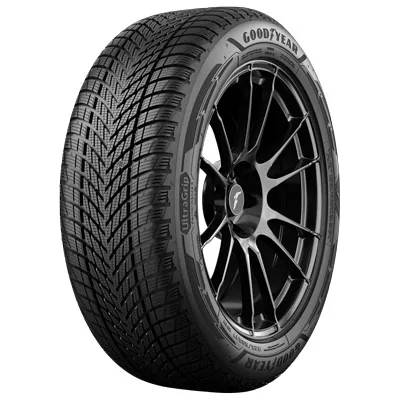
Goodyear Goodyear UltraGrip Performance 3
- 2.2 gut — 2nd (ADAC/ÖAMTC/TCS 2024)Independent test grade, 205/55 R16
- €98retail price
Details+
Runner-up in this size at both ADAC and AUTO BILD, and outright winner in two other sizes in 2025. Auto Express dropped it to seventh in 2026 citing dry handling — the one discordant result.
- Strengths
- 2nd in 205/55 R16 at both ADAC/ÖAMTC/TCS (2.2) and AUTO BILD (1.3)
- Outright winner in 225/40 R18 (ADAC 2025) and 245/45 R19 (GTÜ 2025)
- Balanced sub-scores with no weak discipline in the ADAC test
- Best environmental score of the premium group in 2025 (1.7)
- Typically €5-10 cheaper per tyre than the Continental
- EPREL registration verified (1222754)
- Weaknesses
- Auto Express 2026 placed it 7th in this size, criticising dry handling
- The gap between its 2024 and 2026 results in the same size is unexplained
- Wet grip class B like the rest of the field
8.6 / 10good
-
Best value
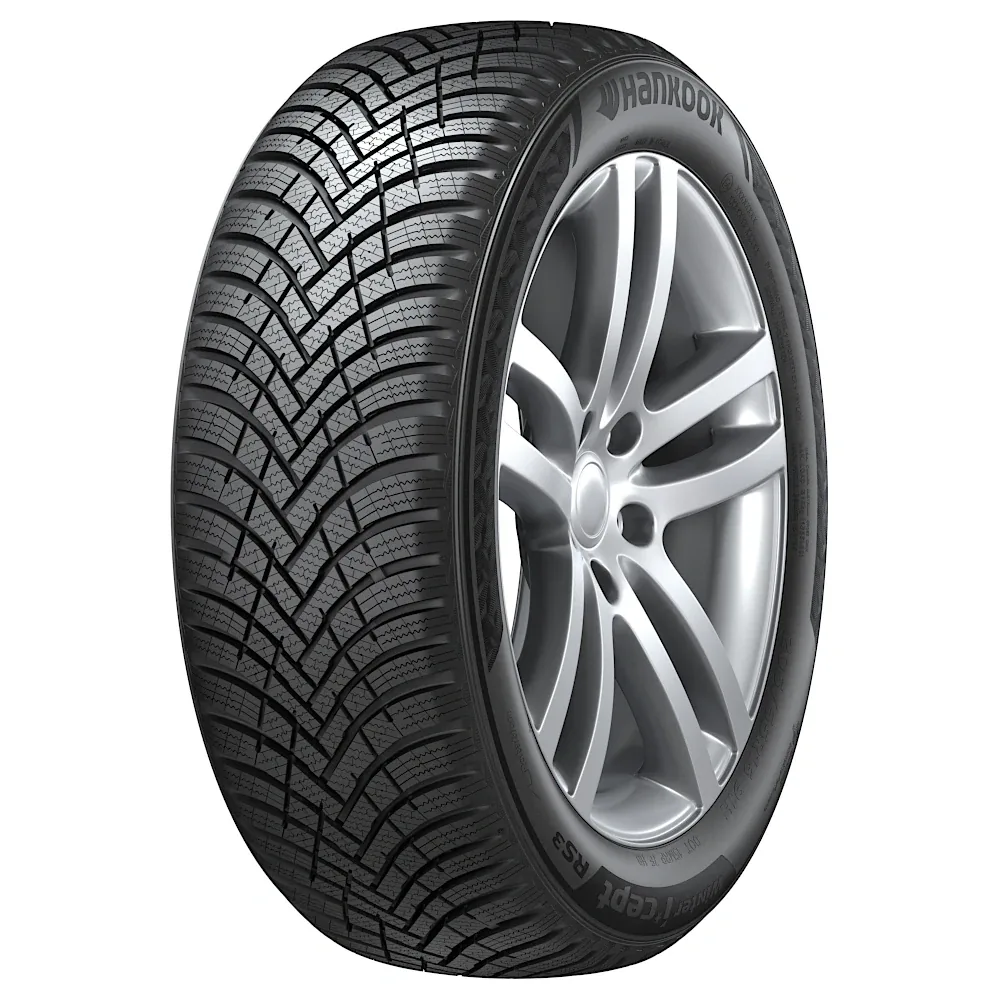
Hankook Hankook Winter i*cept RS3 (W462)
- 2.6 befriedigend (ADAC 2024) · 3rd (Auto Express 2026)Independent test grade, 205/55 R16
- €80retail price
Details+
The value pick. Third at Auto Express 2026 in this size, strong snow and ice scores and outstanding mileage per AUTO BILD, at around €80. Wet performance is the weak point.
- Strengths
- 3rd in 205/55 R16 at Auto Express 2026
- Around €80 — roughly €90 cheaper than the Continental across four tyres
- Outstanding mileage specifically noted by AUTO BILD
- Environment score 2.0, joint best in the ADAC field
- Strong snow (TCS 68%) and dry (TCS 64%) figures
- 3PMSF and M+S
- Weaknesses
- Weakest wet performance of the recommended group (TCS 54%, ADAC safety 2.8)
- Noisiest tyre here at 72 dB
- Noise class letter not published on any source we could verify
- Only 2.6 befriedigend overall at ADAC/ÖAMTC/TCS
8.5 / 10good
-
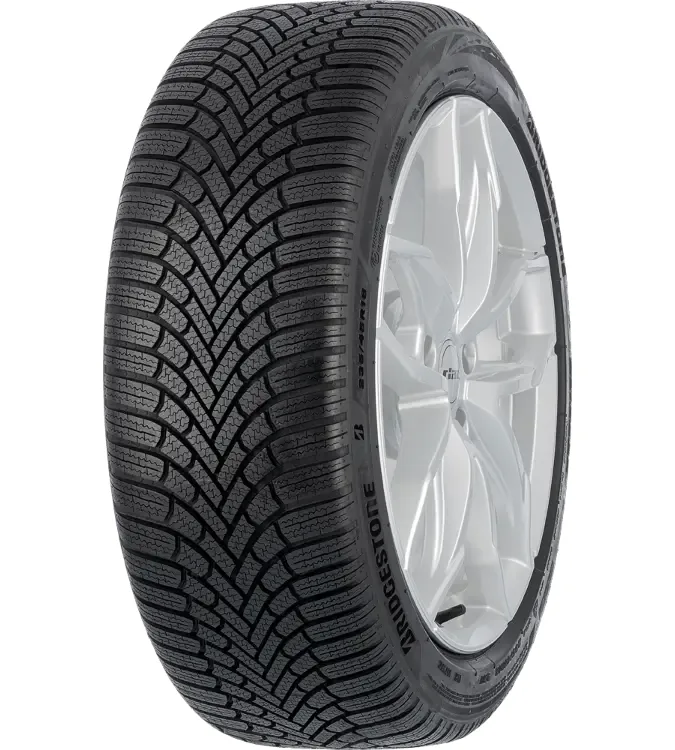
Bridgestone Bridgestone Blizzak 6 Enliten
- 1.5 gut — 4th (AUTO BILD 2024)Independent test grade, 205/55 R16
- €96retail price
Details+
The best measured snow braking of the AUTO BILD qualifying round, combined with low rolling resistance from the Enliten construction. Consistently strong, never the outright winner.
- Strengths
- Shortest snow braking in AUTO BILD's qualifying round at 34.6 m
- 4th of 20 at AUTO BILD 2024 in this size, grade 1.5 gut
- Joint 4th at Auto Express 2026 in this size
- 3rd of 31 at ADAC/ÖAMTC/TCS 2025 in 225/40 R18
- Enliten construction reduces rolling resistance and weight
- EPREL registration verified (1992440)
- Weaknesses
- Not included in the ADAC/ÖAMTC/TCS 2024 test in this size
- No outright win in any 205/55 R16 test
- No single class-leading discipline outside snow braking
- Wet grip class B like the rest of the field
8.4 / 10good
-
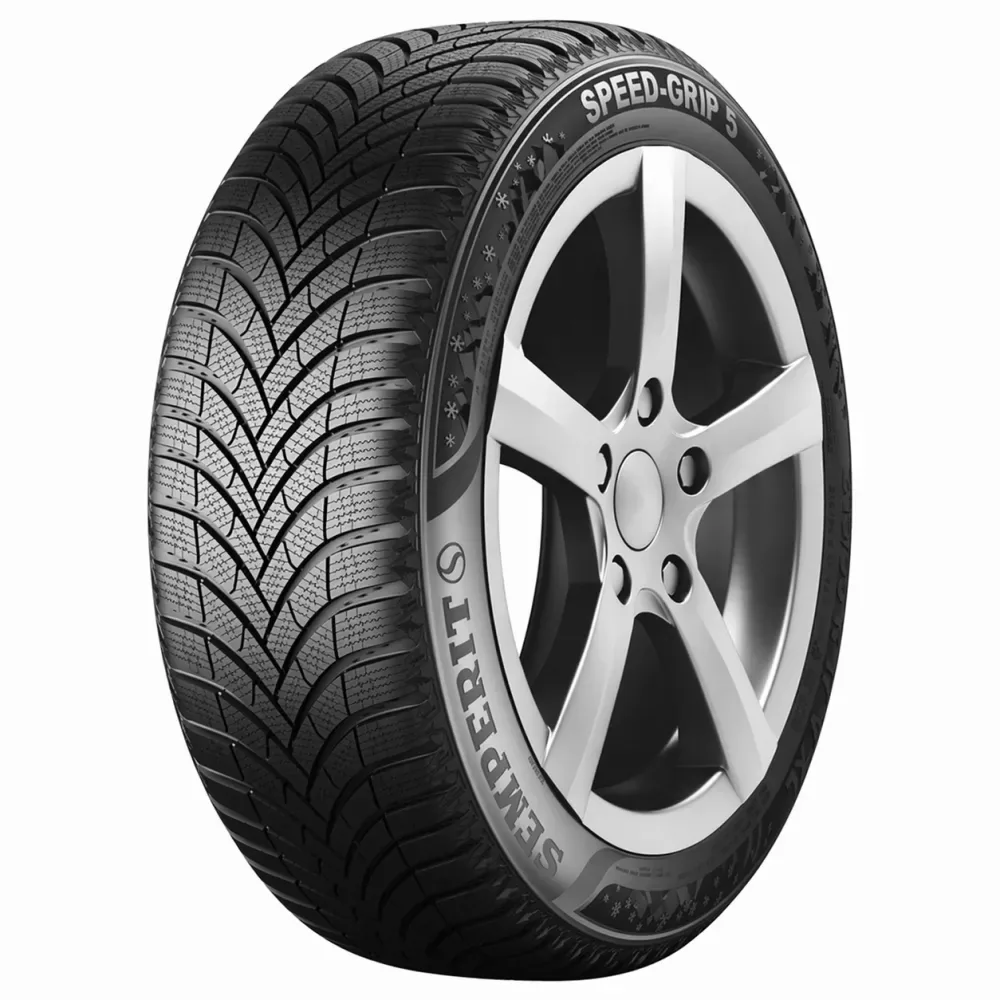
Semperit Semperit Speed-Grip 5
- 1.4 sehr gut — 3rd (AUTO BILD 2024)Independent test grade, 205/55 R16
- €81retail price
Details+
A Continental-owned budget brand that finished third of twenty at AUTO BILD in this size, matching the winners on snow braking. But ADAC graded it 3.2 in a different size — the testers sharply disagree.
- Strengths
- 3rd of 20 at AUTO BILD 2024 in this exact size, grade 1.4 sehr gut
- Snow braking 29.1 m — matched the two test winners
- Around €81, well below the premium brands
- Continental-owned brand with shared technology
- 3PMSF and M+S
- Weaknesses
- ADAC/ÖAMTC/TCS graded it only 3.2 in 225/40 R18 in 2025 — a sharp contradiction
- The two testers disagree more than size variation normally explains
- 72 dB, joint noisiest here
- No result in the ADAC test conducted in this size
8.1 / 10good
-
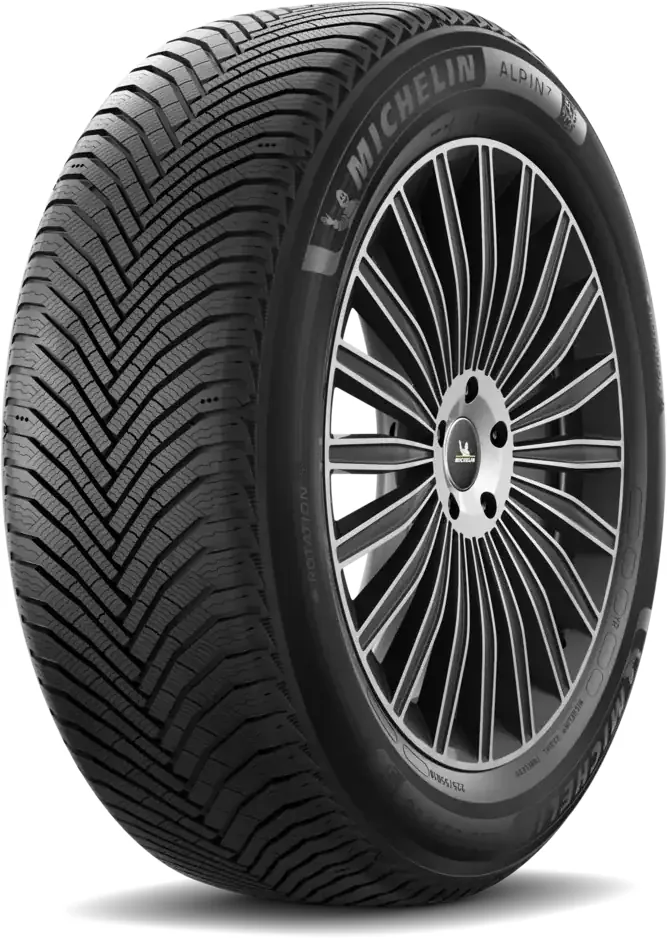
Michelin Michelin Alpin 7
- Joint 4th (Auto Express 2026)Independent test grade, 205/55 R16
- €109retail price
Details+
Michelin's current winter tyre, joint fourth at Auto Express 2026 in this size. Strong wet and dry grip and the brand's traditional longevity, at the highest price here.
- Strengths
- Joint 4th in 205/55 R16 at Auto Express 2026
- Consistent top-six results across four test programmes in other sizes
- Strong wet and dry grip and water evacuation
- Michelin's traditional mileage advantage — predecessor Alpin 6 projected 53 200 km at ADAC
- 94H XL variant available for heavier cars, EV-suitable
- Weaknesses
- Most expensive tyre in this ranking at around €109
- No outright test win in any size
- 71 dB — higher road noise than the Falken, Nokian or Pirelli at 69 dB
- Deep-snow performance described as competent rather than class-leading
- EPREL registration number not verified
8.1 / 10good
-
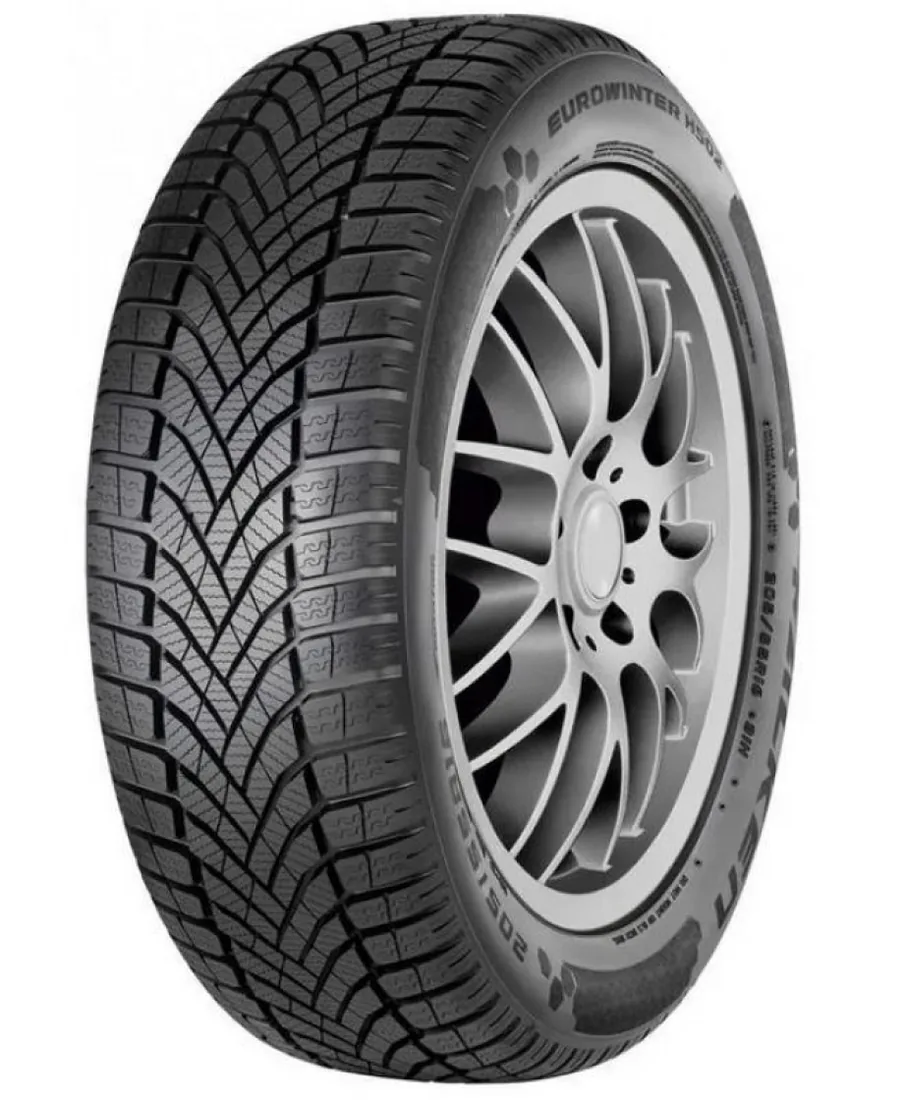
Falken Falken Eurowinter HS02
- 2.8 befriedigend (ADAC/ÖAMTC/TCS 2024)Independent test grade, 205/55 R16
- €76retail price
Details+
The best dry-road tyre in the ADAC field at 72% TCS dry, the quietest at 69 dB class A, and the cheapest recommended option. Its snow score was the weakest of the recommended group.
- Strengths
- Best dry-road performance in the ADAC field (TCS 72%)
- Quietest here at 69 dB with noise class A
- Cheapest recommended option at around €76
- Five-year manufacturing defect guarantee
- 3PMSF and M+S — legal across Europe
- Weaknesses
- Weakest snow performance of the recommended group (TCS 52%)
- Overall grade only 2.8 befriedigend
- The newer HS02 PRO outranked it at Auto Express 2026 (6th vs 8th)
- Not a sensible choice for mountain or Alpine driving
7.7 / 10fair
-
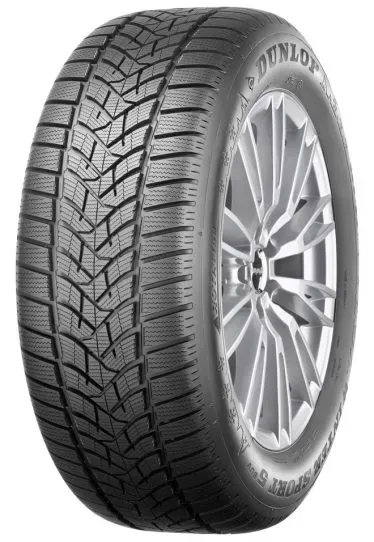
Dunlop Dunlop Winter Sport 5
- 2.6 befriedigend (ADAC/ÖAMTC/TCS 2024)Independent test grade, 205/55 R16
- €90retail price
Details+
One of the two best pure snow performers in the ADAC field, with a winter-road score of 1.7 and 76% snow at TCS. Wet and dry safety pull the overall grade down to 2.6.
- Strengths
- Winter-road score 1.7 — joint best in the ADAC 205/55 R16 field
- TCS snow 76%, joint highest recorded
- 4th of 31 at ADAC/ÖAMTC/TCS 2025 in 225/40 R18 (grade 2.4)
- Reasonable price for the snow performance
- 3PMSF and M+S
- Weaknesses
- TCS dry only 54% — second weakest of the recommended group
- ADAC safety score 2.8 drags the overall grade to 2.6
- Noise value disputed between sources (69 vs 71 dB), multiple article variants in this size
- Auto Express 2026 placed a similarly named Dunlop 9th
7.7 / 10fair
Scores comparable only within this categorySignificance threshold: ±0.15 pt
8.9 Our verdict
The Continental WinterContact TS 870 wins, and the evidence is unusually strong. It is the only tyre here to finish first in this size in three separate test programmes — ADAC / ÖAMTC / TCS 2024, AUTO BILD 2024 and Auto Express 2026. It also achieved something none of the others managed: the best winter-road score and the best overall safety score at the same time. Most tyres trade one against the other.
If you want to spend less, the Hankook Winter i*cept RS3 is the value pick at around €80. Third place at Auto Express 2026, and AUTO BILD singled out its mileage. The compromise is wet performance, where it was the weakest of the recommended group.
Three tyres in this size failed to earn a recommendation and are worth naming. The Pirelli Cinturato Winter 2 recorded the best snow score of the entire field and one of the best wet braking results — and was still graded 3.9 and not recommended, because its dry handling was judged unsafe. The Vredestein Wintrac showed the same pattern at 3.8. The Winrun Winter-max A1 WR22 was graded 5.5, the worst possible result. Note that Pirelli's successor model, the Cinturato Winter 3, finished second at Auto Express 2026 — if you want a Pirelli, buy that one.
Timing matters more than the last €10. Winter tyre demand across Germany, Austria and Czechia peaks in the second half of October. Buy in September and you get stock, choice and fitting appointments. Buy in November and you get whatever is left.
The label problem
Why the EU tyre label tells you almost nothing about a winter tyre
Every tyre in this ranking carries an identical EU label: rolling resistance class C, wet grip class B. Not one achieves wet grip A. The only variable across the whole field is external noise, ranging from 69 to 72 dB.
Yet in the same size, the joint ADAC / ÖAMTC / TCS test graded tyres from 2.0 to 5.5. The worst performer, a budget model, was still travelling at 30 km/h at the point where the winner had already come to a complete stop from the same speed. Identical labels; radically different tyres.
What the label actually measures
Regulation (EU) 2020/740 has applied since 1 May 2021. It grades three properties:
Fuel efficiency — rolling resistance coefficient in N/kN, measured under UNECE R117. Class A is ≤6.5, B is 6.6–7.7, C is 7.8–9.0, D is 9.1–10.5, E is ≥10.6. Each class step is worth roughly 0.1 l/100 km; ADAC puts the full A-to-E spread at about 0.5 l/100 km, or 7.5%.
Wet grip — a wet grip index where A is ≥1.55, B is 1.40–1.54, C is 1.25–1.39, D is 1.10–1.24, E is ≤1.09. ADAC states that braking to a standstill from 80 km/h on an average-grip surface, a class A tyre can stop up to 18 metres shorter than a class E tyre.
External rolling noise — the measured dB(A) value plus a class. A means at least 3 dB below the regulatory limit, B means at or under it, C means above it. In 205/55 R16 the limit is 72 dB, so 69 dB earns class A and 70–72 dB earns class B. A 3 dB difference is a doubling of sound energy.
The part that matters: the wet grip test is not a winter test
The wet grip procedure for passenger car tyres prescribes:
- Dense asphalt, gradient no more than 2%, texture depth 0.7 ± 0.3 mm
- Water depth 1.0 ± 0.5 mm
- Air temperature between 2 °C and 20 °C for snow tyres
- Braking from 85 ± 2 km/h
Wet asphalt, above freezing, no snow, no ice, no slush anywhere in the procedure. The wet grip class tells you nothing about snow braking, ice grip, snow traction or slush aquaplaning — the properties a winter tyre exists to provide.
The only winter information on the label is the 3PMSF snowflake pictogram, and that is a pass/fail threshold rather than a ranking. A separate ice-grip icon exists for tyres meeting the Nordic ice-grip index — that is the marking that identifies a true Nordic tyre.
ADAC reaches the same conclusion in its own words: the label is a rudimentary assessment, the values are self-declared and self-tested by manufacturers, and independent club tests cover considerably more safety-relevant criteria.
What to do instead
Use the label for two things only: confirm the 3PMSF marking is present, and compare the noise value if cabin quietness matters to you. For everything else, use test results measured in your size. Every label carries a QR code linking to the EPREL database, where the manufacturer's declared data is registered — useful for verifying that a retailer's listing is accurate, not for choosing between tyres.
Markings
M+S and 3PMSF: one is a test, the other is a claim
| M+S | 3PMSF (alpine symbol) | |
|---|---|---|
| Meaning | Mud + Snow | Three-Peak Mountain Snow Flake |
| Basis | Manufacturer self-declaration. No test required, no legal definition of performance. | Type-approval test under UNECE R117 |
| Requirement | None | Must exceed a reference winter tyre by at least 10% on the snow grip index |
| Verification | None | Independent and certified |
Any manufacturer may mould M+S into a sidewall without testing anything. 3PMSF has to be earned.
Which marking satisfies which law
- Germany: since 1 October 2024, only 3PMSF is legally valid. The transitional arrangement that allowed M+S-only tyres manufactured before 1 January 2018 expired on 30 September 2024.
- France: since November 2024, only 3PMSF is recognised under Loi Montagne II.
- Finland: the alpine symbol has been the accepted marking since December 2024.
- Austria, Czechia, Slovakia, Slovenia, Italy: M+S is still accepted alongside 3PMSF, though the direction of travel across Europe is clearly toward 3PMSF only.
- Sweden, Norway: 3PMSF or studded tyres.
Every tyre in this ranking carries 3PMSF, so all eight are legal in every European country. The distinction only bites if you are reusing older stock or considering cheap all-season tyres, some of which carry M+S alone and are therefore no longer legal in Germany or France.
The law
Winter tyre requirements across Europe
| Country | Rule | Period | Marking | Min. tread |
|---|---|---|---|---|
| Germany | Situative requirement — winter tyres only when winter conditions exist: black ice, packed snow, slush, frost or freezing rain. No calendar dates. Fines €60 plus a point, rising to €100 with endangerment | condition-based | 3PMSF only since Oct 2024 | 1.6 mm |
| Austria | Winter tyres or snow chains on the driven axle when winter conditions exist | 1 Nov – 15 Apr | M+S or alpine | 4 mm |
| Czechia | Mandatory when winter conditions exist | 1 Nov – 31 Mar | M+S sufficient | 4 mm |
| France | Loi Montagne II — mandatory in designated mountain communes, roads signed B26 | 1 Nov – 31 Mar | 3PMSF only since Nov 2024 | 3.5 mm |
| Italy | No nationwide rule — set province by province. South Tyrol and the Brenner A22: 15 Nov – 15 Apr. Aosta Valley: 15 Oct – 15 Apr. Fines €42–345 | varies | M+S or alpine | not specified |
| Slovenia | Mandatory in the fixed window and whenever winter conditions exist. Snow chains on summer tyres are an accepted alternative | 15 Nov – 15 Mar | M+S accepted | 3 mm |
| Slovakia | Vehicles up to 3.5 t: when winter conditions exist | over 3.5 t: 15 Nov – 31 Mar | M+S accepted | 3 mm |
| Sweden | Mandatory when winter conditions exist | 1 Dec – 31 Mar | 3PMSF, M+S or studded | 3 mm |
| Finland | Mandatory when winter conditions exist | 1 Nov – 31 Mar | alpine symbol | 3 mm (5 recommended) |
| Norway | No general requirement up to 3.5 t, but snow chains required if driving on summer tyres in winter conditions | over 3.5 t: 15 Nov – 31 Mar | M+S for all-season | 3 mm |
| Switzerland | No general obligation — but fines and full liability if unsuitable tyres cause an obstruction or accident. Snow chains where signed | — | sources conflict | not specified |
| Poland | No winter tyre requirement at all. Snow chains permitted on designated roads | — | — | 1.6 mm |
The trap most drivers miss. Austria and Czechia both set a legal minimum tread depth of 4 mm for winter tyres — Germany's general minimum is 1.6 mm. A German driver perfectly legal at home on 3 mm winter tyres becomes illegal the moment they cross the border.
Sources disagree on several details, particularly Switzerland's marking requirement and Norway's date window. Verify against the national automobile club before a long trip.
Tread depth
The 4 mm rule, and what the measurements show
Germany's legal minimum is 1.6 mm, the same for summer and winter tyres. ADAC recommends replacing winter tyres at 4 mm, and states plainly that the legal limit "only offers minimal safety".
The measurements behind that recommendation are worth quoting, because they describe a tyre that is already at the recommended change point — not one worn to the legal limit:
- Snow braking from 30 km/h: 3.2 metres longer than a new tyre
- Aquaplaning begins at 63 km/h, against 87 km/h for a new tyre
- Snow traction: less than half that of a new winter tyre
A 24 km/h reduction in the aquaplaning threshold is the figure to sit with. At 4 mm, a tyre that would have gripped at 80 km/h on a flooded motorway is already floating.
The Nokian Snowproof 2 carries a useful feature here: a Driving Safety Indicator moulded into the tread as a numeric depth readout, where the snowflake symbol disappears at exactly 4 mm. No measuring needed.
How old can a new tyre be?
There is no legal limit in Germany or the EU. The German tyre trade association BRV defines tyres up to 3 years old as factory-new and up to 5 years as new. ADAC recommends buying nothing older than 2 years.
The DOT code on the sidewall ends in four digits giving week and year of manufacture — "1024" means week 10 of 2024. Check it before accepting a delivery, particularly on a heavily discounted set.
For service life, ADAC advises replacing winter tyres at no more than 8 years, noting that grip falls off noticeably after about 6. The compound hardens through UV and ozone exposure even in unused, correctly stored tyres.
Avoid
Tyres that failed in this size, and why we are naming them
Two of these are premium products, which is exactly why they are worth naming — a recognised brand is not a guarantee.
Pirelli Cinturato Winter 2 — graded 3.9, not recommended. This is the most polarised result in the data. It recorded the best winter-road score of the entire 205/55 R16 field at 1.7, TCS scored it 76% on snow, and ADAC noted strong wet braking. And it was still not recommended, because its dry handling was scored 3.9 with a TCS dry figure of just 32%. An outstanding snow tyre whose dry-road behaviour the testers judged unacceptable. If you want a Pirelli, the successor Cinturato Winter 3 finished second at Auto Express 2026 in this size — buy that one instead.
Vredestein Wintrac — graded 3.8, not recommended. The same pattern: winter score 1.9, safety 3.8, TCS dry 34%. ADAC described it as unbalanced. GTÜ also placed it in the not-recommended group in its 2025 test.
Winrun Winter-max A1 WR22 — graded 5.5 "mangelhaft". The worst grade the scale allows. Braking from 80 km/h, this tyre was still travelling at 30 km/h at the point where the best tyres in the test had come to a complete stop. It costs around €80 — barely less than the Falken or Hankook, both of which are recommended.
Also graded poorly in this size: Zeetex WH 1000 (3.7), GT Radial WinterPro2 Evo (3.7). Auto Express 2026 placed Linglong Sport Master Winter HP, Maxxis Premitra Snow WP6 and Minerva Frostrack HP in the bottom three of its 205/55 R16 field.
The pattern across all of them is the same: the savings are small and the measured safety deficit is large.
Studded tyres
Almost certainly not relevant to you
Studded tyres are available in 205/55 R16 — the Nokian Hakkapeliitta 10 is sold factory-studded in 94T XL. But for most buyers of this size the question is settled by geography, because the countries where 205/55 R16 cars are most common are largely the countries where studs are banned.
- Germany: banned since 1975. The sole exception is a roughly 15 km corridor around Bad Reichenhall near the Austrian border, at 50 km/h maximum, motorways excluded.
- Czechia, Slovakia, Slovenia, Poland: banned.
- Austria: permitted 1 October – 31 May. Maximum 2 mm stud protrusion, mandatory rear sticker, 80 km/h outside built-up areas and 100 km/h on motorways.
- Switzerland: permitted November – April, 80 km/h outside built-up areas, sticker required, forbidden on motorways except the San Bernardino and Gotthard tunnels.
- Italy, France: permitted.
- Sweden, Finland, Norway: permitted, limited to 50 studs per metre of tyre circumference.
For a driver in Germany, the Benelux countries, France or the Visegrád group, a 3PMSF friction tyre is the answer. Studs are a Nordic and Baltic product.
Context
Why 205/55 R16 is the most common winter size in Europe
It is the standard or common optional fitment for the C-segment, Europe's largest passenger car segment, and it spills into both the B-segment and older D-segment cars. ADAC frames its test around "compact class vehicles like the VW Golf and Toyota Corolla". The list also includes the Audi A3, Škoda Octavia, Ford Focus and Fiesta, Opel Corsa, Honda Civic, Nissan Qashqai, Audi A4 and BMW 3 Series.
Three reasons it dominates:
The Golf effect. The Golf and its platform siblings — A3, Octavia, Leon — have been built in the tens of millions on 16-inch wheels, and the aftermarket follows the original fitment for a decade or more after each generation ends.
The 16-inch sweet spot. A 55-series sidewall on a 16-inch rim balances handling against ride comfort and pothole resistance. Sixteen-inch winter wheels are also the cheapest sensible downsize from 17 or 18-inch summer wheels — which is why so many winter sets are 205/55 R16 even on cars delivered on larger rims.
Scale feeds itself. One European retailer lists 141 winter tyre models in this size across 64 sellers. More competition means lower prices, which keeps buyers choosing it.
Methodology
How this score is built
The score is the mean of four component scores — each carries equal weight and each rests on a named source. The full procedure is described in the methodology.
01Composition and specification
Declared composition and specification: active ingredients and their concentrations, energy classes, standards, technical parameters — and what the manufacturer leaves unsaid.
02Evidence and studies
Verification of the manufacturer's claims against outside sources: laboratory reports, industry testing, safety data sheets, certificates and regulatory decisions.
03Owner feedback
Analysis of verified reviews written after extended use, together with recurring fault reports for the model or series.
04Cost and value
Price set against what the product actually delivers, plus costs incurred later — consumables, energy, servicing, subscriptions — over the lifespan typical for the category.
FAQ
Frequently asked questions
Which winter tyre in 205/55 R16 should most drivers buy?+
The Continental WinterContact TS 870. It is the only tyre to win this size in three separate test programmes — ADAC/ÖAMTC/TCS 2024, AUTO BILD 2024 and Auto Express 2026 — and it achieved the best winter-road score and the best safety score simultaneously, which none of its rivals managed. Expect to pay €88-103 per tyre. If that is too much, the Hankook Winter i*cept RS3 at around €80 finished third at Auto Express 2026, with wet performance as the compromise.
Why do all these tyres have the same EU label?+
Because the label's classes are coarse and its wet grip test is not a winter test. Every tyre in this ranking is rated rolling resistance C and wet grip B, yet independent testing in the same size graded them from 2.0 to 5.5. The wet grip procedure is run on wet asphalt between 2 °C and 20 °C with no snow or ice involved, so it measures nothing that distinguishes a good winter tyre from a bad one. Use the label to confirm the 3PMSF marking and to compare noise; use test results for everything else.
Is M+S enough, or do I need the 3PMSF snowflake?+
In Germany, only 3PMSF has been legally valid since 1 October 2024, and France has required it since November 2024. Finland switched in December 2024. Austria, Czechia, Slovakia, Slovenia and Italy still accept M+S. Since M+S is a manufacturer's self-declaration requiring no test at all, while 3PMSF requires passing a certified snow grip test, there is no reason to buy an M+S-only tyre in any case. All eight tyres in this ranking carry 3PMSF.
When should I replace winter tyres?+
At 4 mm remaining tread, per ADAC's recommendation, not at the 1.6 mm legal minimum. At 4 mm a winter tyre already brakes 3.2 metres longer on snow from just 30 km/h, begins aquaplaning at 63 km/h instead of 87 km/h, and delivers less than half the snow traction of a new tyre. Also replace on age: ADAC advises no more than 8 years for winter tyres, with grip falling off noticeably after about 6.
How old can a tyre be when I buy it?+
There is no legal limit. The German tyre trade association treats tyres up to 3 years old as factory-new and up to 5 years as new; ADAC recommends buying nothing older than 2 years. Check the DOT code on the sidewall — the last four digits give the week and year of manufacture, so 1024 means week 10 of 2024. Heavily discounted sets are often old stock.
Do I need winter tyres in Poland?+
There is no legal requirement in Poland at all, and no seasonal obligation. That is a legal position, not a safety recommendation — a winter compound stays flexible below 7 °C and outbrakes a summer tyre on cold wet asphalt regardless of whether snow is present. If you drive to Germany, Austria, Czechia or Slovakia in winter, their rules apply to you the moment you cross the border, and Austria and Czechia both require 4 mm minimum tread.
Should I buy a cheap budget tyre to save money?+
The evidence in this size argues strongly against it. The Winrun Winter-max A1 WR22 costs around €80 and was graded 5.5 mangelhaft — braking from 80 km/h it was still doing 30 km/h where the best tyres had stopped. The Falken Eurowinter HS02 costs €76 and is recommended; the Hankook costs €80 and finished third at Auto Express. The saving from going below those is a few euros per tyre, and the measured safety deficit is large. Budget branding from a known manufacturer, such as Semperit or Kleber, is a much safer way to spend less.
When is the best time to buy winter tyres?+
September. Demand across Germany, Austria and Czechia peaks in the second half of October, and by November you are choosing from what is left and competing for fitting appointments. Prices in this size move sharply through the autumn, so the figures on this page should be verified at the point of purchase.
Can I trust a test result measured in a different tyre size?+
Only as weak evidence. The Continental TS 870 scored 2.0 and won in 205/55 R16, while the TS 870 P variant managed only 2.5 in 225/40 R18. The Semperit Speed-Grip 5 finished third at AUTO BILD in this size and scored 3.2 at ADAC in a different one. Construction, compound behaviour and sidewall stiffness all change with size. This ranking uses results measured in 205/55 R16 wherever they exist, and says so whenever they do not.
Sources
Documents and standards
- 1. ADAC / ÖAMTC / TCS joint winter tyre test 2024, 205/55 R16 91H: https://www.adac.de/rund-ums-fahrzeug/ausstattung-technik-zubehoer/reifen/reifentest/winterreifen/205-55-r16/
- 2. ADAC winter tyre test index: https://www.adac.de/rund-ums-fahrzeug/ausstattung-technik-zubehoer/reifen/reifentest/winterreifen/
- 3. ÖAMTC Winterreifentest 2024: https://www.oeamtc.at/tests/reifentest/winterreifentest-2024/
- 4. TCS test results winter tyres 2024, 205/55 R16 91H (PDF): https://www.tcs.ch/mam/Digital-Media/PDF/Booklets/testergebnisse-winterreifen-2024-dimension-205-55-r16-91h.pdf
- 5. AUTO BILD Winterreifen-Test 205/55 R16: https://www.autobild.de/produkttests/winterreifen-test-205-55-r16-26476899.html
- 6. AUTO BILD Winterreifen-Test qualifying round 2024, 205/55 R16: https://blog.reifen-vor-ort.de/autobild-winterreifen-test-qualifying-2024-205-55-r16
- 7. Auto Express - Best winter tyres 2026 (tested in 205/55 R16): https://www.autoexpress.co.uk/product-group-tests/93097/best-winter-tyres-2026
- 8. GTÜ winter tyre test 2025: https://www.reifen-testberichte.info/gtue-winterreifentest-2025-auch-hier-verfehlt-die-haelfte-das-ziel/1389/
- 9. ADAC - Winterreifen-Test 2024 news summary: https://www.adac.de/news/winterreifen-test-2024/
- 10. Regulation (EU) 2020/740 consolidated text: https://eur-lex.europa.eu/legal-content/EN/TXT/PDF/?uri=CELEX%3A02020R0740-20200605
- 11. Commission Regulation (EU) 228/2011 - wet grip test method: https://www.legislation.gov.uk/eur/2011/228/adopted/data.xht?view=snippet&wrap=true
- 12. UNECE Regulation No. 117 rev.5: https://unece.org/sites/default/files/2025-09/R117r5e.pdf
- 13. ADAC - Das Reifenlabel: https://www.adac.de/rund-ums-fahrzeug/ausstattung-technik-zubehoer/reifen/reifenkauf/reifenlabel/
- 14. Goodyear - EU tyre label explained: https://www.goodyear.eu/en_gb/consumer/learn/eu-tire-label-explained.html
- 15. ADAC - Winterreifen: neue Regel ab Oktober (3PMSF requirement): https://www.adac.de/news/auto-winterreifen-neue-regel-oktober/
- 16. ADAC - Winterreifen und Schneeketten im Ausland: https://www.adac.de/verkehr/recht/verkehrsvorschriften-ausland/winterreifen-schneekette/
- 17. Gummibereifung - Winterreifenpflicht in 21 Ländern: https://www.gummibereifung.de/winterreifenpflicht-regelungen-in-21-laendern-im-ueberblick
- 18. Uniroyal - Where are winter tyres mandatory: https://www.uniroyal-tyres.com/de/de/car/service-knowledge/winter-tyres-mandatory/
- 19. driverreviews - Was ist 3PMSF: https://www.driverreviews.de/news/articles/was-ist-3pmsf-winterreifen-zertifizierung
- 20. ADAC - Reifenprofil und Mindestprofiltiefe: https://www.adac.de/rund-ums-fahrzeug/ausstattung-technik-zubehoer/reifen/sicherheit/reifenprofil/
- 21. ADAC - Reifenalter und DOT-Nummer: https://www.adac.de/rund-ums-fahrzeug/ausstattung-technik-zubehoer/reifen/reifenkauf/reifenalter/
- 22. auto-reise-welt - Spikereifen in Europa: https://www.auto-reise-welt.de/spikereifen.htm
- 23. t-online - Winterreifen mit Spikes, wo erlaubt: https://www.t-online.de/mobilitaet/recht-und-verkehr/id_100097390/winterreifen-wo-darf-ich-jetzt-mit-spikes-fahren-.html
- 24. Tire Streets - Why are 205/55 R16 tyres so popular: https://tirestreets.co.uk/blogs/rethink-your-rubber/why-are-205-55-r16-tyres-so-popular
- 25. reifenlab - 205/55 R16 winter tyre overview: https://www.reifenlab.de/205-55-R16/winter/
- 26. reifen.com product pages and EU label data, September 2026: https://www.reifen.com/
- 27. reifendirekt.de product pages and EU label data, September 2026: https://www.reifendirekt.de/
- 28. Oponeo.de product pages and EU label data, September 2026: https://www.oponeo.de/
- 29. Geizhals price comparison, September 2026: https://geizhals.de/
More
Other rankings
in
Automotive.
Each category has its own protocol and its own key parameter.
-
 Automotive8.3top
All-Season Tyres 205/55 R16
EU tyre label for the exact size: rolling resistance / wet grip / noise
-
 Automotive7.1top
Dash Cams
Front image sensor and recording resolution/frame rate
-
 Automotive7.6top
Home EV Chargers 11 kW
Integrated 6 mA DC fault detection and MID meter, as published