Baby & kidsAnalysis 125
Best i-Size Car Seats (40–105 cm)
Price predicts almost nothing about child seat safety. That is not a rhetorical opening — it is what the data in this ranking shows.
- A €149 Graco and a €270 Joie scored identically at 2.4, with the same sub-scores across safety, handling, ergonomics and harmful substances.
- An €828 BeSafe scored the same 2.4.
- A €540 Britax Römer scored 3.2, with a safety sub-score of 3.5 driven by elevated injury risk in the frontal crash — the worst result of any seat here, at the second-highest price.
Two further facts should shape how you read every child seat listing you see.
Side-impact protection is not a feature. It has been mandatory under UN Regulation R129 since 2013. Every i-Size seat has passed a side-impact crash test. The branded names — L.S.P., SIP, G-CELL, Tri-Protect — describe how, not whether. Cybex's "up to 25% force reduction" figure for its L.S.P. system is explicitly internal testing, not independent.
And seats do fail. In ADAC's May 2026 round, the Kinderkraft Mink Pro 2 scored 5.5 "mangelhaft" because in the frontal crash the carrier tore out of its ISOFIX base and was thrown through the cabin. Seven identically constructed white-label seats failed the same way, sold under seven different brand names. They are listed by name further down this page.
Methodology note
What this ranking is based on. Grades and sub-scores come from individual seat pages published by ADAC and ÖAMTC, covering the May 2025, October 2025 and May 2026 test rounds. ADAC, ÖAMTC, Stiftung Warentest and other European clubs run a joint programme, so the same figures appear under all three names. Approval ranges, weights and installation methods come from manufacturer specification pages.
What we did not test. We conducted no crash testing and no installation assessment. Nothing on this page substitutes for the fitting check your retailer or a trained fitter should perform in your own car.
Recall status is unchecked. We found no recall or safety notice for any of the eight seats here, but we did not query the EU Safety Gate (RAPEX) database directly. Treat that as "not checked" rather than "clear", and verify before purchase — Safety Gate is public and free to search.
Specific gaps we are flagging rather than filling. The Joie i-Spin Safe's grade and all four sub-scores are confirmed, but the ADAC page did not state which test round produced them — it may predate 2024. Newborn insert ranges are confirmed only for the Maxi-Cosi Pebble S and Cybex Sirona Ti. Britax's own page shows conflicting weight limits for the Dualfix 5Z (18 kg in the body text, 19 kg in the page metadata). Prices are ADAC's stated market prices at test time, not retailer quotes.
 8.8BPR score
Key parameter
ADAC / ÖAMTC overall grade
Overall grade from the joint child seat test run by ADAC, ÖAMTC, Stiftung Warentest and other European clubs, on the German scale where 1.0 is best and 5.5 is a fail. Weighting is safety 50%, handling 40%, ergonomics 10%, with harmful substances applied as a separate downgrade. Crash testing exceeds the legal minimum: frontal impacts use a Kia Sportage body on a sled at a severity between Euro NCAP's offset and full-width tests.
-
Top score
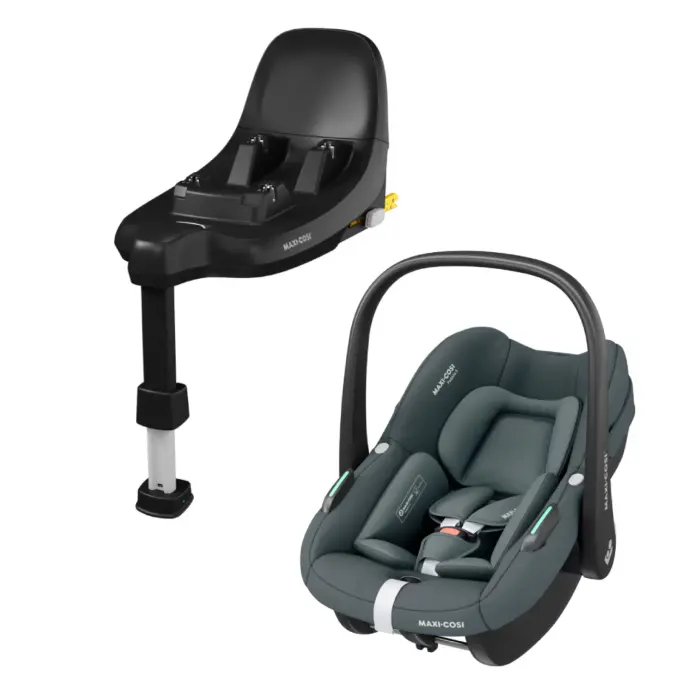
Maxi-Cosi Maxi-Cosi Pebble S + FamilyFix S
- 1.8 (ADAC/ÖAMTC 05/2025)ADAC / ÖAMTC overall grade
- €330retail price
Details+
The best infant carrier here at 1.8, with a 3.2 kg shell and ADAC's explicit note of low misuse potential — which is a genuine safety property, not a convenience one.
- Strengths
- 1.8 overall — the best infant carrier result here
- ADAC explicitly notes low misuse potential, which is a real safety property
- 3.2 kg shell, light to carry with a baby in it
- Works with the ISOFIX base OR a three-point vehicle belt
- Newborn insert range confirmed at 40-60 cm
- G-CELL side impact protection
- Weaknesses
- Harmful substances 1.5 — the weakest of the good seats here
- 40-83 cm only, so roughly 12-15 months before you buy again
- The carrier alone, belt-fitted without the base, scored only 2.7
- Base adds 6.5 kg and cost
- Ergonomics 2.1, mid-pack
8.8 / 10good
-
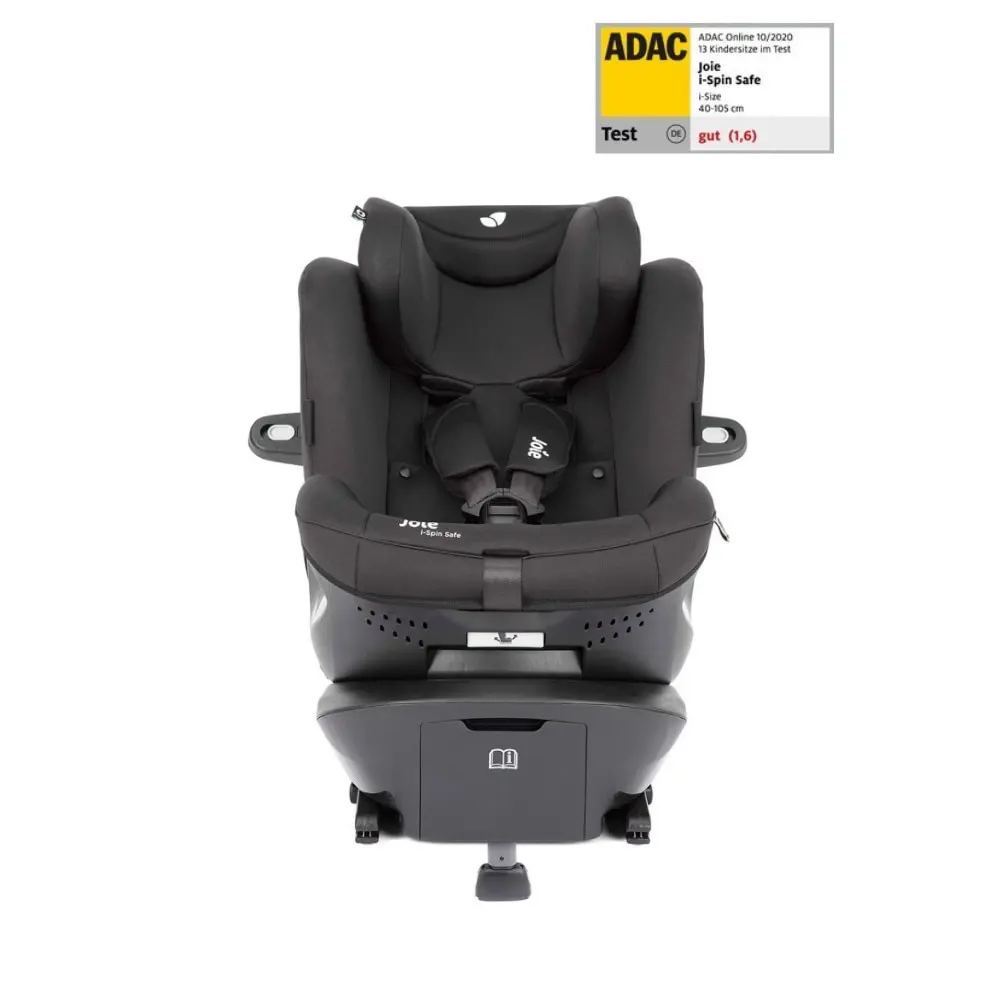
Joie Joie i-Spin Safe
- 1.6 — safety sub-score 1.2 (ADAC/ÖAMTC)ADAC / ÖAMTC overall grade
- €400retail price
Details+
The best safety result in this ranking: 1.6 overall with a safety sub-score of 1.2 and a clean 1.0 for harmful substances. Rearward-facing only to 105 cm — there is no forward-facing mode.
- Strengths
- Best safety sub-score in this ranking at 1.2 — very low injury risk, frontal and side
- 1.6 overall grade, the best result here
- Clean 1.0 for harmful substances
- Rearward-facing all the way to 105 cm — no forward-facing compromise
- ISOFIX with support leg
- Covers 40-105 cm, so birth to roughly four years in one seat
- Weaknesses
- 14.3 kg — the heaviest seat here, realistically a one-car seat
- No forward-facing mode at all, which some parents will not accept
- ADAC did not state which test round produced this result
- Older model — the grade may predate 2024
- Front airbag must be deactivated if fitted in the front seat
8.7 / 10good
-
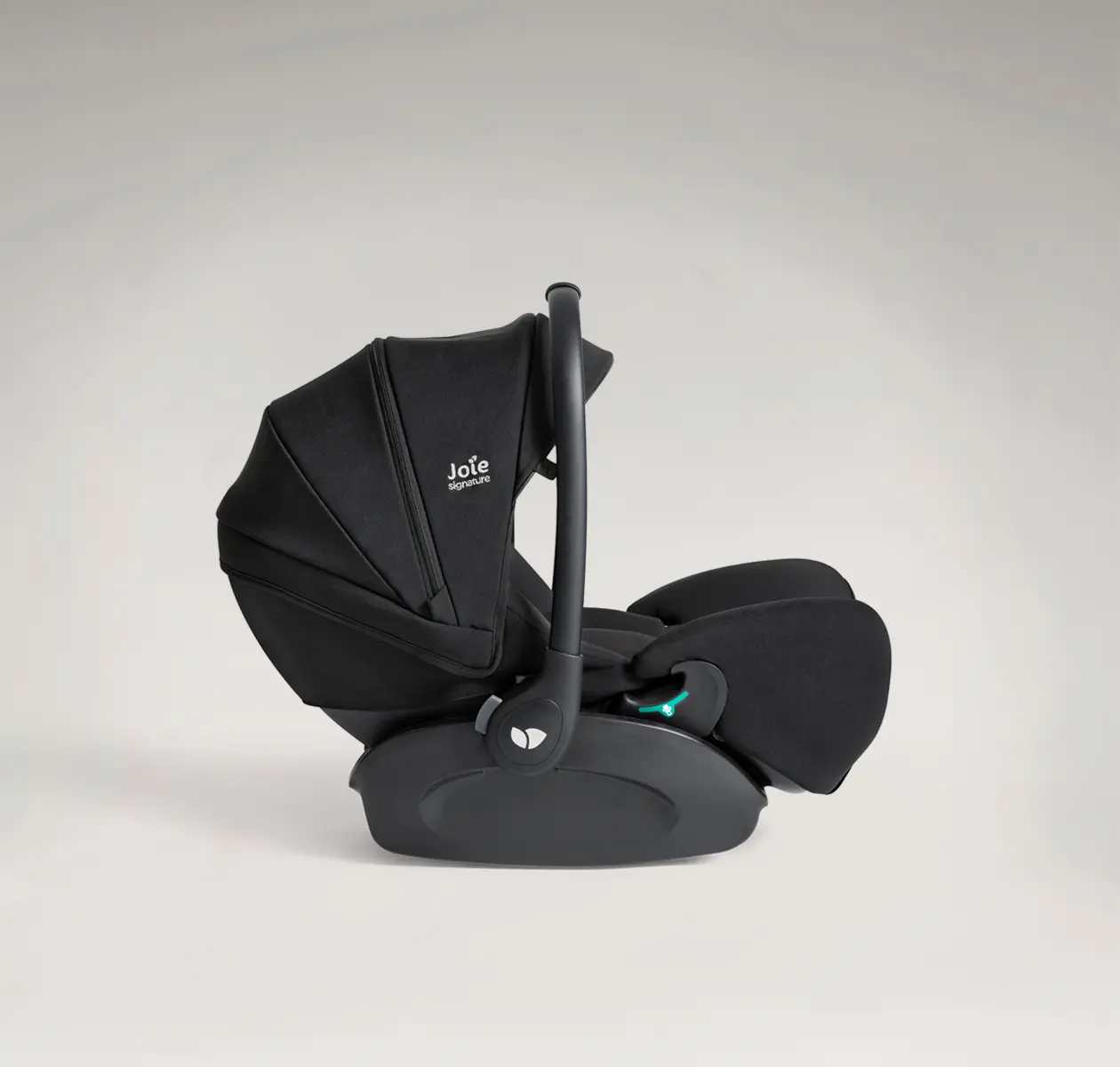
Joie Joie i-Level Pro
- 2.3 (ADAC/ÖAMTC 10/2025)ADAC / ÖAMTC overall grade
- €199retail price
Details+
A €199 infant carrier with a 157° near-flat recline and clean 1.0 toxicology. Unusually, it scored better on safety belt-installed than with its own ISOFIX base.
- Strengths
- €199 — the cheapest well-tested infant carrier here
- Clean 1.0 for harmful substances
- 157° near-flat recline, better for newborn breathing on long journeys
- 40-87 cm, slightly longer usable life than 83 cm seats
- Removable full-body infant insert included
- Works belt-installed or with the i-Base Encore
- Weaknesses
- 2.3 overall, behind the Maxi-Cosi and Nuna
- Safety score is worse WITH the ISOFIX base (2.6) than belt-installed (2.3)
- Handling 2.4 belt-installed — higher misuse risk without the base
- 4.6 kg, heavier than the Nuna and Maxi-Cosi shells
- Newborn insert range not published
8.4 / 10good
-
Best value
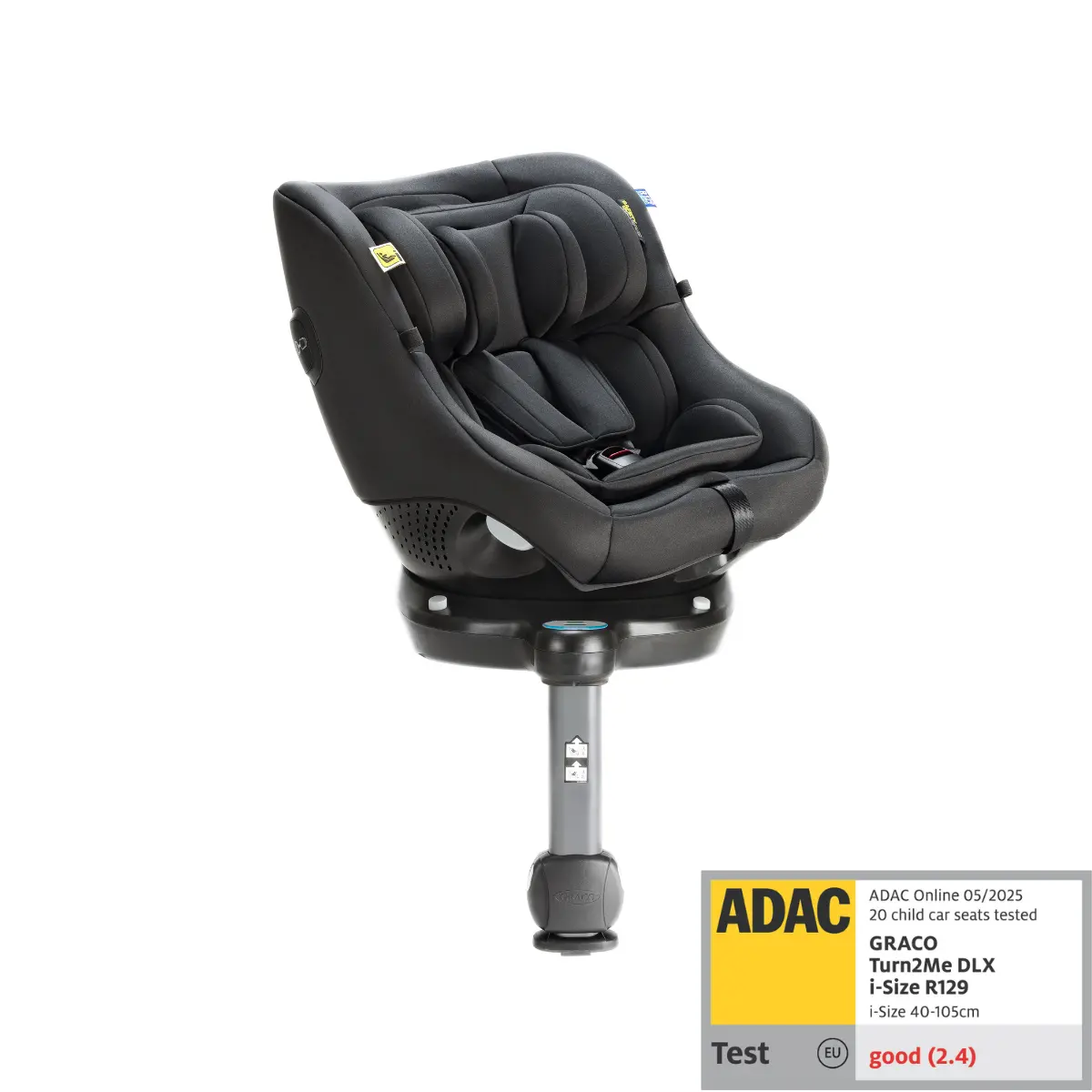
Graco Graco Turn2Me DLX i-Size R129
- 2.4 (ADAC/ÖAMTC 05/2025)ADAC / ÖAMTC overall grade
- €149retail price
Details+
The value finding of this research: €149 for a rotating 40–105 cm seat with identical ADAC sub-scores to a €270 Joie and the same overall grade as an €828 BeSafe.
- Strengths
- €149 — identical ADAC sub-scores to a seat costing €270
- Same overall grade as an €828 BeSafe
- 40-105 cm with rear-facing permitted to 105 cm
- 360° rotation for easier loading
- Clean 1.0 for harmful substances
- Safety sub-score 2.1, better than the Cybex and far better than the Britax
- Weaknesses
- Handling 2.8 — the joint weakest of the recommended seats, so higher misuse risk
- ISOFIX with support leg only, no belt installation option
- Cannot be used as an infant carry-cot despite the 40 cm approval
- 11.3 kg, stays in one car
- Many parents will still want a separate carrier for the first year
8.4 / 10good
-
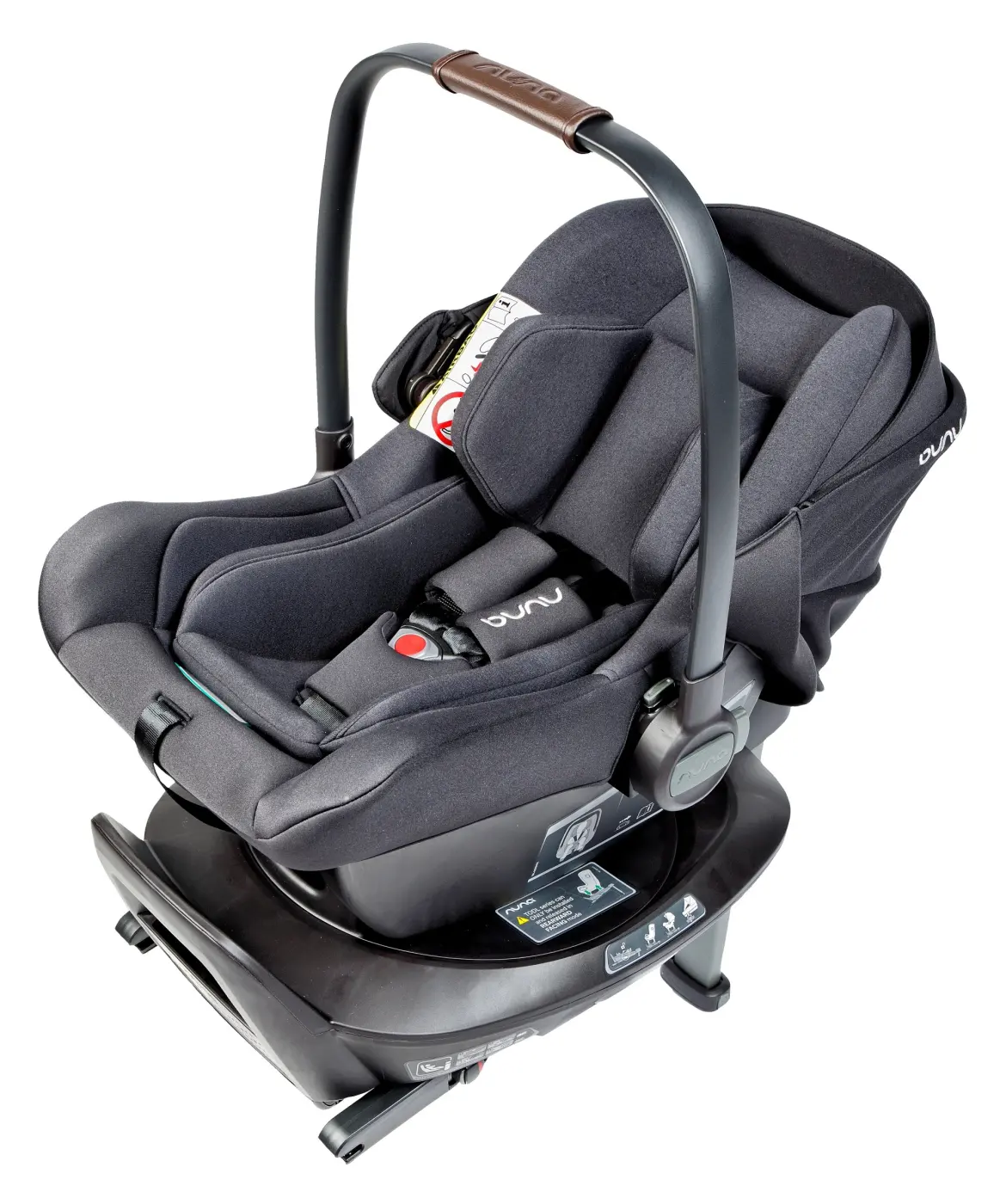
Nuna Nuna PIPA lite + BASE next
- 2.0 (ADAC/ÖAMTC 05/2025)ADAC / ÖAMTC overall grade
- €440retail price
Details+
The lightest carrier here at 2.5 kg, with a clean 1.0 for harmful substances and GREENGUARD Gold certification. Cannot be belt-installed — the base is compulsory.
- Strengths
- 2.5 kg shell — the lightest carrier here by a clear margin
- Clean 1.0 for harmful substances
- GREENGUARD Gold certified for chemical emissions
- Ergonomics 1.9, the best of the infant carriers
- Aeroflex foam and memory foam headrest
- BASE next rotates 360° for easier loading
- Weaknesses
- Cannot be belt-installed — an ISOFIX base is compulsory
- No use in taxis or hire cars without ISOFIX
- €440, the most expensive carrier here for a 2.0 grade
- 40-83 cm only
- Second base needed to share between two cars
8.3 / 10good
-
Joie Joie i-Pivot 360
- 2.4 (ADAC/ÖAMTC 05/2025)ADAC / ÖAMTC overall grade
- €270retail price
Details+
A 360° rotating 40–105 cm seat with three foam layers and an energy-absorbing load leg. ADAC's summary was "safe, but heavy" — and its sub-scores are identical to the €149 Graco.
- Strengths
- Safety sub-score 2.1, matching the best rotating seats here
- Clean 1.0 for harmful substances
- Three foam layers including Intelli-Fit memory foam
- Energy-absorbing load leg rather than a plain support leg
- 40-105 cm with rear-facing to 105 cm and 360° rotation
- Better build quality and finish than the cheaper alternatives
- Weaknesses
- Identical ADAC sub-scores to the €149 Graco, at €121 more
- Handling 2.8 — higher misuse risk
- 11.3 kg, described by ADAC as heavy
- ISOFIX with load leg only, no belt installation
- Newborn insert range not published
8.1 / 10good
-
Cybex Cybex Sirona Ti
- 2.5 (ADAC/ÖAMTC 05/2026)ADAC / ÖAMTC overall grade
- €480retail price
Details+
One of only six seats rated "gut" in ADAC's May 2026 round, with an integrated support leg needing no separate base. ADAC's own verdict: "safe, but very heavy" at 13.5 kg.
- Strengths
- One of only six seats rated gut in ADAC's May 2026 round of 26
- Most recently tested seat in this ranking
- Integrated support leg — no separate base needed
- Clean 1.0 for harmful substances
- Newborn insert range confirmed at 40-60 cm
- ADAC states an 8-year usable life
- Weaknesses
- 13.5 kg — ADAC's verdict is "safe, but very heavy"
- Handling 2.9, the weakest of any recommended seat here
- €480 street price for a 2.5 grade
- Same 2.1 safety sub-score as the €149 Graco
- L.S.P. force-reduction claim is internal testing, not independent
- No belt installation option
7.5 / 10fair
-
Britax Römer Britax Römer Dualfix 5Z + Vario Base 5Z
- 3.2 — safety sub-score 3.5 (ADAC/ÖAMTC 05/2026)ADAC / ÖAMTC overall grade
- €540retail price
Details+
Included as a warning. The second-most-expensive seat here at €540, and the worst-performing: 3.2 overall, with ADAC citing elevated injury risk in the frontal crash.
- Strengths
- Handling 2.4 — better than several higher-scoring seats here
- Ergonomics 2.3, mid-pack
- 360° rotation with rear-facing to 105 cm
- ISOFIX base with support leg
- Established brand with a wide European service and retail network
- Weaknesses
- 3.2 overall — the worst result in this ranking
- Safety sub-score 3.5, with ADAC citing elevated frontal-crash injury risk
- Harmful substances 1.9, the weakest toxicology result here
- €540 — nearly four times the price of a better-scoring seat
- 61-105 cm, so not usable from birth
- Britax's own page gives conflicting weight limits (18 vs 19 kg)
5.3 / 10poor
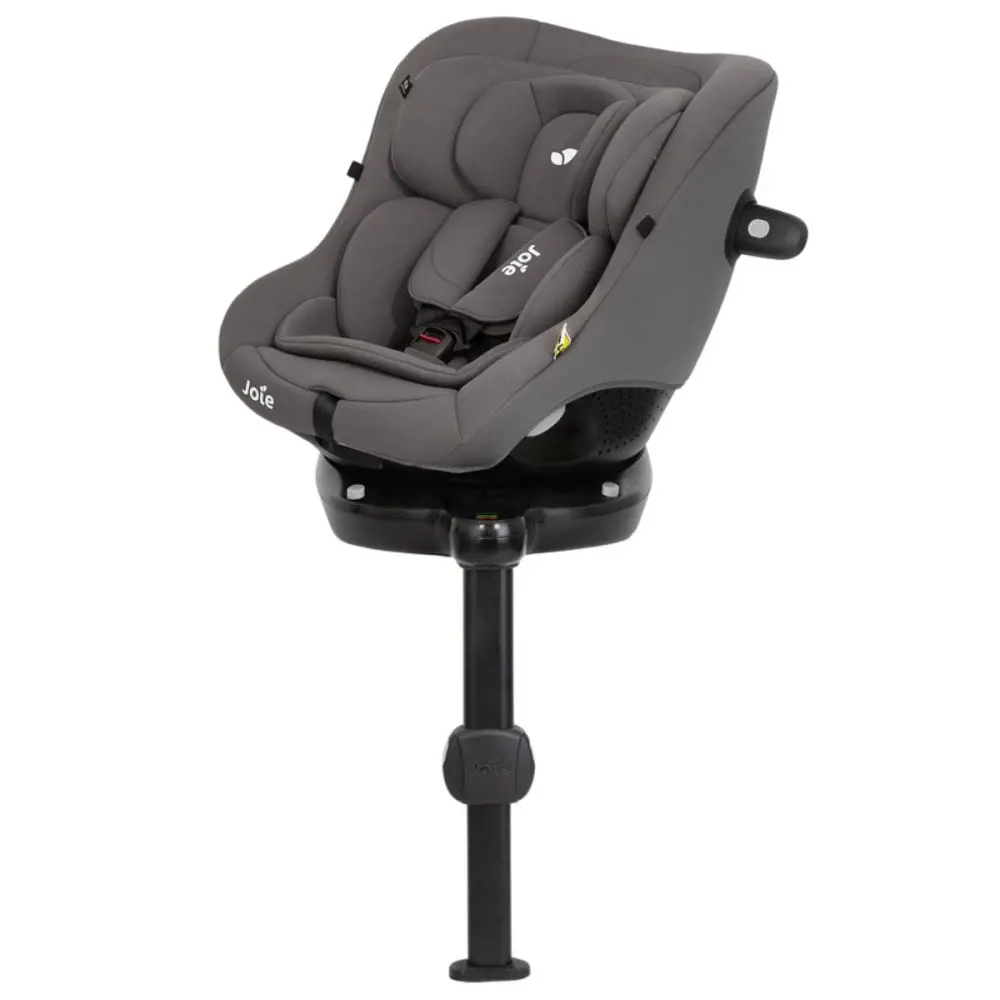
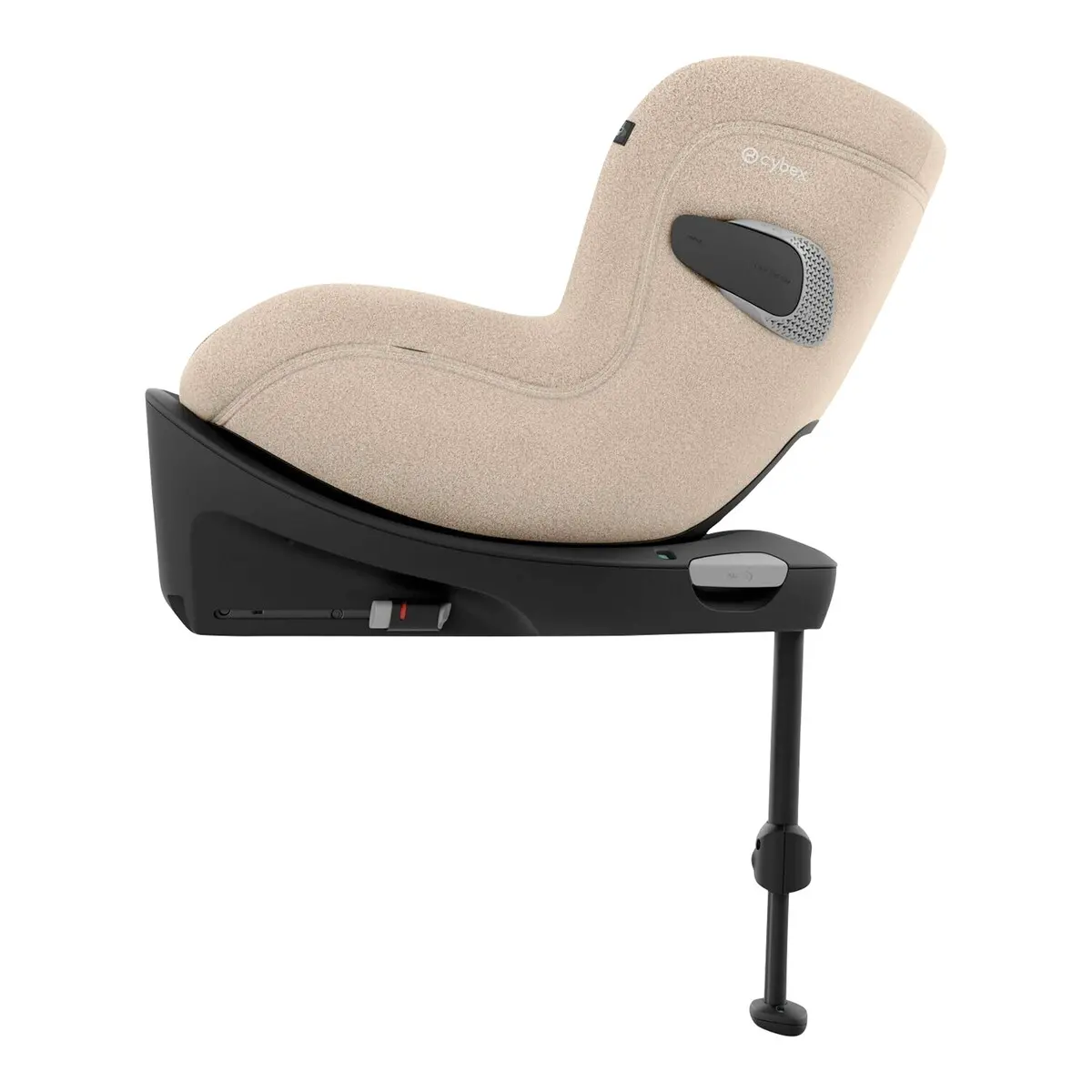
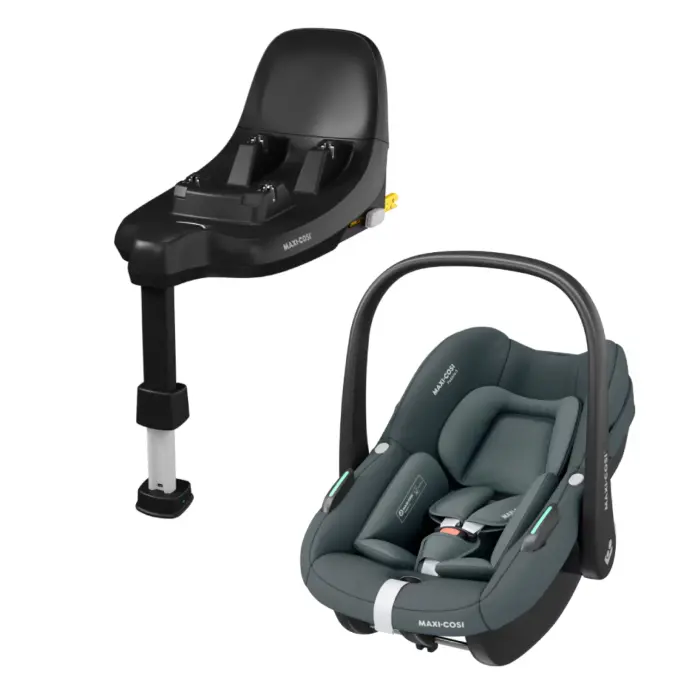
Scores comparable only within this categorySignificance threshold: ±0.15 pt
8.8 Our verdict
The Joie i-Spin Safe is the safety pick, at 1.6 overall with a safety sub-score of 1.2 — very low injury risk in both frontal and side crash. It is rearward-facing only, all the way to 105 cm, with no forward-facing mode at all. At 14.3 kg it is the heaviest seat here, and that is the trade you are making.
The Graco Turn2Me DLX at €149 is the value finding of this research. It scored 2.4 with identical sub-scores to a €270 Joie and the same overall grade as an €828 BeSafe. If your budget is tight, the honest advice is that a cheap seat is not a dangerous seat — a badly tested seat is.
Rearward-facing to at least age two, not fifteen months. R129's 15-month rule is a legal floor. An infant's head is roughly 25% of body weight against about 6% in an adult, on a neck with incomplete ossification, and those proportions do not resolve at fifteen months. ADAC itself recommends rear-facing to at least age two. Sweden sustains around 83% rear-facing use at ages two to four against roughly 22% in the UK.
Do not buy a seat on brand or price. Buy on the most recent ADAC grade, check the harmful-substances sub-score specifically, and — before anything else — confirm the seat fits your car and that you can install it correctly every single time. A German insurers' study found almost 50% of small children were not correctly restrained.
Seats that failed
Eight seats that came out of their base in the crash test
This is the most important section on this page. These are current, purchasable products that failed ADAC's crash testing, and several are sold under brand names most buyers will not recognise as related.
May 2026 round — 26 seats tested
Six good, sixteen satisfactory, three adequate, one failed.
Kinderkraft Mink Pro 2 + Base Mink FX2 — graded 5.5 "mangelhaft", around €145. In the frontal crash the carrier tore out of the ISOFIX base and was hurled through the cabin.
Seven identically constructed white-label seats failed the same way:
- Buf Boof Tweety Plus
- Ding Aiden 360
- Kidiz 360
- KidsZone i-Size 360
- Lettas i-Size 360
- Miophy i-Size 360
- Xomax 946i
These are the same product sold under eight names. If you are shopping on a marketplace and see an unfamiliar brand offering a 360° rotating i-Size seat at a very low price, this is the specific risk.
Also downgraded in May 2026: Jané Concord Kombikid at 3.8, penalised for elevated TDCP flame retardant in the cover fabric — the harmful-substances mechanism working exactly as intended. Lionelo Lavender 3.9. Axkid Minikid 4 at 3.8, for installation complexity.
No seat failed on PFAS in this round.
October 2025 round
Reecle 360 and Chipolino Olympus i-Size both detached from their base in the frontal crash.
Maxi-Cosi Nomad Plus failed on very high PFAS content combined with a 4.0 frontal crash result. That was the first year PFAS was screened, and nearly one seat in three was affected. Maxi-Cosi subsequently reported removing PFAS from its cover materials.
What to take from this
A seat carrying an R129 approval label has passed type approval. Type approval is a floor, not a ranking. ADAC's crash testing is deliberately more severe than the regulatory minimum — frontal impacts use a Kia Sportage body on a sled at a severity between Euro NCAP's offset and full-width tests, and side impacts follow Euro NCAP severity rather than R129's floor. Seats that pass the law can and do fail this.
The regulation
R129 versus R44, and what happened in 2023
| R44/04 (old) | R129 (i-Size) | |
|---|---|---|
| Sizing | Child weight groups (0 / 0+ / I / II / III) | Child height in cm |
| Side impact | Not tested at all | Mandatory side-impact crash test |
| Crash dummies | P-series | Q-series — more sensors, better injury data |
| Rear-facing | Forward-facing permitted from 9 kg | Rearward-facing mandatory to at least 15 months |
| ISOFIX | Optional | Mandatory in Phase 1 |
Height-based sizing matters because parents routinely misjudge weight, and weight is a poor proxy for where the harness and headrest actually need to sit.
R129 rolled out in three phases: Phase 1 (2013) integrated ISOFIX seats from birth to 105 cm; Phase 2 (2017) non-integrated boosters above 100 cm using the vehicle belt; Phase 3 (2019) integrated birth-to-105 cm seats installed with the vehicle belt only.
The key date, and the thing most guides get wrong
Since September 2023, seats approved under UN ECE R44 may no longer be newly sold. A one-year transition allowed retailers to clear existing stock until 31 August 2024. From then, only R129 seats have been commercially available new.
But it remains legal to use an R44 seat you already own. ADAC states plainly that no ban on use is planned — R44/03, R44/04 and R129 all remain simultaneously valid for use, and buying a second-hand R44 seat is not illegal.
That gap between legal and advisable is the useful thing to understand. An R44 seat was never side-impact tested, because R44 contained no side-impact requirement at all. If you are using a hand-me-down R44 seat, it is lawful and it is worse.
Rear-facing
Why 15 months is a floor, not a recommendation
R129 requires rearward-facing travel until at least 15 months. That is the legal minimum, and it is not what the biomechanics support.
The physiology
An infant's head is roughly 25% of body weight, against about 6% in an adult, carried on a neck with immature musculature and incomplete ossification of the vertebrae.
In a frontal impact, a forward-facing harness restrains the torso while the head continues forward, loading the cervical spine in tension. A rear-facing shell instead distributes the force across the whole back, head and neck simultaneously.
These proportions do not resolve at 15 months. ADAC itself recommends rear-facing to at least age two.
The Swedish evidence
Folksam's analysis of Swedish child road deaths from 1992 to 2024 reports that:
- More than one in three child traffic deaths could have been prevented by rear-facing travel
- Among 0–3 year-olds who died, up to 48% may have survived rear-facing
- For under-fours forward-facing at the time of a fatal collision, an estimated 63% may have survived rear-facing
- Among 4–6 year-olds, not a single fatally injured child in the study was travelling rear-facing
Sweden sustains around 83% rear-facing use at ages two to four, against roughly 22% in the UK.
A note on sourcing: these percentages reach us second-hand, through a summary of Folksam's work rather than from Folksam's own publication, and we could not open the original. We report them because they are widely cited and directionally consistent with the biomechanics — but verify them if you intend to rely on the exact figures.
What this means for choosing
Buy a seat that permits rear-facing to 105 cm, which covers roughly four years. Five of the eight seats here do: the Joie i-Spin Safe, Joie i-Pivot 360, Graco Turn2Me DLX, Cybex Sirona Ti and Britax Dualfix 5Z. The three infant carriers stop at 83–87 cm and are rear-facing throughout by design.
And in every case, the front airbag must be deactivated if a rear-facing seat is fitted in the front. This is required in every country listed in the next section.
The law by country
Child restraint rules across Europe
| Country | Threshold | Front seat | Airbag |
|---|---|---|---|
| Germany | 150 cm or age 12 | Permitted with correct seat | Must be deactivated for rear-facing |
| France | Age 10 | Under-10s must ride in the rear | Deactivation required |
| Italy | 150 cm (no age alternative) | Permitted with correct seat | Deactivation required |
| Spain | 135 cm | Under-135 cm must ride in the rear | Deactivation required |
| Austria | 135 cm or age 14 | Permitted with correct seat | Deactivation required |
| Netherlands | 135 cm (height only) | Permitted with correct seat | Deactivation required |
| Sweden | Restraint to 135 cm; adult belt from 135 cm but not in an airbag-equipped seat; free seating from 140 cm. The driver is responsible for all under-15s | — | Must be disconnected for any child seat in front |
Italy additionally requires an anti-abandonment alarm device for children under four.
France and Spain are the strictest on seating position — both require children below the threshold to travel in the rear, not merely in a correct seat. A German family driving through France with a nine-year-old in the front is breaking French law.
Poland: we could not establish the current rule from any source we reached and are not going to guess at a child safety regulation. Check with the Polish authorities or a national motoring organisation before travelling.
Harmful substances
Why ADAC's Schadstoffe score can sink a good seat
ADAC's weighting is safety 50%, handling 40%, ergonomics 10%. Harmful substances sit outside that weighting as a downgrade mechanism: anything worse than "good" progressively pulls the overall verdict down, and a poor result sinks it outright.
Every material the child touches is screened for PAHs, phthalate plasticisers, flame retardants, phenols, organotin compounds, azo dyes and heavy metals — and since 2025, for PFAS, under DIN EN 17681-1:2023-12.
This is not theoretical
- Jané Concord Kombikid was downgraded to 3.8 in May 2026 for TDCP flame retardant in the cover fabric.
- Maxi-Cosi Nomad Plus failed outright in October 2025, partly on very high PFAS content. Maxi-Cosi subsequently reported removing PFAS from its cover materials.
- In the first year PFAS was screened, nearly one seat in three was affected.
Why it justifies that weight
A child sits in this seat for hours a week across several years, in a car that reaches high temperatures in summer, gripping and frequently mouthing the fabric. Exposure is prolonged, warm and direct — a combination that applies to very few other products a small child uses.
In this ranking, six of eight seats scored a clean 1.0. The Maxi-Cosi Pebble S scored 1.5 and the Britax Römer Dualfix 5Z scored 1.9 — and in the Britax's case that is compounding an already weak crash result.
When comparing two seats with similar overall grades, the harmful-substances sub-score is worth reading. It is published for every seat and almost never mentioned in retail listings.
Installation
Almost half of small children are incorrectly restrained
This is the risk that dwarfs the differences between the seats on this page.
A 2018 field study by the German insurers' association (GDV) found that almost 50% of small children were not correctly restrained. In Spain, the DGT's March 2026 roadside campaign checked 443,758 vehicles and around 700,000 people; among children under 135 cm, 458 — about 2.4% — had no seat or were using one incorrectly, with nearly 70% of violations on rural rather than urban roads.
Those two figures measure different things: the German study is a detailed inspection of restraint quality, the Spanish one a roadside enforcement count. They are not directly comparable, and the German figure is the more alarming one because it captures seats that look correctly fitted.
Why ISOFIX plus support leg is the practical answer
It removes the two commonest belt-routing errors and gives audible and visual confirmation that the seat is locked in. ADAC's Bedienung score explicitly includes Fehlbedienungsrisiko — misuse risk — which is why ADAC's note that the Maxi-Cosi Pebble S has "low misuse potential" is a safety finding, not a convenience one.
We could not find a study that cleanly isolates ISOFIX misuse rates against belt misuse rates, so we are not going to quote a comparison.
And note the Joie i-Level Pro result, which cuts the other way: belt-installed it scored safety 2.3 and handling 2.4; with its ISOFIX base, safety 2.6 and handling 1.9. The base made it easier to use correctly and slightly worse in the crash. There is no universal rule here — read the sub-scores for the specific seat.
Four things not to do
- Thick winter coats. They compress in a crash and leave the harness slack. Remove the coat, buckle the child in, then lay the coat over them.
- Aftermarket accessories. Head supports, strap pads, seat protectors, harness tighteners — none are part of the seat's type approval and none were present in any crash test. If it did not come in the box, it was not tested with that seat.
- Second-hand seats. No crash history is verifiable, and an invisibly stressed shell can fail. The used market is now largely R44 stock, which was never side-impact tested.
- Keeping a seat indefinitely. Plastics embrittle with UV exposure and heat cycling. ADAC gives the Cybex Sirona Ti an 8-year usable life under normal use as a concrete reference point.
Marketing decoded
Four claims that do not mean what they suggest
"Side impact protection." Branded systems — L.S.P., SIP, G-CELL, Tri-Protect — are implementations of a mandatory requirement. Side-impact testing has been compulsory under R129 since 2013, so every i-Size seat passes one. The names describe how a seat achieves it, not whether it does. Cybex's "up to 25% force reduction" figure for L.S.P. is explicitly its own internal testing.
Padding volume. Thicker padding is an ergonomics and comfort property, and ADAC weights ergonomics at 10%. It does not appear in the 50% safety score at all.
Brand premium. In this dataset it was negative. The €149 Graco and the €270 Joie scored identically across all four sub-scores. The €828 BeSafe scored the same 2.4 as the €149 Graco. The €540 Britax scored 3.2 with a safety sub-score of 3.5. Price predicted almost nothing.
"Up to 50% greater safety rear-facing than forward-facing." Manufacturers use variants of this claim, and the underlying physics is sound — but it is a statement about orientation, not about that manufacturer's seat versus a competitor's. Use it to decide how long to keep your child rear-facing, not which brand to buy.
Methodology
How this score is built
The score is the mean of four component scores — each carries equal weight and each rests on a named source. The full procedure is described in the methodology.
01Composition and specification
Declared composition and specification: active ingredients and their concentrations, energy classes, standards, technical parameters — and what the manufacturer leaves unsaid.
02Evidence and studies
Verification of the manufacturer's claims against outside sources: laboratory reports, industry testing, safety data sheets, certificates and regulatory decisions.
03Owner feedback
Analysis of verified reviews written after extended use, together with recurring fault reports for the model or series.
04Cost and value
Price set against what the product actually delivers, plus costs incurred later — consumables, energy, servicing, subscriptions — over the lifespan typical for the category.
FAQ
Frequently asked questions
Which i-Size car seat should I buy?+
For the best crash performance, the Joie i-Spin Safe at around €400 — 1.6 overall with a safety sub-score of 1.2, rearward-facing to 105 cm. For value, the Graco Turn2Me DLX at €149 scored 2.4 with identical sub-scores to a €270 Joie and the same overall grade as an €828 BeSafe. For a newborn carrier you can lift out of the car, the Maxi-Cosi Pebble S with FamilyFix S at €330 scored 1.8 with explicitly low misuse potential. Check the current ADAC grade before buying — seats are retested twice a year.
Does a more expensive seat protect my child better?+
Not reliably. In this ranking a €149 Graco and a €270 Joie scored identically across all four sub-scores, an €828 BeSafe scored the same overall grade as the €149 Graco, and a €540 Britax Römer scored 3.2 with a safety sub-score of 3.5 — the worst result here. Price buys materials, weight, rotation smoothness and finish. Buy on the most recent ADAC grade instead.
How long should my child travel rearward-facing?+
R129 requires it to at least 15 months, but that is a legal floor. ADAC recommends at least age two, and the biomechanics support going further: an infant's head is around 25% of body weight against about 6% in an adult, on a neck with incomplete ossification, and those proportions do not resolve at 15 months. Sweden sustains around 83% rear-facing use at ages two to four; the UK around 22%. Buy a seat that allows rear-facing to 105 cm and use it.
Can I still use my old R44 car seat?+
Yes, legally. R44 seats could no longer be newly sold from September 2023, with a transition for existing retail stock until 31 August 2024, but ADAC states that no ban on use is planned — R44/03, R44/04 and R129 all remain valid for use. What you should know is that R44 contained no side-impact requirement at all, so an R44 seat has never been side-impact tested. Legal and worse are not the same thing.
Is a cheap seat from an unfamiliar brand safe?+
Sometimes yes, sometimes catastrophically not — and you cannot tell from the listing. The €149 Graco in this ranking scored 2.4, better than seats costing four times as much. But in ADAC's May 2026 round, the Kinderkraft Mink Pro 2 scored 5.5 because the carrier tore out of its base in the frontal crash and was thrown through the cabin — and seven identically constructed white-label seats failed the same way under different brand names. Only buy a seat you can find a current ADAC result for.
ISOFIX or seatbelt installation?+
ISOFIX with a support leg is generally the safer practical choice because it eliminates the two commonest belt-routing errors and confirms lock-in audibly and visually — and misuse is the dominant real-world risk, with a German insurers' study finding almost 50% of small children incorrectly restrained. But it is not universal: the Joie i-Level Pro scored better on safety belt-installed (2.3) than with its own base (2.6), while the base improved its handling score. Read the sub-scores for the specific seat.
Why does ADAC test for harmful substances?+
Because a child spends hours a week in this seat across several years, in a car that gets hot, gripping and often mouthing the fabric. ADAC screens every material the child touches for PAHs, phthalates, flame retardants, phenols, organotin compounds, azo dyes, heavy metals and — since 2025 — PFAS. It applies as a downgrade to the overall grade rather than a weighted component. Jané's Concord Kombikid was pulled down to 3.8 in 2026 for a flame retardant in its cover, and Maxi-Cosi's Nomad Plus failed in 2025 partly on PFAS.
Can I use a seat protector or extra head support?+
No, unless it came in the box. Aftermarket accessories are not part of the seat's type approval and were not present in any crash test — including the seat protectors sold to stop upholstery marking, which can affect how the base sits. The same applies to strap pads, harness tighteners and add-on head supports. Anything between the child and the harness, or between the seat and the car, changes a system that was tested as a whole.
Can my child wear a winter coat in the seat?+
No. A padded coat compresses in a crash, leaving several centimetres of slack in a harness you tightened correctly. Remove the coat, buckle the child in, then lay the coat over them or use a blanket. This is one of the commonest and most consequential everyday mistakes, and it happens on exactly the cold mornings when the risk of a collision is highest.
Sources
Documents and standards
- 1. ADAC - Kindersitztest, Graco Turn2Me DLX i-Size R129: https://www.adac.de/rund-ums-fahrzeug/ausstattung-technik-zubehoer/kindersitze/kindersitztest/marken/graco/graco-turn2me-dlx-i-size-r129-id-887/
- 2. ADAC - Kindersitztest, Joie i-Pivot 360: https://www.adac.de/rund-ums-fahrzeug/ausstattung-technik-zubehoer/kindersitze/kindersitztest/marken/joie/joie-i-pivot-360-id-888/
- 3. ADAC - Kindersitztest, Joie i-Spin Safe: https://www.adac.de/rund-ums-fahrzeug/ausstattung-technik-zubehoer/kindersitze/kindersitztest/marken/joie/joie-i-spin-safe-id-681/
- 4. ADAC - Kindersitztest, Joie i-Level Pro: https://www.adac.de/rund-ums-fahrzeug/ausstattung-technik-zubehoer/kindersitze/kindersitztest/marken/joie/joie-i-level-pro-id-901/
- 5. ADAC - Kindersitztest, Maxi-Cosi Pebble S + FamilyFix S: https://www.adac.de/rund-ums-fahrzeug/ausstattung-technik-zubehoer/kindersitze/kindersitztest/marken/maxi-cosi/maxi-cosi-pebble-s-plus-familyfix-s-id-882/
- 6. ADAC - Kindersitztest, Nuna PIPA lite + BASE next: https://www.adac.de/rund-ums-fahrzeug/ausstattung-technik-zubehoer/kindersitze/kindersitztest/marken/nuna/nuna-pipa-lite-plus-base-next-id-883/
- 7. ADAC - Kindersitztest, Cybex Sirona Ti: https://www.adac.de/rund-ums-fahrzeug/ausstattung-technik-zubehoer/kindersitze/kindersitztest/marken/cybex/cybex-sirona-ti-id-928/
- 8. ADAC - Kindersitztest, Britax Römer Dualfix 5Z + Vario Base 5Z: https://www.adac.de/rund-ums-fahrzeug/ausstattung-technik-zubehoer/kindersitze/kindersitztest/marken/britax-roemer/britax-roemer-dualfix-5z-plus-vario-base-5z-id-938/
- 9. ADAC - Kindersitztest, BeSafe Beyond 360 + Beyond Base: https://www.adac.de/rund-ums-fahrzeug/ausstattung-technik-zubehoer/kindersitze/kindersitztest/marken/besafe/besafe-beyond-360-plus-beyond-base-id-912/
- 10. ADAC press release, 26 May 2026 - Sechs mal gut im ADAC Kindersitztest: https://presse.adac.de/meldungen/adac-ev/tests/sechs-mal-gut-im-adac-kindersitztest.html
- 11. ADAC - Wissenswertes zum Kindersitztest (methodology): https://www.adac.de/rund-ums-fahrzeug/ausstattung-technik-zubehoer/kindersitze/kindersitztest/kindersitz-test-wissenswert/
- 12. ADAC - Kindersitz-Normen und R44 phase-out: https://www.adac.de/rund-ums-fahrzeug/ausstattung-technik-zubehoer/kindersitze/kindersitzberater/kindersitz-normen/
- 13. ÖAMTC - Kindersitztest 2025 Frühjahr, Maxi-Cosi Pebble S: https://www.oeamtc.at/tests/kindersitztest/kindersitztest-2025-fruehjahr/maxi-cosi-pebble-s-familyfix-s-79503805
- 14. ÖAMTC - Kindersitztest 2025 Herbst, Joie i-Level Pro: https://www.oeamtc.at/tests/kindersitztest/kindersitztest-2025-herbst/joie-i-level-pro-i-base-encore-82635756
- 15. sitzkitz - ADAC Kindersitztest October 2025 summary: https://sitzkitz.de/adac-kindersitztest-2025-oktober/
- 16. sitzkitz - DGT Spain misuse study 2026: https://sitzkitz.de/misuse-spanien-studie-2026/
- 17. BeSafe / GDV - Fehlbedienung bei Autokindersitzen: https://www.besafe.com/de/sicherheit-tipps/sicherheit-aufklarung/Fehlbedienung-bei-Autokindersitzen/
- 18. kindersitzprofis - Kindersitz-Norm und Zulassungsvorschriften: https://www.kindersitzprofis.de/blog/kindersitz-norm-zulassungsvorschriften
- 19. Multimac - summary of Folksam Swedish rear-facing data: https://www.multimac.com/blog/how-long-should-children-travel-rear-facing-uk/
- 20. Easy Escape - Child seat rules across Europe: https://www.easy-escape.com/blog/child-seat-rules-europe
- 21. Körkort Online - Swedish child safety seat rules: https://korkortonline.se/en/theory/child-safety-seats/
- 22. Joie - i-Pivot 360 product page: https://joiebaby.com/en/i-pivot-360-child-car-seat-2026
- 23. Joie - Signature i-Level Pro product page: https://joiebaby.com/eu/signature-i-level-pro-deep-reclining-baby-car-seat
- 24. Maxi-Cosi - Pebble S product page: https://www.maxi-cosi.de/kindersitze/pebble-s
- 25. Nuna - PIPA lite product page: https://nunababy.eu/uk/pipa-lite-infant-car-seat
- 26. Cybex - Sirona Ti product page: https://www.cybex-online.com/de/de/p/cs-pl-sirona-ti.html
- 27. Britax Römer - Dualfix 5Z product page: https://www.britax-roemer.com/car-seats/toddler/dualfix-5z/3047.html
- 28. BeSafe - Beyond 360 product page: https://www.besafe.com/en/car-seats/toddler-seats/beyond-360/
More
Other rankings
in
Baby & kids.
Each category has its own protocol and its own key parameter.