
6Rank 06 of 8 · Best 55-inch TVs Under €1000
Hisense Hisense 55U7Q
The cheapest route to 144Hz, Mini-LED and all four HDR formats, with the best SDR energy label here at class E. But 674 measured nits and 220 dimming zones put it well behind the TCL at a similar price.
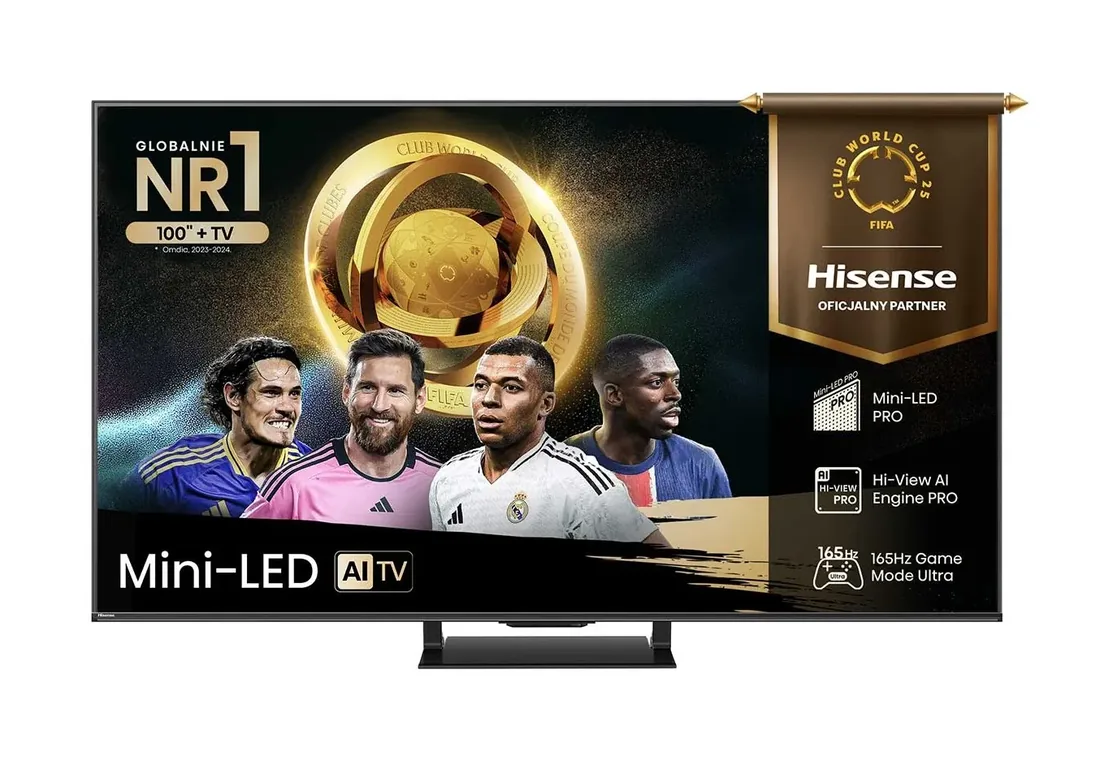 7.8BPR score
- €519Price
- 674 nits (choose.tv)Measured peak HDR brightness
- 6 of 8in Best 55-inch TVs Under €1000
- 7.8BPR score 0–10
Review
What this product is
Written after the analysis, from the same sources the score is built on: the manufacturer's documentation, available studies and verified owner feedback.
At €474–569 this is the least expensive set in the ranking, and on paper it looks like the TCL C7K: Mini-LED, quantum dot, 144Hz native, Dolby Vision and HDR10+ both supported, 9 ms measured input lag at 120Hz. The measured performance tells a different story.
choose.tv measured 674 nits peak HDR — against 1672 nits for the TCL C7K at a comparable price. The dimming zone count explains why: 220 zones arranged 10 by 22 on the 55-inch panel, against the C7K's much finer grid. With that few zones, small bright objects on dark backgrounds trigger aggressive dimming, which choose.tv observed directly. A star field or subtitle over black will show halos, and highlights get pulled down rather than allowed to peak.
The one metric where it genuinely leads is efficiency. The EU energy label reads class E for SDR — the best in this entire ranking, where most sets land on F or G — with class G for HDR and 180 W maximum draw.
Two specifications are disputed between sources. Hisense Germany states four HDMI 2.1 ports; Prad and choose.tv both report two HDMI 2.1 plus two HDMI 2.0. Assume two gaming-grade ports until you can confirm otherwise on the specific unit. Hisense Germany also claims a dual tuner while Prad lists a single tuner, which determines whether you can record one channel while watching another.
The VIDAA operating system is a closed platform with a narrower app catalogue than Google TV, webOS or Tizen — check that the services you use are present before buying. There is also no HGiG support, which choose.tv flags as making HDR calibration on consoles harder than it needs to be.
A pricing observation worth acting on. The Hisense 55U7Q Pro has been listed at around €549 — the same street price as this non-Pro model — and the Pro measured 1790 nits with 560 dimming zones. If that price parity holds in your market, the Pro is the obvious buy and this model is difficult to recommend at all. Check both before ordering.
Technical data
Specification
Figures from the manufacturer's documentation, verified against available outside sources. Values we could not confirm are marked as declared.
- Panel technology
- Mini-LED with quantum dot, VA, 220 zones (10x22)
- Measured peak HDR
- 674 nits, up to approx. 800 in optimal conditions (choose.tv)
- Measured contrast (dimming-assisted)
- up to 300 000:1
- Native refresh rate
- 144 Hz (240 Hz at 1080p)
- Full-bandwidth HDMI 2.1 ports
- 2 of 4 per Prad and choose.tv; Hisense DE claims 4
- Measured input lag
- 17 ms @60Hz / 9 ms @120Hz
- HDR formats
- Dolby Vision, Dolby Vision IQ, HDR10, HDR10+, HDR10+ Adaptive, HLG
- Smart platform
- VIDAA U8.5/U9
- Tuners
- DVB-T/T2, DVB-C, DVB-S/S2 - single vs dual disputed
- Gaming features
- VRR 48-240Hz, ALLM, G-Sync, eARC. No HGiG
- Audio
- 40 W (2x10 W + 20 W), Dolby Atmos
- EU energy class
- E (SDR) / G (HDR), 180 W max
- European street price
- EUR 474-569
Component scores
Where the score
comes from.
Four components, equal weight, each on a 0–10 scale and each resting on a named source. The overall score is their mean — the full procedure is in the methodology.
What we liked
- Lowest price in this ranking at EUR 474-569
- Class E SDR energy label — the most efficient set here
- 144Hz native panel with 9 ms input lag at 120Hz
- Dolby Vision, Dolby Vision IQ, HDR10, HDR10+ all supported
- 40 W audio with Dolby Atmos
Worth knowing
- Only 674 measured nits — far behind the similarly priced TCL C7K
- 220 dimming zones cause aggressive dimming of small highlights
- VIDAA is a closed platform with a narrower app catalogue
- No HGiG support for console HDR calibration
- HDMI 2.1 port count disputed between sources (2 vs 4)
- The U7Q Pro often costs the same and measures 1790 nits
Comparison
How it compares
within the category
All values come from the same analysis and are comparable only within the category Best 55-inch TVs Under €1000.
| Product | Score | Measured peak HDR brightness | Price |
|---|---|---|---|
| TCL 55C7KTop score | 8.9 | 1 672 nits (AVForums, 55") | €549 |
| Hisense 55U7QThis product | 7.8 | 674 nits (choose.tv) | €519 |
| Category average8 products analysed | 8.1 | — | — |
FAQ
Frequently asked questions
Why does this cost the same as the TCL C7K but measure a third of the brightness?
Dimming zone count and backlight specification. This set has 220 zones on the 55-inch panel; the TCL uses a considerably denser array with a brighter backlight. Both are called Mini-LED, and the term itself guarantees nothing about performance — the zone count and measured output are what separate them.
Should I buy the U7Q Pro instead?
If it costs the same or close to it, yes. The Pro measured 1790 nits against this model's 674, with 560 dimming zones rather than 220. Pricing between the two has been unusually close in some European markets. Check both listings before ordering — the difference in measured performance is far larger than any price gap has been.
What is HGiG and does its absence matter?
HGiG is a set of guidelines that lets a console and a display agree on HDR tone mapping so games look as the developer intended. Without it, you calibrate each game manually and results vary. It matters if you game seriously in HDR; it is irrelevant for film and streaming.
From the same ranking
Other products in Best 55-inch TVs Under €1000.
The same protocol, the same key parameter, the same set of sources.
-
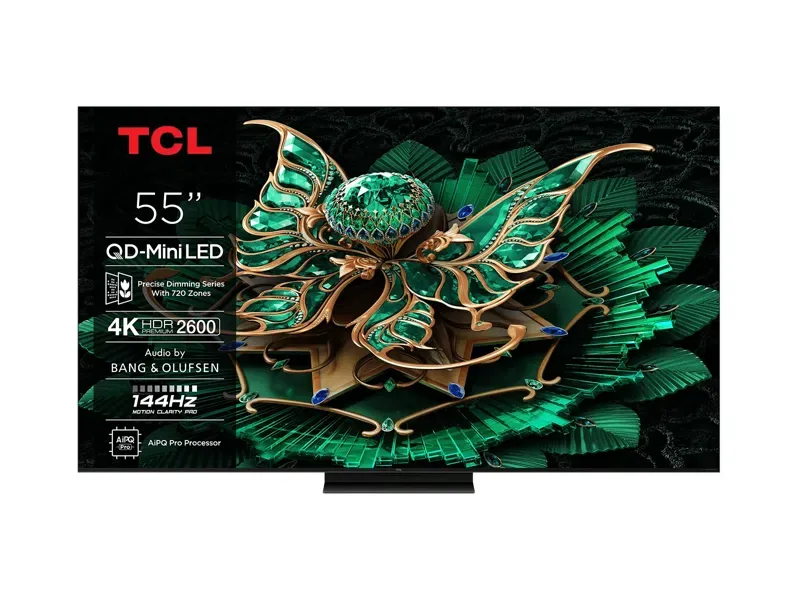 No. 018.9/ 10
TCL 55C7K
QD-Mini LED with the highest measured brightness per euro in this class. 144Hz native, 4.7 ms…
-
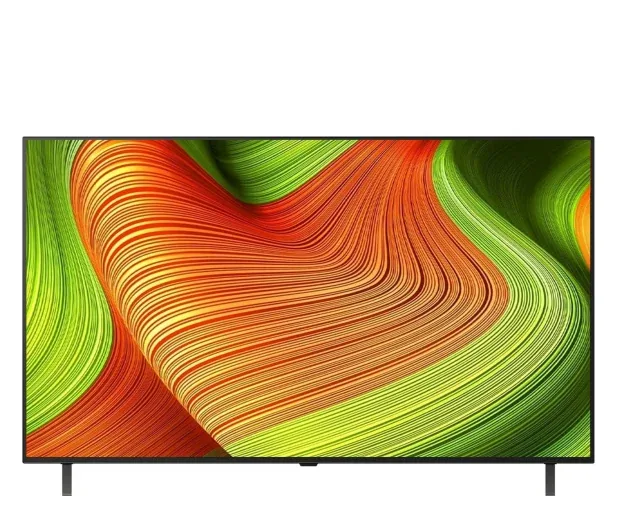 No. 028.6/ 10
LG OLED55B5
Entry-level OLED with per-pixel emissive black, four full-bandwidth HDMI 2.1 ports and 9.1 ms…
-
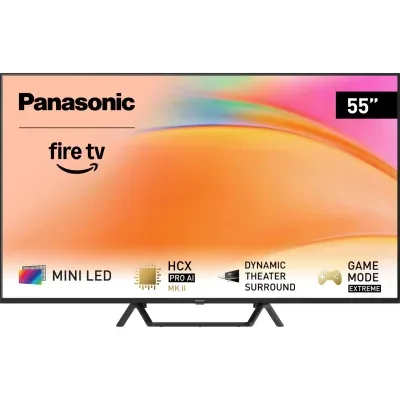 No. 038.4/ 10
Panasonic TV-55W95B
Mini-LED with 504 dimming zones and reference-grade out-of-box accuracy — Delta E of 1.1 to…
-
 No. 048.3/ 10
Samsung QE55S85F
The brightest OLED in this ranking at 787 measured nits, with four full-bandwidth HDMI 2.1…