
4Rank 04 of 8 · Best 55-inch TVs Under €1000
Samsung Samsung QE55S85F
The brightest OLED in this ranking at 787 measured nits, with four full-bandwidth HDMI 2.1 ports and 5 ms input lag. The absence of Dolby Vision is a genuine content cost, not a spec-sheet quibble.
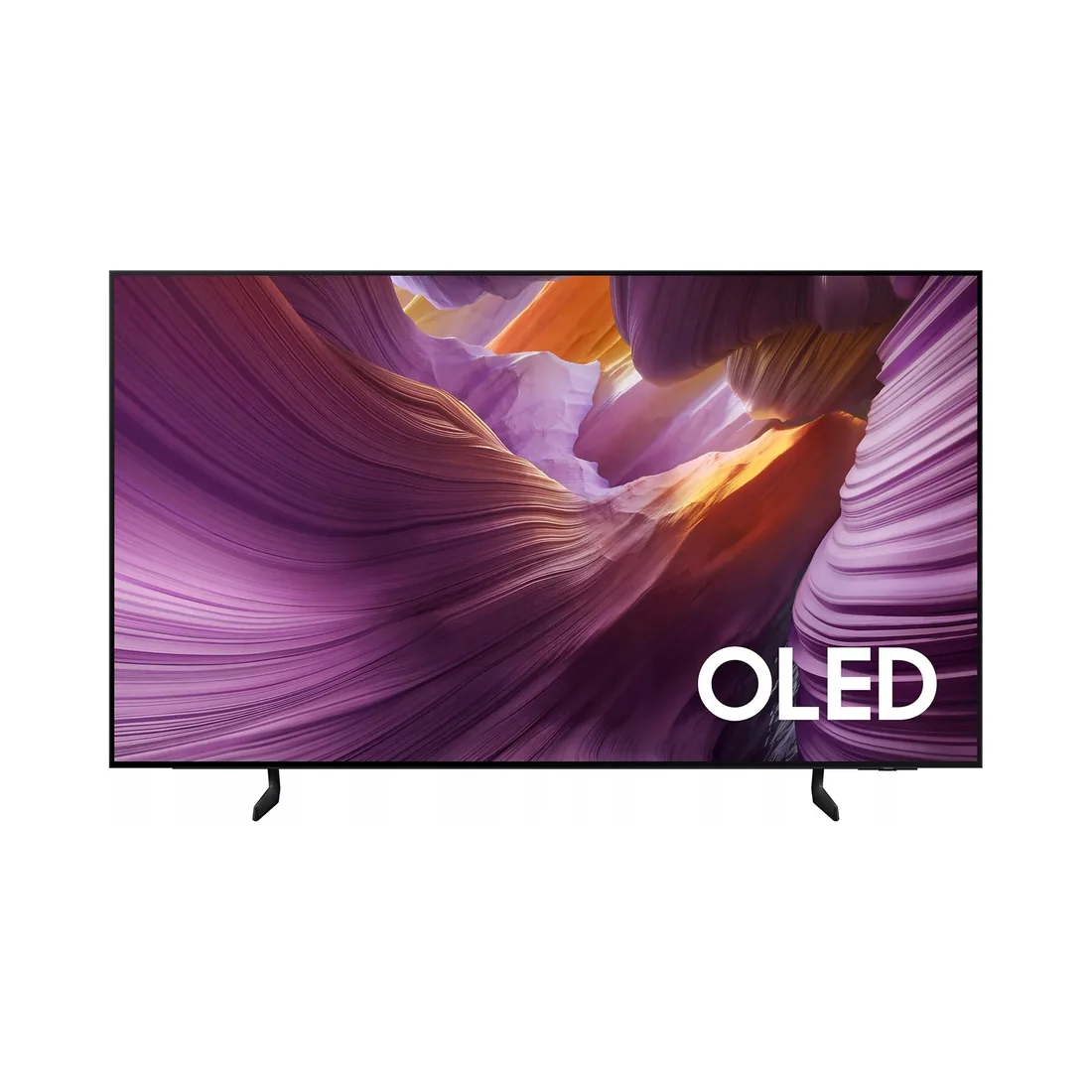 8.3BPR score
- €838Price
- 787 nits (Netzwelt, 55")Measured peak HDR brightness
- 4 of 8in Best 55-inch TVs Under €1000
- 8.3BPR score 0–10
Review
What this product is
Written after the analysis, from the same sources the score is built on: the manufacturer's documentation, available studies and verified owner feedback.
Netzwelt measured 787 cd/m² peak HDR on the 55-inch GQ55S85F, making this the brightest OLED here — meaningfully ahead of the LG B5's 668 nits. Colour accuracy measured Delta E 1.5, close to the Panasonic's calibration-grade figure. Full-screen output sits around 250–300 nits, still well short of any Mini-LED but better than the LG.
Connectivity matches the LG: four 48 Gbps HDMI 2.1 ports with 4K120, VRR, FreeSync Premium, ALLM and eARC. Measured input lag is roughly 5 ms at 120Hz and 10 ms at 60Hz — the lowest 120Hz figure of any OLED here. For PC users the panel accepts up to 144Hz. Tizen handles apps and covers the European catch-up services fully.
The Dolby Vision omission is the deciding factor for most buyers. Samsung supports HDR10, HDR10+ and HDR10+ Adaptive, but not Dolby Vision. In Europe, Netflix, Disney+, Apple TV and the majority of UHD Blu-ray releases lean on Dolby Vision; HDR10+ is largely a Prime Video format. On a Dolby Vision title this set falls back to HDR10, losing the per-scene dynamic metadata that keeps highlights and shadows correctly mapped. Whether that outweighs the brightness advantage over the LG depends entirely on what you watch.
One specification is genuinely unresolved. Sources disagree on whether the 55-inch model uses a QD-OLED or WOLED panel — choose.tv reports QD-OLED at 55 inches with WOLED at 65 inches and above, while Empire describes the UK 65-inch as WOLED. This affects colour volume at high brightness. Confirm the panel type for the specific unit in your market before buying if this matters to you.
The EU energy label reads class G for both SDR and HDR, with Samsung's German product page listing 83 kWh/1000h without specifying which mode. Built-in audio is 20 W, weak for the price, though Atmos passthrough over eARC works normally.
Technical data
Specification
Figures from the manufacturer's documentation, verified against available outside sources. Values we could not confirm are marked as declared.
- Panel technology
- OLED - QD-OLED or WOLED at 55", sources conflict
- Measured peak HDR
- 787 cd/m2 (Netzwelt, 55")
- Measured full-screen
- approx. 250-300 nits
- Measured colour accuracy
- Delta E 1.5 (Netzwelt)
- Native refresh rate
- 120 Hz (up to 144 Hz for PC)
- Full-bandwidth HDMI 2.1 ports
- 4 of 4 (48 Gbps)
- Measured input lag
- approx. 5 ms @120Hz / 10 ms @60Hz
- HDR formats
- HDR10, HDR10+, HDR10+ Adaptive, HLG (no Dolby Vision)
- Smart platform
- Tizen / One UI
- Tuners
- DVB-T2, DVB-C, DVB-S2
- Gaming features
- VRR, FreeSync Premium, ALLM, eARC
- Audio
- 20 W, OTS Lite, Q-Symphony, Dolby Atmos passthrough
- EU energy class
- G (SDR) / G (HDR), 83 kWh/1000h
- European street price
- EUR 777-900
Component scores
Where the score
comes from.
Four components, equal weight, each on a 0–10 scale and each resting on a named source. The overall score is their mean — the full procedure is in the methodology.
What we liked
- Brightest OLED here at 787 measured nits (Netzwelt, 55")
- Four full-bandwidth HDMI 2.1 ports
- 5 ms measured input lag at 120Hz — fastest OLED in this ranking
- Delta E 1.5 colour accuracy
- 144Hz support for PC use
- Tizen with full European app coverage
Worth knowing
- No Dolby Vision — a real limitation given European streaming catalogues
- Only 20 W built-in audio
- Class G energy label for both SDR and HDR
- Panel type at 55 inches disputed between sources (QD-OLED vs WOLED)
- More expensive than the LG B5 for a narrower feature set
Comparison
How it compares
within the category
All values come from the same analysis and are comparable only within the category Best 55-inch TVs Under €1000.
| Product | Score | Measured peak HDR brightness | Price |
|---|---|---|---|
| TCL 55C7KTop score | 8.9 | 1 672 nits (AVForums, 55") | €549 |
| Samsung QE55S85FThis product | 8.3 | 787 nits (Netzwelt, 55") | €838 |
| Category average8 products analysed | 8.1 | — | — |
FAQ
Frequently asked questions
How much does the missing Dolby Vision actually matter?
It depends on your sources. Netflix, Disney+, Apple TV and most UHD Blu-rays in Europe use Dolby Vision; Prime Video leans on HDR10+. Without Dolby Vision, those titles play back in standard HDR10, which uses a single static mapping for the whole film rather than adjusting scene by scene. The picture is still good, but darker scenes in particular lose some shadow separation. If most of your viewing is Netflix and Disney+, the LG OLED55B5 is the more sensible OLED despite being dimmer.
Is this brighter than the LG B5 by a meaningful amount?
787 nits versus 668 nits is roughly an 18% difference on a 10% window — visible on specular highlights but not transformative. Both remain far below the Mini-LED sets in this ranking. If brightness is your priority, neither OLED is the right answer.
From the same ranking
Other products in Best 55-inch TVs Under €1000.
The same protocol, the same key parameter, the same set of sources.
-
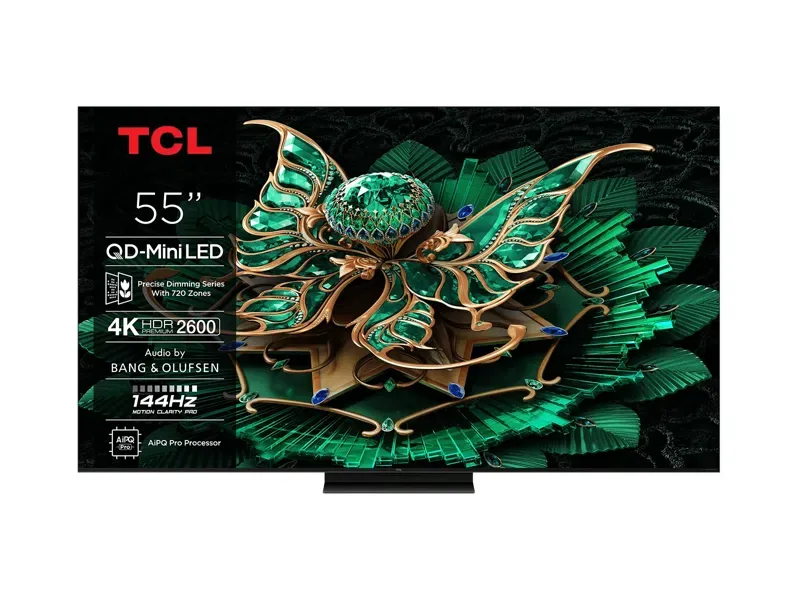 No. 018.9/ 10
TCL 55C7K
QD-Mini LED with the highest measured brightness per euro in this class. 144Hz native, 4.7 ms…
-
 No. 028.6/ 10
LG OLED55B5
Entry-level OLED with per-pixel emissive black, four full-bandwidth HDMI 2.1 ports and 9.1 ms…
-
 No. 038.4/ 10
Panasonic TV-55W95B
Mini-LED with 504 dimming zones and reference-grade out-of-box accuracy — Delta E of 1.1 to…
-
 No. 057.8/ 10
Sony BRAVIA 5 K-55XR5
The best-controlled Mini-LED backlight here, with minimal blooming, class-leading motion…