Services & financeAnalysis 121
Best Travel Money Cards
Everyone compares these cards on exchange-rate markups. That is the second most important question.
The first is whether your money is protected if the provider fails, and the answer is not what a banking licence would lead you to expect. PayPal Europe is a licensed bank, supervised by the CSSF in Luxembourg — and balances held in a PayPal account are explicitly not covered by any deposit guarantee scheme. The licence is real; the protection is absent. That single fact demolishes the heuristic almost everyone uses.
The distinction that matters is between two regimes. Under Directive 2014/49/EU, deposits at a licensed credit institution are guaranteed to €100,000 per person per institution by a national scheme, paid out within days if the bank fails. Under the e-money rules, your money is instead "safeguarded" — held in a segregated account at a separate bank, legally kept apart from the provider's own funds. Safeguarding is not nothing. But if the provider becomes insolvent, you are waiting on an administrator to return client money, not on a state guarantee, and there is no ceiling, no timetable and no compensation for a shortfall.
The practical rule is therefore not "pick the safest provider". It is: keep travel money on the card that gives you the best rate, and keep your savings where they are guaranteed. The card is a spending instrument. Load what the trip needs.
Methodology note
What this ranking is based on. Providers' published fee schedules, terms and regulatory disclosures; EU regulations governing card fees, currency conversion and deposit protection; and each provider's own statement of its licensing status.
Limitations. Fee structures in this category change frequently and vary by country of residence, by plan tier and sometimes by month — every figure here should be checked against the provider's current schedule for your own country before you rely on it. Free monthly withdrawal and exchange allowances differ substantially between EU countries on the same plan, which no comparison table can fully capture. Weekend and out-of-hours FX markups are applied by several providers and are not always prominent in their published rates.
What we could not verify. We did not open accounts or execute transactions, so no rate quoted here was obtained by us at a till. Interbank comparisons come from providers' own disclosures. Deposit-protection status is stated as each provider states it; where a provider's status is changing, we say so.
This is information, not financial advice. We are not financial advisers, and the right answer depends on your residence, your spending pattern and your own risk tolerance.
 9.0BPR score
Key parameter
Deposit protection status
Whether the money you load onto the card is covered by a national deposit guarantee scheme under Directive 2014/49/EU — up to €100,000 per person per institution — or merely 'safeguarded' under e-money rules, which is a different and weaker thing. This is the only criterion here that determines whether your money survives the provider failing, and it does not follow from the provider holding a banking licence.
-
Top score
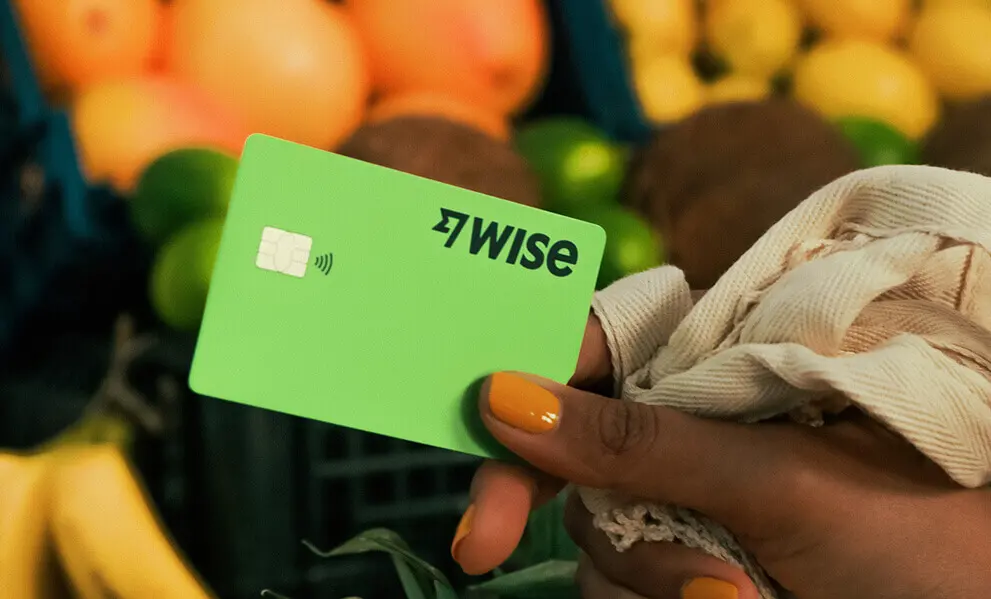
Wise Wise
- E-money institution — safeguarded, NOT deposit-guaranteedDeposit protection status
- —no price
Details+
The clearest pricing in this category — the mid-market rate with a stated fee rather than a hidden spread — and genuine multi-currency balances.
- Strengths
- Mid-market rate with a separately stated fee — no hidden spread
- Genuine multi-currency balances with local account details
- The clearest fee disclosure in this ranking
- Card spends from a matching currency balance automatically
- Weaknesses
- E-money institution — safeguarded but NOT deposit-guaranteed
- One-off card issue fee
- Free ATM allowance is modest before percentage fees start
- Conversion fees vary by currency pair
9.0 / 10excellent
-
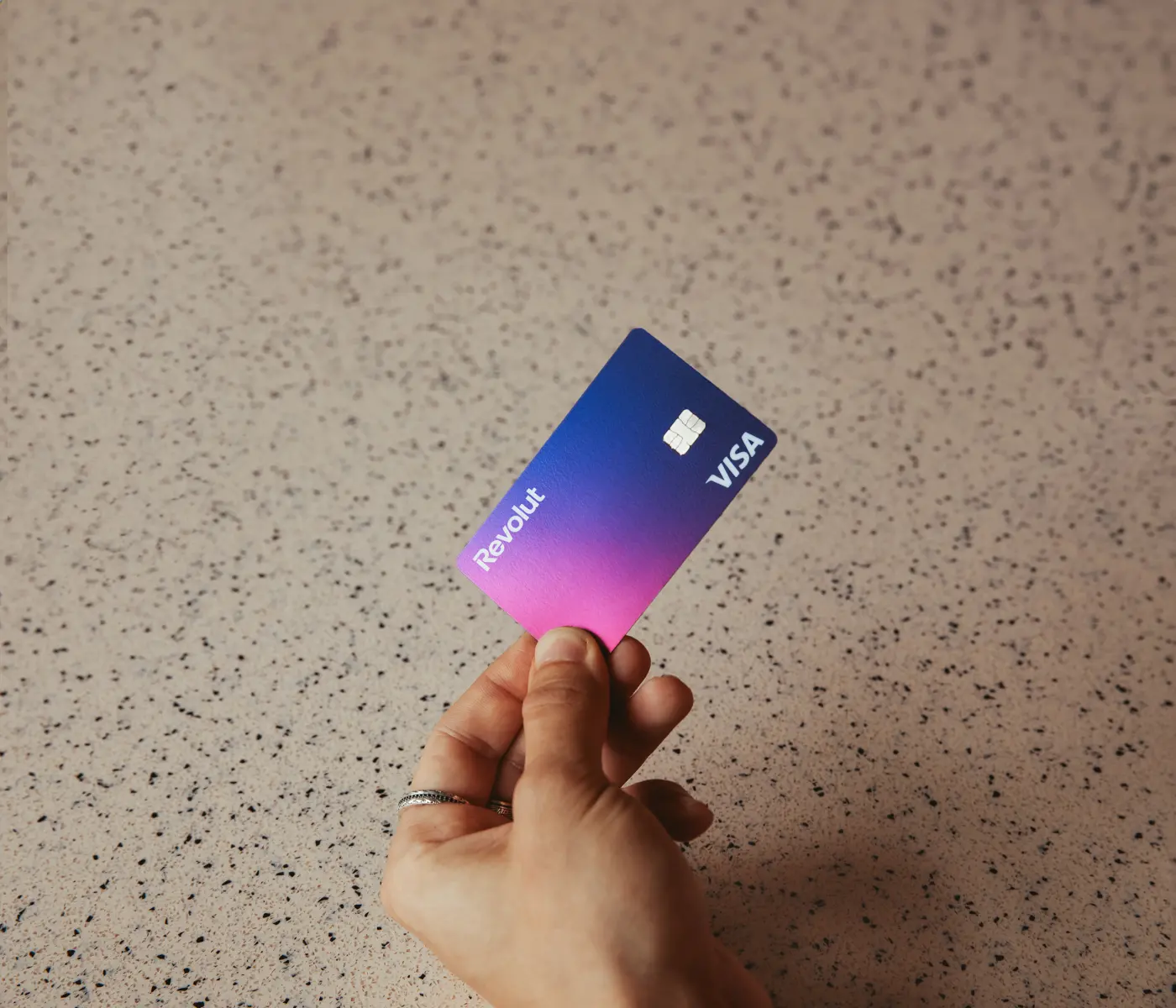
Revolut Revolut
- French banking licence since 10 Aug 2026 — protection depends on the entity holding your balanceDeposit protection status
- —no price
Details+
Interbank exchange rates on weekdays, free ATM withdrawals to a monthly limit, and the strongest card-control features in this ranking.
- Strengths
- Interbank exchange rate on weekdays with no markup, to a monthly allowance
- Free ATM withdrawals up to a monthly limit
- Instant card freeze and disposable virtual cards
- Widest currency coverage in this ranking
- French banking licence since 10 August 2026
- Weaknesses
- Weekend FX markup of around 1%
- Deposit protection depends on the entity and country holding your balance — not automatic
- Allowances differ substantially between EU countries
- Chat-first support, no branches, limited phone access
8.9 / 10good
-
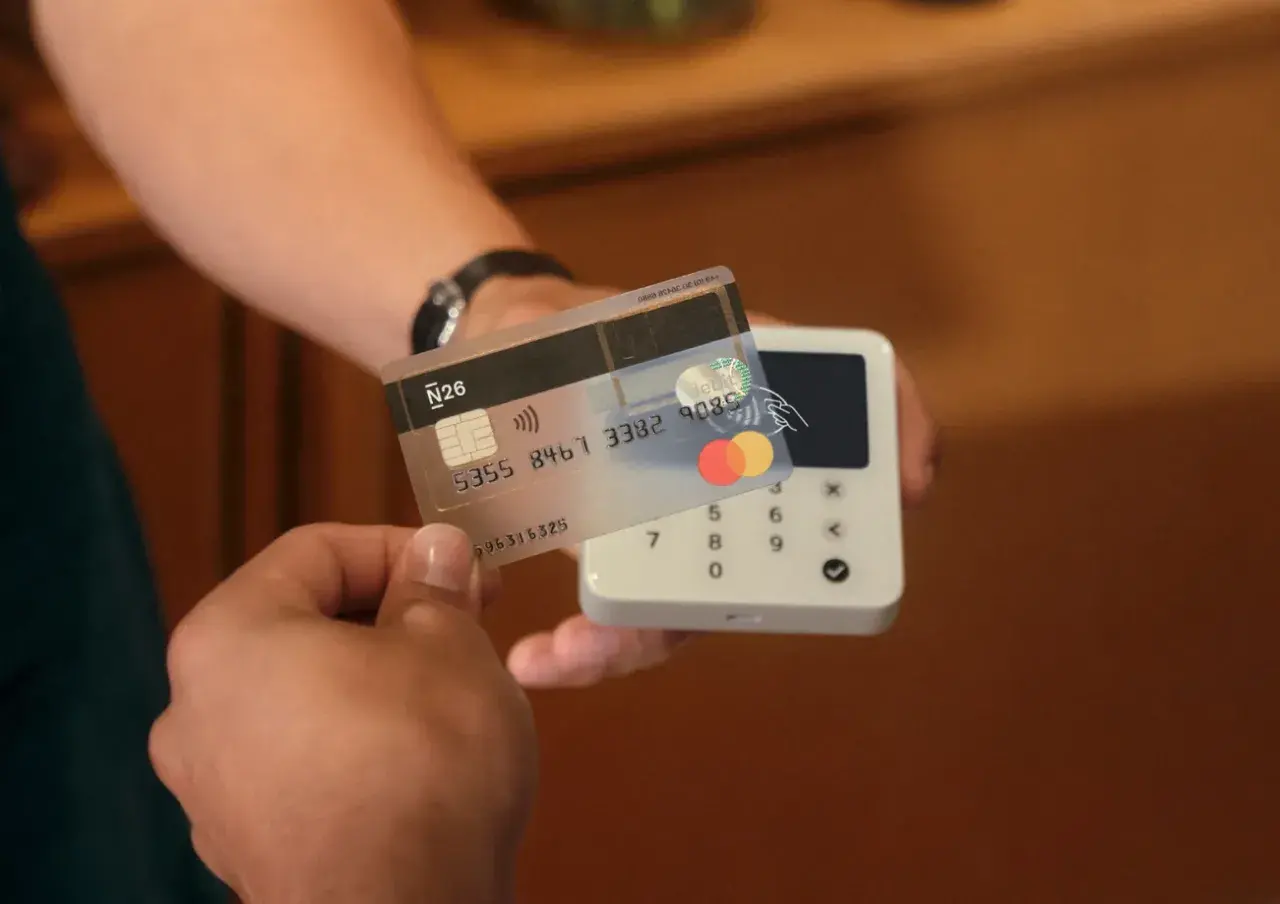
N26 N26
- German banking licence — deposits protected to €100,000Deposit protection status
- —no price
Details+
A full German bank account with deposit protection to €100,000 and no foreign-transaction fee on card payments.
- Strengths
- Full German banking licence with deposits protected to €100,000
- No foreign-transaction fee on card payments, seven days a week
- A real current account with a German IBAN
- BaFin supervision and formal complaint routes
- Weaknesses
- Foreign-currency ATM withdrawals carry a fee on the free plan
- Free euro ATM withdrawals capped monthly
- No multi-currency balances — everything converts at the moment of spending
- Narrower currency coverage than Revolut or Wise
8.7 / 10good
-
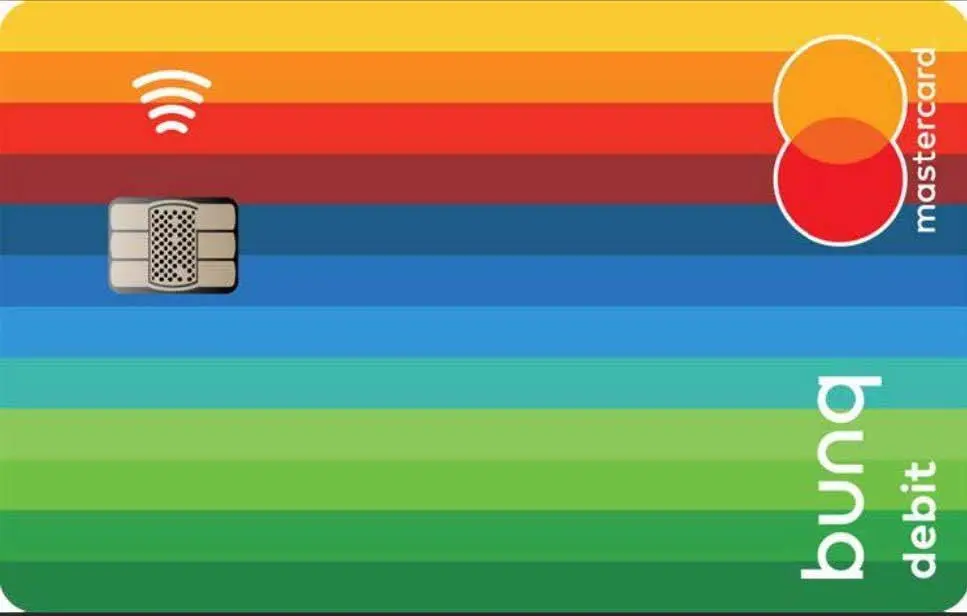
bunq bunq
- Dutch banking licence — deposits protected to €100,000Deposit protection status
- €4per month (from)
Details+
A Dutch bank with full deposit protection, unusually flexible sub-accounts, and a subscription rather than a free tier.
- Strengths
- Dutch banking licence with deposits protected to €100,000
- Multiple sub-accounts with separate IBANs and cards
- Highly configurable app
- Competitive multi-currency handling
- Weaknesses
- No free tier — from around €3.99 per month
- Best travel allowances only on higher-priced plans
- Exchange rates good but not the sharpest here
- Pricing and availability vary by country
8.1 / 10good
-
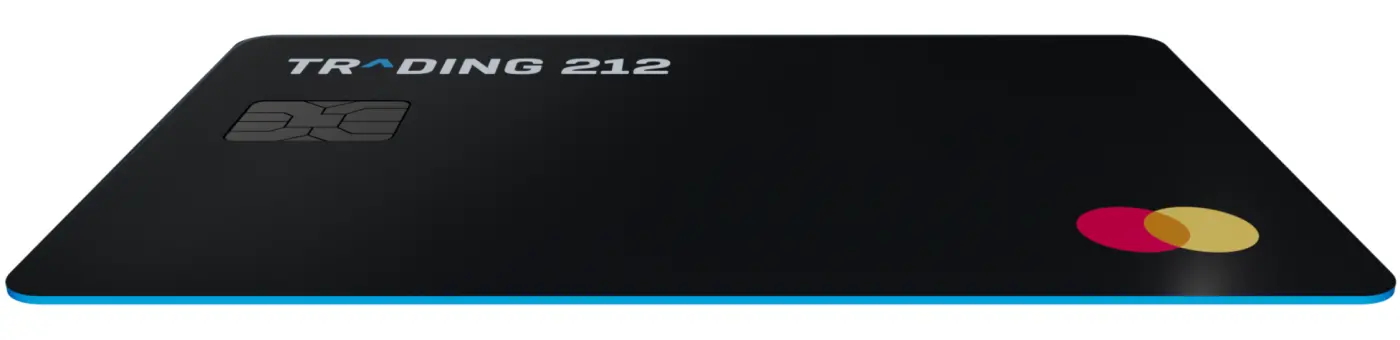
Trading 212 Trading 212 Card
- Investment firm — client money rules, not deposit protectionDeposit protection status
- —no price
Details+
A debit card attached to an investment account, with strong headline rates and a protection regime different from both banks and e-money firms.
- Strengths
- No monthly fee
- Interest paid on uninvested cash — unique in this ranking
- Competitive foreign-exchange handling
- Weaknesses
- Investor-compensation rules, not deposit protection — a different and lower limit
- Travel money held inside an investment platform
- Availability varies by country
- Payments are not the platform's core business; terms can change
7.9 / 10fair
-
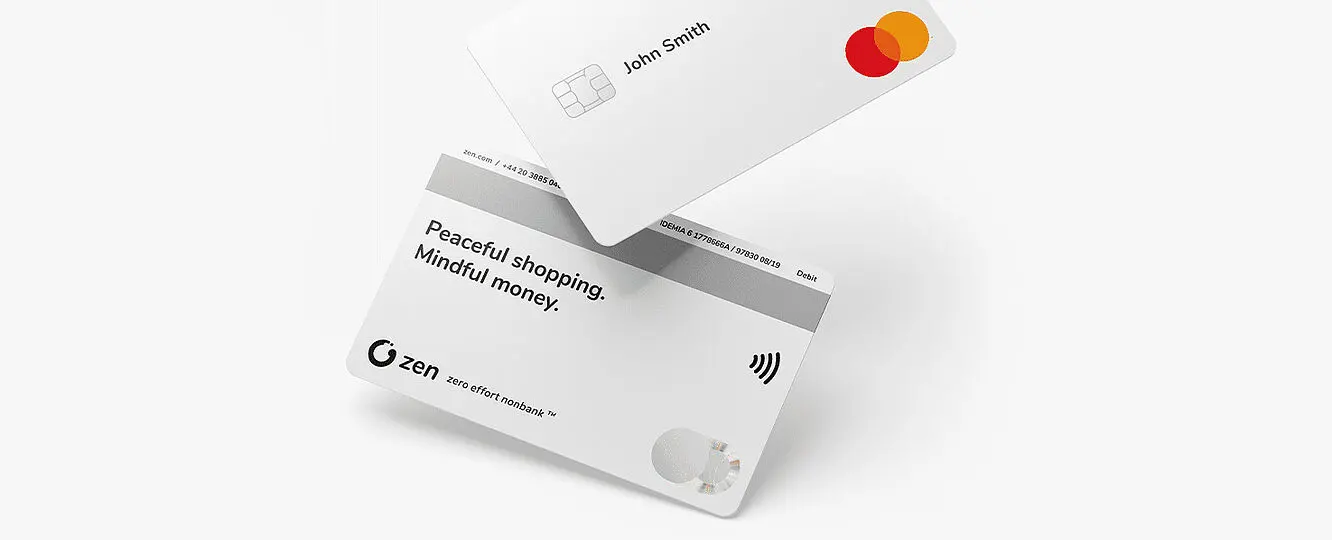
ZEN.com ZEN.com
- E-money institution — safeguarded, not deposit-guaranteedDeposit protection status
- —no price
Details+
A Lithuanian e-money provider with multi-currency accounts and purchase protection, aimed squarely at central and eastern Europe.
- Strengths
- Free tier available
- Multi-currency accounts
- Purchase protection beyond standard chargeback
- Useful coverage in central and eastern Europe
- Weaknesses
- E-money institution — safeguarded, not deposit-guaranteed
- Smaller provider than the app suggests
- Exchange rates behind Revolut and Wise
- Narrower currency coverage; more mixed service reports
7.4 / 10fair
-
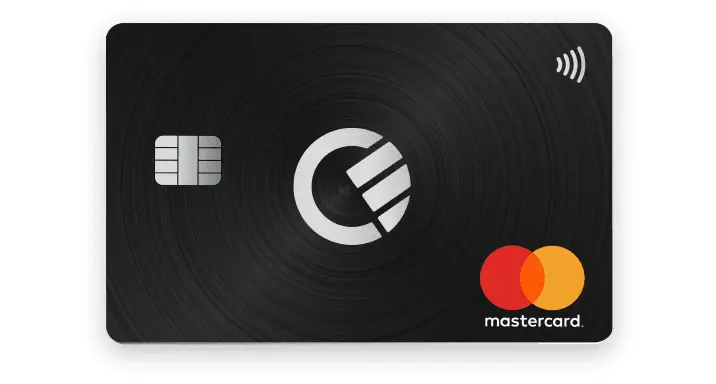
Curve Curve
- E-money institution — a routing layer, not a place to hold moneyDeposit protection status
- —no price
Details+
A card that routes payments to your other cards, letting you pick which one paid after the fact — useful, but a layer of complexity between you and the till.
- Strengths
- Routes payments to your existing cards and lets you change which one paid, retrospectively
- Consolidates several cards into one
- Free plan available
- Competitive FX to a monthly limit
- Weaknesses
- An extra layer that can fail at the till, in a country where you cannot easily resolve it
- E-money institution — no deposit protection
- Percentage FX fee beyond the free monthly limit, plus weekend markups
- Some issuers restrict Curve; some transactions may be treated as cash advances
6.9 / 10acceptable
-
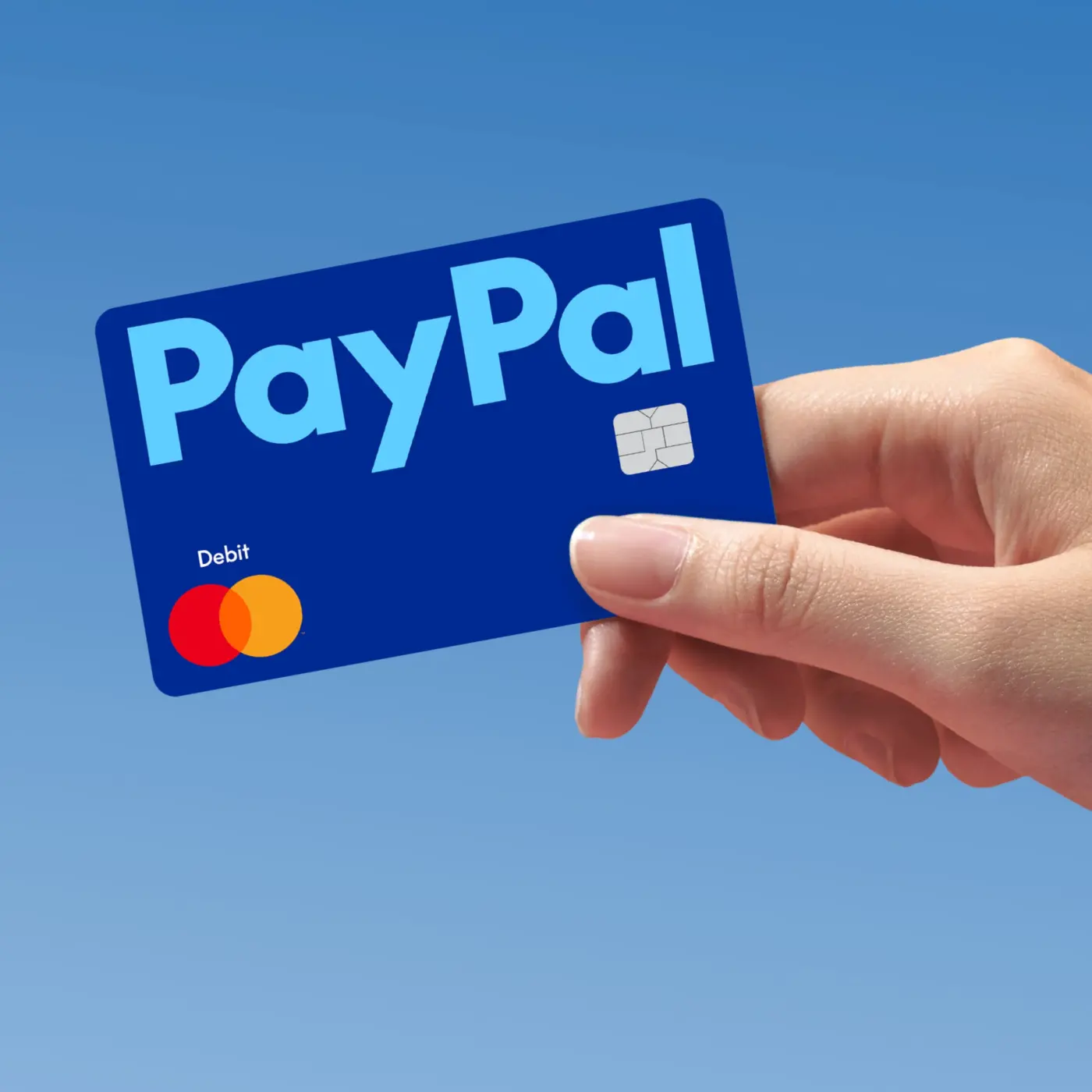
PayPal (Europe) S.à r.l. PayPal
- Licensed CSSF bank — balances explicitly NOT deposit-protectedDeposit protection status
- —no price
Details+
The clearest illustration in this ranking that a banking licence and deposit protection are two separate things — and an expensive way to convert currency.
- Strengths
- Strong buyer protection on eligible online purchases
- Near-universal acceptance in European e-commerce
- No monthly fee
- Weaknesses
- Balances are NOT covered by any deposit guarantee scheme, despite the banking licence
- Substantial exchange-rate spread — materially worse than every dedicated provider here
- Poor value for in-person spending abroad
- Account freezes are a recurring and well-documented complaint
5.5 / 10poor
Scores comparable only within this categorySignificance threshold: ±0.15 pt
9.0 Our verdict
Revolut is the pick for most European travellers — the interbank rate on weekdays, free ATM withdrawals up to a monthly allowance, near-instant card freezing and virtual cards, and the widest currency coverage here. Since obtaining a French banking licence on 10 August 2026 it has been building out deposit-protected accounts, though whether your particular balance is protected depends on which entity holds it and which country you are in — check yours rather than assuming.
Wise is the better choice if you actually hold several currencies — genuine multi-currency balances, the mid-market rate with a transparent stated fee rather than a hidden spread, and by far the clearest disclosure in this ranking. It is an e-money institution: your money is safeguarded, not deposit-guaranteed.
If you want a real bank account with full deposit protection and a card that behaves well abroad, N26 is the answer — a German banking licence, deposits covered to €100,000, and no foreign-transaction fee on card payments.
Whatever you choose, the single biggest saving is behavioural, not product-related. Always choose to pay in the local currency. When a terminal or cash machine offers to charge you in euros instead of the local money, that is dynamic currency conversion, and it costs between 2.6% and 12%. It will wipe out any difference between the eight providers below, several times over, in a single transaction.
The single most expensive mistake
Dynamic currency conversion costs 2.6% to 12% — always pay in local currency
When a card terminal or cash machine abroad asks whether you would like to be charged in euros rather than the local currency, it is offering dynamic currency conversion. It sounds like a courtesy. It is a fee, and it is the largest one you will meet on any trip.
DCC markups run from around 2.6% to as much as 12% depending on the operator, and the operator sets the rate — not your bank, not the card scheme. The exchange rate shown to you at the terminal already contains the margin, which is why the screen can display a rate without displaying a fee.
Always choose the local currency. Your own card converts at its own rate — for Revolut on a weekday that is the interbank rate; for Wise the mid-market rate plus a stated fee; for N26 the Mastercard rate. Every one of those beats DCC comfortably.
Under Regulation (EU) 2019/518, providers must disclose currency-conversion charges for cross-border euro transactions as a percentage markup over the ECB reference rate, so the comparison is at least available. But the regulation makes DCC transparent — it does not make it cheap, and the choice at the terminal is still yours to get right.
Cash machines are the worst offenders, because the screen wording is designed to make accepting the conversion the path of least resistance. Read it and decline.
Three regimes, one word
'Regulated' covers deposit guarantees, safeguarding and client money — and they are not the same
Every provider in this ranking is regulated. Three quite different things are meant by it.
A deposit guarantee scheme under Directive 2014/49/EU covers deposits at a licensed credit institution to €100,000 per person per institution, paid by a national scheme on a statutory timetable if the bank fails. N26 (Germany) and bunq (Netherlands) sit here. This is the strongest protection available.
Safeguarding applies to electronic money institutions — Wise, ZEN.com, Curve. Your money must be held in segregated accounts at a separate bank, legally distinct from the provider's own funds. If the provider fails, that money should be recoverable, but you are dependent on an administrator, there is no ceiling, no timetable, and nothing covers a shortfall.
Client-money and investor-compensation rules apply to investment firms — Trading 212. Different scope again, and typically a €20,000 limit.
And then PayPal, which holds a banking licence and whose balances are covered by none of them.
The conclusion is not that e-money is unsafe. Safeguarding has worked in practice. The conclusion is that the strength of protection does not follow from the licence, the size of the app, or the word "bank" — so if you want a €100,000 guarantee, verify that the specific entity holding your specific balance provides one, in your country.
Rules that already save you money
What EU regulation does and does not do for card fees
Regulation (EU) 924/2009, as amended by 2019/518, requires that a cross-border euro payment within the EU costs no more than an equivalent domestic payment. A euro transfer from Poland to Portugal cannot be priced as "international".
Regulation (EU) 2015/751 caps interchange fees at 0.2% for debit and 0.3% for credit consumer card transactions within the EU. This is why merchant surcharging on consumer cards has largely disappeared across the EU.
Regulation (EU) 2019/518 also forces disclosure of currency-conversion markups as a percentage over the ECB reference rate, and requires that you be told the cost before an ATM DCC conversion.
What none of it does. It does not cap what your provider charges you for converting into non-euro currencies. It does not cap DCC. It does not cap ATM operator fees, which are set by the machine's owner and are common in tourist areas. And it does not extend deposit protection to e-money balances.
The regulation has removed the crudest rip-offs from intra-EU euro payments. The expensive decisions left are the ones you make at the terminal.
A worked warning
'Fee-free' is a word that needs checking — the HSBC Global Money example
HSBC's Global Money service has been marketed on "no fees" for international transfers and spending. Analysis of the rates actually offered found an effective cost of around 2.2% built into the exchange rate itself.
Nothing about that is unlawful, and no fee line appears on the statement — because the margin is in the rate. This is the standard model at high-street banks, and it is precisely what Wise's stated-fee approach exists to expose.
How to check any provider in ten seconds: look up the mid-market rate for the pair (a search for the currency pair gives it), then look at the rate you are being quoted. The gap, as a percentage, is your real cost — add any stated fee on top. A provider quoting 2% below mid-market and calling it fee-free is charging you 2%.
Apply the same test to airport bureaux de change, which frequently run 5–10% below mid-market while advertising "0% commission". The commission is genuinely zero. The rate is where the money is made.
Practical
How to actually travel with these cards
Carry two cards from two different providers, on two different schemes if you can — one Visa, one Mastercard. Outages happen, cards get blocked by fraud systems, and terminals in some countries accept one scheme and not the other. This single habit prevents the worst version of every payment problem abroad.
Load the card with what the trip needs, not with your savings. This is the practical answer to the entire deposit-protection question: exposure you have limited yourself does not need a guarantee.
Exchange currency on a weekday. Weekend markups of around 1% apply at several providers because the interbank market is shut.
Withdraw cash in larger, less frequent amounts where ATM allowances are capped per month or per withdrawal — and refuse the machine's offer to convert.
Tell nobody, but do check your allowances by country. Free ATM and FX limits on the same plan differ substantially between EU member states, and the figure in a comparison article is often the one for a country that is not yours.
Keep a small amount of local cash. Card acceptance across Europe is excellent and getting better, but rural transport, market stalls and small tavernas remain cash-first in several countries.
Methodology
How this score is built
The score is the mean of four component scores — each carries equal weight and each rests on a named source. The full procedure is described in the methodology.
01Composition and specification
Declared composition and specification: active ingredients and their concentrations, energy classes, standards, technical parameters — and what the manufacturer leaves unsaid.
02Evidence and studies
Verification of the manufacturer's claims against outside sources: laboratory reports, industry testing, safety data sheets, certificates and regulatory decisions.
03Owner feedback
Analysis of verified reviews written after extended use, together with recurring fault reports for the model or series.
04Cost and value
Price set against what the product actually delivers, plus costs incurred later — consumables, energy, servicing, subscriptions — over the lifespan typical for the category.
FAQ
Frequently asked questions
Which travel money card is safest?+
N26 and bunq, because both hold full banking licences and deposits are guaranteed to €100,000 under Directive 2014/49/EU. Wise, ZEN.com and Curve safeguard your money rather than guaranteeing it, and PayPal balances are covered by nothing at all despite PayPal holding a banking licence.
Should I pay in euros or in the local currency abroad?+
Always the local currency. Accepting the terminal's offer to charge you in euros is dynamic currency conversion and costs between 2.6% and 12%, set by the terminal operator rather than by your card provider.
Does a banking licence mean my money is protected?+
No, and PayPal is the proof: it holds a CSSF banking licence in Luxembourg and its terms state that balances are not covered by any deposit guarantee scheme. Check the protection statement for the specific account, not the licence.
Which card has the best exchange rate?+
Revolut on weekdays, at the interbank rate with no markup up to your monthly allowance. Wise is close and more transparent, using the mid-market rate with the fee stated separately. Both beat any high-street bank comfortably.
Why do exchange rates get worse at the weekend?+
The interbank currency market closes, so providers cannot price against a live rate. Most add roughly 1% to cover the risk of where Monday opens. Convert on a Friday if you can.
Are ATM withdrawals abroad free?+
Up to a monthly allowance with Revolut and, on a smaller allowance, Wise. N26 charges for foreign-currency withdrawals on its free plan. Separately, the machine's owner may charge an operator fee that no card provider controls.
How many cards should I take?+
Two, from different providers and ideally on different schemes — one Visa and one Mastercard. Fraud blocks, outages and scheme-specific acceptance problems are all common enough to plan for.
Is it safe to keep a large balance on a travel card?+
Keep only what the trip needs. On an e-money card there is no deposit guarantee, and even on a deposit-protected account there is no reason to carry the exposure. Load, spend, top up.
What does 'fee-free' usually mean?+
Usually that the margin is in the exchange rate rather than on a fee line. HSBC's Global Money, marketed as fee-free, was found to carry an effective cost of about 2.2% inside the rate. Compare the quoted rate with the mid-market rate to see your real cost.
Sources
Documents and standards
- 1. Directive 2014/49/EU on deposit guarantee schemes
- 2. Regulation (EU) 2019/518 amending Regulation (EC) No 924/2009 as regards charges on cross-border payments and currency conversion charges
- 3. Regulation (EC) No 924/2009 on cross-border payments in the Community
- 4. Regulation (EU) 2015/751 on interchange fees for card-based payment transactions
- 5. Directive 2009/110/EC on electronic money institutions (safeguarding requirements)
- 6. PayPal (Europe) S.à r.l. et Cie, S.C.A. — user agreement and regulatory disclosures, CSSF Luxembourg
- 7. Revolut — fee schedules and announcement of French banking licence, 10 August 2026
- 8. Wise — pricing, mid-market rate policy and safeguarding disclosure
- 9. N26 — account terms, fee schedule and German deposit guarantee statement
- 10. bunq — plan pricing and Dutch deposit guarantee statement
- 11. Trading 212 — card terms and client money / investor compensation disclosures
- 12. ZEN.com — terms and Bank of Lithuania licensing status
- 13. Curve — terms, fee schedule and e-money status
- 14. Published analysis of dynamic currency conversion markups and of HSBC Global Money exchange-rate margins
More
Other rankings
in
Services & finance.
Each category has its own protocol and its own key parameter.