
6Rank 06 of 8 · Best Dishwashers 60 cm
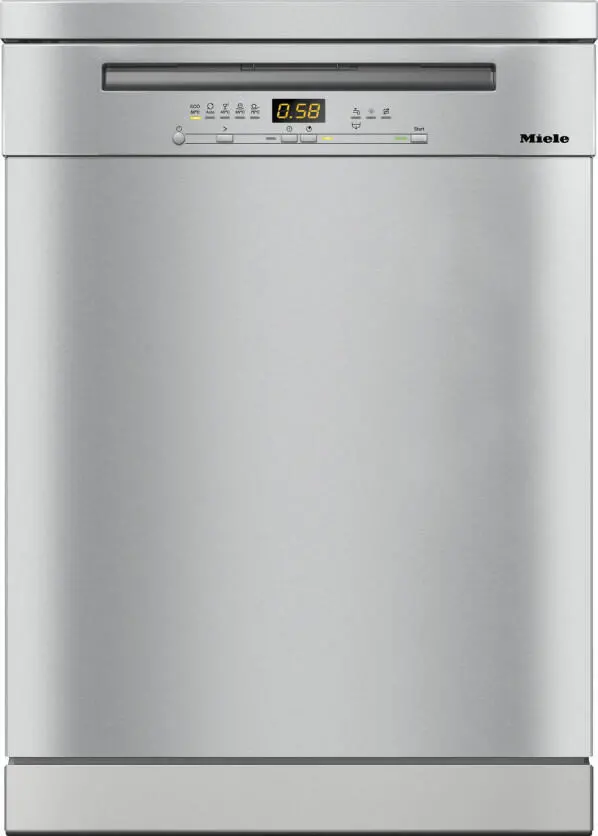
Miele Miele G 5310 SC Active Plus
The freestanding option for kitchens with no integration slot, and the fastest eco cycle here at 3 hours 19 minutes. Class C at 74 kWh is the price of that speed.
 7.8BPR score
- €820Price
- 74 kWh/100 cycles — class CEnergy use, kWh per 100 eco cycles
- 6 of 8in Best Dishwashers 60 cm
- 7.8BPR score 0–10
Review
What this product is
Written after the analysis, from the same sources the score is built on: the manufacturer's documentation, available studies and verified owner feedback.
The only freestanding machine in this ranking, which makes it the answer for renters and for kitchens without an integration slot. It measures 598 × 845 × 600 mm with finished sides and top and a visible control panel, and needs no cabinet door.
Two figures stand out. Water consumption is 8.4 litres per cycle, joint best here alongside the AEG and the G 7260 — better than every Bosch and Siemens machine in this ranking. And the eco cycle is 3 hours 19 minutes, the shortest of any machine here by more than half an hour and nearly two hours quicker than the AEG.
The equipment is solid: the 3D MultiFlex cutlery tray and FlexCare cup rack, AutoOpen automatic door drying with SensorDry and active condensation drying, the Waterproof System as standard, and a universal water softener rated to 70 °dH — an unusually wide range that matters in hard-water regions. It supports a hot-water connection, and Miele states fresh-water rinsing from as little as 6 litres in automatic mode.
The energy figure is the problem, and it should be stated plainly. Class C at 74 kWh per 100 cycles is worse than the €448 Bosch Serie 4 and roughly €15 a year more expensive to run than the class A machines here. At €820 — reduced from a €1,029 list price — you are paying premium money for a mid-tier label.
What you are actually buying is Miele's build quality, the softener range, the fast cycle, and the published 20-year durability programme: 5,600 test cycles at 280 cycles a year. That is a specific, falsifiable methodology, which is more than any competitor here publishes. Whether it is worth €372 more than the Bosch Serie 4 depends entirely on how long you keep appliances.
There is no wifi on this model — Miele@home appears on the G 7000 series. We could not locate an EPREL registration number for this variant.
Sibling versions exist for other installations: the G 5310 SCi is semi-integrated at around €900, and the G 5310 SCU is underbuilt.
Technical data
Specification
Figures from the manufacturer's documentation, verified against available outside sources. Values we could not confirm are marked as declared.
- Type
- Freestanding, 598 x 845 x 600 mm (1 195 mm door open)
- EU energy class
- C
- Energy
- 74 kWh per 100 eco cycles (0.74 kWh/cycle)
- Water
- 8.4 litres per cycle
- Noise
- 44 dB(A) - noise class B
- Place settings
- 14
- Eco programme duration
- 3 h 19 min - shortest here
- Programmes
- QuickPowerWash, ECO, Automatic, Intensive 75 °C, Gentle
- Third rack
- Yes - 3D MultiFlex tray plus FlexCare cup rack
- Drying
- AutoOpen with SensorDry and active condensation drying
- Leak protection
- Waterproof System
- Water softener
- Universal, rated to 70 °dH
- Connectivity
- None
- Durability testing
- Miele states up to 20 years / 5 600 cycles
- Estimated running cost
- approx. EUR 69/year
- European price
- approx. EUR 820 (list EUR 1 029)
Component scores
Where the score
comes from.
Four components, equal weight, each on a 0–10 scale and each resting on a named source. The overall score is their mean — the full procedure is in the methodology.
What we liked
- The only freestanding machine here — no cabinet door required
- 3 h 19 min eco cycle, the fastest in this ranking by over 30 minutes
- 8.4 litres per cycle, joint best here
- Water softener rated to 70 °dH for hard-water regions
- Miele's published 20-year, 5 600-cycle durability testing
- 3D MultiFlex tray, AutoOpen drying, Waterproof System standard
Worth knowing
- Class C at 74 kWh — worse than the €448 Bosch Serie 4
- Roughly €15/year more to run than the class A machines here
- 44 dB(A), joint loudest in this ranking
- No wifi on this model
- EPREL registration number could not be located
- €820 is premium money for a mid-tier energy label
Comparison
How it compares
within the category
All values come from the same analysis and are comparable only within the category Best Dishwashers 60 cm.
| Product | Score | Energy use, kWh per 100 eco cycles | Price |
|---|---|---|---|
| AEG 9000 GI9210X2TFTop score | 9.1 | 49 kWh/100 cycles — class A | €849 |
| Miele G 5310 SC Active PlusThis product | 7.8 | 74 kWh/100 cycles — class C | €820 |
| Category average8 products analysed | 8.3 | — | — |
FAQ
Frequently asked questions
Should I accept class C to get a freestanding machine?
If you have no integration slot, you have little choice — freestanding options at this quality level are limited. The energy penalty is about €15 a year against a class A machine, which over ten years is roughly €150. Weigh that against the fact that a freestanding machine moves house with you, which an integrated one effectively does not.
Why is the eco cycle so much shorter than everyone else's?
Because eco programmes trade time against temperature, and manufacturers pick different points on that curve. Miele has tuned this one for a shorter cycle and accepted a class C result; AEG tuned the GI9210X2TF for 49 kWh and accepted 5 hours 10 minutes. Neither is wrong — they optimise for different owners.
From the same ranking
Other products in Best Dishwashers 60 cm.
The same protocol, the same key parameter, the same set of sources.
-
 No. 019.1/ 10
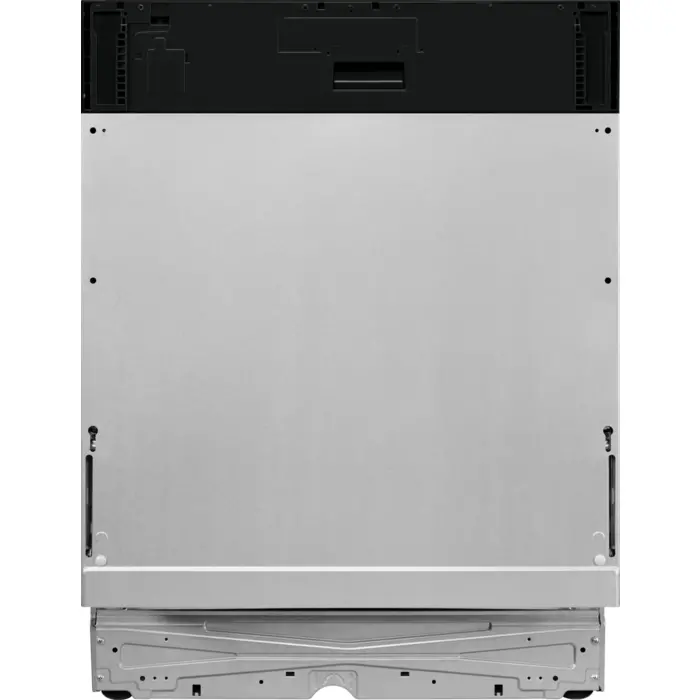
AEG 9000 GI9210X2TF
The only machine here to reach noise class A at 37 dB, and the most efficient at 49 kWh and…
-
 No. 029.1/ 10
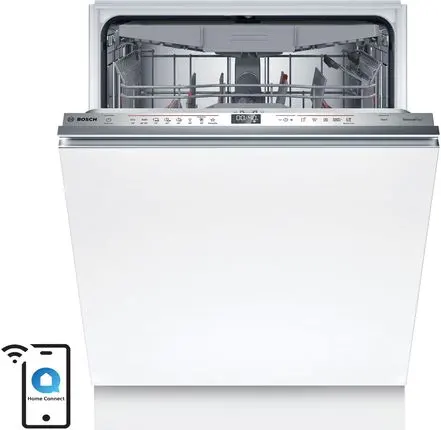
Bosch Serie 6 SMD6ECX12E
Class A at 54 kWh without any zeolite — just an auto-opening door. Joint test winner at…
-
 No. 038.7/ 10
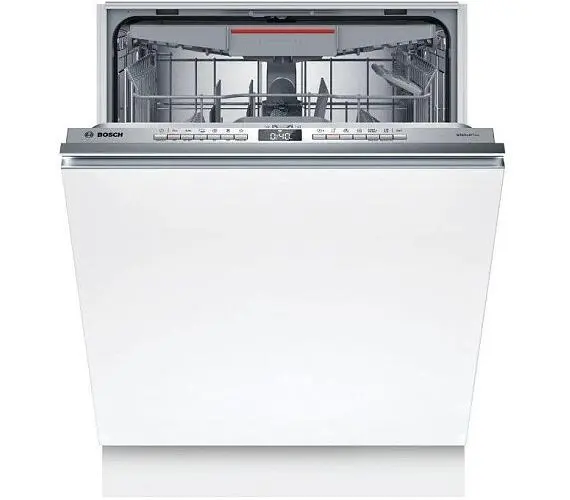
Bosch Serie 4 SMV4EVX08E
The value inflection point of the market. €99 more than the cheapest machine here buys a…
-
 No. 048.5/ 10
Bosch Serie 8 SMD8TCX04E
Bosch's flagship, with both zeolite and auto-opening drying, TimeLight floor projection and a…