
1Rank 01 of 8 · Best Dishwashers 60 cm
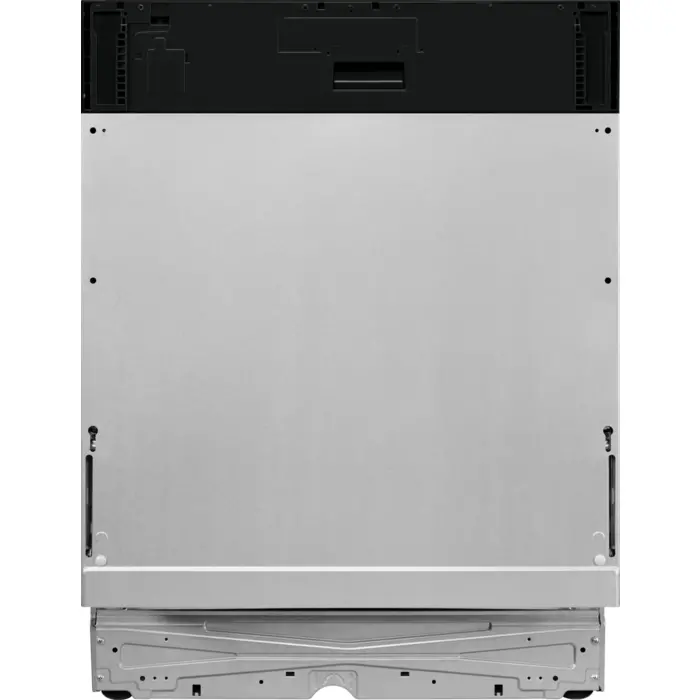
AEG AEG 9000 GI9210X2TF
The only machine here to reach noise class A at 37 dB, and the most efficient at 49 kWh and 8.4 litres. ETM Testmagazin's Testsieger at 95.1%. The trade-off is a 5 hour 10 minute eco cycle.
 9.1BPR score
- €849Price
- 49 kWh/100 cycles — class AEnergy use, kWh per 100 eco cycles
- 1 of 8in Best Dishwashers 60 cm
- 9.1BPR score 0–10
Review
What this product is
Written after the analysis, from the same sources the score is built on: the manufacturer's documentation, available studies and verified owner feedback.
This machine beats every Bosch, Siemens and Miele in this ranking on all three label metrics at once, which none of them manages against each other. 49 kWh per 100 cycles is the best energy figure here, 8.4 litres per cycle is joint best, and 37 dB(A) is a genuine noise class A.
That last point deserves explaining. The rescaled label sets noise class A at under 39 dB, which means essentially the entire market sits in class B — a six-decibel bucket running from 39 to 44 dB. Of the eight machines here, seven are class B. Only this one clears the bar. At 37 dB it is quiet enough to run in an open-plan kitchen during an evening without being intrusive.
ETM Testmagazin made it Testsieger in issue 3/2026 with 95.1% and a "sehr gut" rating, in a four-week test running more than 100 cycles per machine. Its verdict described "outstanding quality that is consistently easy to use, delivers impressive cleaning performance in most programs, and has exceptionally low consumption". It beat the Bosch Serie 8 SMD8TCX04E, which scored 93.4%. The single weakness ETM identified was the absence of a dedicated extra-drying programme.
Equipment is complete: a cutlery drawer, AirDry automatic door opening, QuickLift two-sided height adjustment on the upper basket that works while the basket is loaded, SatelliteClean Pro dual-rotation spray arm, Aqua Control water stop with float switch, and app connectivity. Eight programmes from Eco 50 °C through to a 30-minute quick wash.
The cost of all that efficiency is time. The eco cycle runs 5 hours 10 minutes — 40 minutes longer than the Bosch Serie 8 and nearly two hours longer than the Miele G 5310. If you run the machine overnight this is irrelevant. If you need dishes back within an afternoon, it matters.
Two caveats. Its leak protection is a float-switch water stop rather than the double-walled hose plus solenoid system Bosch and Siemens back with a lifetime water-damage guarantee. And retailer pricing on this SKU is erratic — legitimate offers sit at €849–879, but we found one marketplace listing at over €2,100. Check the seller.
Technical data
Specification
Figures from the manufacturer's documentation, verified against available outside sources. Values we could not confirm are marked as declared.
- Type
- Fully integrated, 60 cm
- EU energy class
- A
- Energy
- 49 kWh per 100 eco cycles
- Water
- 8.4 litres per cycle
- Noise
- 37 dB(A) - noise class A
- Place settings
- 14
- Eco programme duration
- 5 h 10 min
- EPREL registration
- 2400252
- Programmes
- 8 - Eco 50, AutoSense 50-60, 120 min, 90 min, 60 min, Quick 30, Machine Care, Pre-rinse
- Third rack
- Yes - cutlery drawer
- Drying
- AirDry automatic door opening
- Leak protection
- Aqua Control water stop with float switch
- Connectivity
- AEG app
- ETM Testmagazin 3/2026
- Testsieger, sehr gut, 95.1%
- Estimated running cost
- approx. EUR 49/year
- European price
- EUR 849-879
Component scores
Where the score
comes from.
Four components, equal weight, each on a 0–10 scale and each resting on a named source. The overall score is their mean — the full procedure is in the methodology.
What we liked
- 49 kWh/100 cycles — the most efficient machine in this ranking
- 37 dB(A), noise class A — almost nothing else on the market reaches it
- 8.4 litres per cycle, joint best here
- ETM Testmagazin Testsieger 2026, 95.1% sehr gut
- Cutlery drawer and QuickLift adjustable upper basket
- AirDry auto-opening drying with nothing to fail
Worth knowing
- 5 h 10 min eco cycle — the longest here
- No dedicated extra-drying programme (ETM's only criticism)
- Float-switch water stop rather than a full solenoid AquaStop system
- Erratic retailer pricing — one marketplace listing exceeded €2,100
- Water softener maximum hardness not published by AEG
Comparison
How it compares
within the category
All values come from the same analysis and are comparable only within the category Best Dishwashers 60 cm.
| Product | Score | Energy use, kWh per 100 eco cycles | Price |
|---|---|---|---|
| AEG 9000 GI9210X2TFThis product · top score | 9.1 | 49 kWh/100 cycles — class A | €849 |
| Bosch Serie 6 SMD6ECX12ERunner-up | 9.1 | 54 kWh/100 cycles — class A | €679 |
| Category average8 products analysed | 8.3 | — | — |
FAQ
Frequently asked questions
Is a five-hour wash cycle a problem?
Only if you need the dishes back quickly. The eco programme saves energy by heating less and soaking longer, so duration is the mechanism rather than a defect. Most households load the machine after dinner and unload in the morning, in which case five hours is invisible. If you routinely need a turnaround inside two hours, the 60-minute and 90-minute programmes exist — but they use considerably more energy and water than the label figure suggests.
How much quieter is 37 dB than the 42-44 dB machines here?
Noticeably. The decibel scale is logarithmic — roughly every 10 dB is a doubling of perceived loudness, so a 7 dB gap over a 44 dB machine is a substantial reduction. In practical terms, 37 dB in an open-plan kitchen is a background presence you stop noticing; 44 dB is audible over conversation.
From the same ranking
Other products in Best Dishwashers 60 cm.
The same protocol, the same key parameter, the same set of sources.
-
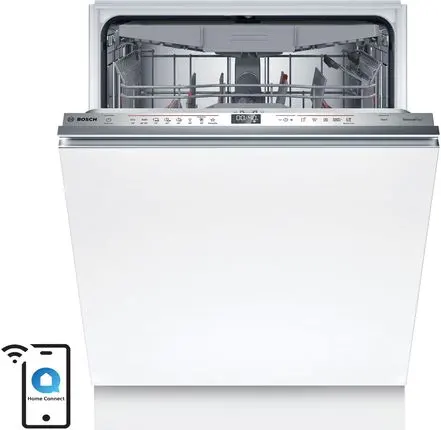 No. 029.1/ 10
Bosch Serie 6 SMD6ECX12E
Class A at 54 kWh without any zeolite — just an auto-opening door. Joint test winner at…
-
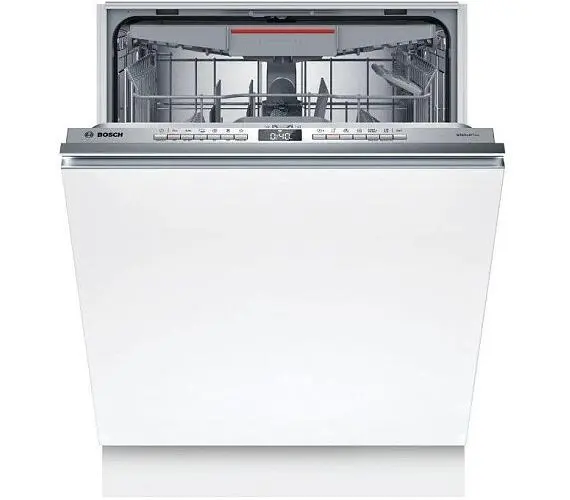 No. 038.7/ 10
Bosch Serie 4 SMV4EVX08E
The value inflection point of the market. €99 more than the cheapest machine here buys a…
-
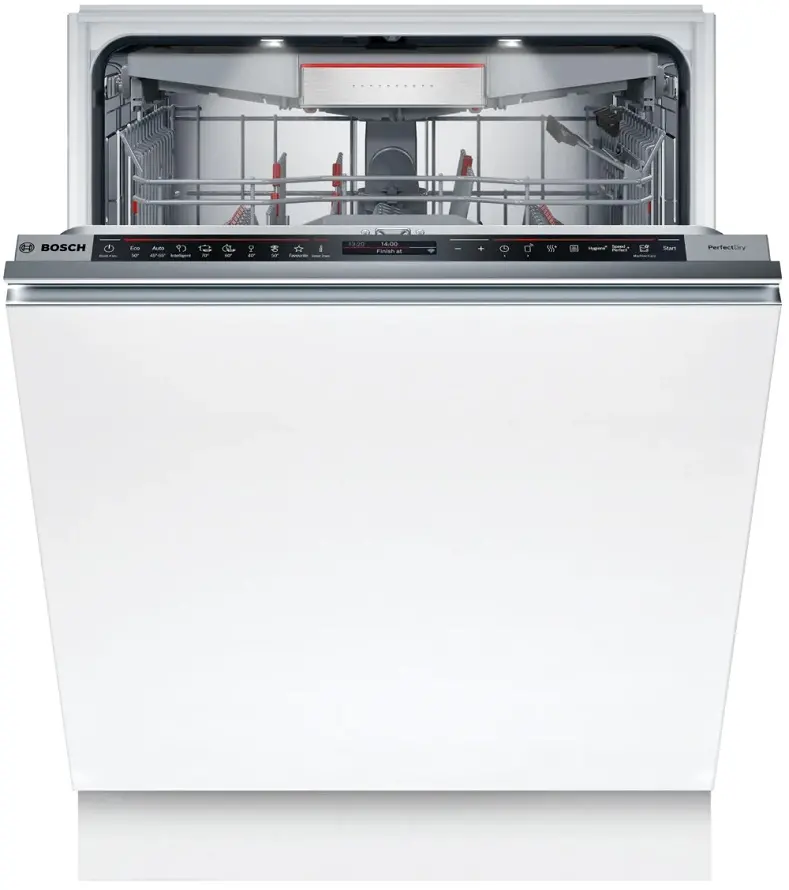 No. 048.5/ 10
Bosch Serie 8 SMD8TCX04E
Bosch's flagship, with both zeolite and auto-opening drying, TimeLight floor projection and a…
-
 No. 058.4/ 10
Miele G 7260 SCVi
Class A at 54 kWh with 8.4 litres per cycle and a 3 hour 50 minute eco programme — the best…