
5Rank 05 of 8 · Best Electric Toothbrushes
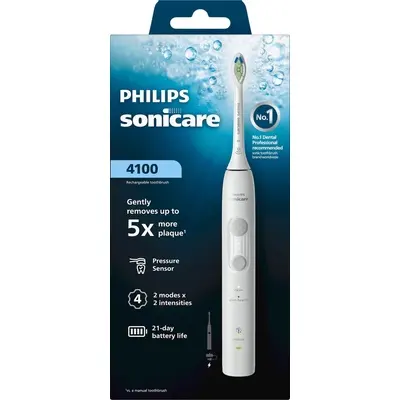
Philips Philips Sonicare 4100
The cheapest way into Sonicare, with one mode and a vibrating pressure sensor. Genuine heads cost 3.3 times the handle over five years — the clearest cost-of-ownership trap here.
 7.9BPR score
- €57Price
- €247 with genuine heads / approx. €110 with third-party headsFive-year cost of ownership
- 5 of 8in Best Electric Toothbrushes
- 7.9BPR score 0–10
Review
What this product is
Written after the analysis, from the same sources the score is built on: the manufacturer's documentation, available studies and verified owner feedback.
A good brush undone by head pricing, and the single best illustration of why this ranking uses cost of ownership as its metric.
The hardware is straightforward and effective: sonic at 62,000 brush movements / 31,000 strokes per minute — the same figures as the test-winning Sonicare 5500 — with a pressure sensor that alerts by vibrating the handle, a two-minute timer with quadpacer, a magnetic charging stand, and about two weeks claimed battery with 20 to 37 days measured. Its sibling the Sonicare 3100 scored 2.2 "gut" at around €43 in Stiftung Warentest's December 2024 round.
There is one mode and no intensity settings. On the evidence that is not a weakness — no trial and no guidance body supports additional modes improving outcomes.
Now the arithmetic. Genuine Sonicare heads cost €23.99 for two (€12.00 each) or €37.99 for four (€9.50 each). Twenty heads over five years is €190 — 3.3 times the €56.90 handle price, for a five-year total of €247.
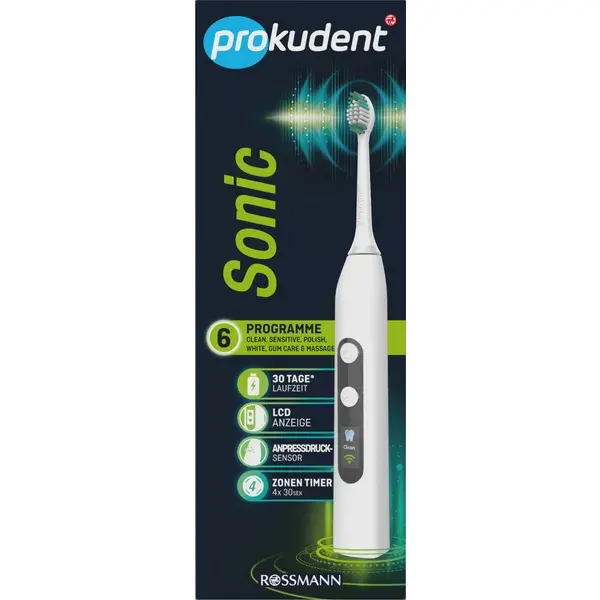
Rossmann's prokudent universal heads at €2.65 explicitly fit the Sonicare Series 3 and 5, DiamondClean, FlexCare, ProtectiveClean, EasyClean and HealthyWhite ranges. Using those, the five-year total falls to roughly €110.
That is a €137 saving from a decision about brush heads — larger than the price difference between any two handles in this ranking. It is the most consequential thing on this page.
The battery is non-removable. Note that whether the pressure sensor also reduces motor power is not confirmed for this model; higher Sonicare models are widely said to do so, and we could not verify it.
Technical data
Specification
Figures from the manufacturer's documentation, verified against available outside sources. Values we could not confirm are marked as declared.
- Technology
- Sonic / vibrating
- Movements
- 62 000 brush movements / 31 000 strokes per minute
- Modes
- 1, no intensity settings
- Pressure sensor
- Yes - alerts by vibrating the handle
- Timer
- 2-minute with quadpacer
- Battery
- Non-removable Li-ion, approx. 2 weeks claimed, 20-37 days measured
- App
- None
- Genuine head price
- EUR 12.00 each (2-pack) or EUR 9.50 (4-pack)
- Third-party head price
- EUR 2.65 (prokudent universal)
- Five-year cost - genuine
- approx. EUR 247
- Five-year cost - third-party
- approx. EUR 110
- Sibling result
- Sonicare 3100 scored 2.2 gut at approx. EUR 43 (Stiftung Warentest 12/2024)
- Price
- EUR 56.90
Component scores
Where the score
comes from.
Four components, equal weight, each on a 0–10 scale and each resting on a named source. The overall score is their mean — the full procedure is in the methodology.
What we liked
- Same 62 000 movements per minute as the test-winning Sonicare 5500
- Vibrating pressure sensor — felt while brushing rather than seen
- Sibling Sonicare 3100 scored 2.2 gut at Stiftung Warentest
- 20-37 days measured battery against a two-week claim
- Third-party heads at €2.65 cut the five-year cost from €247 to about €110
- €56.90
Worth knowing
- Genuine heads cost 3.3 times the handle price over five years
- Five-year total of €247 on genuine heads — worse than the €69 iO 3
- One mode only, no intensity settings
- Non-removable battery
- No Stiftung Warentest grade for this exact model
Comparison
How it compares
within the category
All values come from the same analysis and are comparable only within the category Best Electric Toothbrushes.
| Product | Score | Five-year cost of ownership | Price |
|---|---|---|---|
| Philips Sonicare 5500Top score | 8.8 | €265 with genuine heads / approx. €110 with third-party heads | €75 |
| Philips Sonicare 4100This product | 7.9 | €247 with genuine heads / approx. €110 with third-party heads | €57 |
| Category average8 products analysed | 7.8 | — | — |
FAQ
Frequently asked questions
Is one cleaning mode enough?
Yes. No clinical trial and no dental guidance body supports additional modes improving plaque removal or gum health. Stiftung Warentest's own comment on a four-mode brush was "plenty of settings, average cleaning". What guidance does stress — UK national guidance and Scottish SDCEP both — is technique and duration: brush twice daily for at least two minutes. A mode selector does not help with either.
How can the five-year cost be higher than a more expensive brush?
Because the handle is a small part of what you pay. This brush costs €56.90 and its genuine heads cost €190 over five years, totalling €247. The €69 Oral-B iO 3 costs €125 in heads, totalling €194 — €53 less, despite a handle that costs €12 more. On the Curaprox at €199 the effect is starker still. Always price twenty heads before choosing a handle.
From the same ranking
Other products in Best Electric Toothbrushes.
The same protocol, the same key parameter, the same set of sources.
-
 No. 018.8/ 10
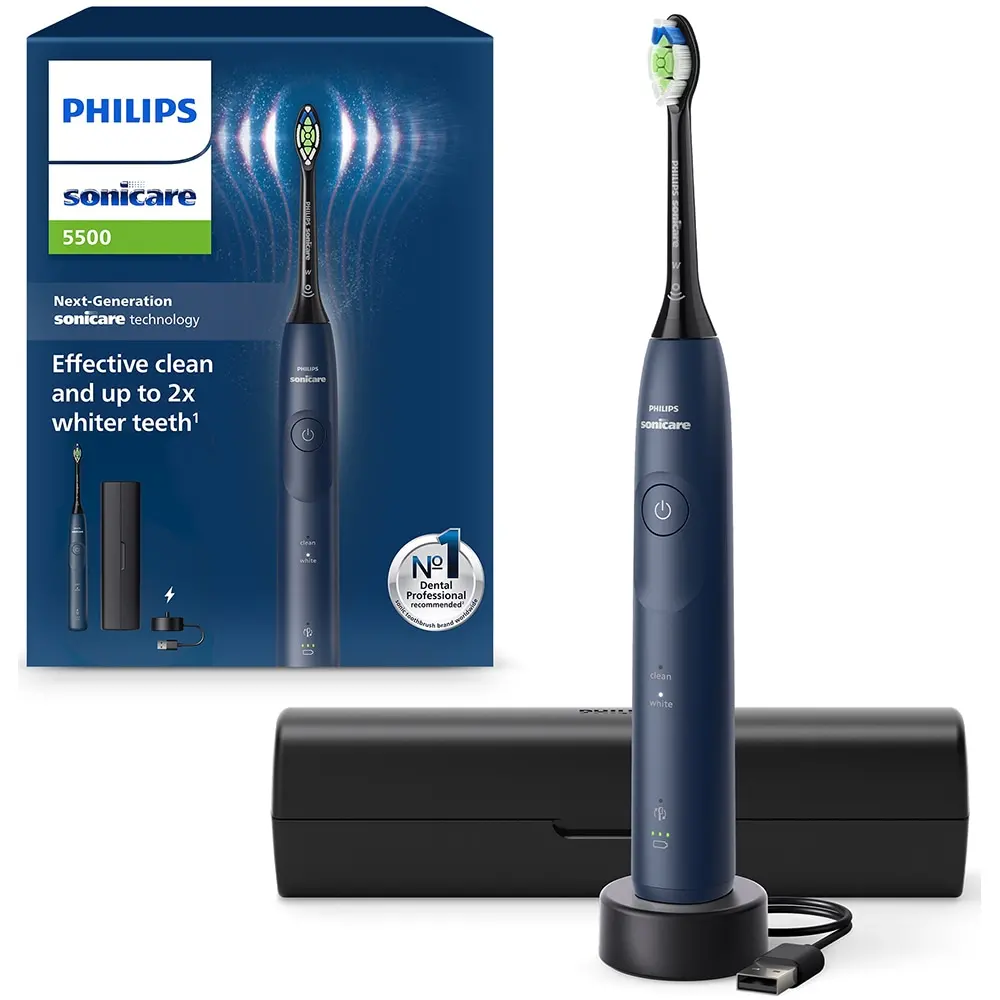
Philips Sonicare 5500
Stiftung Warentest's November 2025 winner at grade 1.7 with a cleaning sub-score of 1.3, now…
-
 No. 028.6/ 10
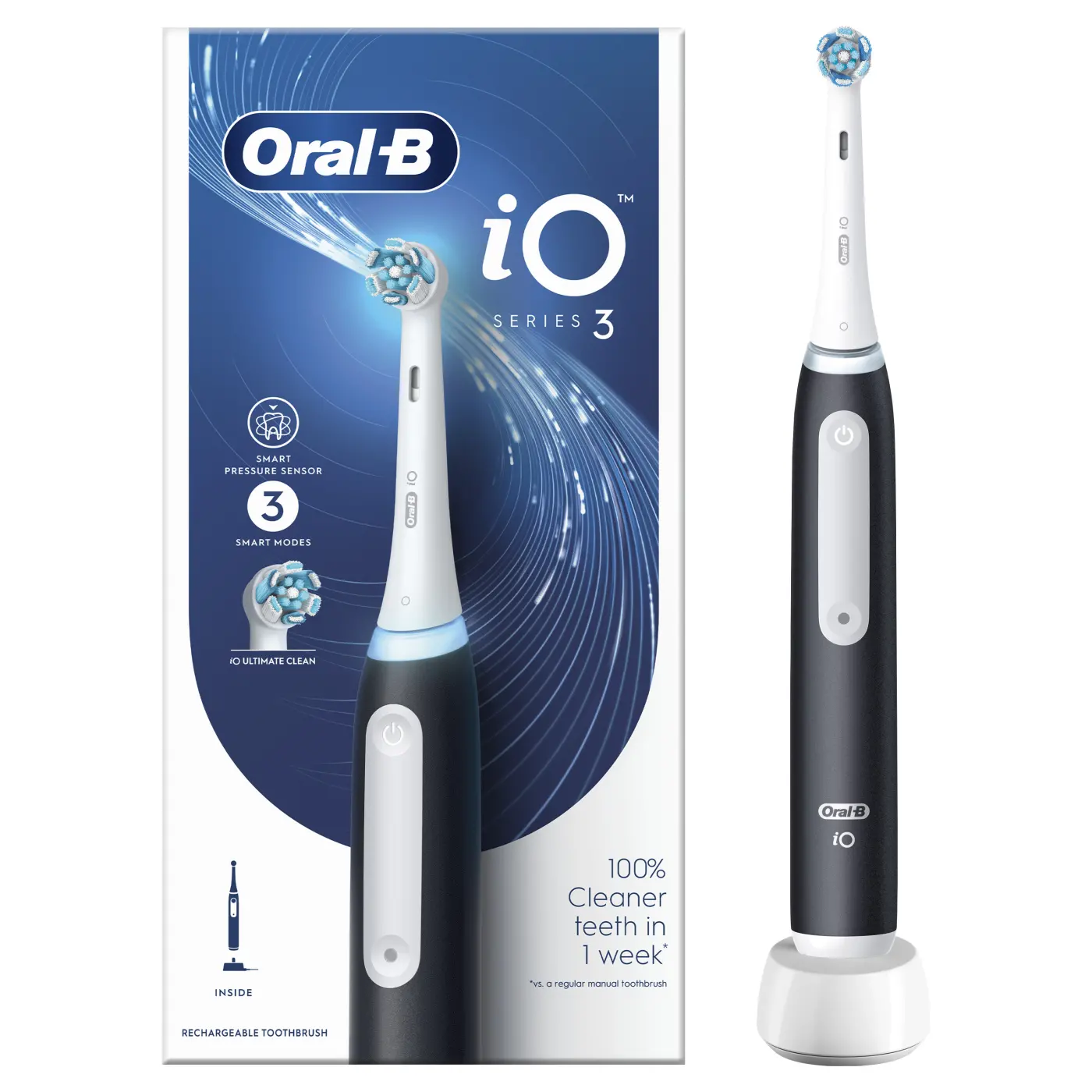
Oral-B iO Series 3
The Oral-B iO Series 3N won Stiftung Warentest's November 2024 round with grade 1.9, ahead of…
-
 No. 038.4/ 10
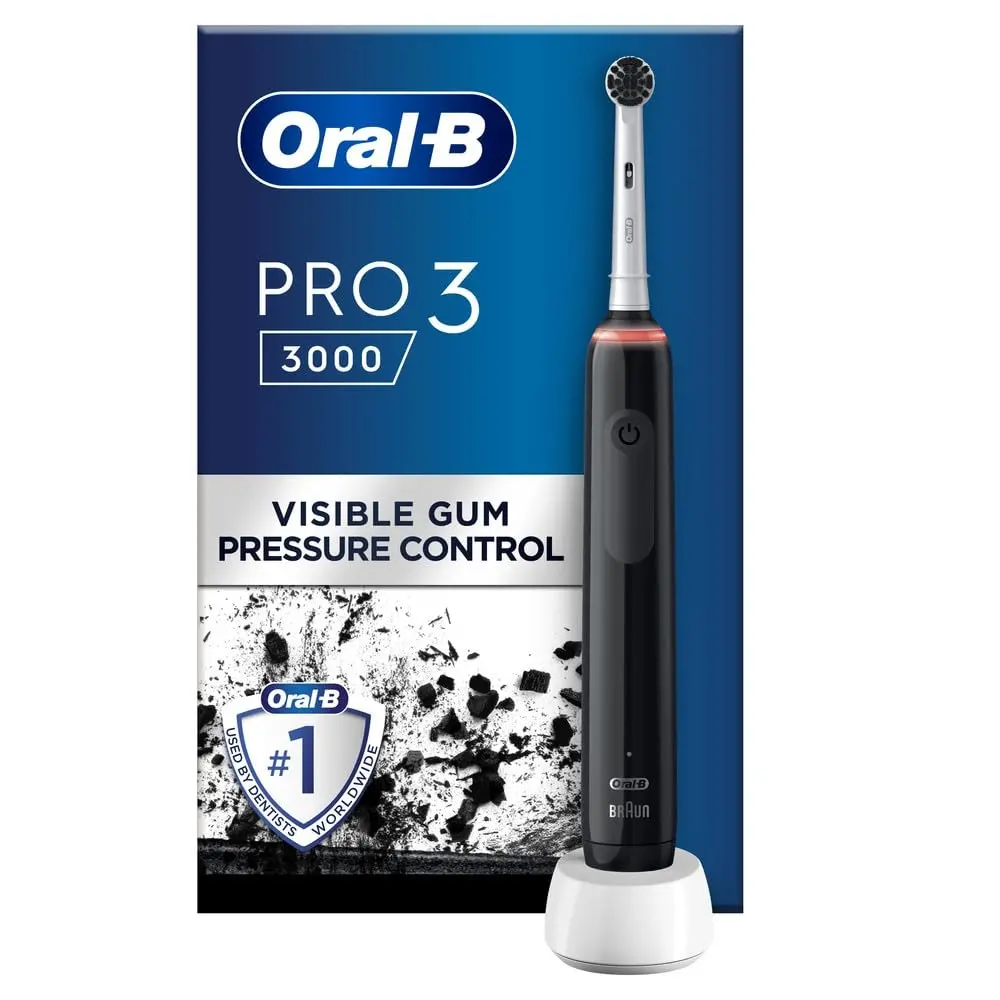
Oral-B Pro 3 3000
The value baseline: oscillating-rotating with a pressure sensor and the cheapest genuine heads…
-
 No. 048.0/ 10
prokudent Sonic LCD
A drugstore own-brand at €34.99 with €2.65 heads, giving the lowest five-year cost here at…