
7Rank 07 of 8 · Best Electric Toothbrushes
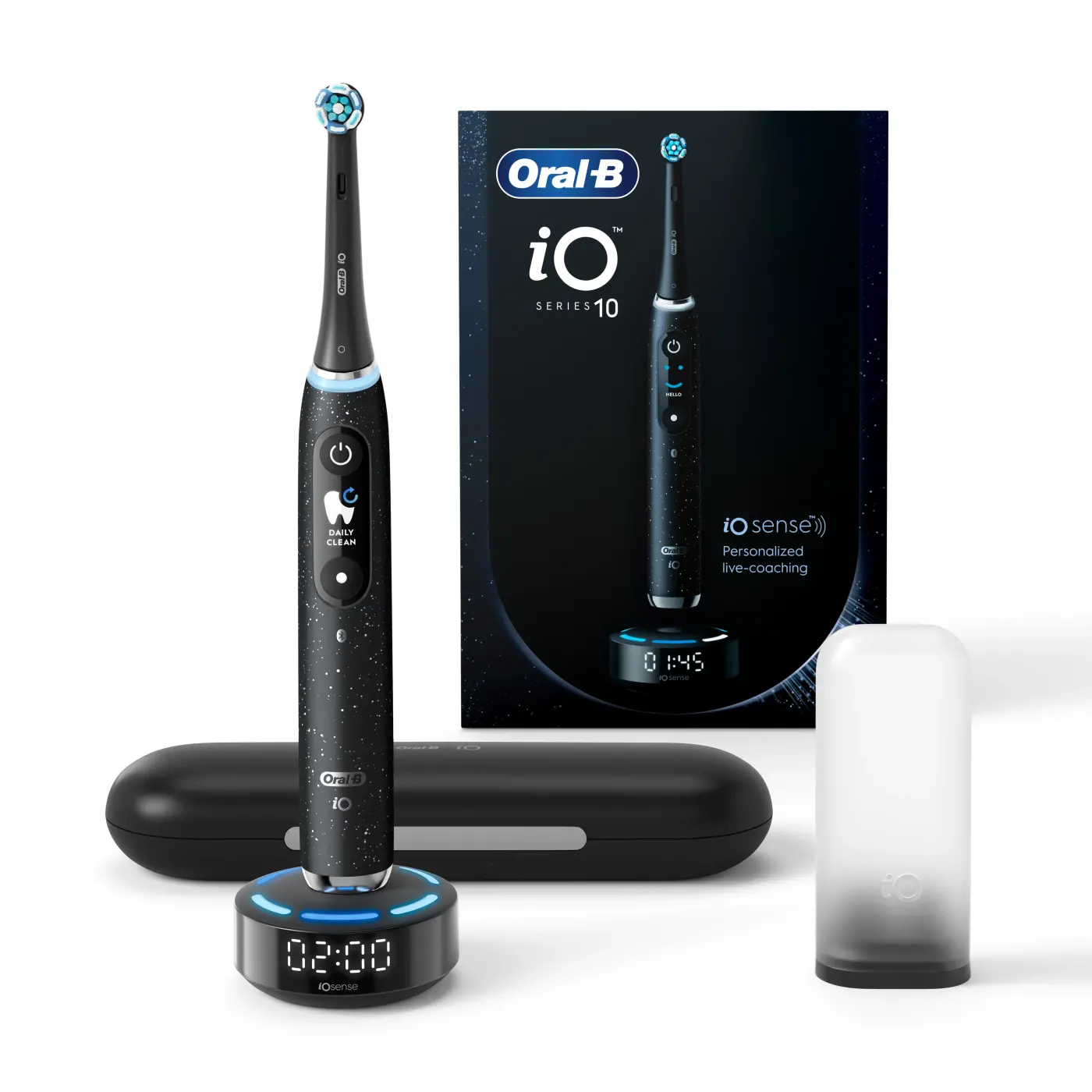
Oral-B Oral-B iO Series 10
€300 for a colour display, seven modes and app tracking over the €69 iO 3 — none of which has outcome evidence. It does contain the one pressure sensor here that actually modulates the motor.
 6.7BPR score
- €300Price
- approx. €425 over five yearsFive-year cost of ownership
- 7 of 8in Best Electric Toothbrushes
- 6.7BPR score 0–10
Review
What this product is
Written after the analysis, from the same sources the score is built on: the manufacturer's documentation, available studies and verified owner feedback.
Included as the anchor that shows what €300 does not buy.
Against the €69 iO Series 3, this adds a colour in-handle display, four extra modes, Bluetooth app tracking with position detection, and a faster magnetic charging puck. None of those has any published outcome evidence behind it.
On modes: no trial and no guidance body supports additional modes improving plaque removal or gum health. On the app: trials of brushing apps exist, but they test behavioural coaching interventions in orthodontic and paediatric populations — not whether a €300 brush's app beats a €35 brush. We found nothing supporting a general-adult benefit.
There is one genuine technical distinction, and it deserves credit. The Smart Adapt mode "reduces the oscillation angle and lowers the micro-vibrations when the pressure used is too strong" — the only mechanism we could confirm in this whole ranking where a brush actually modulates its output in response to pressure, rather than just flashing a light. Whether that produces better outcomes than a visual sensor is untested; no trial has compared them.
The rest is well built: oscillating-rotating with micro-vibrations, seven modes, a three-colour pressure sensor, 14-plus days of battery and about three hours to full charge.
The economics. €299.99 for the handle plus €125 for twenty iO heads is about €425 over five years. Stiftung Warentest tested the iO Series 10 in November 2023 at €350; the grade is paywalled. Its own 2024 winner was the €80 iO 3N at grade 1.9, and its 2025 winner was a €90 Philips at 1.7.
Note the RRP: €599.99, against a street price of €294.61–299.99. A list price at double the actual selling price is the norm in this category, not an outlier — treat any "was €600, now €300" framing accordingly.
Technical data
Specification
Figures from the manufacturer's documentation, verified against available outside sources. Values we could not confirm are marked as declared.
- Technology
- Oscillating-rotating with micro-vibrations
- Modes
- 7 - Daily Clean, Sensitive, Whitening, Gum Care, Intense, Tongue Clean, Smart Adapt
- Pressure sensor
- Three-colour, plus Smart Adapt which reduces oscillation angle and micro-vibrations under high pressure
- Display
- Colour in-handle display
- Battery
- 14+ days, approx. 3 hours on the magnetic puck
- App
- Bluetooth with position tracking
- Head price
- EUR 6.25 each, iO-exclusive
- Five-year cost
- approx. EUR 425
- Stiftung Warentest
- Tested November 2023 at EUR 350, grade paywalled
- RRP / street
- EUR 599.99 RRP; EUR 294.61-299.99 street
Component scores
Where the score
comes from.
Four components, equal weight, each on a 0–10 scale and each resting on a named source. The overall score is their mean — the full procedure is in the methodology.
What we liked
- Smart Adapt is the only pressure mechanism here that actually reduces motor output
- Oscillating-rotating with micro-vibrations and a three-colour pressure sensor
- Colour in-handle display and seven modes
- 14-plus days of battery with about a 3-hour charge
- Bluetooth app with position tracking
- Street price is half the €599.99 RRP
Worth knowing
- approx. €425 over five years — four times the €69 iO 3's performance for no evidenced gain
- No outcome evidence for extra modes, the display or the app
- iO-exclusive heads at €6.25 — standard Oral-B heads do not fit
- Its Stiftung Warentest grade is paywalled and unknown
- Oral-B's own €80 iO 3N won the 2024 test
- RRP of €599.99 against a €300 street price is meaningless anchoring
Comparison
How it compares
within the category
All values come from the same analysis and are comparable only within the category Best Electric Toothbrushes.
| Product | Score | Five-year cost of ownership | Price |
|---|---|---|---|
| Philips Sonicare 5500Top score | 8.8 | €265 with genuine heads / approx. €110 with third-party heads | €75 |
| Oral-B iO Series 10This product | 6.7 | approx. €425 over five years | €300 |
| Category average8 products analysed | 7.8 | — | — |
FAQ
Frequently asked questions
Does the app help me brush better?
No published evidence says so for general adults. Trials of brushing apps do exist — including a six-month telemonitoring randomised trial — but they test behavioural coaching interventions, mostly in orthodontic or paediatric populations. Nothing tests whether a €300 brush's position-tracking app produces better outcomes than a €35 brush with a timer. Treat it as a feature you might enjoy, not one that improves your teeth.
Is Smart Adapt worth having?
It is genuinely different from the rest — it reduces the oscillation angle and micro-vibrations when you press too hard, rather than flashing a light and leaving you to react. That is a real mechanism. But no trial has compared a motor-modulating sensor against a visual one, and the 36-month recession study that supports pressure sensors at all used a visual sensor. So it is plausibly better and entirely unproven, on a brush costing €231 more than one with a visual sensor.
From the same ranking
Other products in Best Electric Toothbrushes.
The same protocol, the same key parameter, the same set of sources.
-
 No. 018.8/ 10
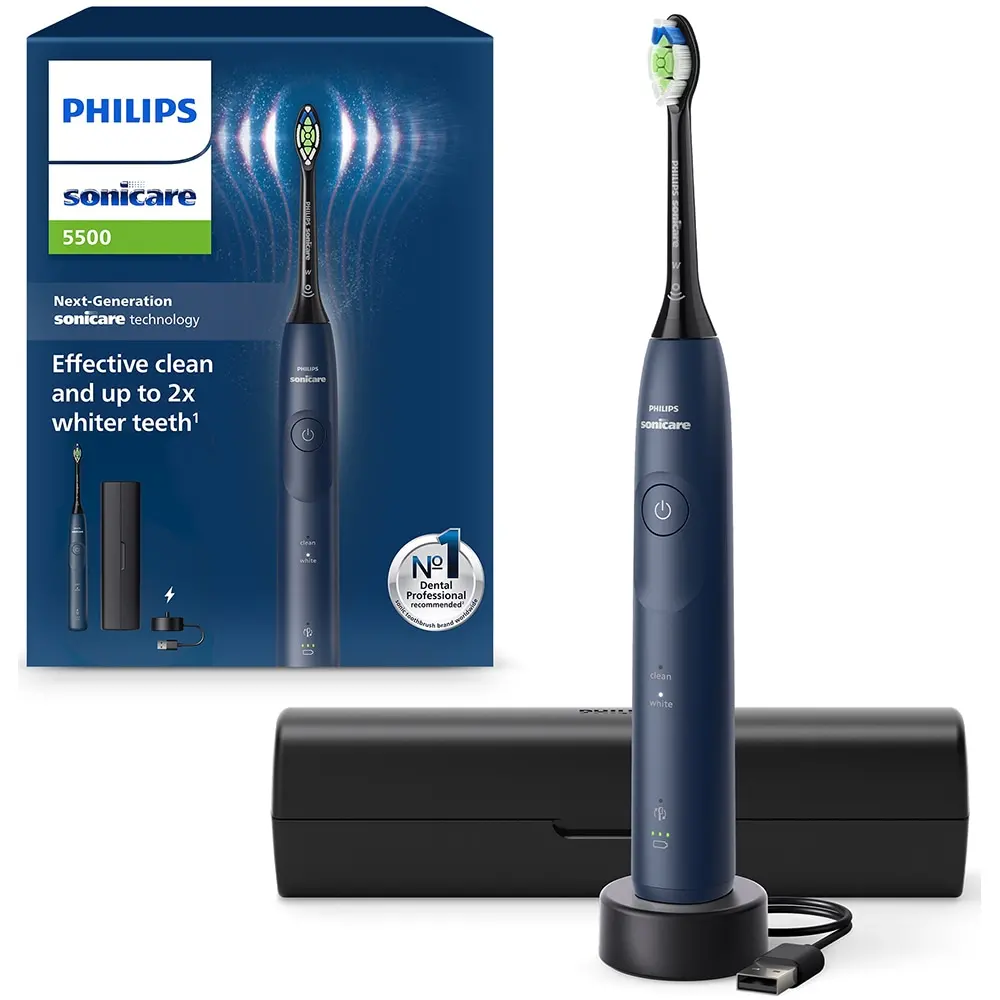
Philips Sonicare 5500
Stiftung Warentest's November 2025 winner at grade 1.7 with a cleaning sub-score of 1.3, now…
-
 No. 028.6/ 10
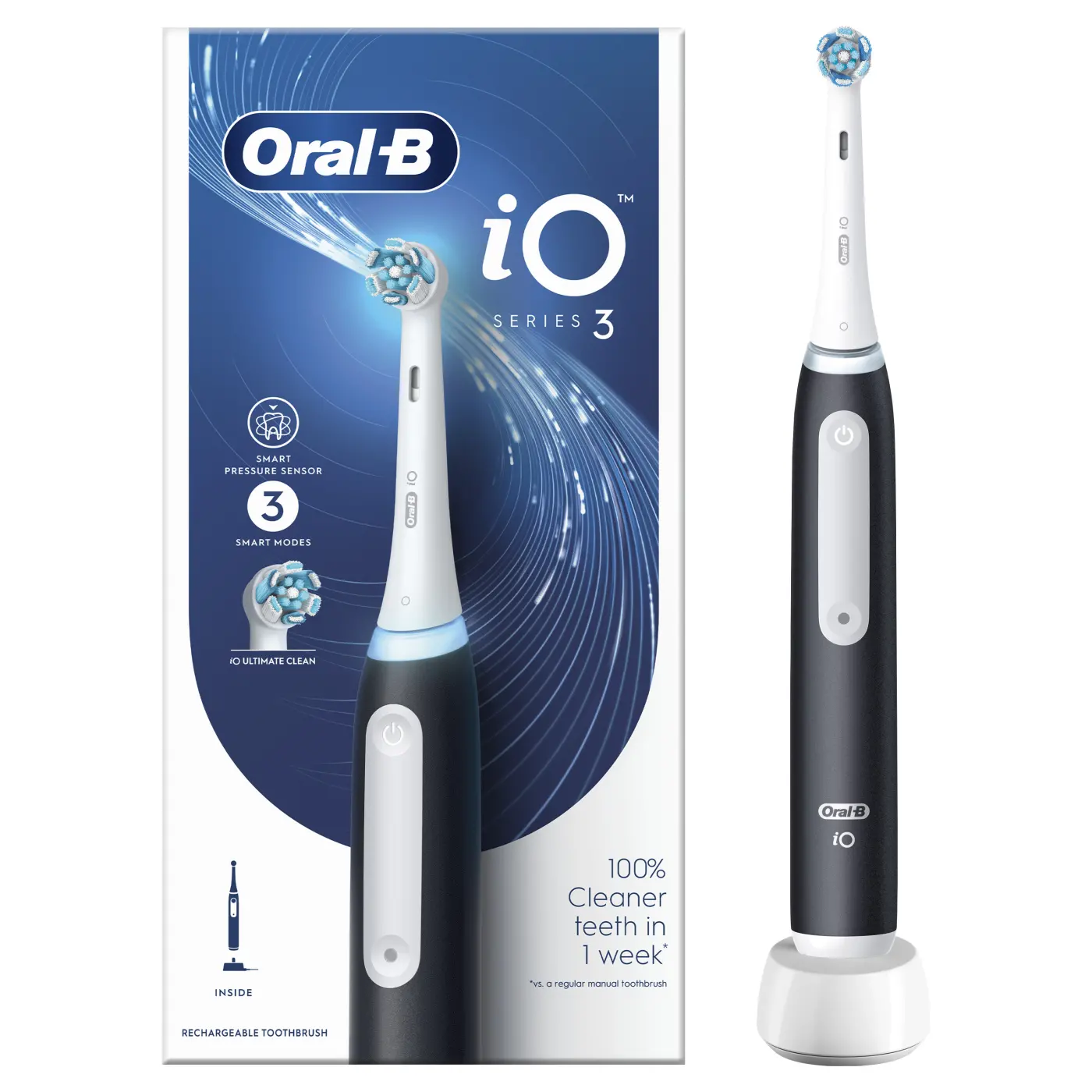
Oral-B iO Series 3
The Oral-B iO Series 3N won Stiftung Warentest's November 2024 round with grade 1.9, ahead of…
-
 No. 038.4/ 10
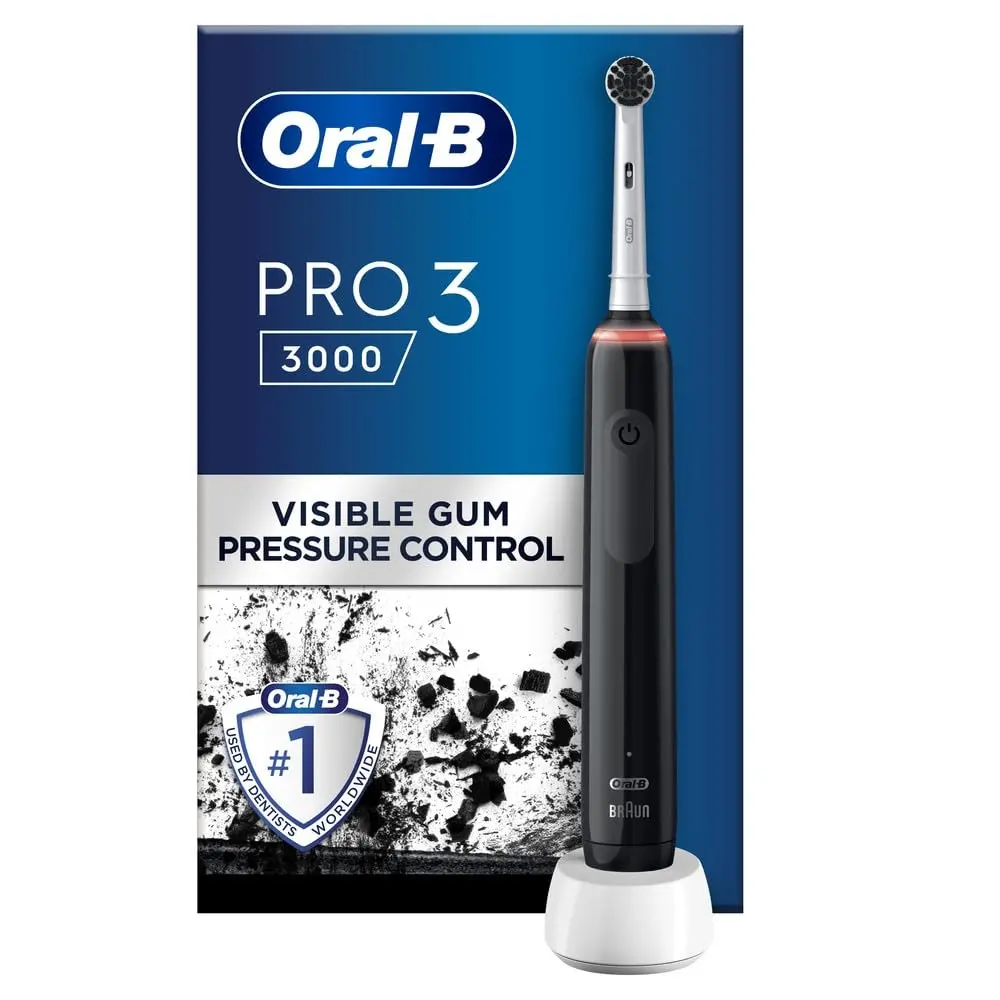
Oral-B Pro 3 3000
The value baseline: oscillating-rotating with a pressure sensor and the cheapest genuine heads…
-
 No. 048.0/ 10
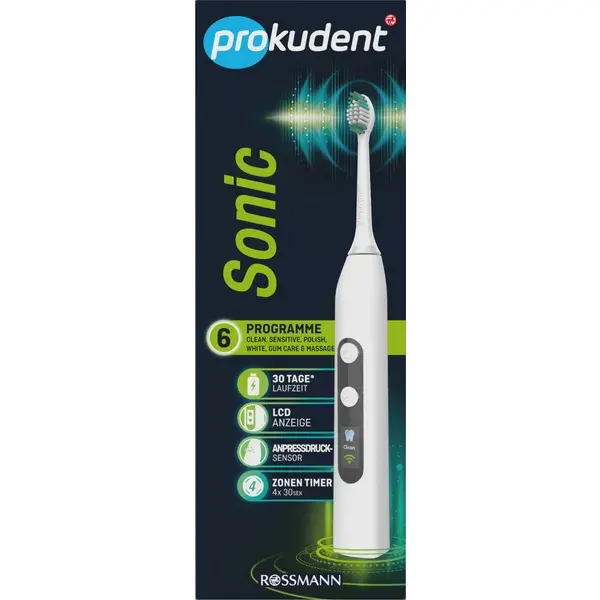
prokudent Sonic LCD
A drugstore own-brand at €34.99 with €2.65 heads, giving the lowest five-year cost here at…